Everything You Need to Know
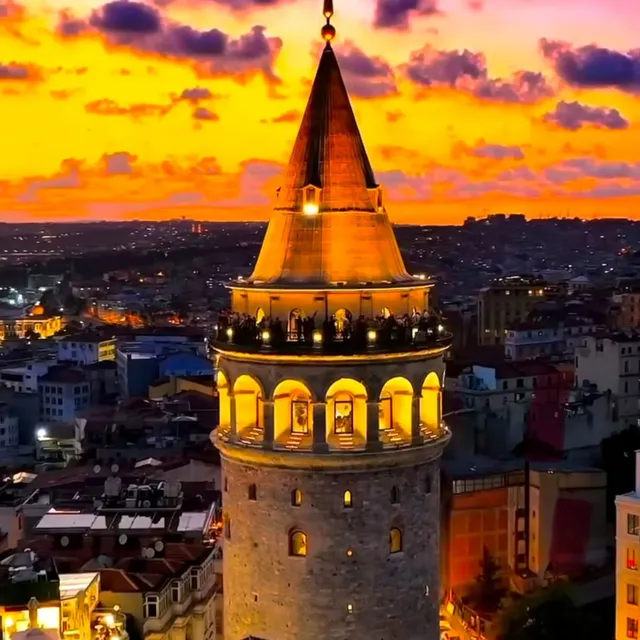
Rising above the cobblestoned streets of Beyoglu like a stone sentinel from another age, Galata Tower is one of the most recognizable landmarks on Istanbul's skyline. For nearly seven centuries, this cylindrical watchtower has marked the northern shore of the Golden Horn, bearing witness to empires, earthquakes, fires, and the slow metamorphosis of Constantinople into Istanbul. Today, it rewards every visitor who makes the climb with an unbroken 360-degree panorama that stretches from the domes of the Old City to the shimmering strait of the Bosphorus and, on the clearest days, all the way to the distant Princes' Islands floating in the Sea of Marmara. This guide covers its layered history, the experience at the top, practical visiting tips, and the vibrant neighborhood that surrounds it.
History & Origins of Galata Tower
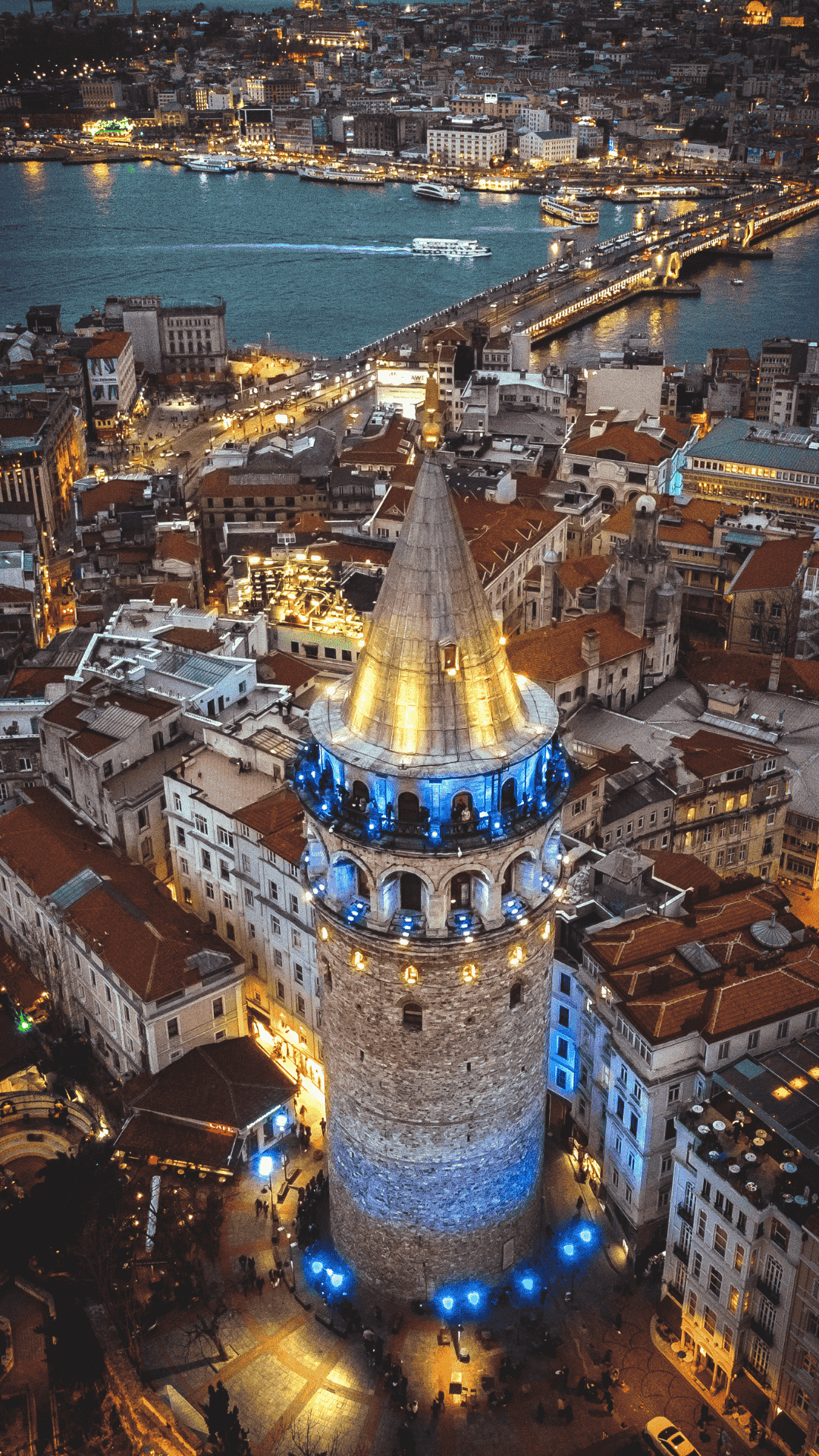
The story of Galata Tower begins not with the Ottomans who would come to define Istanbul, but with an ambitious Mediterranean trading republic seeking to protect its commercial enclave on the far side of the Golden Horn. In 1348, while Galata was a Genoese colony within the Byzantine Empire, the Genoese built the tower as part of the district's defensive walls. Known as Christea Turris, or the Tower of Christ, it served as a strategic observation and defensive structure overlooking the Golden Horn and surrounding waterways.
Rising approximately 63 meters, the tower stood prominently above the buildings on the northern side of the Golden Horn. Its cylindrical stone structure has an outer diameter of approximately 16.45 meters, with walls around 3.75 meters thick at the base, designed to withstand both siege and earthquake. A wooden staircase spiraled upward inside the drum-shaped shaft, granting watchmen a vantage point that could surveil the entire Golden Horn, the Bosphorus approach, and the hills of the Old City beyond.
The Republic of Genoa builds Christea Turris as the apex of its fortified colony walls. At 67 meters, it becomes the tallest structure in Constantinople, serving as a watchtower, lighthouse, and symbol of Genoese commercial power over the Golden Horn trade routes.
Following the Ottoman conquest of Constantinople in 1453, Galata Tower became part of the Ottoman city. During the Ottoman period, it was used for different purposes, including as a dungeon and later as a fire lookout tower.
A devastating earthquake strikes Istanbul, severely damaging the tower. The renowned Ottoman architect Hayrettin undertakes a significant restoration, reinforcing the walls and rebuilding portions of the upper structure. The tower survives, though its silhouette is subtly altered.
In one of the most celebrated episodes of Ottoman lore, the polymath Hezarfen Ahmed Celebi is said to have strapped on a pair of eagle-like wings and launched himself from the top of Galata Tower. According to the account recorded by the 17th-century traveler Evliya Celebi, Hezarfen Ahmed Celebi is said to have flown from Galata Tower and landed in Dogancilar Square in Uskudar. The story is based on Evliya Celebi's account and has not been independently verified.. Whether historical fact or embellished legend, the tale has made Galata Tower synonymous with human ambition and the dream of flight.
During the Ottoman period, Galata Tower was used as a fire lookout station. It underwent several repairs and alterations after being damaged by earthquakes and fires, and its appearance changed more than once over the centuries, making it a vital part of the city's emergency infrastructure.
A major restoration campaign modernizes the tower's interior while preserving its medieval exterior. An elevator is installed, a restaurant and nightclub are opened at the top, and the observation balcony is made accessible to the public. Galata Tower enters its modern era as one of Istanbul's premier tourist destinations.
The 2020 restoration removed later concrete additions and the former café areas, allowing the tower to reopen with museum exhibitions managed by the Ministry of Culture and Tourism. The restaurant is removed, exhibition spaces are installed across multiple floors detailing the tower's history, and the observation deck is refurbished to improve safety and visitor experience. Following a major restoration, Galata Tower reopened as a museum in October 2020. Additional roof, structural, and exterior conservation works were carried out in 2024, and the tower reopened to visitors on May 25, 2024.
What makes Galata Tower truly extraordinary is not merely its age or its architecture, but its continuity. In a city that has been razed by fire, shaken by earthquakes, besieged by armies, and reshaped by three empires, this cylindrical stone column has simply endured. It has been a fortress, a prison, an observatory, a fire station, a nightclub, and now a museum. Galata Tower's changing functions from a defensive structure and dungeon to a fire lookout and museum reflect the many historical periods through which Istanbul has passed.
The View from the Top
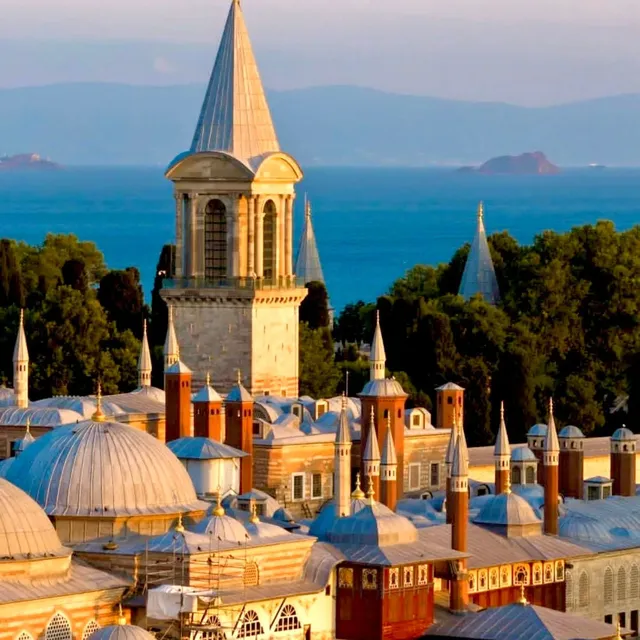
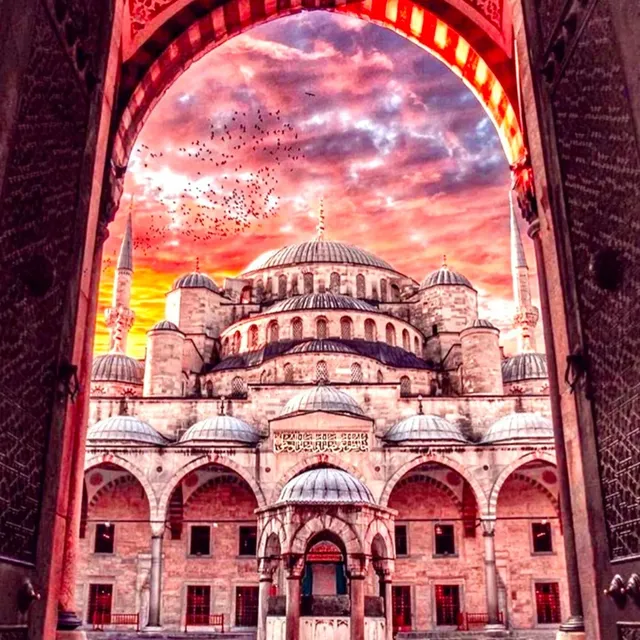
Nothing in Istanbul quite prepares you for the moment you step onto Galata Tower's narrow observation balcony, 51 meters above the rooftops, and the entire city unfolds in every direction. The observation balcony offers a wide panorama of Istanbul's Historic Peninsula, the Golden Horn, the Bosphorus, and the surrounding districts. The eye does not know where to settle first. To the south, the skyline of the Historic Peninsula rises in a procession of domes and minarets that reads like a textbook of imperial ambition: the vast, flattened dome of Hagia Sophia, the cascading half-domes of the Blue Mosque, the fortified walls and cypress gardens of Topkapi Palace, and the elegant silhouette of Suleymaniye Mosque crowning the Third Hill. These monuments appear not as isolated landmarks but as a single, orchestrated composition a city sculpted by sultans, architects, and fifteen centuries of devotion.
Turn to the east and the Bosphorus strait reveals itself, a shimmering silver channel dividing two continents. From the tower, visitors can follow part of the Bosphorus northward and see the urban landscape extending along both shores, the European shore lined with waterfront mansions and the Asian shore dotted with the residential neighborhoods of Uskudar and Kadikoy. Ferries crawl between the continents like white insects on blue glass. On exceptionally clear days usually in the autumn or early spring the Princes' Islands emerge as a faint archipelago far to the south, adrift in the Sea of Marmara.
Below you, the Golden Horn curves westward like a tarnished saber, spanned by the Galata Bridge where fishermen dangle lines into the current while traffic and trams cross overhead. The waterway divides the old from the new, the monumental from the mercantile, and from this height you can appreciate why it has been the geographic heart of every civilization that has settled here.
Look north and you see the modern city stretching toward Taksim, the Art Deco apartment blocks and 19th-century embassy buildings of Beyoglu giving way to the glass towers of Sisli and Levent. The contrast is staggering within a single slow revolution of the balcony, you move from a 6th-century basilica to a 21st-century financial district, and you understand in your bones that Istanbul is not a city frozen in time but one that has never stopped building upon itself.
Photography Tips
The observation balcony is narrow and the metal railings can intrude into wide-angle shots, so a standard or short telephoto lens in the 35mm to 85mm range tends to produce the cleanest compositions. For smartphone photographers, the 2x optical zoom on most modern devices offers the best balance of detail and stability. The golden hour roughly one hour before sunset transforms the limestone domes of the Old City into warm amber and paints the Bosphorus in shades of rose and copper. This is the single best moment for photography, but it is also the most crowded; arriving thirty minutes before golden hour gives you time to claim a spot on the southern side of the balcony. Morning visits offer the clearest atmospheric conditions and the gentlest light for detailed panoramas. Overcast days, while less dramatic, produce even lighting that eliminates harsh shadows and can be excellent for architectural detail.
Sunset vs. Daytime
The tower offers two fundamentally different experiences depending on when you visit. During the day, especially in the morning, the light is crisp and the air is typically clearest. You can pick out individual minarets, count the arches of aqueducts, and trace the shipping lanes of the Bosphorus with precision. The city feels like a living map unfolded beneath you.
At sunset, the experience becomes something closer to theatre. As the sun drops toward the western hills of Thrace, the sky cycles through golds, pinks, and violets, and the domes of the Old City become silhouettes against a molten horizon. Around sunset, the call to prayer can be heard from mosques across the Historic Peninsula and surrounding neighborhoods, adding to the atmosphere of the view. By the time twilight settles, the mosques are illuminated and the Bosphorus bridges become ribbons of white and amber light. Sunset offers one of the tower's most atmospheric panoramic experiences.
Following the 2020 and 2024 restoration, the tower also remains open until 11:00 PM, making nighttime visits possible. After dark, the view takes on an entirely different character the city becomes a constellation of lights, the mosques glow against the black sky, and the Bosphorus reflects the illumination of both shores.
Tickets & How to Visit
Galata Tower is managed by the Turkish Ministry of Culture and Tourism, and ticketing has been streamlined considerably since the 2021 restoration. Understanding your options before you arrive will save you significant time and frustration, particularly during the peak summer months when queues can stretch well beyond an hour.
Online Tickets
The most efficient way to visit is to purchase your ticket online in advance through the official Muze Kart website or through authorized third-party platforms. Official e-tickets may be purchased online when available. Ticket-purchase procedures can vary, and all visitors must follow the current entry, capacity, and security arrangements at the tower. The current official admission price for international visitors is listed as €30. Prices may be revised, so visitors should check the official museum page before their visit., though rates are adjusted periodically. Online booking typically opens 30 days in advance, and popular sunset slots sell out quickly if you have your heart set on golden hour, book as early as possible.
On-Site Tickets
Walk-up tickets are available at the ticket office located at the base of the tower. During off-peak periods (weekday mornings, winter months), queues are manageable and you may wait only 10 to 15 minutes. During peak season July through September, weekends, and holidays expect queues of 30 to 60 minutes or more. The ticket office accepts both cash (Turkish Lira) and credit cards.
Museum Pass Istanbul
Galata Tower is included in the Museum Pass Istanbul, a multi-attraction pass that covers entry to many of the city's most popular museums and monuments. If you plan to visit Hagia Sophia Museum, Topkapi Palace, the Archaeological Museums, and other participating sites, the Museum Pass can offer significant savings. It also provides skip-the-line access at Galata Tower, making it an excellent option for visitors on a multi-day itinerary.
Istanbul Tourist Pass® & Istanbul Prime Pass
For visitors looking for a more seamless and value-packed experience, the Istanbul Tourist Pass® is another excellent option. Galata Tower is included in the pass, meaning you can enter without purchasing a separate ticket. The Istanbul Tourist Pass® is also included within the Istanbul Prime Pass, offering even more flexibility for travelers who want to bundle premium experiences.
With the pass, you benefit from a fully digital and hassle-free experience, including hosted entry and access to an audio guide, helping you better understand the history and significance of Galata Tower. There's no need to wait in ticket lines or manage multiple bookings—simply choose your preferred time slot, arrive at the meeting point, and enjoy a smooth entry process.
Beyond Galata Tower, the pass covers 120+ top attractions and experiences across Istanbul, making it an ideal choice for visitors planning to explore the city in depth. From iconic landmarks to guided tours and unique activities, it offers both convenience and excellent overall value.
If you're looking to save time, skip lines, and maximize your Istanbul itinerary, the Istanbul Tourist Pass® (and its inclusion within the Istanbul Prime Pass) is a smart and efficient choice.
Practical Information
Everything you need for a smooth visit, from opening hours and transport to accessibility details and queue strategies.
Opening Hours
Regular daytime visiting hours are from 8:30 AM to 6:30 PM, with the daytime ticket office closing at 6:14 PM. A separate night-museum period operates from 6:30 PM to 11:00 PM, with the night ticket office closing at 10:00 PM. The tower is currently open every day. Hours may be reduced during Ramadan or national holidays check the official Muze Kart site before visiting.
Queue Times
Off-peak: 10–15 minutes. Weekends and summer: 30–60+ minutes. The shortest queues are weekday mornings before 10 AM or after 8 PM on weeknights. Online tickets or Museum Pass eliminate the general queue entirely.
Getting There
Metro: Sishane station (M2 line), then a 5-minute uphill walk. Tram: Karakoy stop (T1 line), then a 10-minute walk up steep streets. Tunel: The historic underground funicular from Karakoy to Beyoglu deposits you a 3-minute walk away. Walking: 20 minutes from Sultanahmet across Galata Bridge.
Elevator & Accessibility
The elevator provides access from the ground floor to the sixth floor. Visitors must use stairs to reach the upper museum levels and observation area. Due to the historic structure, full wheelchair access to the observation balcony is not available.
What to Know
No food or drink is sold inside the tower. Bags are screened at entry. Tripods and selfie sticks are generally not permitted on the observation deck. The interior is climate-controlled across the exhibition floors, but the outdoor balcony can be windy bring a light jacket for evening visits.
Pricing
The current official admission price for international visitors is €30. MuseumPass Istanbul is valid during regular daytime hours but not during the separate night-museum period. Prices, age policies, and visiting conditions may change, so check the official museum information before arrival. Prices are subject to periodic revision.
Are you ready to explore Galata Tower?
Unforgettable views and the best moments await you.
The Neighborhood Galata & Karakoy
Galata Tower does not stand in isolation. It rises from the heart of one of Istanbul's most creatively alive, architecturally layered, and endlessly walkable neighborhoods. The streets radiating from the tower's base form a web of cobblestone lanes, steep stairways, and unexpected courtyards that reward aimless exploration as richly as any museum. Before or after visiting the tower, allow some time to explore the surrounding streets of Galata and Karakoy, known for their historic buildings, cafés, shops, cultural venues, and waterfront connections.
The quarter's character was forged by its cosmopolitan past. For centuries, Galata was home to Genoese merchants, Jewish communities displaced from Spain, Greek Orthodox families, Armenian artisans, and Levantine traders. This layered heritage survives in the architecture: Romanesque stone towers sit beside Ottoman wooden houses, Art Nouveau apartment blocks share walls with Sephardic synagogues, and Byzantine-era cisterns lurk beneath modern cafes. The neighborhood wears its history openly, without the self-conscious preservation of a heritage zone it simply never stopped being lived in.
 Coffee Culture
 Third-Wave Cafes
Galata is home to a wide selection of independent cafés and specialty coffee shops. Within a five-minute walk of the tower, you will find dozens of independent roasters and cafes tucked into converted ground-floor workshops. The steep lanes of Serdar-i Ekrem Caddesi are particularly dense with options, and many offer seating that spills onto the street with views up toward the tower itself.
 Cultural Heritage
 Galata Mevlevi Lodge
Located a short walk from the tower, Galata Mevlevi Lodge was founded in 1491 and now operates as a museum devoted to Mevlevi culture, music, calligraphy, and Sufi traditions. Cultural events and sema programs may be organized on selected dates, so visitors should check the current event schedule separately.
 Street Art
 Street Art & Galleries
The streets descending from Galata toward Karakoy are an open-air gallery of murals, stencils, and installations that change with the seasons. The nearby Istanbul Modern Art Museum relocated to a striking new waterfront building designed by Renzo Piano anchors the district's contemporary art identity, while smaller galleries on Bankalar Caddesi (the old banking street) exhibit emerging Turkish artists in converted vault rooms.
 Waterfront
 Karakoy Waterfront & Vintage Shops
Descend from the tower to the water's edge and you reach Karakoy, a former docklands district reborn as one of Istanbul's most dynamic food and design neighborhoods. The waterfront promenade offers sweeping views of the Old City across the Golden Horn, while the back streets harbor vintage furniture dealers, antique bookshops, and design studios housed in converted Ottoman-era warehouses.
The interplay between Galata Tower and its neighborhood is what elevates a visit from a simple observation-deck stop into a genuine half-day experience. The tower gives you the panoramic overview; the streets below fill in the human detail. You see the Bosphorus ferries from above, then walk down to buy a fish sandwich from the fishermen at Galata Bridge. You spot the domes of Suleymaniye in the distance, then duck into a Galata cafe to plan your route across the bridge to visit it. The tower and the neighborhood are, in the best sense, inseparable.
What to See at Galata Tower
8 Tips for the Perfect Visit
Insider knowledge to help you make the most of your time at Galata Tower, whether it is your first visit or your fifth.
Arrive for Golden Hour
Time your visit so you reach the observation deck 45 to 60 minutes before sunset. You will see the city in full daylight, watch the golden hour transform the domes, and if you linger, witness the mosques illuminate against the darkening sky. This three-act experience is far superior to any single moment.
Visit on Weekday Mornings
If photography is your priority and you want unobstructed views without elbows in your frame, weekday mornings between 8:30 and 10:00 AM are your window. Queues are minimal, the light is clean, and you may have sections of the balcony entirely to yourself.
Book Online in Advance
Purchasing your ticket in advance may help you avoid the ticket-purchase line, but security checks, capacity controls, and entry waiting times may still apply. During peak season, this single step can save you 30 to 60 minutes of standing in line on the steep cobblestone street. Book sunset slots as far ahead as possible they sell out first.
Explore the Streets First
Resist the urge to head straight to the tower. Arrive an hour early and wander the surrounding streets Serdar-i Ekrem, Buyukhendek, Galip Dede Caddesi. The neighborhood context will make the aerial view from the top infinitely more meaningful when you can identify the streets you just walked.
Try a Night Visit
The tower's extended hours (until 11 PM) make after-dark visits possible, and they are dramatically underrated. The city becomes a tapestry of light, the mosques glow against black sky, and the Bosphorus bridges become luminous arcs. Evening visitor numbers can vary, so check the current night-museum ticket conditions before planning a late visit.
Combine with Istiklal Avenue
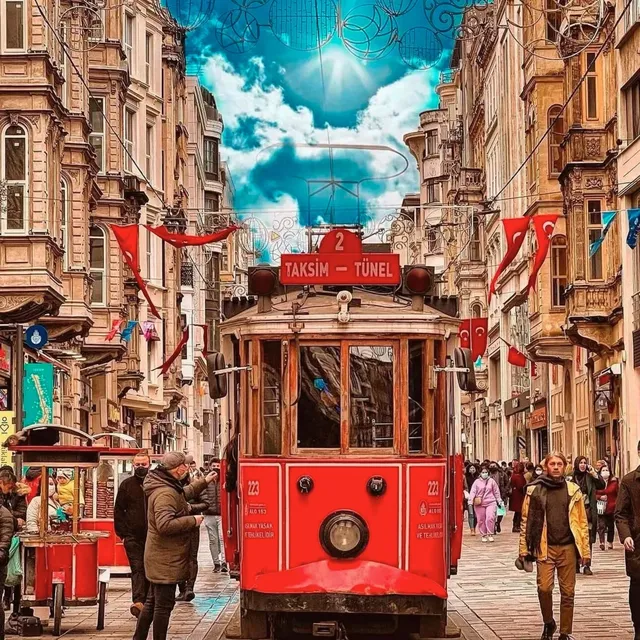
Galata Tower sits at the southern end of the Beyoglu district. After your visit, walk uphill along Galip Dede Caddesi to the Tunel entrance, then stroll the full length of Istiklal Avenue Istanbul's grand pedestrian boulevard of shops, consulates, churches, and historic passages.
Find Alternative Viewpoints
Several rooftop cafes and restaurants near Galata Tower offer elevated views of the tower itself, which can be even more photogenic than the view from it. Look for venues on the upper floors of buildings along Buyukhendek Caddesi and Serdar-i Ekrem Caddesi for the classic tower-against-skyline shot.
Bring a Light Layer
The observation balcony is open-air and catches significant wind, especially in the evening. Even in summer, temperatures at 51 meters can feel noticeably cooler than street level. A light jacket or scarf will keep you comfortable enough to linger rather than retreat inside prematurely.
Nearby Attractions
Galata Tower sits at the intersection of several of Istanbul's most rewarding districts. These landmarks and experiences are all within easy walking distance or a short transit ride.

Istiklal Avenue
Istanbul's grand pedestrian boulevard, 10-minute walk uphill via Tunel.

Galata Bridge
Iconic double-decker bridge with fishermen above and restaurants below, 8 minutes on foot.

Bosphorus Cruise
Check current ferry and sightseeing-cruise departure points in Karakoy, Eminonu, or Kabatas when planning a Bosphorus experience.

Grand Bazaar
One of the world's oldest and largest covered markets, with thousands of shops. Reaching it from Galata Tower requires a longer walk across the Golden Horn and through the Historic Peninsula, or a combination of walking and public transport.
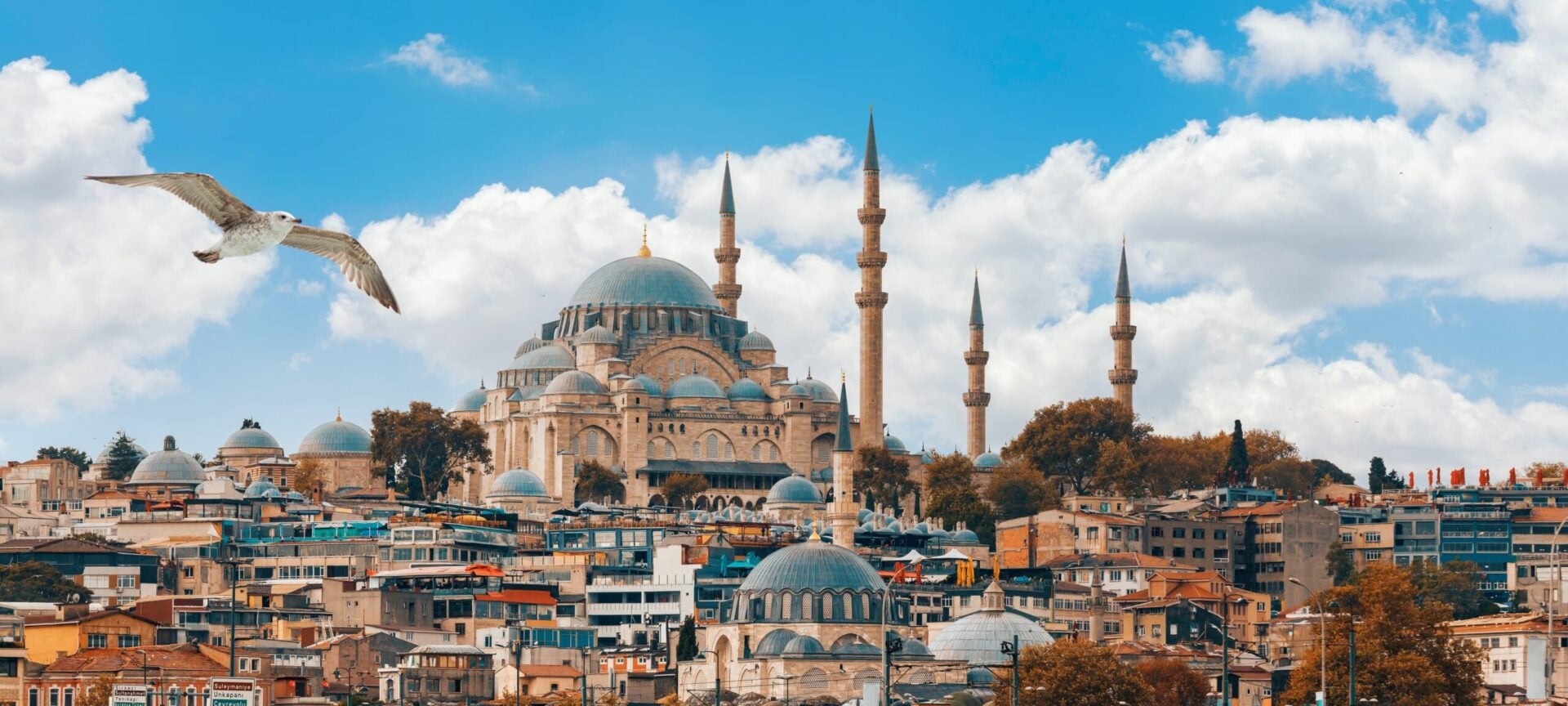
Suleymaniye Mosque
Sinan's masterpiece visible from the tower, a 25-minute walk across the Golden Horn.

Things to Do in Istanbul
Our complete guide to experiences, tours, and hidden gems across the city.
Frequently Asked Questions
Quick answers to the most common questions visitors ask before climbing Galata Tower.
Galata Tower stands approximately 67 meters (220 feet) tall from the ground to the tip of its distinctive conical roof. The observation balcony where visitors take in the panoramic views sits at about 51 meters above street level. When the tower was completed in 1348, it was the tallest structure in all of Constantinople, and it remained a dominant feature of the skyline for centuries.
Yes. An elevator installed during the 1960s renovation takes visitors up through the majority of the tower's interior. However, the final two floors leading to the observation balcony must be climbed on foot via narrow stone staircases with metal handrails. The stairs are manageable for most visitors, including older travelers who take them at a comfortable pace, but they may present a challenge for those with significant mobility difficulties or claustrophobia, as the stairwells are quite compact.
Plan for 45 minutes to 1.5 hours total, depending on queues and how long you spend on the observation deck. The exhibition floors inside the tower take roughly 10 to 15 minutes to walk through, and most visitors spend 20 to 30 minutes on the balcony enjoying the views and taking photographs. The queue itself can add anywhere from 10 minutes (off-peak) to over 60 minutes (summer weekends). Purchasing tickets online eliminates the queue and brings total visit time closer to 45 minutes.
The ideal visit depends on your priorities. For the most dramatic visual experience, arrive one to two hours before sunset to enjoy both daylight views and the golden hour spectacle. For the shortest queues and clearest atmospheric conditions, visit on a weekday morning shortly after the 8:30 AM opening. For a unique and uncrowded experience, consider an evening visit after 9:00 PM the illuminated city at night offers an entirely different, and often more intimate, perspective. Autumn (September to November) and spring (March to May) offer the best combination of pleasant weather and moderate crowds.
Absolutely. The Bosphorus strait is one of the most striking elements of the panorama from Galata Tower. From the eastern side of the observation balcony, you can see the waterway stretching northward toward the Black Sea, with both the European and Asian shores clearly visible. The first Bosphorus Bridge and, on clear days, the second bridge are visible, along with ferries and cargo ships traversing the strait. Looking south toward the Sea of Marmara, you may also catch a glimpse of the Princes' Islands on particularly clear autumn or winter days.
Without question. Galata Tower offers the single best panoramic viewpoint in Istanbul, combining an unobstructed 360-degree vista with nearly seven centuries of architectural and cultural history. The 2021 restoration has significantly improved the visitor experience, with well-curated exhibition floors and a beautifully maintained observation deck. Beyond the tower itself, the surrounding Galata neighborhood is one of the most vibrant and walkable districts in the city, making the visit a gateway to hours of exploration. It is consistently rated as one of the top five experiences in Istanbul by visitors.
Galata Tower was built in 1348 by the Republic of Genoa, the powerful Italian maritime city-state that controlled the Galata trading colony on the northern shore of the Golden Horn. The Genoese originally named it Christea Turris (Tower of Christ), and it served as the highest point of the fortification walls that surrounded their colony. It is worth noting that an earlier, smaller Byzantine watchtower called the Tower of Galata existed on a nearby site before the Genoese construction, but the current structure is entirely of Genoese origin.
Not inside the tower. The restaurant and nightclub that operated at the top of Galata Tower for several decades were removed during the comprehensive 2020 and 2024 restoration. The tower now functions purely as a museum and observation deck, with no food or beverage service. However, the surrounding Galata and Karakoy neighborhoods are densely packed with excellent cafes, restaurants, and rooftop bars many of which offer views of the tower itself. Several rooftop venues within a few minutes' walk serve meals and drinks with panoramic city views that rival the tower's own perspective.