Inside
What to Expect & What to Buy at the Grand Bazaar
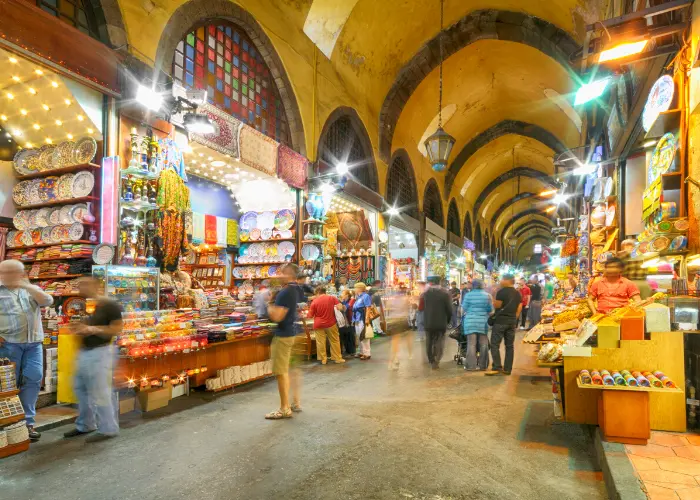
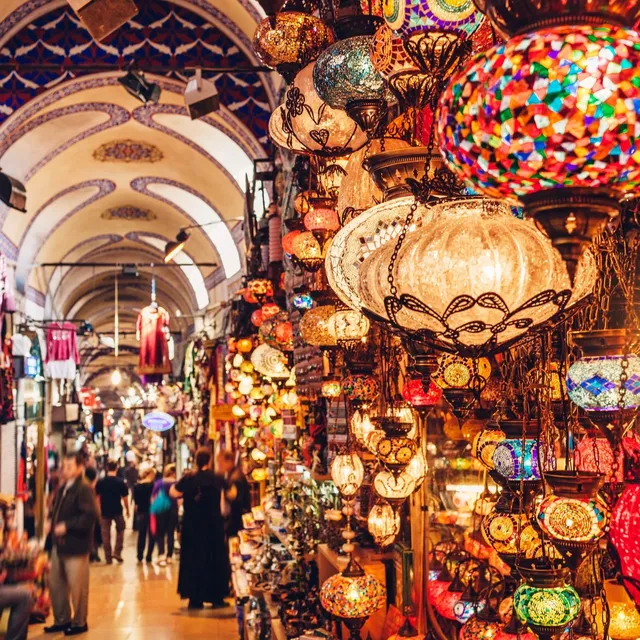
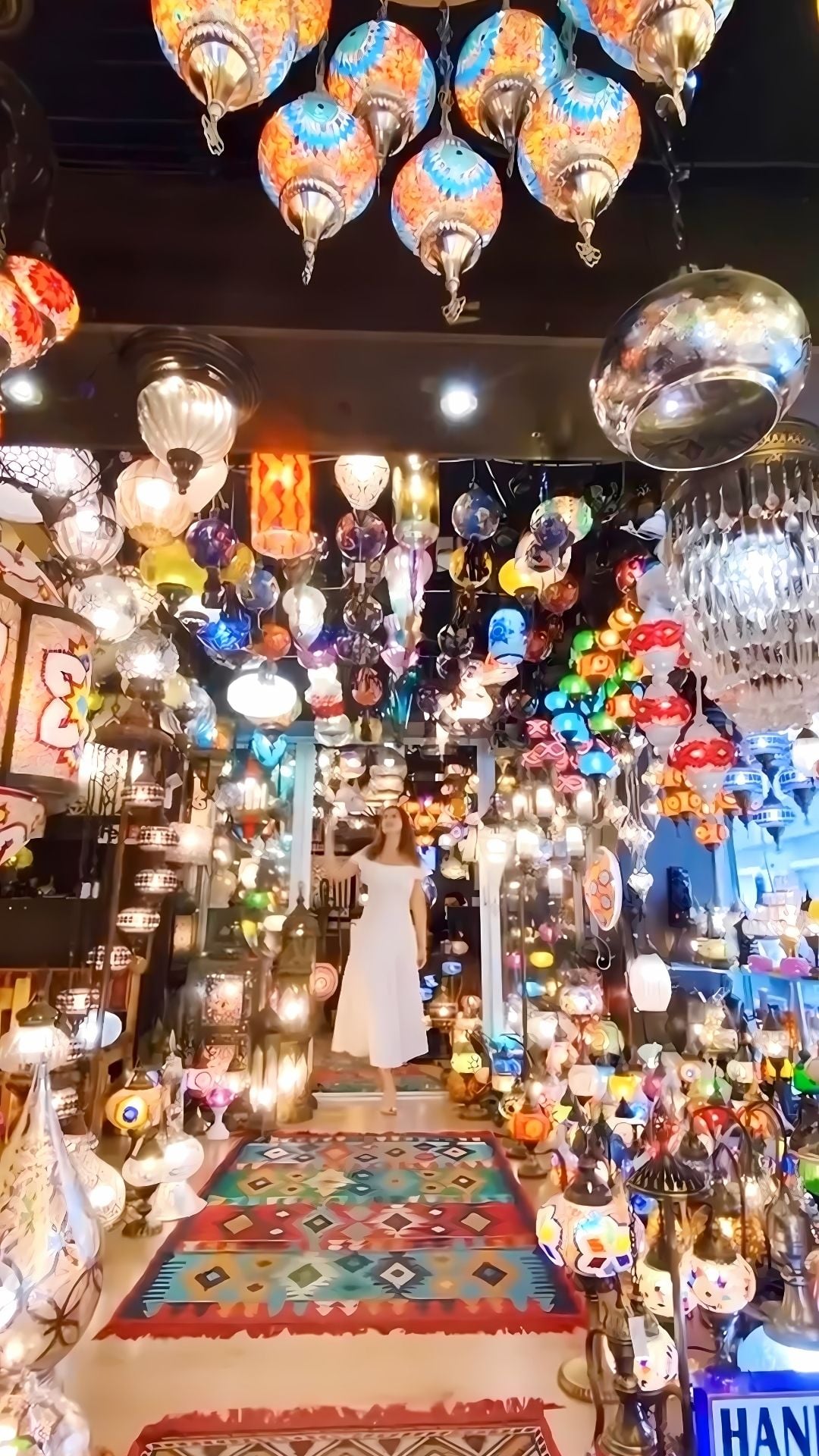
First, the scale. So how big is big? The bazaar covers about 30,700 square meters, with around 20 gates — counts vary between 18 and 22, per Go Türkiye — and busy days estimated at a quarter-million visitors or more. It sounds overwhelming. In practice, it is a city with neighborhoods: gold and jewellery glitter along Kalpakçılar Caddesi toward the Nuruosmaniye Gate, carpets and textiles fill the side streets, and lamps, ceramics, leather, and copper each keep their own quarters. In our experience, the map matters less than the logic — pick a craft, follow it, and let the streets do the rest. Shopkeepers will call out; a smile and a wave is a full sentence here. Nothing about the place requires armor, only patience and curiosity.
What to buy
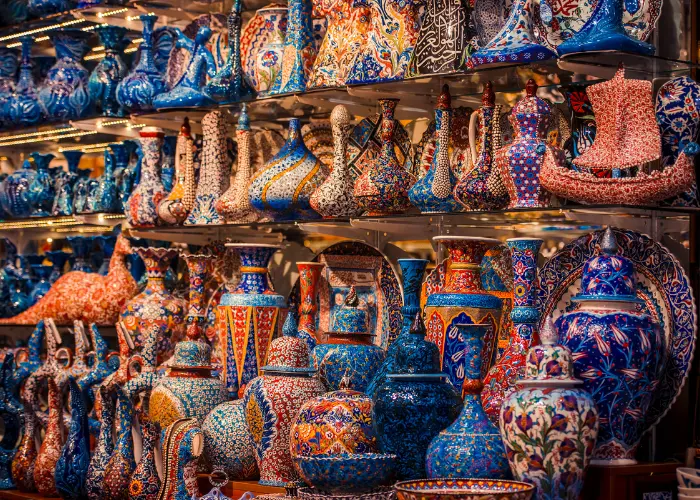
Buy where the makers are. The Cevahir Bedesten is the bazaar's oldest heart, and it holds the antiques, vintage silver, and rare finds. A han is one of the courtyard workshop-buildings around the bazaar, and the upstairs ateliers are where much of the jewellery is actually made. For carpets and kilims, ask about origin and knot count, and take your time over tea — the good dealers enjoy the conversation as much as the sale. Likewise strong here: hand-painted ceramics, hammered copper, leather jackets, and gold sold by weight. For example, jewellery pricing starts from the day's gold rate, which makes it one of the more honest purchases in the building.
How to haggle
Haggling is part of the culture here — a game with rules, not a fight. Never open the bidding; ask the price, counter somewhere below it, and move in steps with a smile. Walking away is a legitimate move, and so is coming back. That said, haggle only for what you actually want: opening negotiations you never meant to finish is the one real rudeness in the bazaar.
History
Grand Bazaar History: Six Centuries of Trade
The bazaar began as a bank as much as a market. Mehmed II built the core bedesten between 1455 and 1461, right after the conquest, and its windowless stone cellars served as the city's strongrooms — merchants and citizens locked their valuables in the mahzens beneath the trade floor. Commerce grew around that vault of trust, street by covered street, until the complex became the empire's commercial heart. Caravans ended their journeys here. Prices set in these streets echoed across three continents, and for a few centuries this really was the center of a very large world.
Disasters kept editing the building. The 1894 earthquake forced a four-year rebuild and shrank the bazaar's footprint. Fires in 1943 and 1954 did their damage, and the restoration after the last one ran until 1959. Consequently, what looks eternal is really a survivor — patched, rebuilt, and reopened after every blow, with the shops back at work each time.
The newest chapter is overhead. A 39,000-square-meter roof restoration finished in 2024 — decades of air-conditioner units, tanks, and cables removed, historic tiles relaid (Daily Sabah, 2024). Since then, official guided rooftop tours have opened the bazaar's rooftops to visitors, with a panorama of domes and minarets that traders themselves rarely saw.
Notably, the bazaar still runs as a trades community. The shopkeepers' association carries the old guild tradition forward, and the surrounding hans — the courtyard workshops of the merchant age — still house jewellers and craftsmen at work.
Plan your visit
Visiting the Grand Bazaar: Hours, Entrance & Getting There
Opening hours
The bazaar opens Monday through Saturday, roughly 8:30am to 7pm — and closes on Sundays, unlike the Spice Bazaar. It also closes for the first days of religious holidays. Individual shops keep their own rhythm inside that window; accordingly, mid-morning is when everything is reliably open.
Entrance fee
Entry to the Grand Bazaar is free. It is a working market with around 20 open gates — you walk in, no ticket, no queue.
What costs money is entirely up to your bags. In addition, an audio guide or a guided visit buys you orientation, which in this building is genuinely worth something.
How to get there
Take the T1 tram to Beyazıt-Kapalıçarşı; the gate is steps from the stop. From Sultanahmet, the tram is one stop or a ten-minute walk along the Divan Yolu. Meanwhile, the Spice Bazaar sits fifteen minutes downhill — the classic two-bazaar day walks from one to the other through the market streets.
Best time to visit
Weekday mornings before 11am are the calm window; we found the difference between 10am and 2pm to be night and day in July. Our team measured a gate-to-gate crossing at twelve minutes at 9am — the same walk takes half an hour in the afternoon crush. On the other hand, late afternoon has its own energy, when locals shop after work. If crowds close in, step into a han courtyard — the workshops upstairs are quieter than any street below.
Fact-checked against official sources · September 1, 2026 · TURSAB-licensed operator
Tours
Grand Bazaar Tours (Entry Is Free)
No ticket exists for the bazaar itself — anyone selling "Grand Bazaar entry" is selling a tour. So what is worth adding? The audio guide turns the maze into a story, street by street, at your own pace. In fact, the strongest pairing is the two-bazaar day: Grand Bazaar for crafts and haggling, then the Spice Bazaar for food — two markets, two centuries apart, one afternoon. If you are stacking sights across several days, a city pass may bundle the guided options; check what it currently includes. Prices live on the cards below.


FAQ
Frequently Asked Questions
Yes. It is a working market with around 20 gates and no admission of any kind. You pay only for what you buy — and, if you choose, for a guide or audio tour.
No — Sunday is the weekly closing day, along with the first days of religious holidays. The nearby Spice Bazaar does open on Sundays, which makes it the standard Sunday substitute.
Around 4,000 shops along 61 covered streets, in a complex of roughly 30,700 square meters. Counts shift as shops merge and split, but the scale has held for centuries.
Yes — it is expected, especially for carpets, leather, lamps, and souvenirs. Counter below the first price, move in steps, and keep it friendly. Gold, notably, is the exception: it is priced from the daily rate, leaving less room.
The bazaar's oldest core, built under Mehmed II in the 1450s. Its stone vaults once served as the city's strongrooms; today it houses the antique dealers, vintage silver, and the bazaar's rarest goods.
Yes — since the roof restoration finished in 2024, official guided rooftop tours run over the bazaar's domes. Access is only with a licensed tour; freelance rooftop visits are not permitted.
One to two hours for a first walk, and easily more if you shop seriously. For instance, add the rooftop tour or the han courtyards and the visit becomes half a day. Specifically, carpet-buying is its own event: with tea and unrolling, budget an hour for a single good shop.
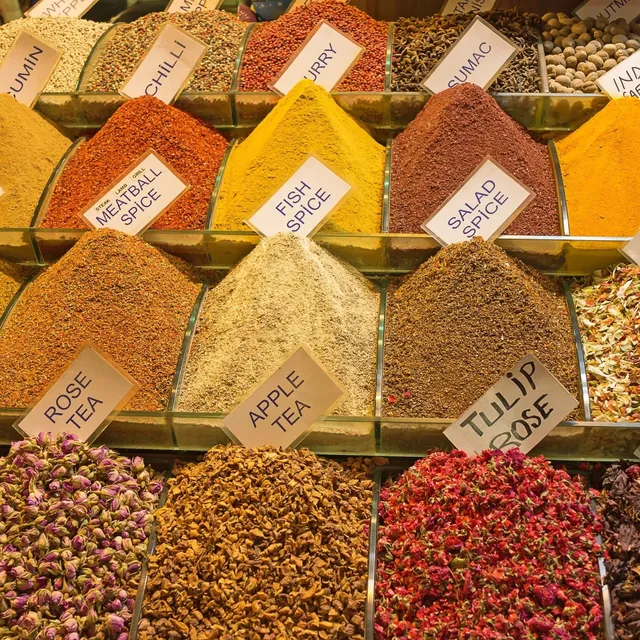
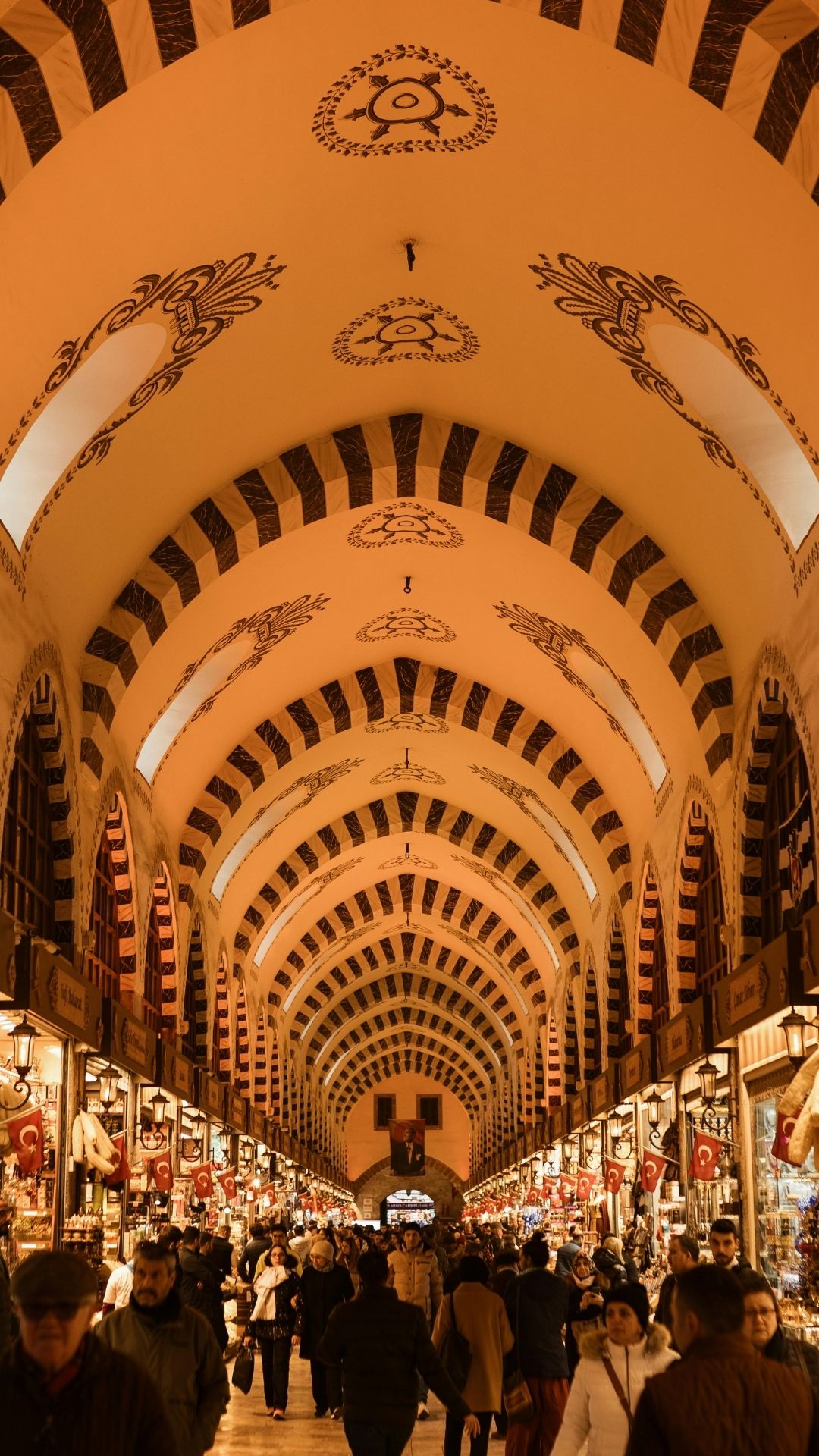
Both, ideally in one day — they are fifteen minutes apart. The Grand Bazaar is for crafts, gold, and the haggling theater; the Spice Bazaar is smaller, calmer, and edible. In other words: one is for your suitcase, the other for your kitchen.
Still have questions?
Our Istanbul travel experts are happy to help.
Nearby