Inside
Inside Topkapı Palace: Courtyards, Harem & Treasury
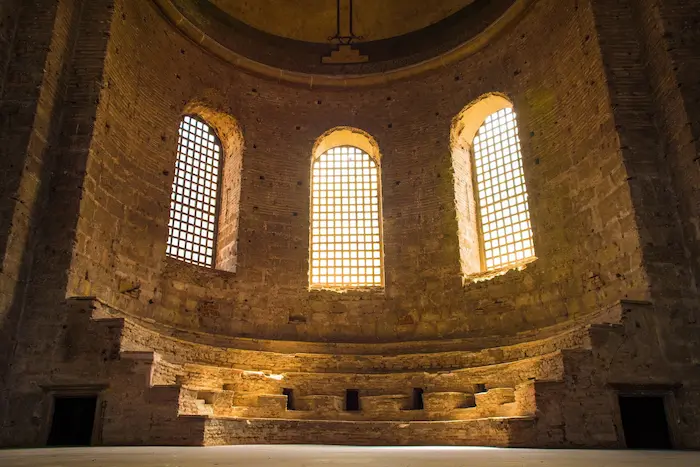
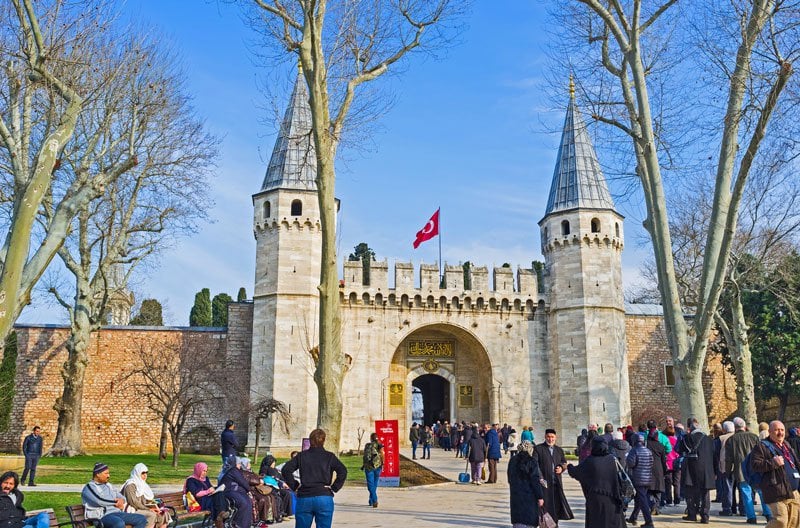
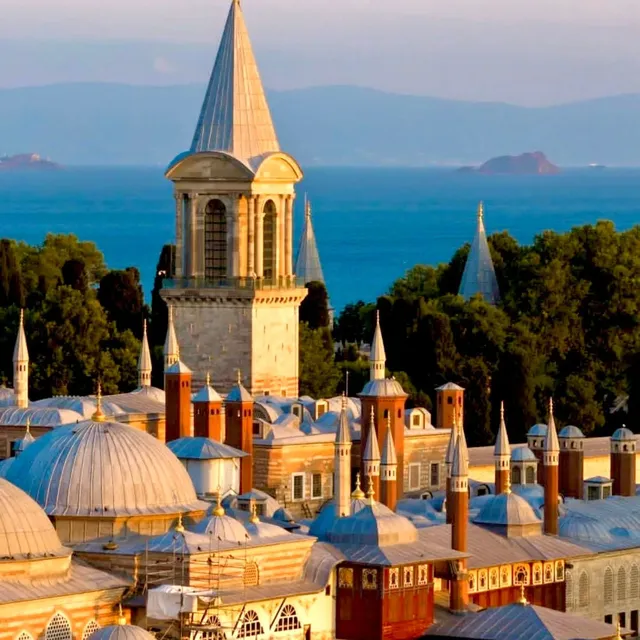
The palace unfolds as four courtyards, each more private than the last. The first is a public park holding Hagia Irene. The second was where the empire did its governing, home to the Imperial Council and the palace kitchens. The third belonged to the sultan's inner court and school; the fourth, in contrast, is all pavilions and Bosphorus views. As a result, to walk Topkapı is to walk inward through Ottoman power, gate by gate, toward rooms few subjects ever saw.
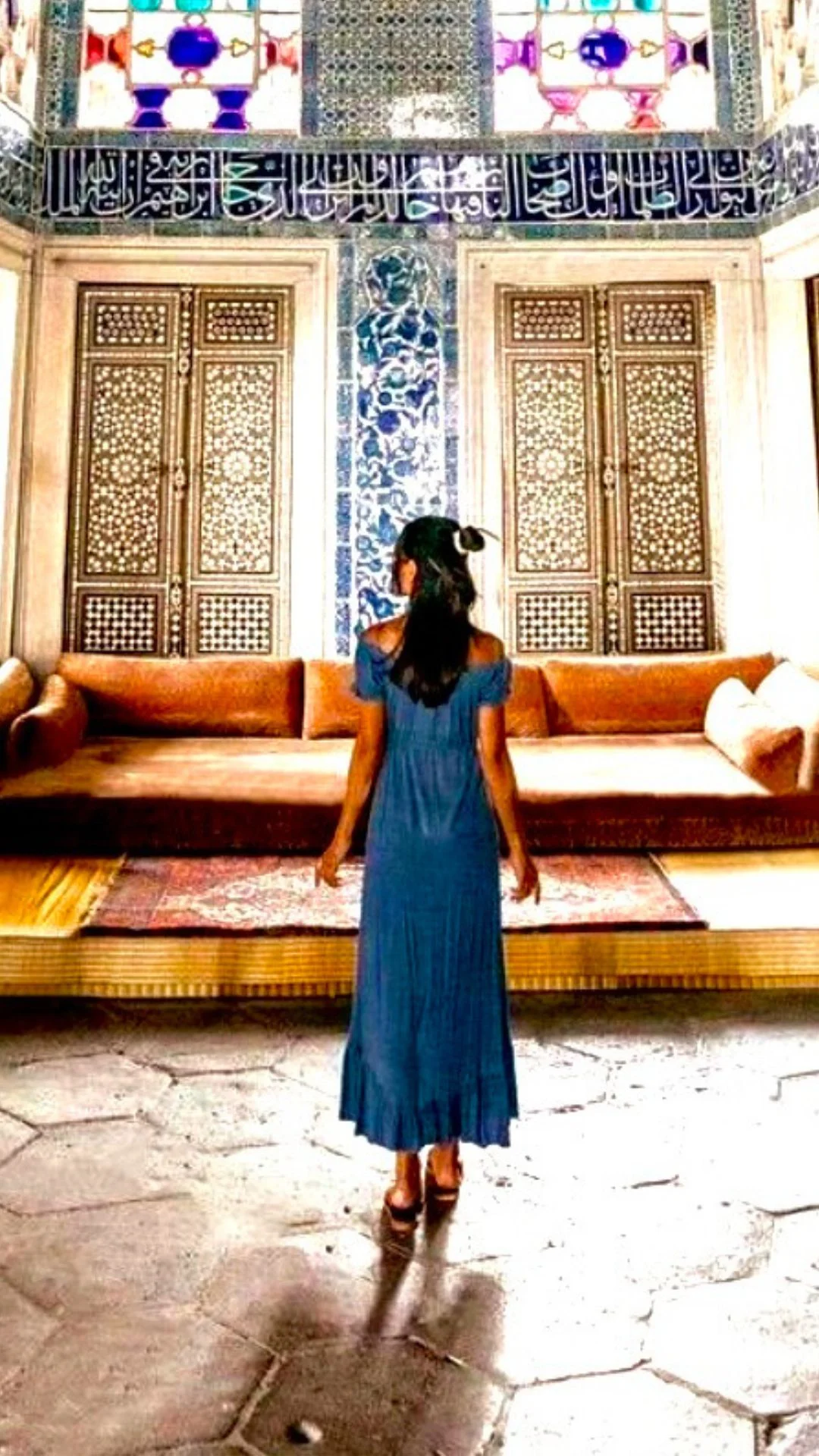
The Harem is the palace within the palace — the private world of the sultan's family, run by the queen mother, wrapped in the finest İznik tilework anywhere. It holds around 300 rooms, though the visitor route shows only the best of them. In our experience it is the half of Topkapı people remember, and it rewards going early, before the corridors tighten with groups. The Treasury answers with spectacle of its own: the Topkapı Dagger and the Spoonmaker's Diamond, an 86-carat stone ringed by 49 smaller diamonds. Nearby, the Chamber of Sacred Relics holds items revered across the Islamic world, displayed to the sound of continuous Quran recitation — a tradition maintained here, notably, since the sixteenth century.
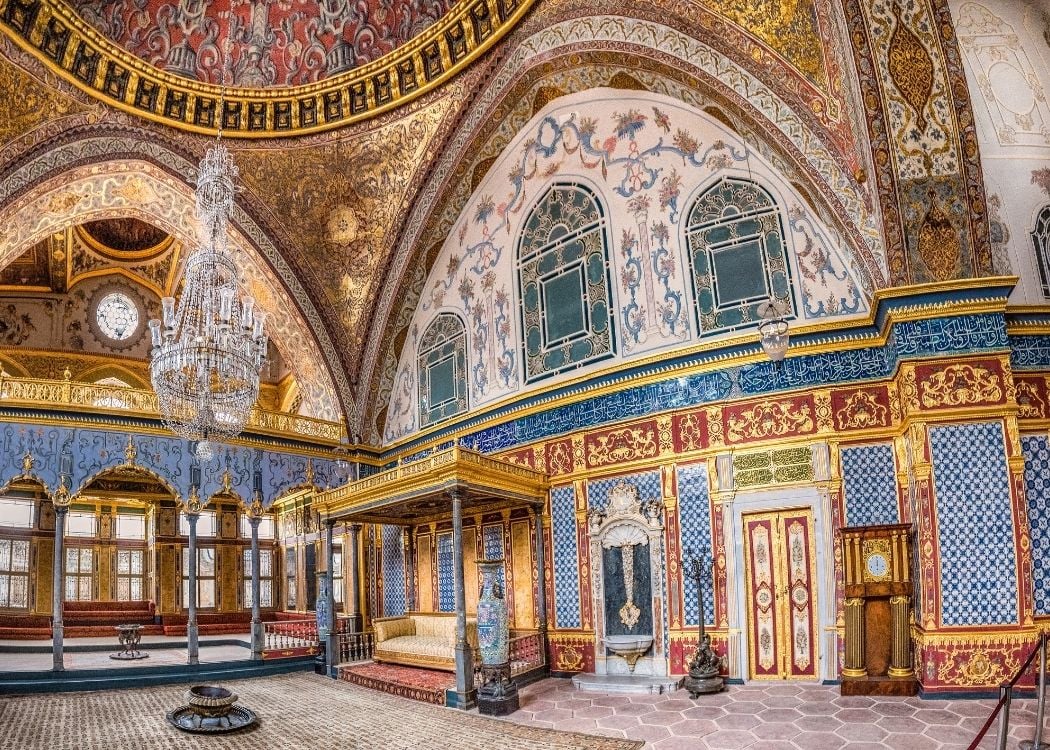
Two smaller stops earn their detour. For instance, the Baghdad and Revan kiosks in the fourth courtyard are jewel-box pavilions built to celebrate campaigns, with the best terrace view in the palace. Their gilded domes and tiled porches show the empire at play rather than at work. Meanwhile, the kitchens — which once fed thousands daily — display one of the world's great Chinese porcelain collections, over 10,000 pieces gathered across six centuries of imperial appetite. Look for the celadon ware: the court prized it on the belief that it revealed poison.
History
Topkapı Palace History: The Empire's Home for 400 Years
Mehmed II began the palace in 1459, six years after conquering Constantinople, choosing the old Byzantine acropolis for its views and its symbolism. The name came later — Topkapı, "cannon gate," borrowed from a shore gate in the sea walls below. For roughly four centuries it served as the empire's seat: sultans were crowned here, envoys were humbled here, and the empire's orders went out from its second courtyard. Consequently, no address in the empire carried more weight. Specifically, this was never one building. At its height the walled complex covered some 350,000 square meters. As many as 4,000 people lived inside it, from pages and cooks to the royal family itself.
The palace's political life ended in 1856, when Sultan Abdülmecid I moved the court downstream to the European-style Dolmabahçe Palace. Topkapı, meanwhile, kept the relics and the memories. The rooms emptied of politics. The visitors came later, and they have not stopped since. Then, on April 3, 1924, the young Republic turned it into its first museum. According to Britannica and the palace's own records, that made it one of the Republic's first acts of keeping the imperial past rather than erasing it. Together with the rest of the Historic Peninsula, it has been UNESCO World Heritage since 1985.
The Spoonmaker's Diamond carries the palace's favorite legend: a fisherman supposedly found the stone in a rubbish heap and traded it to a spoonmaker for three wooden spoons. Historians raise an eyebrow; the name, in fact, stuck anyway — and the 86-carat result outshines the story.
In short, Topkapı is where the Ottoman Empire kept its heart. Dolmabahçe got the chandeliers; this hill kept the relics, the archives — some 300,000 documents — and the ghosts.
Plan your visit
Visiting Topkapı Palace: Tickets, Hours & Timing
Tickets and prices
The palace sells one combined ticket: grounds, Harem, and Hagia Irene together. For foreign visitors it costs 2,750 TL — about €55 — as of mid-2026. Accordingly, buy it online from the official seller, millisaraylar.gov.tr, and treat prices as current rather than fixed. Notably, the old "Harem costs extra" advice is outdated: the combined ticket is the default now. If you carry a museum pass, confirm at the gate exactly which sections it covers — pass rules here have their own fine print. Section-only tickets for the Harem or Hagia Irene exist too, but they still require palace entry, so the combined ticket usually wins on simple math. Children's discounts and the domestic tariff differ; the official checkout shows the full table.
Opening hours
Topkapı opens daily except Tuesday, from 9am to 5pm, with longer evening hours in summer — check the official site for the current schedule. In addition, summer 2026 brings Saturday night visits (8:30pm–10:30pm, June 13 to September 12), a rare look at the courtyards after dark (TÜRSAB, 2026).
How to get there
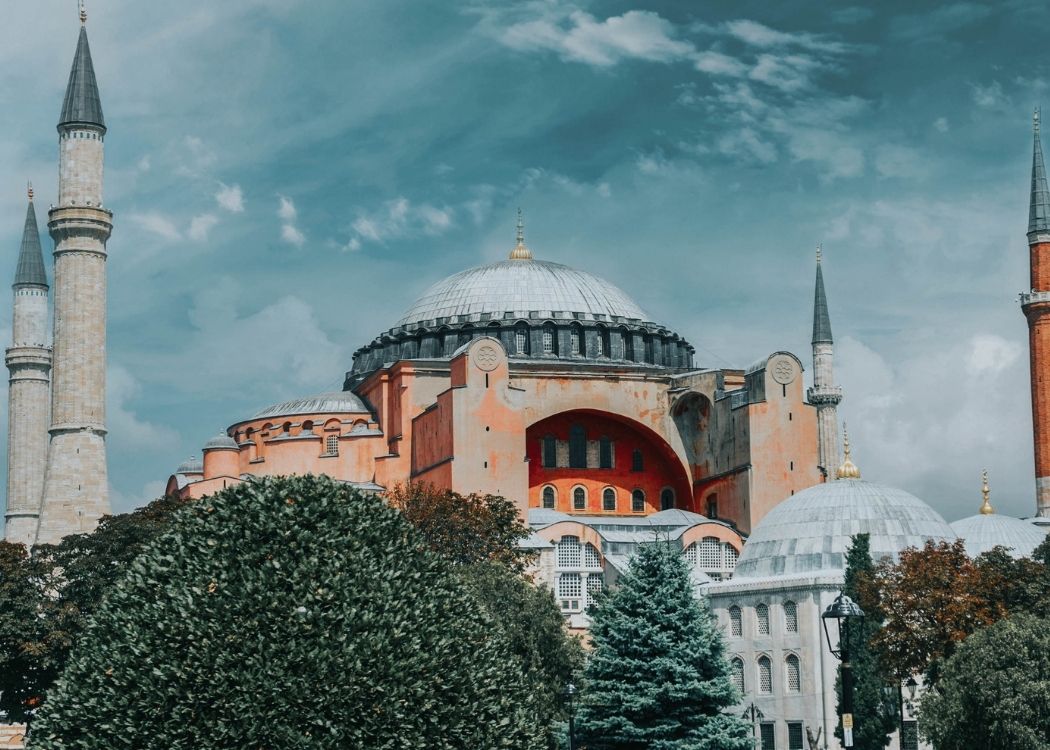
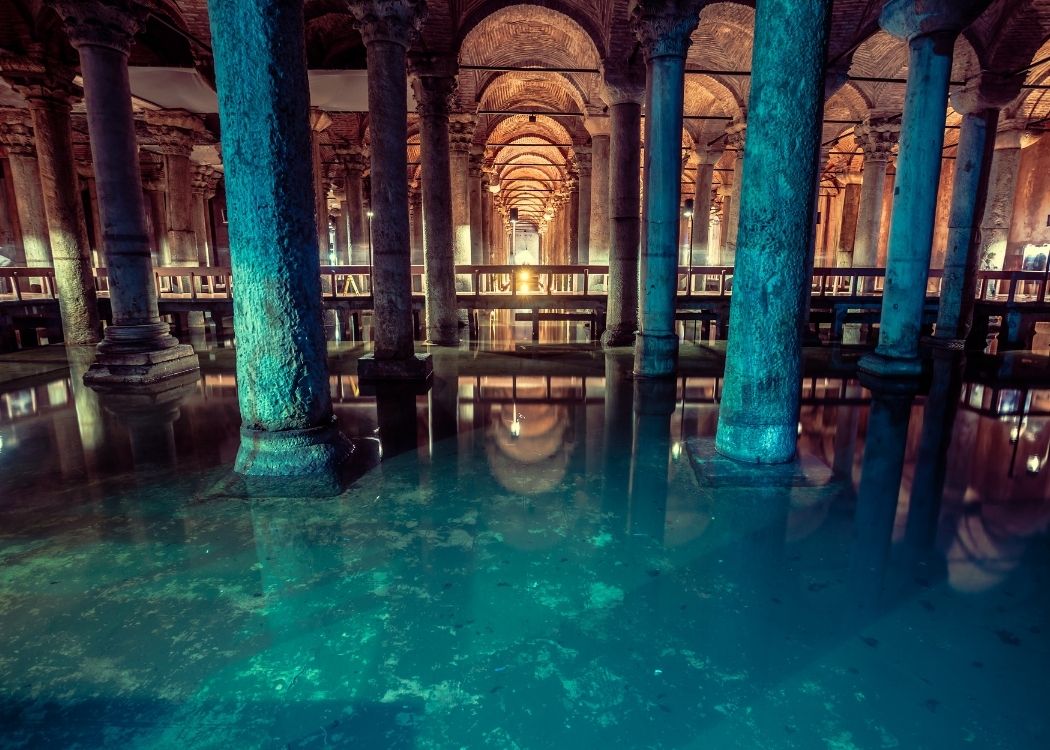
Take the T1 tram to Sultanahmet or Gülhane. Both stops leave a short, pleasant walk to the first gate. From Hagia Sophia, the palace entrance is five minutes on foot. For example, the classic old-city day chains them: Hagia Sophia at opening, Topkapı through midday, Basilica Cistern when your feet ask for shade.
Best time to visit
Be at the gate for the 9am opening and do the Harem first. We found it nearly empty before 10am, and shoulder-to-shoulder by noon. Our team measured the full loop, all four courtyards plus Harem and Treasury, at just over three unhurried hours. On the other hand, if mornings are impossible, late afternoon thins out as the tour groups leave for dinner.
Fact-checked against official sources · August 31, 2026 · TURSAB-licensed operator
Tours
Topkapı Palace Tickets & Tours
The palace rewards context more than most sites. The rooms are labeled, but the stories live between them. So what fits your day? A guided tour with the Harem included covers the essentials in expert company and handles the timing traps. The hosted fast-track option gets you through entry friction and moving at your own pace. Likewise, if Topkapı is one stop in a bigger Istanbul plan, a city pass can bundle it with the rest — check current inclusions before you count on it. Live prices sit on the cards below.


FAQ
Frequently Asked Questions
The combined ticket — palace, Harem, and Hagia Irene — costs 2,750 TL (roughly €55) for foreign visitors as of mid-2026. Smaller section-only tickets exist, but the combined ticket is the standard product. Prices are set by the palace administration and change periodically.
No — Tuesday is the weekly closing day. Every other day the palace opens at 9am, closing at 5pm with seasonal summer extensions. In summer 2026 it also opens for Saturday night visits.
Yes — for many visitors it is the highlight. The Harem is the palace's private quarter, with its finest tilework and the most intimate sense of how the court actually lived. It is included in the combined ticket, so the only cost is time: add roughly an hour.
Two to three hours covers the main courtyards and Treasury at a steady pace; with the Harem and Hagia Irene, plan closer to half a day. The site is large and mostly outdoors; as a result, comfortable shoes matter more than the guidebook.
The Harem, the Treasury with the Spoonmaker's Diamond and Topkapı Dagger, the Chamber of Sacred Relics, and the fourth-courtyard kiosks with their Bosphorus terrace. If time is short, in other words: do the Harem and Treasury, and walk the rest.
Hagia Irene is the Byzantine church standing in Topkapı's first courtyard — older in origin than Hagia Sophia and never converted to a mosque. It is covered by the combined ticket and has its own page worth reading before you go.
Yes, from the official palace site, millisaraylar.gov.tr — the safest route in high season. Third-party lookalike "official" sites exist, however; book through the palace itself or an established licensed operator.
Still have questions?
Our Istanbul travel experts are happy to help.
Nearby