Inside
The Chora Mosaics: What You'll See
Small building, overwhelming ceilings. Chora's two entrance halls — the outer and inner narthex — carry complete mosaic cycles of the lives of Christ and the Virgin. Artists set them in the 1310s, and they glow as if finished last week. Gold ground, turning figures, real tenderness: this is late Byzantine art at full power, made a century before the empire fell. In our experience, visitors budget half an hour and stay double that, necks craned the whole time. Similarly underestimated: the sheer density. Nearly every surface above eye level carries a scene, and the sequence reads like a graphic novel of the gospels. Bring binoculars if you own small ones; the highest panels reward them, and so does patience with the crowds of the popular scenes.
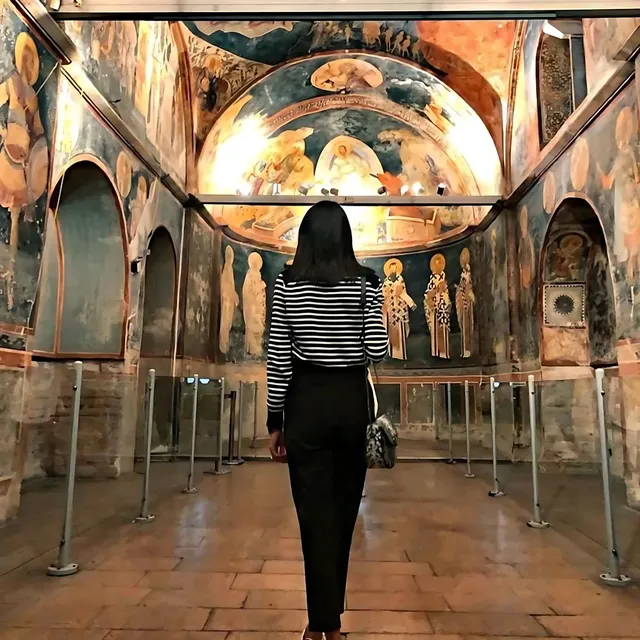
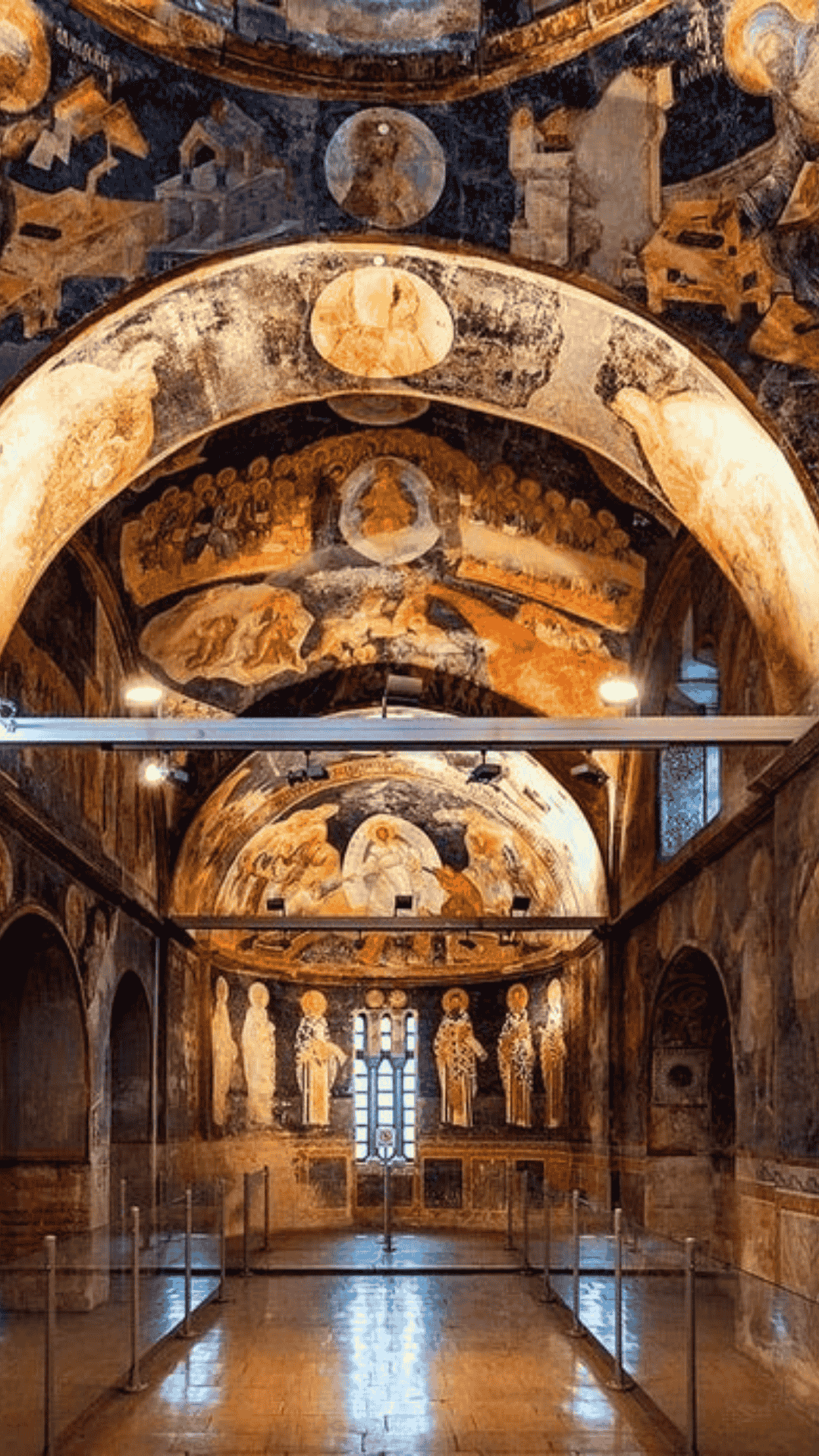
The side chapel is the masterpiece. The parekklesion is Chora's funerary chapel, painted rather than tiled. The Anastasis is the fresco in its apse — Christ hauling Adam and Eve bodily out of their tombs — and it is, in fact, the finest fresco Byzantium ever produced, according to The Byzantine Legacy and most art historians who bother to rank such things. It remains fully visible, flanked by a complete Last Judgment. The colors still carry their original argument: death losing, spring winning, the broken gates of hell scattered underfoot like stage props after the show. Meanwhile, in the naos — now the prayer hall — three figural mosaics are discreetly curtained in line with mosque practice, and the hall itself can be visited outside prayer times.
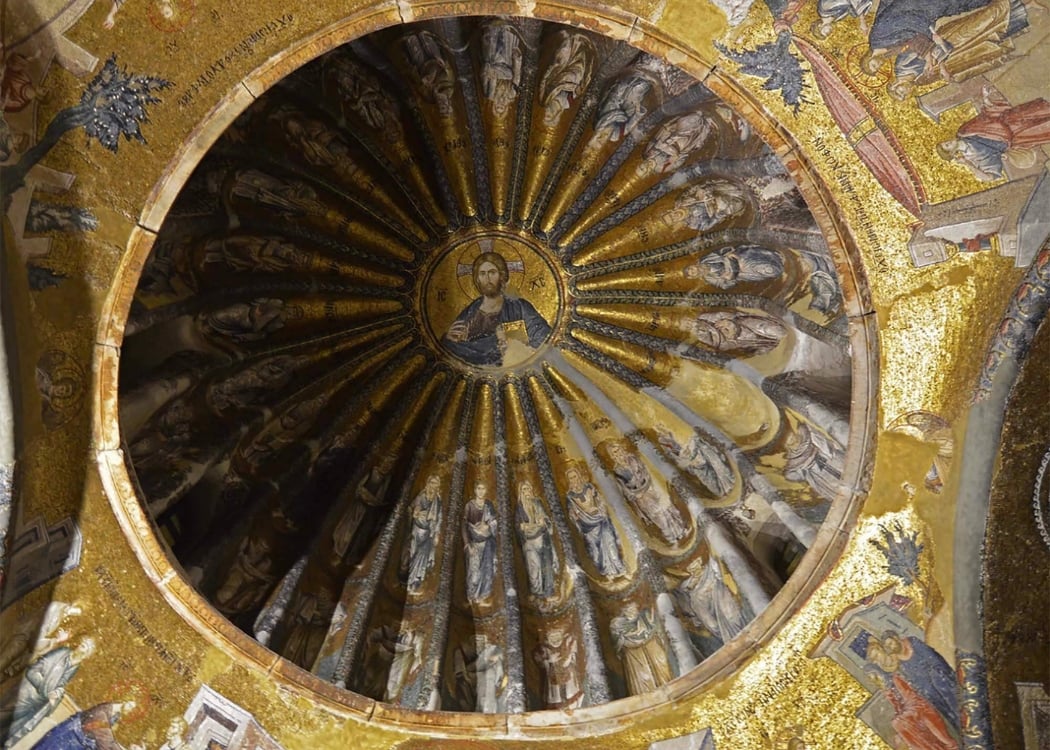
So how does a mosque show Christian art? Practically, and better than the headlines feared. The 2024 arrangement keeps the narthexes and parekklesion open as a visiting route, prayer happens in the naos, and the €20 ticket funds the balance. Consequently, both audiences get the building on their own terms, usually within the same hour. For example, the dome mosaics of Christ's ancestors — the one pictured above — hang exactly where Metochites put them seven centuries ago.
History
Chora History: The Scholar Who Bought Eternity
Chora means "in the country" — the first church here stood outside Constantine's original walls, and the name stuck even after the Theodosian walls swallowed the site. The monks kept it, notably, for its second meaning too: their inscriptions call Christ the Land of the Living. The building you see is mostly 11th to 14th century. Maria Doukaina rebuilt it around 1077, Isaac Komnenos again a century on — and then one extraordinary man transformed it. Theodore Metochites, the empire's chief minister and its leading scholar, poured his fortune into the church between 1316 and 1321, commissioning the mosaics and frescoes that made it immortal. He got five good years to enjoy them before the empire's politics turned on him.
His signature survives above the naos door. The donor mosaic shows Metochites in his enormous striped hat, kneeling, presenting a model of this very church to the enthroned Christ. When politics ruined him in 1328, he returned here as a monk — and in 1332 he was buried in the parekklesion, directly beneath the resurrection frescoes he had paid for. Few patrons in art history chose their exit this well.
The Ottomans converted the church to a mosque in the early 1500s under Grand Vizier Atik Ali Pasha. Plaster went over the art, which — notably — preserved it for the centuries that followed. From 1945 it served as a museum, and American restorers spent a decade uncovering what the plaster had kept. In 2020 a decree returned it to mosque status; consequently, after four more years of restoration, it reopened to both worshippers and visitors on 6 May 2024.
In short, Chora survived by changing owners. Church, mosque, museum, mosque again — and the mosaics outlasted every era that claimed them.
Plan your visit
Visiting Chora: Tickets, Hours & Getting There
Tickets and prices
Foreign visitors pay €20, per the arrangement in place since August 2024 (muze.gen.tr, 2026) — the same two-tier model as Hagia Sophia, just cheaper. Worshippers and Turkish citizens enter free. Museum passes are not valid. An audio guide is available at the entrance. Accordingly, treat the fee as current rather than fixed; Turkish site prices are typically revised each January.
Opening hours
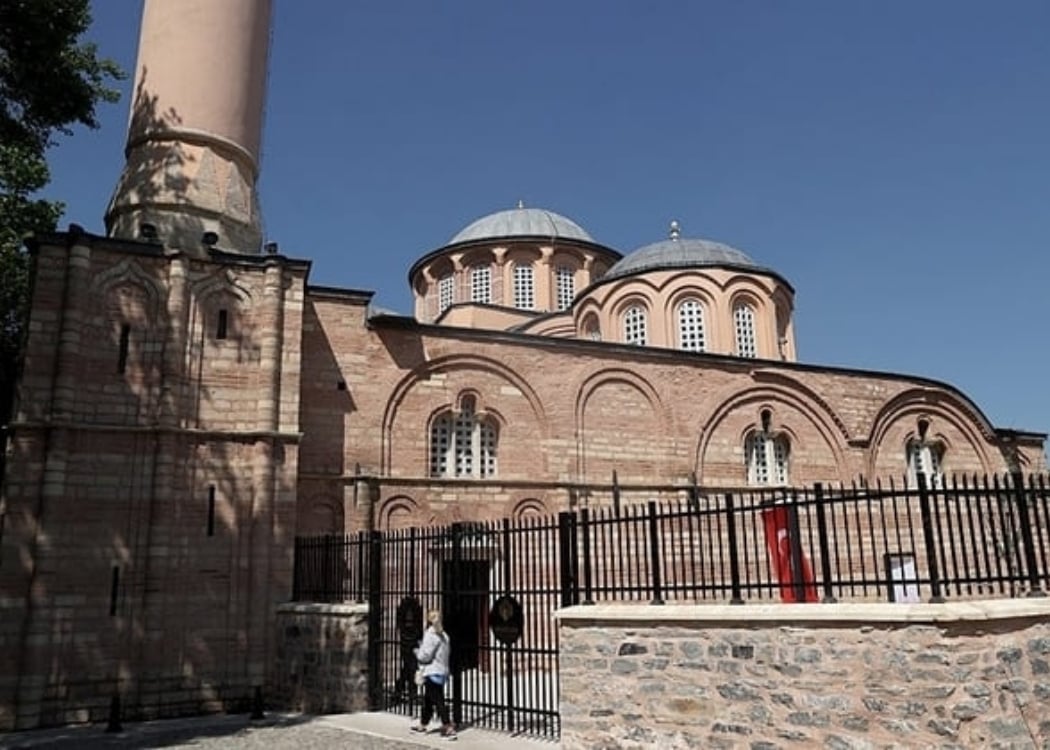
The visiting route runs daily from 9am to 6pm, with the last ticket sold just before closing. On Fridays, however, Chora closes to tourist visits for the whole day — plan around it. In addition, entry pauses about fifteen minutes before each of the five daily prayers, so a short wait is possible at those moments.
How to get there
Chora sits in Edirnekapı, beside the Theodosian land walls, about five kilometers from Sultanahmet. Take the T1 tram to Topkapı, transfer to the T4, and get off at Edirnekapı; the walk from there takes ten to fifteen minutes.
Our team measured door to door from Sultanahmet at just under an hour by tram, or about twenty minutes by taxi outside rush hour. A taxi is the simple option and pairs well with a walk along the walls. Likewise, the Fener-Balat shore below makes a natural same-day companion.
Best time to visit
Weekday mornings are quietest — we found the narthexes nearly empty before 10:30am, and the low sun angles light the gold better than midday. For example, a 9:15am arrival gives you the Anastasis to yourself before the first minibus tours land. On the other hand, avoid planning anything here on a Friday, and check a prayer-times app so the naos is open when you arrive.
Fact-checked against official sources · September 1, 2026 · TURSAB-licensed operator
Tours
Chora Tickets & Tours
The choice here is simple. The skip-the-line ticket handles the €20 entry with the queue friction removed — useful, meanwhile, now that the 2024 reopening put Chora back on the tour circuits. In fact, the strongest way to see it is with context: this is the most story-dense building in Istanbul per square meter, and knowing who Metochites was doubles the visit. If Chora joins a longer Istanbul list, a city pass may bundle your day — check current inclusions. Prices sit on the cards below.


FAQ
Frequently Asked Questions
€20 for foreign visitors, in place since August 2024. Worshippers and Turkish citizens enter free, and museum passes are not valid. Prices at Turkish sites are typically revised each January, so treat the figure as current.
A working mosque since 2020, reopened in May 2024 after restoration — with its Byzantine mosaics and frescoes largely still on view. It was a Byzantine monastery church for centuries, an Ottoman mosque from the early 1500s, and a museum from 1945 to 2020.
Yes — almost all of them. The two narthex mosaic cycles and the entire painted parekklesion, including the famous Anastasis fresco, remain fully visible. Three figural mosaics in the prayer hall are curtained during mosque use.
No — it closes to tourist visits all day on Fridays. Every other day the visiting route runs 9am to 6pm, with short pauses around the five daily prayers.
For anyone who cares about art, emphatically yes. The mosaics outclass anything in the center; likewise, the crowds are a fraction of Hagia Sophia's, and the land walls next door add a second sight for free. Plan half a day with the Fener-Balat neighborhoods below.
The funerary side chapel, painted top to bottom in the 1310s. Its apse fresco — the Anastasis, Christ pulling Adam and Eve from their graves — is widely called the finest surviving Byzantine fresco. Its patron, Theodore Metochites, is buried inside it.
Tram T1 to Topkapı, transfer to T4, off at Edirnekapı, then a ten-to-fifteen-minute walk. A taxi from Sultanahmet takes about twenty minutes outside rush hour. The site sits beside the Theodosian walls in Edirnekapı.
Still have questions?
Our Istanbul travel experts are happy to help.
Nearby