Inside
Taksim & İstiklal: What to See and Do
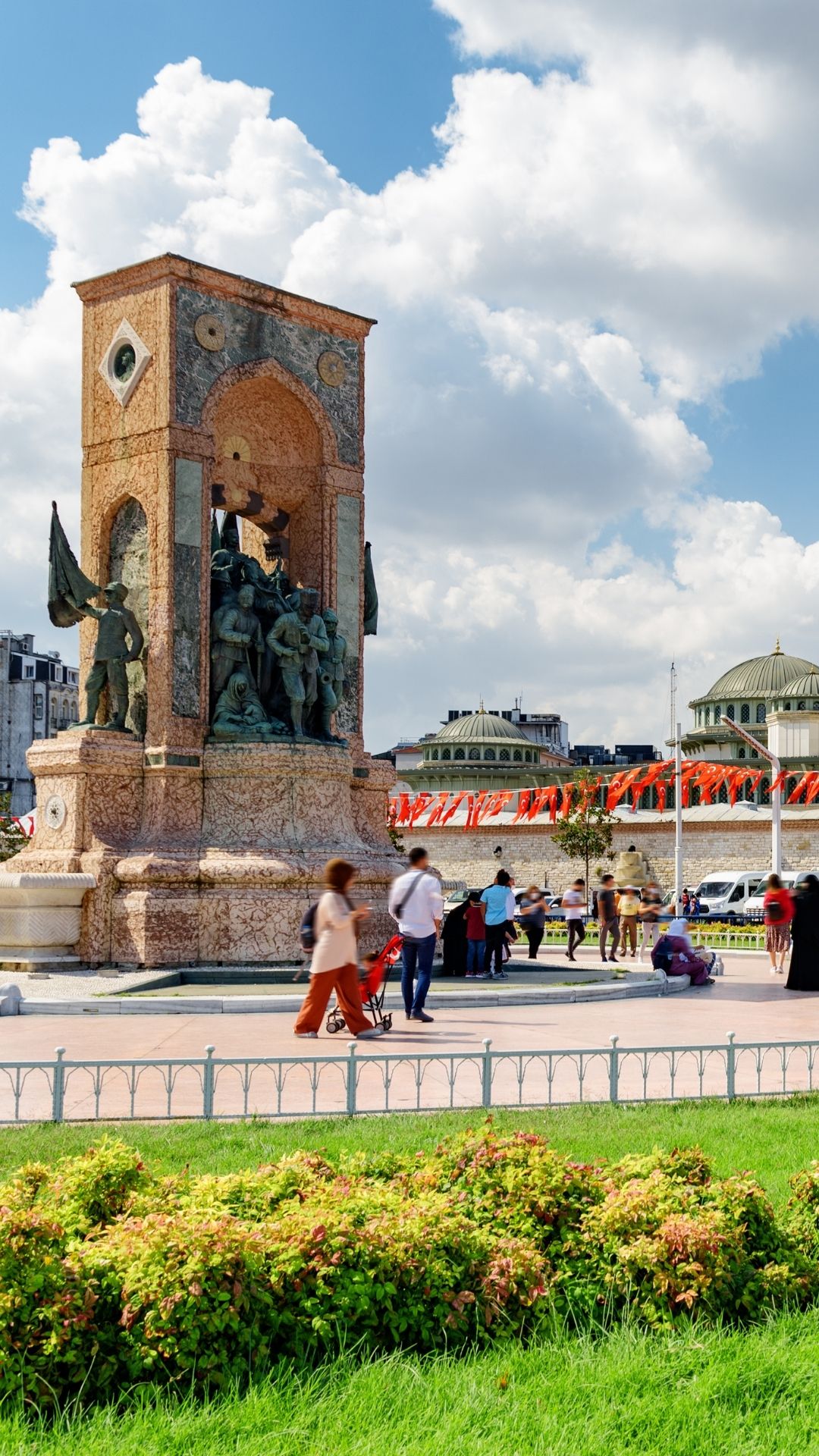
The square itself is a stage set for the city's public life. The Republic Monument — unveiled in 1928, sculpted by Pietro Canonica — anchors the middle. Notably, it shows Atatürk twice: as soldier on one face, statesman on the other. The Taksim Mosque (opened 2021) and the rebuilt Atatürk Cultural Center (AKM, reopened 2021) frame the square's new era. The AKM's opera and ballet season now runs full tilt — for instance, this year's bill pairs La Bohème with Swan Lake — and its ticket desk is worth a look on any evening. Gezi Park, meanwhile, offers the only shade.
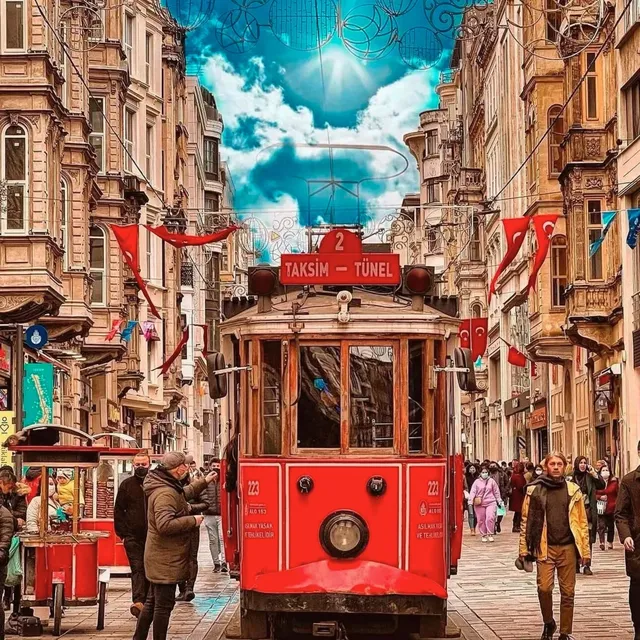
The real attraction leaves from the corner. İstiklal Caddesi is the 1.4-kilometer pedestrian avenue running from Taksim down to Tünel Square, and it is Istanbul's promenade: belle-époque facades, arcades, churches behind courtyards, and the famous red tram threading the crowd. Every fifty meters offers a reason to stop, and as a result no two walks down it are the same. Along the way, Çiçek Pasajı is the flower-passage-turned-meyhane arcade on the site of the old Naum Theatre; similarly atmospheric, the fish market — Balık Pazarı — runs right beside it. In our experience, the avenue rewards slow walking and side-street curiosity far more than any checklist. Duck into any passage that looks half-lit; the best bookshops and record stores hide one floor up.
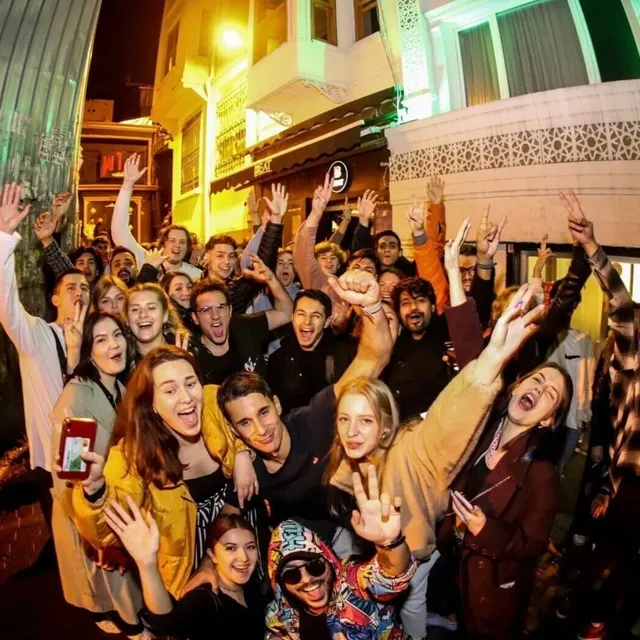
So what should you actually do here? Walk İstiklal end to end, detour into the passages, eat in the fish market, and finish at Tünel — or keep going downhill to Galata Tower. At night, the parallel streets turn into the city's densest run of bars and music venues. Notably, this is the neighborhood where Istanbul stays up latest.
History
Why Is It Called Taksim? The Water Story
The name is plumbing, not poetry. Taksim means "division" or "distribution," and in 1732 Sultan Mahmud I built a maksem here — the stone chamber where the city's northern water supply was divided and sent onward to fountains across the district. The square grew up around the waterworks and kept the name. In other words, Istanbul's most famous square is named after a utility building. History, in fact, rarely gets less romantic or more honest than that.
Here is the part most guides miss: the octagonal maksem still stands at the head of İstiklal Street. It is the only surviving intact maksem in Istanbul, and after an İBB Miras restoration it reopened in June 2024 as the Republic Museum — which means you can now walk into the very building the square is named for.
The square's modern layers came fast. The Republic Monument arrived in 1928, five years into the new state. Subsequently, the 20th century made Taksim the city's rally point, parade ground, and New Year's Eve living room. Consequently, everything here carries a public memory — which is exactly why the square keeps being rebuilt, debated, and loved. Stand by the monument for ten minutes and the whole city walks past you: commuters, brides, protesters, tourists, simit sellers. That mix is the sight, and no ticket anywhere in town buys a better one.
Down the avenue, the past runs deeper. Galatasaray Lisesi at the midpoint traces its origins to 1481, and at İstiklal's far end the Tünel funicular has been hauling people up from Karaköy since 1875 — the world's second-oldest underground urban rail line after London's. One measure of how compact history gets here: tram, Tünel, and a 16th-century mosque share the same hundred meters. The Tünel is that 1875 funicular — 573 meters of tunnel that still runs its two stations like clockwork.
Plan your visit
Visiting Taksim: Getting There, the Tram & Timing
Getting there
Taksim is the best-connected point in the city. The M2 metro serves it directly — Taksim is the busiest station on the entire network — and the F1 funicular hauls you up from the Kabataş tram-and-ferry hub in about two and a half minutes. In addition, airport buses terminate at the square, which makes it many visitors' first sight of the city. Accordingly, almost any Istanbul itinerary passes through here whether it plans to or not.
The red tram
The nostalgic T2 tram trundles İstiklal between Taksim and Tünel, and it is the avenue's moving mascot. The line is currently being converted to battery-powered replica cars, with the overhead cables coming down — so check at the stop, and treat a ride as a bonus rather than a plan. Meanwhile, walking the avenue takes twenty minutes and shows you more.
When to come
Mornings give you İstiklal at its calmest — shutters rising, simit carts out, room to photograph the facades. Evenings bring the crowd and the energy; weekend evenings, for example, bring all of it at once. We found the golden window on weekdays between 9am and 11am; likewise, the best people-watching starts after 7pm. Our team measured the full İstiklal walk, Taksim to Tünel with photo stops, at a relaxed forty minutes. In contrast, midday summer heat turns the treeless avenue into a griddle — that is the hour for the arcades.
Where it leads
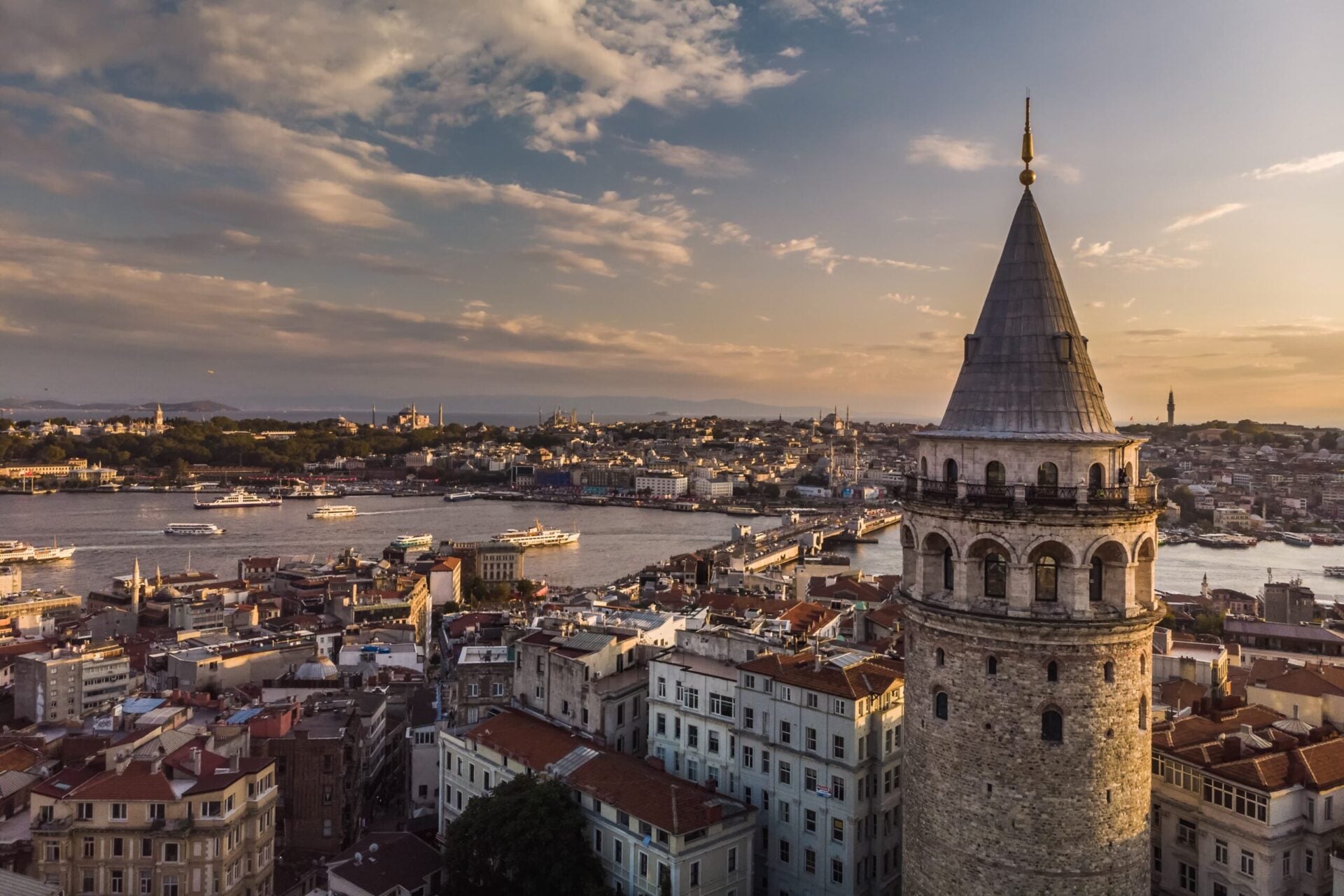
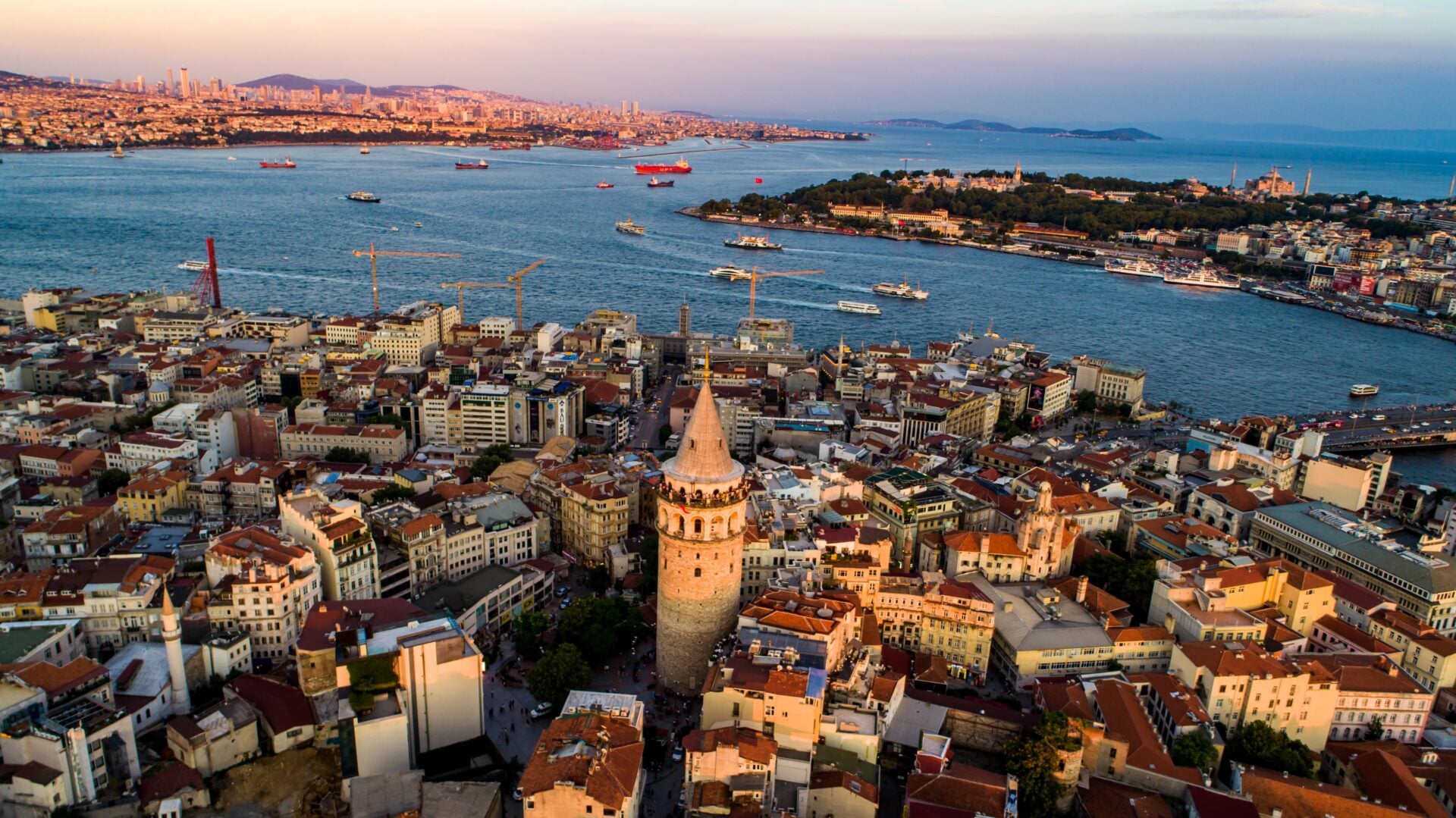
Everything downhill. İstiklal ends at Tünel Square; from there, the Galata lanes drop to the tower, and Karaköy's cafés wait at the bottom. Likewise, Kabataş below the square connects by tram to Sultanahmet and by ferry across the Bosphorus. Taksim is less a destination than a launchpad — plan it as the start of a walking day.
Fact-checked against official sources · September 1, 2026 · TURSAB-licensed operator
Tours
Taksim & Beyoğlu Tours
The square is free and the avenue is the attraction, so what is worth booking? A self-paced audio walk from Taksim through İstiklal to Galata Tower turns the facades into stories — this is the densest stretch of 19th-century Istanbul, and almost none of it is labeled. After dark, a guided pub crawl solves the "which street, which bar" problem in the neighborhood that invented the question. In addition, if your Istanbul plan is pass-based, check what it includes around Beyoğlu. Current prices are on the cards below.



FAQ
Frequently Asked Questions
It is modern Istanbul's central square — home of the Republic Monument, the start of İstiklal Street, and the city's main stage for celebrations and gatherings. For visitors, it is the gateway to Beyoğlu's shopping, food, and nightlife.
Taksim means "distribution": the square is named for the 1732 stone maksem that divided the city's water supply here. The building still stands at the head of İstiklal Street, and since 2024 it houses the Republic Museum.
Completely. The square, İstiklal Street, and the surrounding neighborhoods are public space, open around the clock. You pay only for what you eat, buy, or book.
The nostalgic tram runs between Taksim and Tünel, though the line is being converted to battery-powered cars and service can pause during the works. Check at the stop when you arrive — and remember the walk itself takes only twenty minutes.
Take the F1 funicular down to Kabataş and the T1 tram onward to Sultanahmet — about thirty minutes door to door. The same combination in reverse is the standard old-city-to-Taksim route.
It is one of the city's busiest nightlife districts, lively well past midnight, with a constant police presence around the square. Use ordinary big-city sense on the quieter side streets, and agree on taxi fares or use the app.
İstiklal and its side streets hold Istanbul's densest run of bars, meyhanes, clubs, and live-music venues — Nevizade and the fish-market lanes above Galatasaray are the classic start. The AKM adds opera, ballet, and concerts for a very different evening.
Still have questions?
Our Istanbul travel experts are happy to help.
Nearby