Inside
Inside the Blue Mosque: What You'll Actually See
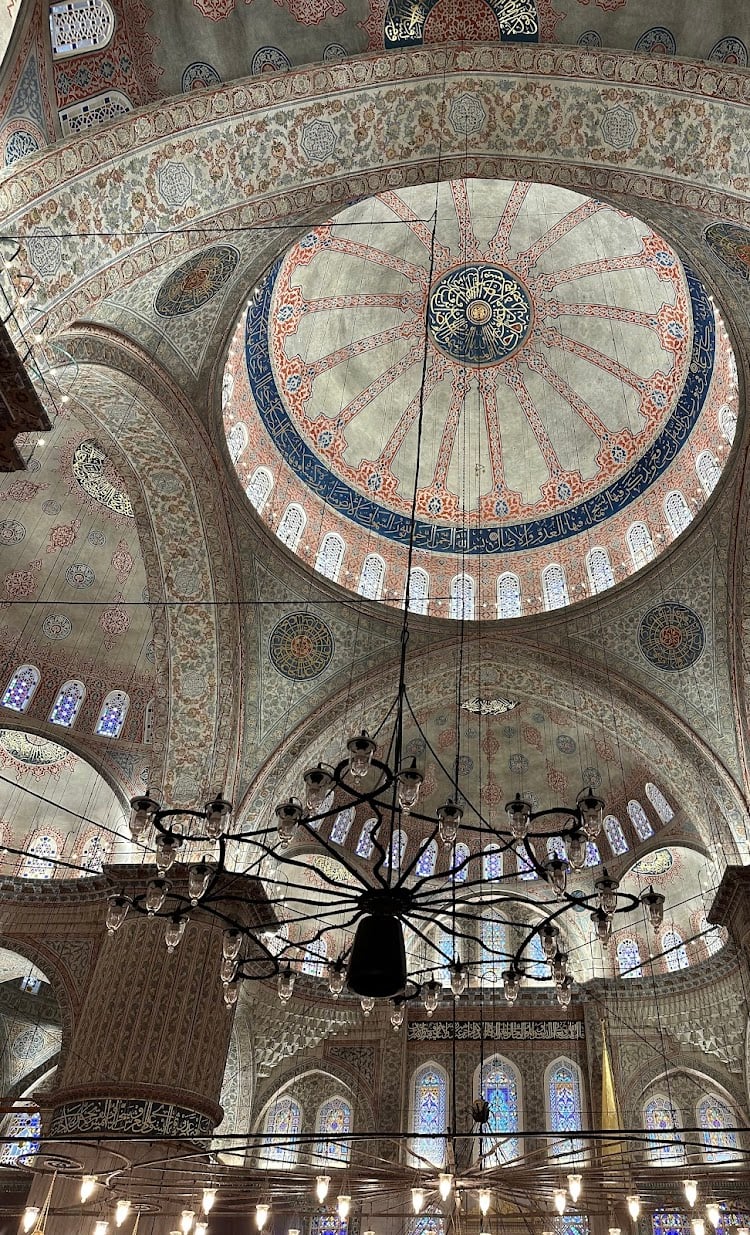
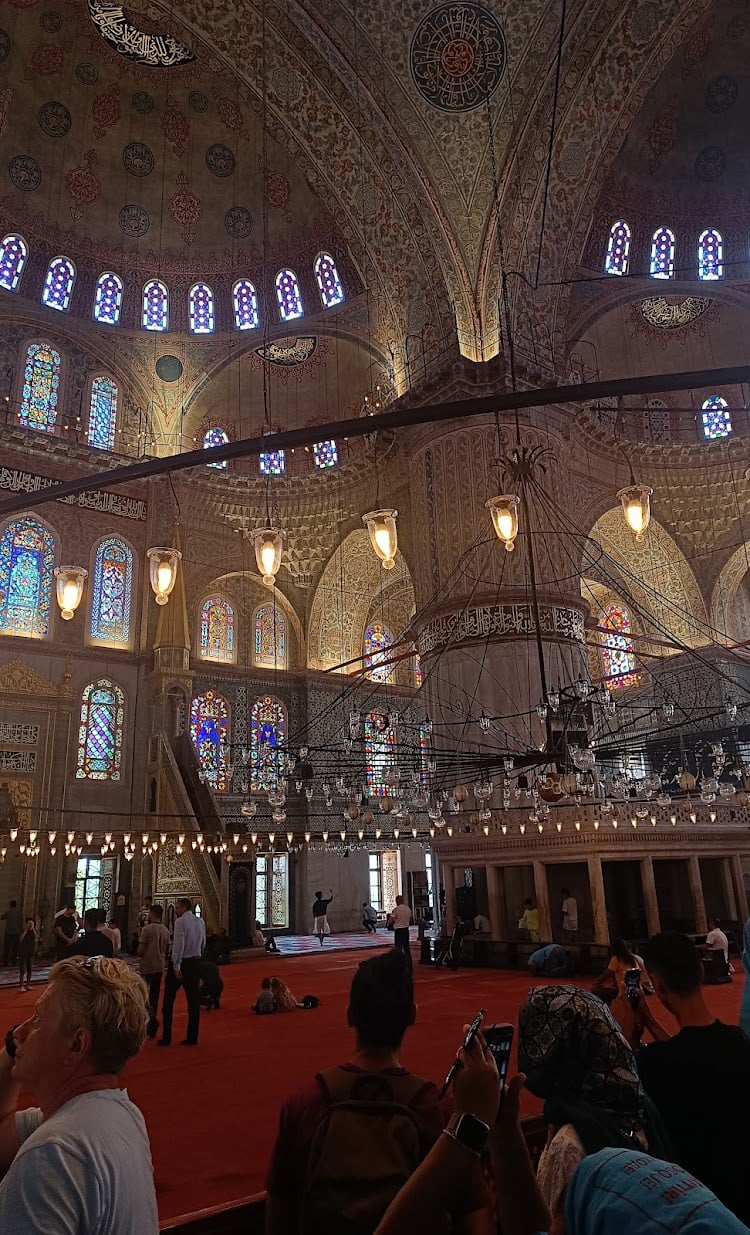
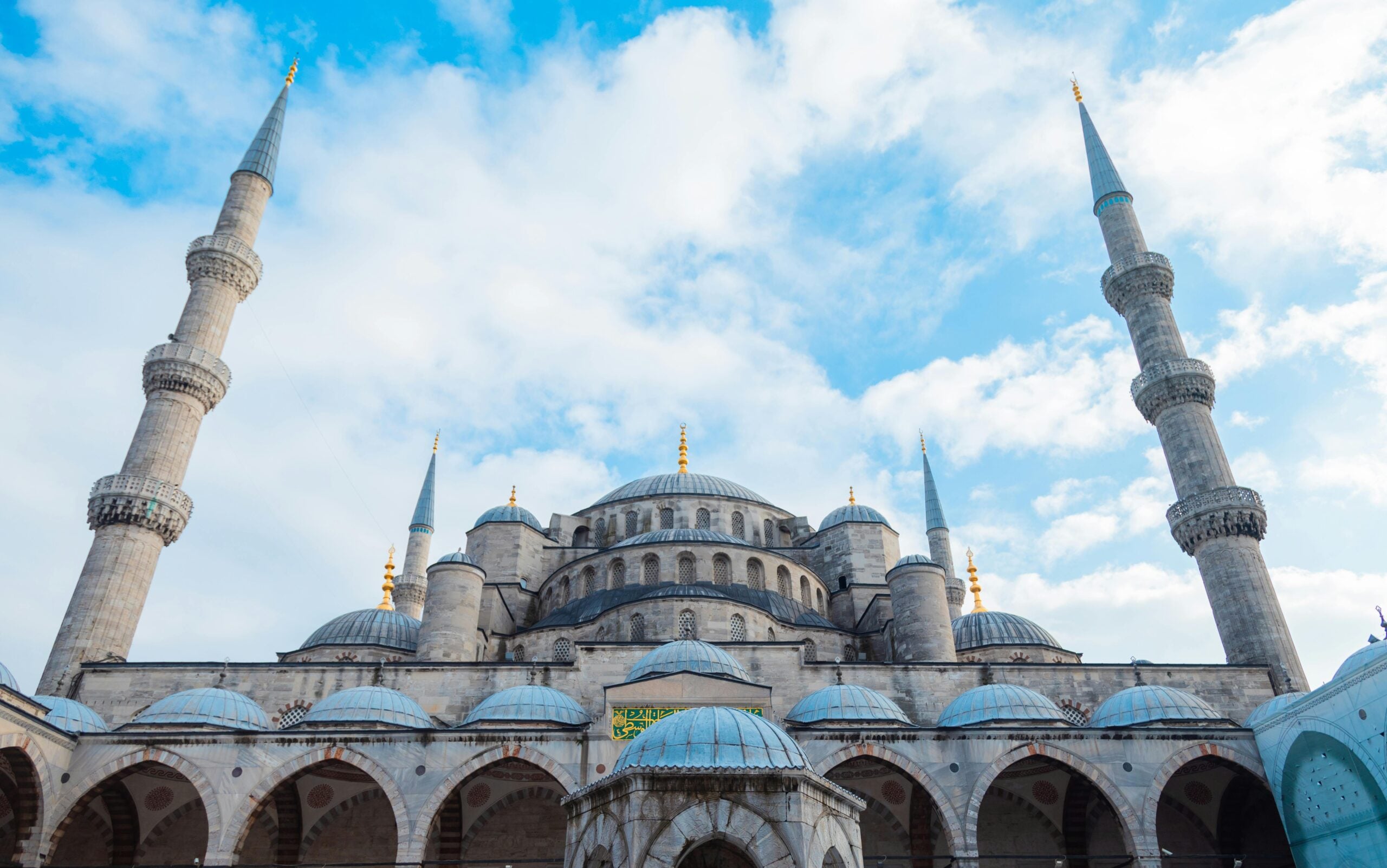
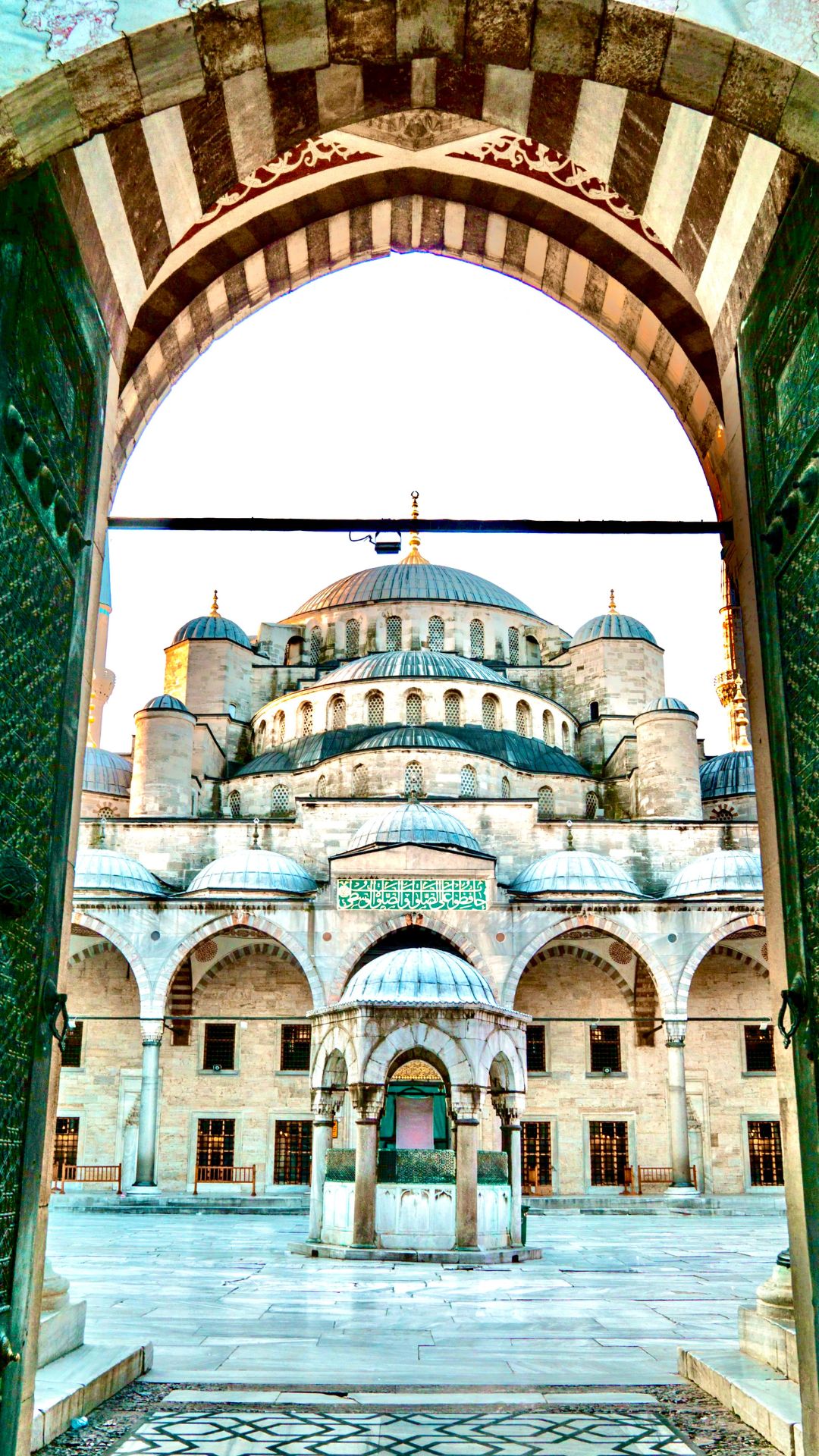
Step through the courtyard gate and the scale hits first. The main dome spans 23.5 meters and rises 43 meters above the floor, carried down through a cascade of semi-domes. The nickname comes from the walls. İznik tiles are hand-painted ceramic panels from the lakeside town of İznik, prized in the 16th and 17th centuries for their cobalt blues. This building holds the largest collection of them ever assembled. In fact, when the mosque reopened in 2023 after restoration, the conservation team recorded exactly 21,043 of them, in more than 50 tulip, carnation, and cypress designs. Notably, most sit high on the galleries and arches, so look up and give your eyes a minute to adjust — the interior is dimmer than photos suggest.
This is not a museum, and that changes how a visit feels. The mosque serves around 10,000 worshippers at capacity by common count, with prayer held five times a day, every day. As a result, you walk a roped visitor route over carpet, shoes in a bag, voices low, while the prayer area stays clear. The carpet runs wall to wall, its pattern laid out in rows that align worshippers toward Mecca. In our experience, it is the living-mosque atmosphere that stays with visitors, not the architecture.
The building reopened in April 2023 after the most comprehensive restoration in its history (Daily Sabah, 2023). In other words, the tilework and paintwork you see now are closer to the 17th-century original than anything a visitor has seen in generations. Together with Hagia Sophia across the square, the mosque anchors the Historic Areas of Istanbul, listed as a UNESCO World Heritage Site in 1985.
History
Blue Mosque History: Who Built It and When
Sultan Ahmed I commissioned the mosque in 1609, when he was still in his late teens. The Ottoman Empire had just signed the Peace of Zsitvatorok with the Habsburgs, a treaty widely read as a blow to Ottoman prestige. The young sultan answered with architecture. Specifically, he ordered an imperial mosque built directly facing Hagia Sophia, on the site of the old Byzantine palace. Construction finished in 1617, though some inscriptions carry 1616.
The architect deserves a page of his own. Sedefkâr refers to a master of mother-of-pearl inlay. Mehmed Ağa spent roughly twenty years in that craft before rising to chief imperial architect in the lineage of Sinan, the empire's greatest builder. Notably, his work here became the subject of the Risale-i Mi'mariyye of 1614 — according to Britannica, essentially the only surviving Ottoman treatise on architecture, written while the mosque was still going up. That pairing of a jeweler's patience with an engineer's ambition explains a lot. The building reads as one sweeping gesture from the square, yet rewards close looking the way inlay work does.
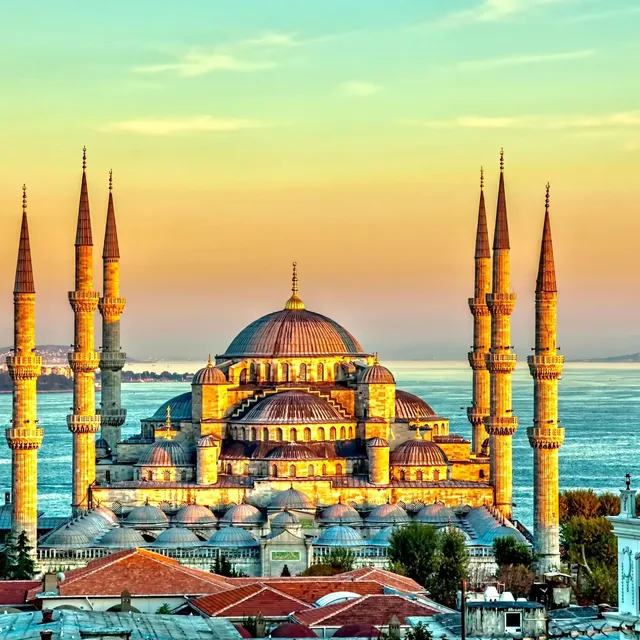
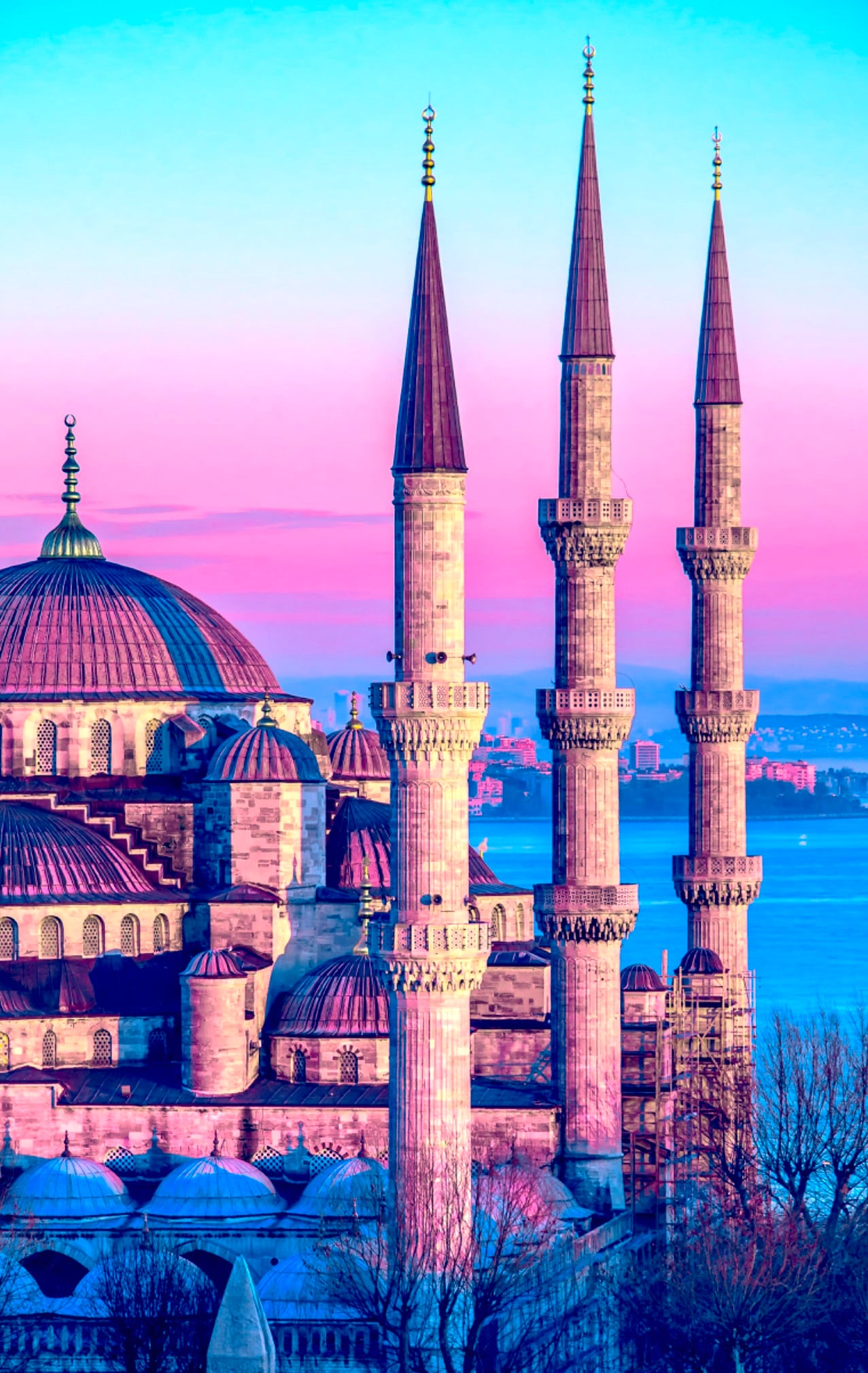
Then there are the six minarets, and a story guides love to tell. At the time, only the mosque in Mecca had six. A popular account says the sultan asked for gold minarets ("altın") and the architect heard six ("altı"). The controversy, the story goes, ended with the sultan funding a seventh minaret at Mecca. We tell the story too — that said, the historical record treats it as legend, not documented fact.
In short, the legend is good storytelling; the documented record is impressive enough. This was the last great imperial mosque of the classical Ottoman style. It has never stopped doing the job Ahmed I built it for: a working house of prayer at the center of the city.
Plan your visit
Visiting the Blue Mosque: Hours, Dress Code & Entry
Opening hours
The Blue Mosque opens to visitors daily from about 8:30am until dusk, except during the five daily prayers. Each prayer closes the mosque to tourists for roughly 60 to 90 minutes, and the exact windows shift through the year with the prayer calendar. Accordingly, check the posted schedule at the entrance or any prayer-times app on the day, and treat any website listing fixed clock times with suspicion.
Prayer times and closures
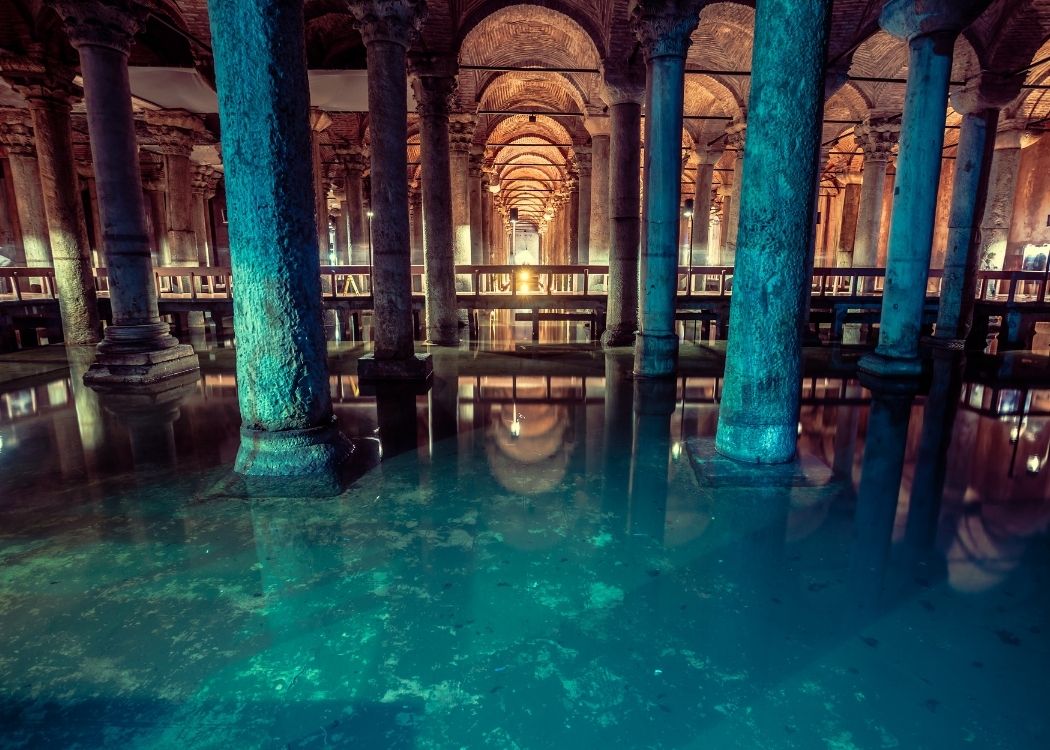
Tourist entry pauses five times a day for prayer. Friday is the big one. Jumu'ah is the Friday midday prayer held in congregation, and the mosque stays closed to visitors through it, typically reopening in the early afternoon. If Friday is your only day in Sultanahmet, plan the mosque for late afternoon. Meanwhile, Hagia Sophia or the Basilica Cistern fill the midday window well.
Dress code
Shoulders and knees must be covered for everyone, and women cover their hair inside. Attendants hand out free headscarves at the entrance if you need one; that said, bringing your own light scarf is more comfortable. Everyone removes their shoes and carries them in a free plastic bag. In short, dress modestly and you will pass the attendants without a second look.
Entrance fee
Entry to the Blue Mosque is free. There is no ticket, and as of 2026 no fee has been introduced for foreign visitors.
In contrast, Hagia Sophia across the square has charged tourists €25 since January 2024. Donations are optional, collected in clearly marked boxes near the exit.
That makes this the only site on Sultanahmet's main axis you can still walk into without paying. No booking app, no timed slot, no queue to pay. The €25 you save is better spent on a guide who can explain what you are looking at. In other words, what visitors pay for at the Blue Mosque is guiding and context, never entry — the tours section below covers what that buys you.
How to get there
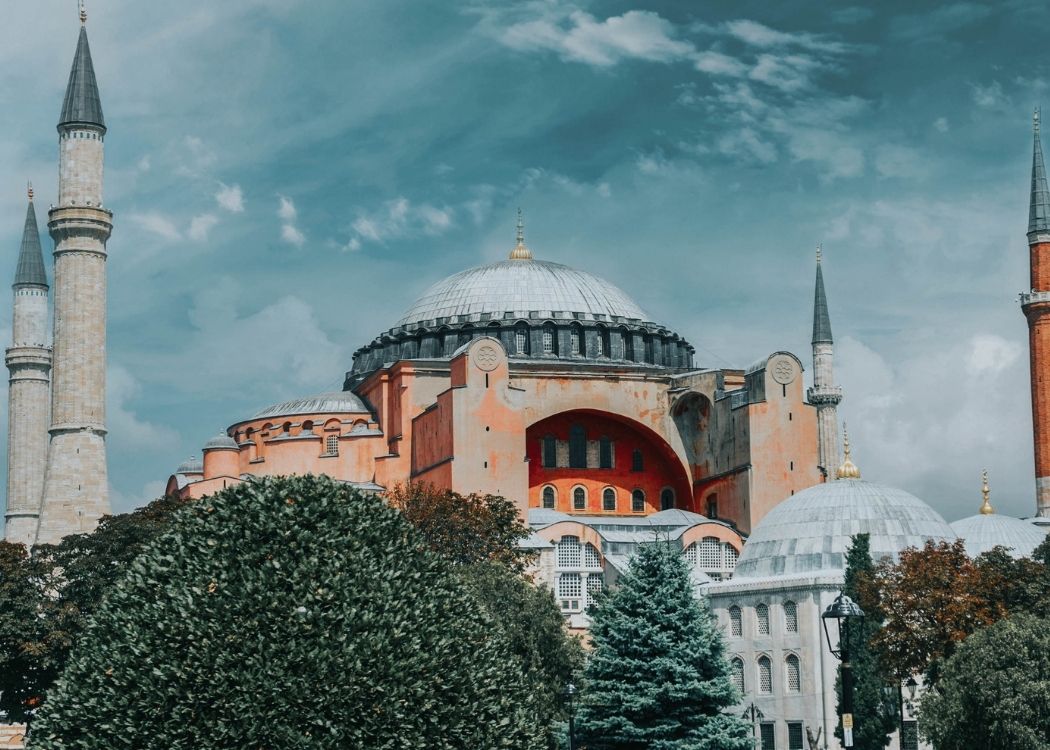
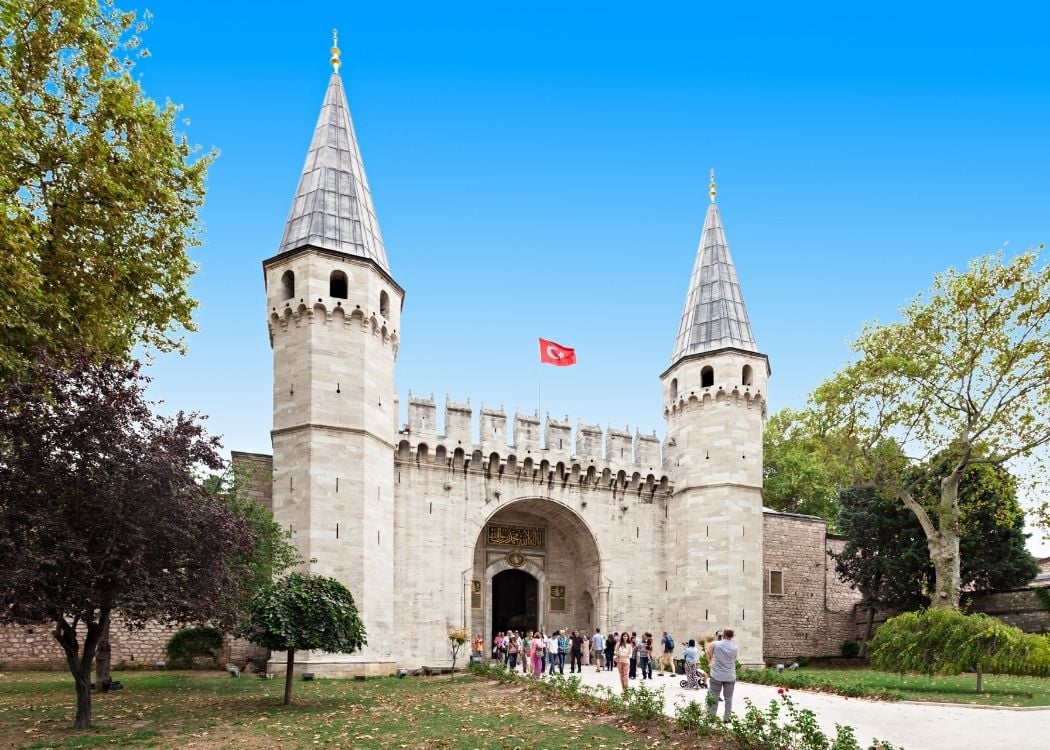
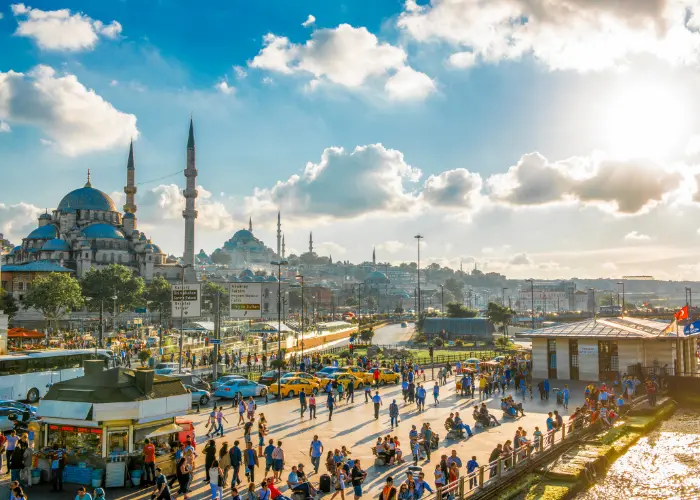
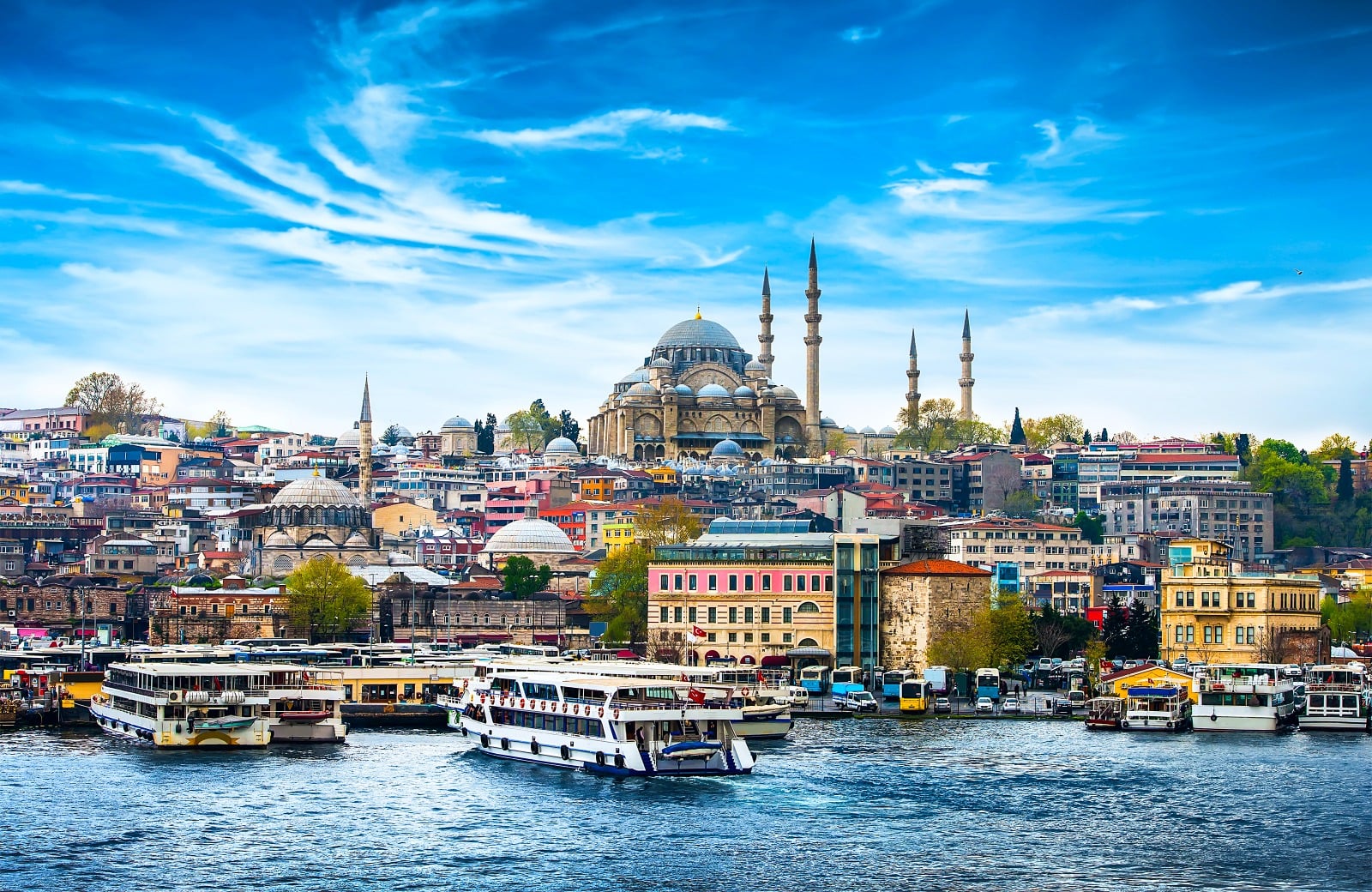
Take the T1 tram to the Sultanahmet stop; our team measured the walk from the tram platform to the mosque gate at three minutes. Coming from the Galata side, the same line runs direct from Karaköy and Eminönü. Hagia Sophia, Topkapı Palace, the Basilica Cistern, and the Grand Bazaar all sit within a 5-to-15-minute walk. For example, you can step out of the mosque, cross the square, and join the Hagia Sophia line in under ten minutes. That is why most people give Sultanahmet a full day.
Best time to visit
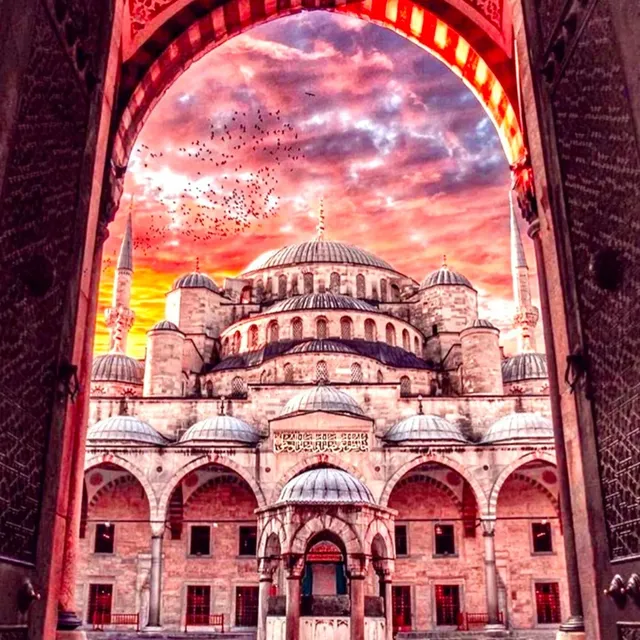
In our experience, the first hour after morning opening, around 8:30am, beats every other window of the day — you share the hall with the fewest people. Late afternoon between prayers is the next-best option. On the other hand, summer middays are the trap: the security line alone can add 30 to 60 minutes. Sunset belongs to the outside of the building — the minarets against the evening sky from the Sultanahmet square benches, with the call to prayer overhead.
Fact-checked against official sources · September 1, 2026 · TURSAB-licensed operator
Tours
Blue Mosque Tours: What's Worth Paying For
One thing the ticket-selling websites blur, stated plainly: the mosque is free, and in fact no tour is required to enter. So what does a good tour add? Everything the bare walls don't tell you — who Ahmed I was, why the tiles came from İznik, and what you are looking at in the mihrab and the sultan's loge. It also plans you around prayer closures, which is where first-time visitors lose the most time.
| Option | What it adds | Best for |
|---|---|---|
| Visit on your own | Nothing to book — walk in free, manage prayer-time logistics yourself | Confident repeat visitors |
| Audio guide | Self-paced commentary on the tiles, dome, and history | Independent first-timers |
| Guided tour | Licensed local guide, timing handled, questions answered | First visit, short on time |
FAQ
Frequently Asked Questions
No. Entry to the Blue Mosque is free for everyone — it is an active mosque, not a ticketed monument. Sites selling "Blue Mosque entry tickets" are in fact selling guided tours or bundles, not entry itself. You only pay if you choose a guide, an audio tour, or a combined sightseeing package.
Because of the tilework: 21,043 hand-painted İznik tiles, most in blue tulip and carnation patterns, cover the interior walls and galleries. The official name is the Sultan Ahmed Mosque (Sultanahmet Camii), after the sultan who commissioned it. The "blue" nickname came from European travelers describing the light inside.
Sultan Ahmed I commissioned it, and the architect Sedefkâr Mehmed Ağa — trained in the lineage of the great Ottoman architect Sinan — built it between 1609 and 1617. It was the last of the great classical imperial mosques of the Ottoman Empire.
Not as a tourist. The mosque closes to visitors for roughly 60 to 90 minutes at each of the five daily prayers. On Fridays it stays closed to tourists through the midday prayer and reopens in the early afternoon. Worshippers, of course, are welcome at all times.
Plan 30 to 45 minutes inside, plus the security line, which can reach 30 to 60 minutes on summer middays. With a guide, expect about an hour. Add the courtyard and the square outside, and Sultanahmet comfortably fills half a day with Hagia Sophia next door.
Cover shoulders and knees; women also cover their hair inside. Free headscarves are available at the entrance, and everyone removes their shoes and carries them in a free bag. In particular, light loose clothing beats layers you have to fight with at the door in summer.
Yes, you can take photos inside, but switch off your flash and avoid photographing people praying — worshippers consider it disrespectful. Similarly, tripods are discouraged. The best light for the tiles comes late morning, when the sun reaches the upper windows.
Yes, the main visitor entrance and prayer-hall level are accessible, with ramps at the tourist entrance. Likewise, the carpeted interior is level throughout the visitor route. The historic courtyard has some thresholds, so an assistant helps for the fastest route in.
Still have questions?
Our Istanbul travel experts are happy to help.
Nearby