Inside
Inside the Museums: Sarcophagi, Empires & a Million Objects
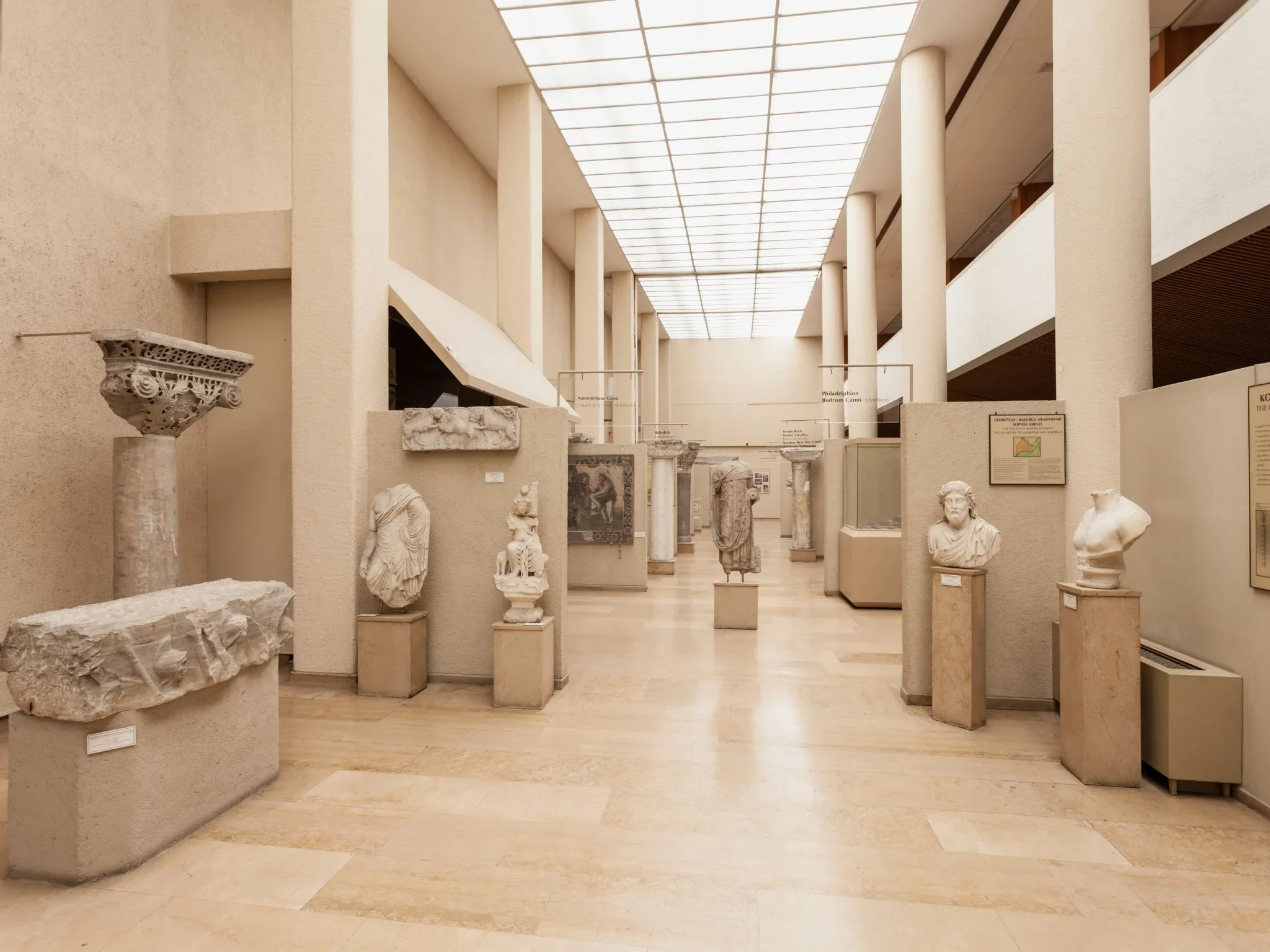
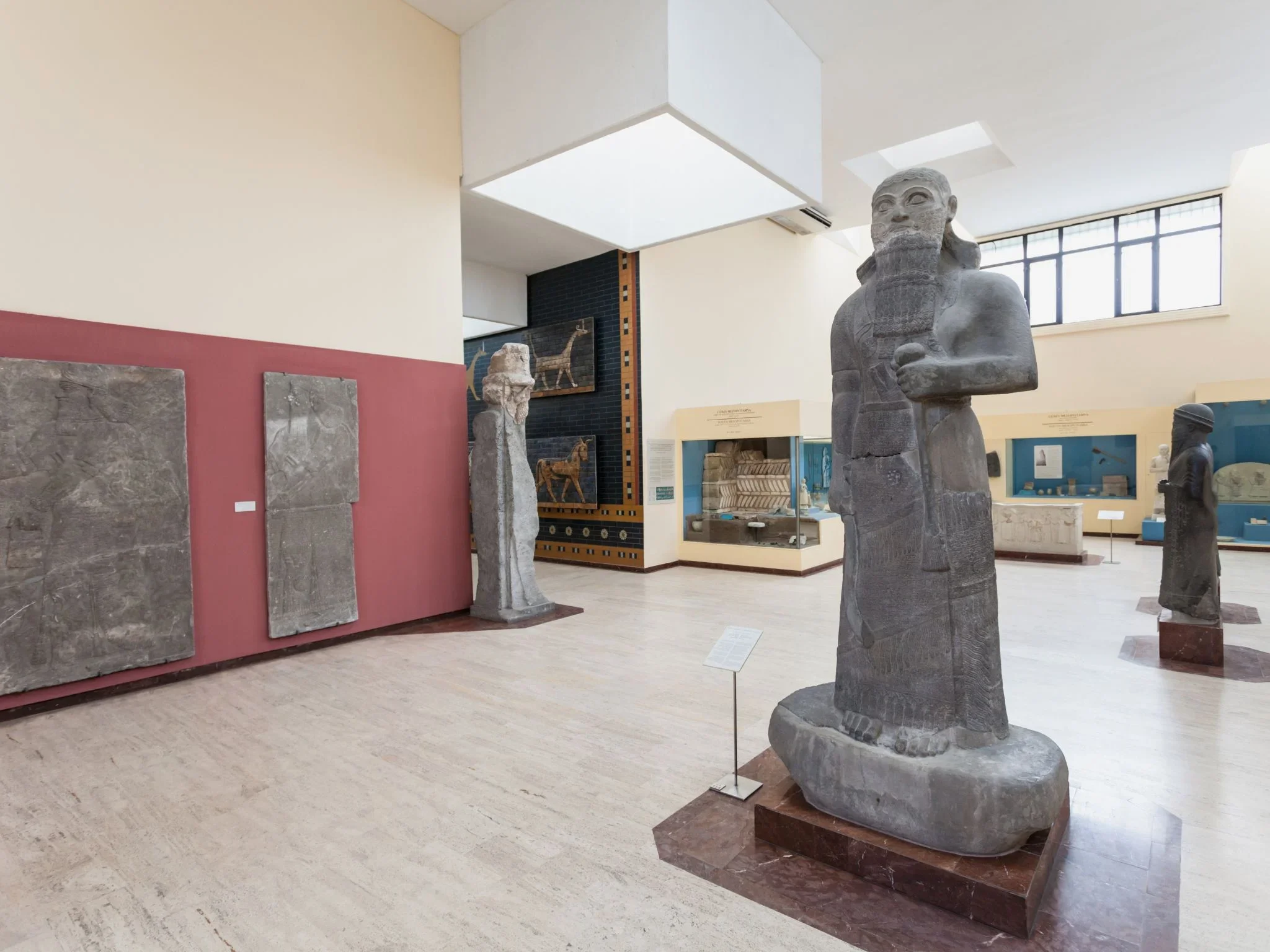
The Istanbul Archaeology Museums are a three-museum complex on the slope between Topkapı Palace and Gülhane Park. The plural matters. The main neoclassical building holds the sarcophagi and the classical world. The Tiled Kiosk of 1472, meanwhile, covers Islamic ceramics. The Museum of the Ancient Orient, in addition, holds the Mesopotamian collections. One honest caveat for 2026: the Ancient Orient building and the Tiled Kiosk are closed for restoration. Plan around the main building — which is, in fact, where the masterpieces live. The main halls reopened in phases after a long renovation. They now show the collection with the modern lighting it waited a century for. The result surprises people. In a city of loud, queued monuments, this is a calm, world-ranked museum that most itineraries skip. That is the whole pitch, and it holds up room after room.
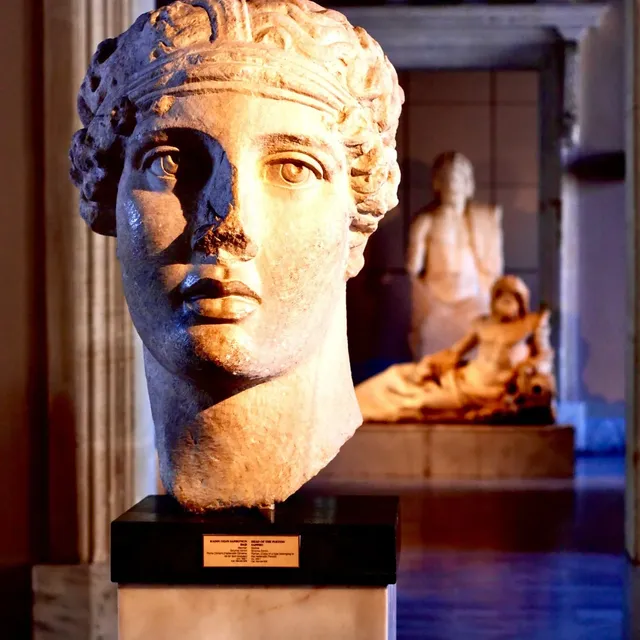
The star is a coffin. The Alexander Sarcophagus is a fourth-century-BC marble tomb carved with battle scenes so crisp the horses still strain. It was found at Sidon, in modern Lebanon. It is named, in fact, for the figure of Alexander the Great fighting on its side. Notably, it is not Alexander's own tomb — scholars generally assign it to Abdalonymus, the king Alexander installed at Sidon. The carving, notably, keeps traces of its original paint. No photograph does the detail justice. In our experience, visitors plan five minutes with it and stay twenty-five. The surrounding finds from the Sidon royal necropolis — an entire buried cemetery of kings, excavated in 1887 — fill the hall like a supporting cast. Walk the hall clockwise. The sarcophagi build in quality as you go, and the Alexander lands last, exactly as the curators intend.
What else earns the time? For example, the statue galleries run from archaic Greece to imperial Rome without a weak room. Meanwhile, the smaller cases hide the famous documents. The tablet collection includes pieces tied to the Treaty of Kadesh — history's earliest surviving peace treaty. With the Ancient Orient building under restoration, its display spot may change; ask at the desk. In short, this is a world-class museum priced and crowded like a local one.
History
Osman Hamdi Bey & the Museum That Fought Back
The museums exist because one man got angry. Throughout the nineteenth century, Western expeditions shipped the Ottoman world's antiquities to London, Paris, and Berlin — legally, under permissive rules. Osman Hamdi Bey was the painter, archaeologist, and administrator who took over the imperial collections in 1881. He decided the empire would keep its own past. Consequently, he tightened the antiquities laws. Subsequently, he dug Sidon himself in 1887. He brought its royal sarcophagi home to Istanbul rather than watching them sail west. He was also, likewise, Turkey's most famous painter — his best-known canvas hangs in a museum he helped make possible. Few institutions anywhere owe this much to a single career, and the museum has, accordingly, kept his name on its street: Osman Hamdi Bey Yokuşu, the lane you climb to reach the gate.
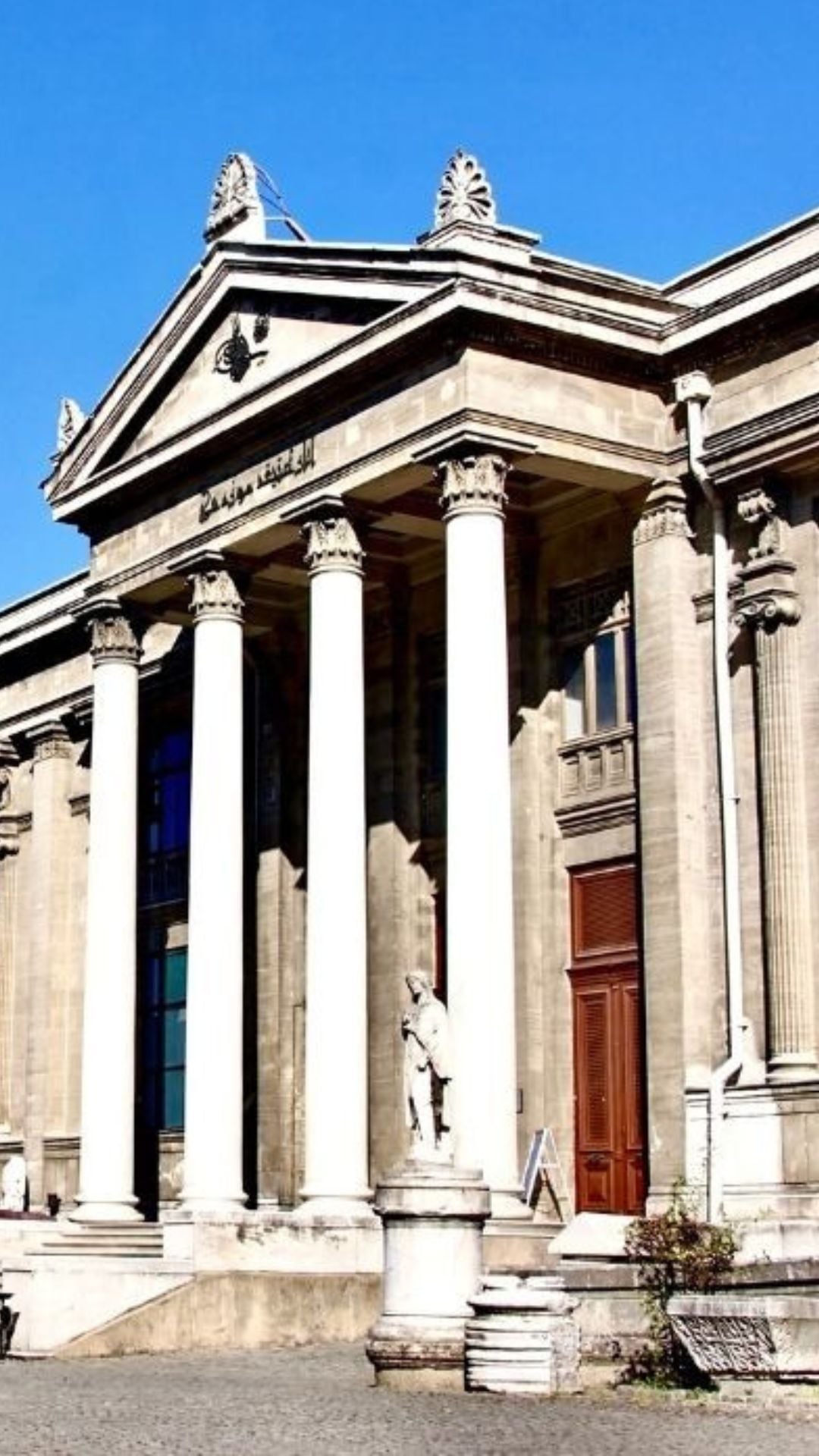
The collection began as the Müze-i Hümayun — the Imperial Museum — founded in 1869. Its purpose-built home opened on 13 June 1891, designed by Alexandre Vallaury. For instance, look at the facade before you enter: its columned front deliberately echoes the two most famous sarcophagi inside, the Alexander and the Mourning Women. The building is, likewise, a portrait of its own collection — architecture quoting the treasures it was built to protect.
The institution grew into one of the world's great archaeology museums. Its collections are customarily counted around a million objects (Wikipedia, 2026). Subsequently, the twentieth century joined the neighboring buildings into a single complex. The recent renovation carried the 1891 halls up to modern museum standards. In other words, the museum Osman Hamdi built to stop history leaving Istanbul now shows more of it, better, than ever.
Plan your visit
Visiting the Archaeology Museums: Tickets & Timing
Tickets and prices
Entry costs €15 for foreign visitors, with children under 12 free, per the official museum portal. Museum Pass İstanbul is valid. Additionally, since the museum sits next to Topkapı, the pass math often works out if you do both. Buy at the gate or online. There is rarely a line at either. Turkey's official Culture Portal lists the complex among the city's essential museums.
Opening hours
The museums open daily from 9am to 6:30pm. There is, in contrast, no weekly closing day — unusual among Istanbul's state museums. Accordingly, this is the old city's best Monday plan, when several neighbors shut.
How to get there
Take the T1 tram to Gülhane or Sultanahmet. The museum entrance sits on the lane climbing from Gülhane Park toward Topkapı. It is a two-minute walk from the park gate. In addition, you can enter directly from Topkapı's first courtyard. That said, most people come the park way — the lane itself is a pleasant climb.
Best time to visit
Weekday mornings are quiet. In contrast to the palace next door, so is nearly every hour — the museum absorbs its visitors easily. We found rainy days the perfect slot. Specifically, the halls stay calm and dry while the palace courtyards empty out. Our team measured the main building at ninety minutes of unhurried viewing. The Alexander Sarcophagus claimed a disproportionate share of it.
Fact-checked against official sources · August 5, 2026 · TURSAB-licensed operator
Tours
Archaeology Museum Tickets & Passes
The entry ticket below covers the complex. Does a pass make sense? If your Istanbul list runs museum-heavy — Topkapı, Galata Tower, the archaeology halls — the Museum Pass İstanbul usually pays for itself by the third door. Likewise, city passes bundle wider itineraries. Check current inclusions on the cards, where the prices live.


FAQ
Frequently Asked Questions
€15 for foreign visitors as of 2026, with children under 12 free. Museum Pass İstanbul is accepted. Check muze.gen.tr for the current tariff.
Yes — 9am to 6:30pm daily, with no weekly closing day. That makes it a reliable Monday option when several nearby museums close.
A fourth-century-BC marble sarcophagus from the royal necropolis of Sidon, carved with vivid battle and hunt scenes featuring Alexander the Great. It is named for its imagery, not its occupant — scholars generally attribute it to Abdalonymus, the king of Sidon. It is the museum's undisputed masterpiece.
Not currently. The main building's halls are open, but the Museum of the Ancient Orient and the Tiled Kiosk are under restoration in 2026. The headline pieces, including the Sidon sarcophagi, are in the main building.
Ninety minutes to two hours covers the main building comfortably. Combined with Topkapı Palace next door, the pair fills a full old-city day.
On Osman Hamdi Bey Yokuşu, the lane between Gülhane Park and Topkapı Palace's first courtyard. T1 tram stops Gülhane and Sultanahmet are both a short walk.
Still have questions?
Our Istanbul travel experts are happy to help.
Nearby