Inside
Inside Hagia Irene: The Emptiness Is the Exhibit
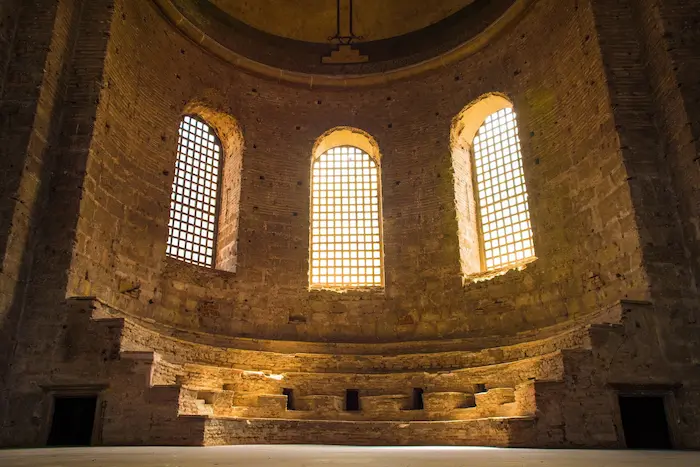
Hagia Irene (Aya İrini) is the church of Holy Peace, and its interior delivers exactly that. Step in and there is almost nothing. No gilded mosaics, no marble sheathing, no imperial portraits. Bare brick climbs to a high dome. Light drops through the windows in visible shafts, and the space simply breathes. Why does that work so well? Because every other Byzantine interior in Istanbul is layered with later centuries. Here, in contrast, the architecture stands alone, and you finally see what the builders saw: pure structure, pure light. Give your eyes a minute to adjust and the room starts working on you. The scale grows. The brick warms. Visitors who race through Topkapı's treasuries, in our experience, stand still here without being told to — the building does its own crowd control.
The details reward a slow lap. In the apse glows the building's one great mosaic: a plain black cross on gold, installed during the Iconoclast period, when images of holy figures were banned (Wikipedia, 2026). It is, notably, one of the very few surviving decorations of that image-smashing era — a mosaic about the absence of mosaics. Below the dome sits the synthronon, the stepped clergy seating that wraps the apse like a small stadium. It survives nowhere else in the city on this scale. In addition, the courtyard in front of the church is a genuine rarity. Hagia Irene is the only Byzantine church anywhere whose original atrium still stands.
The acoustics wrote the modern chapter. The bare brick gives the nave a long, warm echo. Consequently, Hagia Irene has served for decades as a concert hall — it is, in fact, a principal venue of the Istanbul Music Festival, which in 2026 runs 11–25 June. In our experience a rehearsal drifting through the courtyard is the best free concert in the old city. Check the festival calendar if your dates align. Hearing this room is a different way of seeing it.
History
Hagia Irene History: Older Than Its Famous Neighbor
The site is the oldest consecrated ground in Christian Constantinople. A church of Holy Peace stood here from the 330s, in Constantine's own era. It served as the city's cathedral before Hagia Sophia's predecessor rose next door. For example, the First Council of Constantinople — one of the councils that shaped Christian doctrine — met in this church's earlier building in 381. The Nika riots of 532 burned it along with half the city. Justinian rebuilt it, and an earthquake in 740 forced the reconstruction that gave the church its current dome (Wikipedia, 2026). In short, the building you enter is a 6th-century body with an 8th-century crown. Turkey's official Culture Portal counts it among the old city's essential Byzantine monuments — the quiet one on a list of loud ones.
Then came the conquest, and the great exception. In 1453 the Ottomans converted the city's churches to mosques one by one — but Hagia Irene, enclosed inside the new palace's first courtyard, was never converted. The Janissaries took it as their armory instead. The Cebehane, as the arsenal was known, filled the nave with weapons rather than worshippers — and that mundane use, subsequently, preserved the Byzantine shell untouched while its converted siblings gained mihrabs and whitewash.
The armory years led somewhere unexpected: museums. Collections of antiquities and military relics accumulated here through the 19th century. An organized display opened in 1846, and the church housed the Imperial Museum — the Müze-i Hümayun — from 1869, before the collections moved to their purpose-built home nearby. In other words, Turkish museology was born inside this church. Accordingly, the Istanbul Archaeology Museum next door is Hagia Irene's institutional child. What should you take from all this before visiting? One idea: this is the only building in Istanbul that has been a cathedral, an arsenal, a museum, and a concert hall — and it wears all four lightly.
Plan your visit
Visiting Hagia Irene: Tickets, Hours & Strategy
Tickets and prices
Standalone entry runs around 1,050 TL per the official museum portal (muze.gen.tr, 2026). A combined Topkapı Palace ticket — around 2,750 TL — covers the palace, the harem, and Hagia Irene together. Since the church stands inside the palace's first courtyard, the combined route is the natural buy for most visitors. Museum Pass İstanbul, likewise, covers it; check current terms.
Opening hours
Open 9am to 6pm, closed on Tuesdays. Note that this differs from Topkapı's own closing day — accordingly, double-check the pairing on the day you plan. Last entry falls before closing. Likewise, give the interior at least half an hour.
How to get there
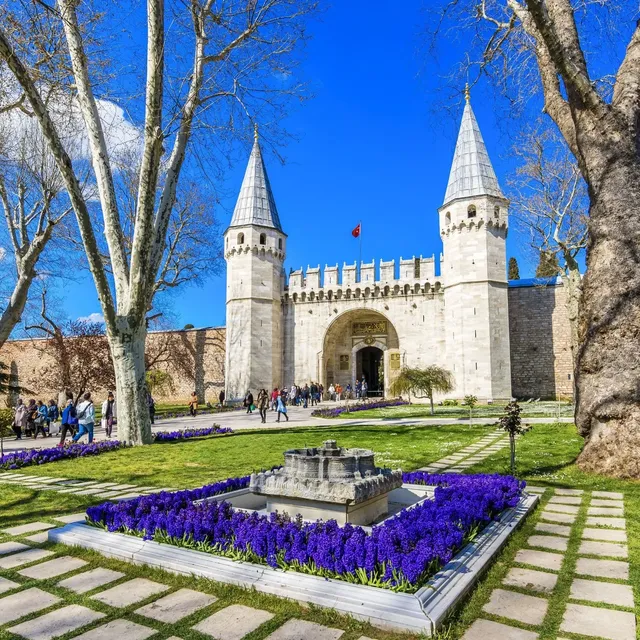
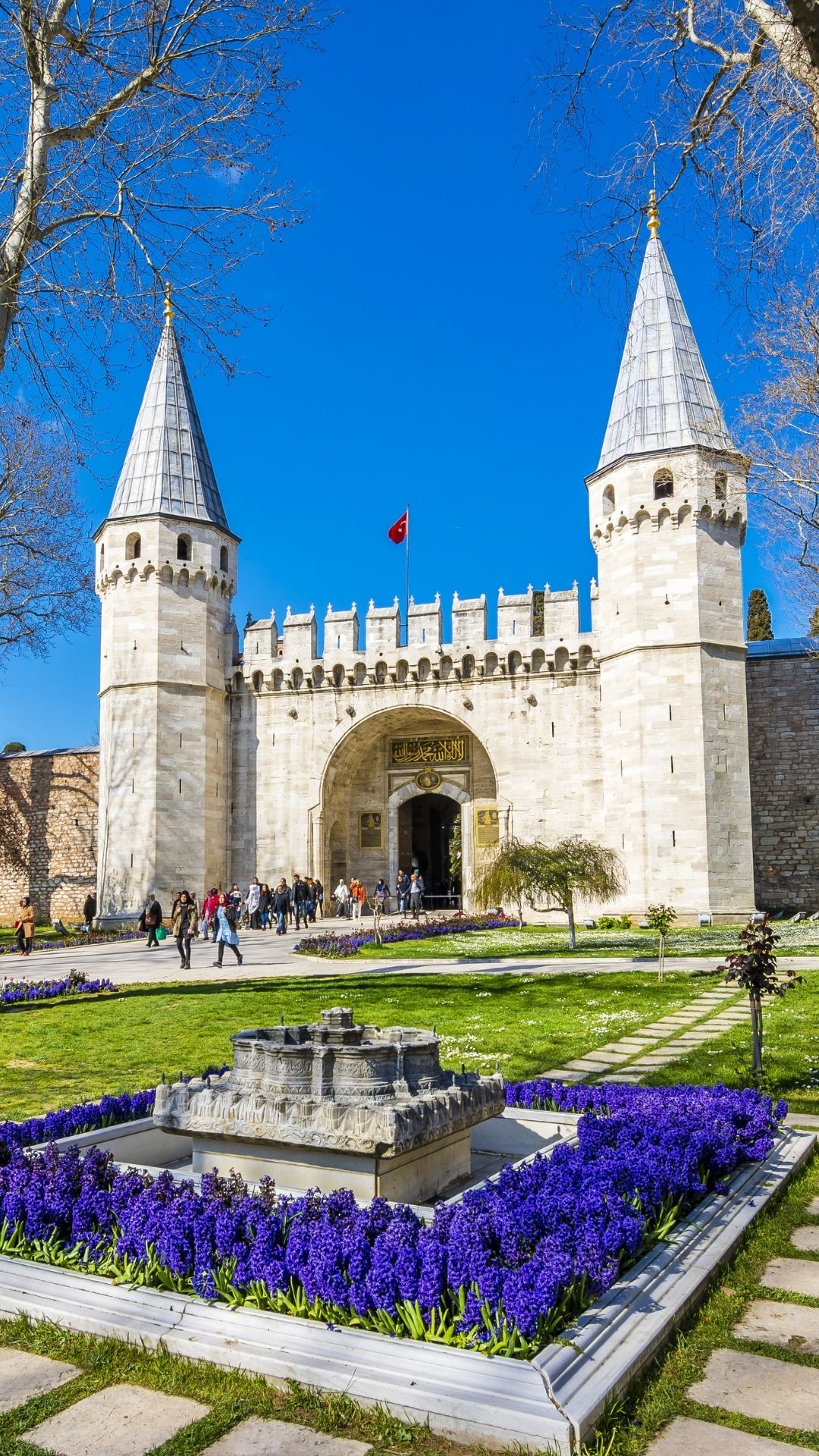
Take the T1 tram to Sultanahmet or Gülhane. Walk into Topkapı's first courtyard through the Imperial Gate behind Hagia Sophia. The church stands on the courtyard's left side, before the ticketed palace gate. Meanwhile, the Archaeology Museum's lane branches off the same courtyard — similarly close, so the three sites form one uphill campus.
Best time to visit
Morning, paired with Topkapı before the palace crowds thicken. We found the light best before noon, when the high southern windows throw their shafts across the nave. Our team measured the visit at thirty-five unhurried minutes — and in festival season, in fact, an evening concert ticket turns the church into the rarest venue in Istanbul.
Fact-checked against official sources · August 5, 2026 · TURSAB-licensed operator
Tours
Hagia Irene Tickets & Passes
The combined Topkapı ticket below is the practical route into Hagia Irene — one purchase covers palace, harem, and church. If your itinerary runs museum-heavy, the Museum Pass İstanbul bundles the same campus with the city's other state museums. A city pass, in addition, may suit wider plans. Prices sit on the cards.


FAQ
Frequently Asked Questions
Around 1,050 TL standalone as of 2026, or included in the combined Topkapı Palace ticket (~2,750 TL) covering palace, harem, and church. Museum Pass İstanbul is also valid. Check muze.gen.tr for current tariffs.
No — it closes on Tuesdays. Otherwise it opens 9am to 6pm. Note the closing day differs from some neighboring sites, so check before pairing visits.
No — it is the great exception among Istanbul's Byzantine churches. Enclosed in Topkapı's first courtyard after 1453, it served as the Janissaries' armory (Cebehane) instead, which preserved its bare Byzantine interior.
The site is — a church of Holy Peace stood here from the 330s, serving as the city's cathedral before Hagia Sophia existed. The current building is Justinian's post-532 reconstruction, with a dome rebuilt after the earthquake of 740.
An almost bare Byzantine interior: brick walls, a high dome, the city's best-preserved synthronon, and the famous Iconoclast-era mosaic — a plain cross on gold in the apse. The emptiness is the point; no other church in Istanbul shows its architecture this clearly.
Its bare brick interior produces a long, warm reverberation prized by musicians. It is a principal venue of the Istanbul Music Festival, which runs 11–25 June in 2026.
Still have questions?
Our Istanbul travel experts are happy to help.
Nearby