Your Guide to the Grand Bazaar
History of the Grand Bazaar
From an Ottoman bedesten to one of the world's largest historic covered markets, the Grand Bazaar has survived major fires, earthquakes, restorations, and centuries of commercial change.
Following the Ottoman conquest of Constantinople, Sultan Mehmed II commissioned a bedesten to support trade and generate income for the city. This vaulted commercial building became the historic nucleus around which the wider bazaar gradually developed. The Sandal Bedesten was added as the complex expanded and became associated particularly with textile trading.
During the reign of Suleiman the Magnificent and in later Ottoman periods, shops, hans, workshops, and covered streets developed around the original bedestens. Trades became associated with particular streets and areas, many of whose names still reflect their former commercial functions. Over time, the complex took on much of the interconnected form seen today.
Following major fire damage, the bazaar undergoes rebuilding and structural changes. Official cultural sources identify this period as an important stage in the development of the complex's later form. This cycle of destruction and renewal becomes a recurring theme in the bazaar's history.
The 1766 Istanbul earthquake damages parts of the Grand Bazaar, leading to further repair and reconstruction work during the Ottoman period.
The 1894 Istanbul earthquake causes extensive damage to the Grand Bazaar. A major restoration lasting approximately four years is carried out during the reign of Sultan Abdulhamid II, and the complex takes on much of its present architectural form.
A major fire in 1954 damages part of the Grand Bazaar, leading to extensive repair and restoration work during the Republican period.
Today, the Grand Bazaar remains an active commercial complex with thousands of shops, workshops, financial businesses, cafés, and other services spread across its covered streets, bedestens, and hans. Official and institutional sources use different boundaries and therefore provide different totals for its shops and streets. Restoration and management projects continue to address the preservation and operation of the historic complex.
What to Buy at the Grand Bazaar
From heirloom carpets to five-dollar souvenirs, these are the eight purchases the Grand Bazaar is most famous for — along with what to look for and what to avoid.
Turkish Carpets & Kilims
The bazaar's carpet shops are legendary. Handwoven Anatolian carpets are made from wool, silk, or a combination and can range from small prayer rugs to room-sized statement pieces. Kilims — flat-weave rugs without a pile — tend to be lighter, more affordable, and equally beautiful. When shopping, examine the knot density on the reverse side: finer carpets have smaller, tighter knots. Silk carpets shimmer when viewed from different angles. Ask for written information about the carpet's materials, origin, age, weaving technique, dimensions, and seller's return or shipping terms. Do not perform moisture or rubbing tests on merchandise without the seller's permission.
💰 €50–€10,000+
📍 Zincirli Han, Halicilar Caddesi

Handmade Ceramics & İznik Tiles
Historic Iznik ceramics are known for a quartz-rich body and characteristic combinations of blue, turquoise, green, red, and white. Most ceramics sold as “Iznik” in today's bazaar are modern pieces inspired by historical designs rather than antiques. Ask whether an item is handmade, where it was produced, and whether it is being sold as a modern decorative piece or as an older work. Decorative plates, bowls, and tile panels make striking wall art.
💰 €10–€500
📍 Yaglikcilar Caddesi & surrounding lanes
Gold & Silver Jewelry
The Grand Bazaar is one of the world's most important gold trading centers. Kalpakcilar Caddesi — the bazaar's main artery — glitters with gold shop after gold shop. Turkish gold is typically 14K, 18K, or 22K, and prices fluctuate daily with the global gold rate. Designs range from Ottoman-inspired filigree to sleek modern pieces. Silver jewelry is also widely available, but value depends on metal purity, stone quality, craftsmanship, weight, and current market prices. For precious-metal purchases, check the fineness or hallmark, confirm the item's weight and workmanship charge, and request a detailed invoice showing the seller, metal type, purity, weight, and total price.
💰 €30–€5,000+
📍 Kalpakcilar Caddesi (main street)

Turkish Mosaic Lamps
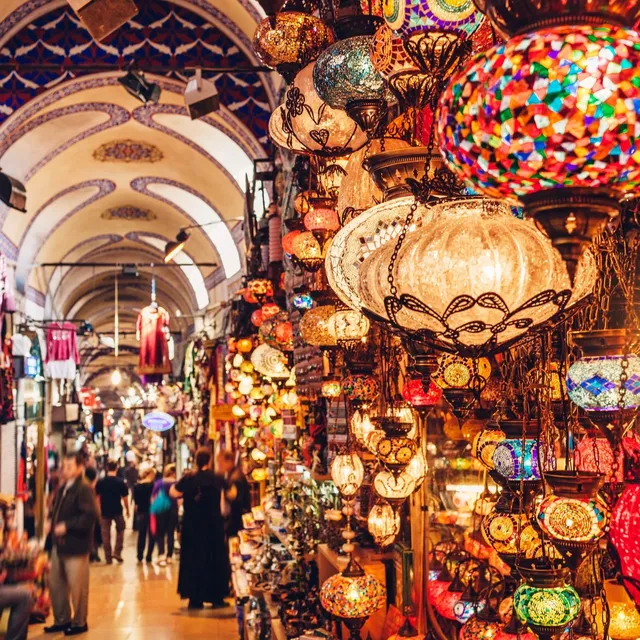
The iconic multicolored glass-and-brass hanging lamps are one of the most popular Grand Bazaar souvenirs. Handmade versions use individually cut glass pieces set into a brass or copper frame, while cheaper factory versions use molded glass. The best lamps feature intricate geometric patterns and rich, saturated colors. When buying, confirm whether the electrical fitting is compatible with your home country's standard and negotiate packaging for safe transport. Many shops offer international shipping.
💰 €15–€200
📍 Throughout the bazaar; densest near Gate 1

Leather Goods
Istanbul has a centuries-long leather-working tradition, and the bazaar offers jackets, bags, belts, wallets, and shoes at prices well below European retail. The best workshops use lamb or goat leather, which is softer and lighter than cowhide. Check the material label, stitching, lining, hardware, finish, and written product description. Smell alone is not a reliable way to distinguish genuine leather from synthetic materials. Check stitching, zipper quality, and lining material. Many shops offer on-the-spot tailoring and can adjust a jacket to your measurements within hours.
💰 €25–€400
📍 Kürkçüler Caddesi area

Spices & Turkish Delight
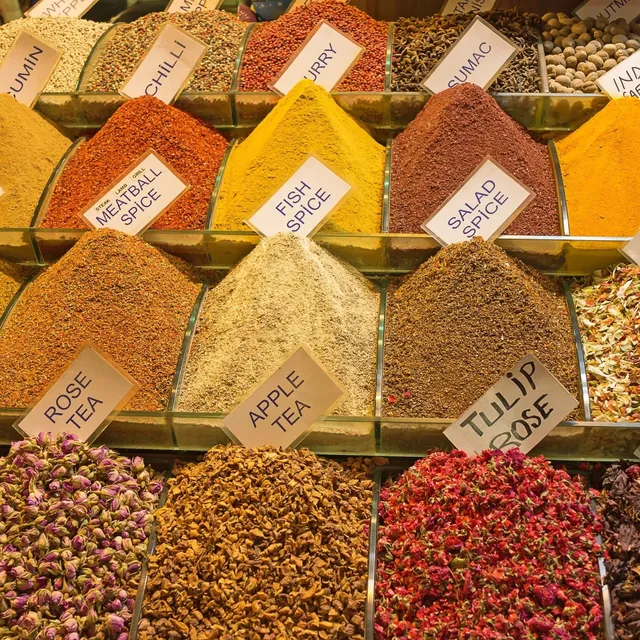
Although the Spice Bazaar and surrounding Eminonu streets are better known for food products, the Grand Bazaar also contains spice, tea, confectionery, and souvenir shops. Quality and prices vary, so compare products, packaging, weight, and current prices. Look for sumac (the deep-red lemony spice essential to Turkish cuisine), pul biber (Aleppo pepper flakes), saffron, and dried-herb blends for Turkish tea. Turkish delight (lokum) ranges from simple rosewater cubes to pistachio-stuffed, pomegranate-dipped luxury pieces. Buy from shops that allow tasting and check the production date.
💰 €3–€30
📍 Scattered throughout; clusters near eastern gates

Textiles & Pashminas
The bazaar is an excellent place to buy silk scarves, cotton towels (pestemal), pashminas, and hand-embroidered textiles. Traditional Ottoman-style silk brocades can be purchased by the meter. For products sold as cashmere or pashmina, check the fiber-content label, origin, weave, finish, and written invoice. The popular “ring test” does not reliably prove that a textile is genuine cashmere. Turkish cotton pestemals, the traditional hammam towels, make practical and beautiful souvenirs. Look for tightly woven fabric with consistent color throughout.
💰 €8–€150
📍 Yaglikcilar Caddesi & Perdahcilar Sokak

Antiques & Calligraphy
For collectors, the İç Bedesten — the original 15th-century core of the bazaar — remains the antique heart. Here you will find Ottoman coins, vintage jewelry, antique watches, Islamic calligraphy, miniature paintings, and old maps. Turkish law strictly regulates protected movable cultural property. Do not assume that an old object can legally be exported simply because it was purchased from a shop. Before buying coins, manuscripts, archaeological-looking objects, carpets, calligraphy, or other potentially historic items, request full documentation and consult the relevant museum or cultural authorities about export eligibility. Calligraphy pieces range from mass-printed reproductions to original works by master calligraphers. For original art, ask about the artist and request provenance documentation.
💰 €20–€5,000+
📍 İç Bedesten (Inner Bedesten)

How to Haggle Like a Local
Bargaining at the Grand Bazaar is not confrontation — it's social theatre. Follow these golden rules and you'll earn better prices and the respect of seasoned merchants.
Do Your Research Before You Arrive
Spend twenty minutes online checking approximate price ranges for whatever you plan to buy. Knowing that a decent handwoven kilim typically starts around 200-300 euros gives you a solid anchor. Without this baseline, you have no idea whether the asking price is double or ten times fair value.
Compare Before Making a Major Purchase
For higher-value items, compare several shops, materials, documentation, return conditions, and total prices before committing. For inexpensive or clearly priced products, purchasing from the first suitable shop is entirely reasonable.
Start at 40–50% of the Asking Price
Some shops allow bargaining, while others use fixed prices, especially for precious metals, branded products, food, and clearly labeled merchandise. Ask politely whether the price is negotiable, compare similar items, and make a reasonable offer based on quality and current prices rather than automatically offering half.
Accept the Tea — It Doesn’t Obligate You
A shopkeeper may offer tea as a gesture of hospitality during a longer conversation or purchase. Accepting does not create an obligation to buy, and declining politely is also perfectly acceptable. Take your time and keep the discussion friendly without feeling pressured. Time in a Turkish shop is never wasted — even the conversation itself is part of the bazaar experience.
Use the “Walk Away” Technique Strategically
If you cannot agree on a price, thank the seller politely and leave without pressure. The seller may make another offer, but visitors should not treat walking away as a guaranteed tactic or repeatedly return merely to force a lower price. If they don't, the price may genuinely be at its floor — or you can try the next shop.
Bundle Purchases for Bigger Discounts
Buying multiple items from one shop gives you significantly more leverage. When buying several items from one shop, you can ask whether a combined price is available. Any discount depends on the products, seller, payment method, and current margins. Mention that you're also interested in other items early in the negotiation. Bulk buying signals a serious customer and motivates the seller to protect the larger sale.
Pay in Turkish Lira for the Best Price
Ask for the final price in Turkish lira and check the exchange rate before agreeing to pay in another currency. Card, cash, and foreign-currency prices may differ by shop. When using an ATM, review the displayed fees and exchange options, and avoid accepting an unfavorable dynamic currency conversion rate.
Stay Friendly and Enjoy the Process
The most important rule of all: keep it friendly. Haggling in the Grand Bazaar is not adversarial. It's a shared cultural practice that both sides genuinely enjoy. Smile. Make small talk. Ask about the merchant's family, their craft, their story. You will almost always get a better price through warmth than through hard-nosed negotiation. And even if you don't, you will leave with a better memory.
Best Sections & Navigation Tips
Find your way through the Grand Bazaar’s most important streets, historic sections, and shopping areas with simple navigation tips for an easier visit.
Kalpakcilar Caddesi
The main artery running east to west, lined with gold and jewelry shops. Use it as your compass spine — it connects the Beyazıt and Nuruosmaniye gates.
İç Bedesten
The original 15th-century core. This is the place for antiques, rare coins, vintage jewelry, and calligraphy. The atmosphere is calmer and more curated than the outer streets.
Halicilar Caddesi
The carpet district. Shops here range from budget-friendly kilim dealers to high-end showrooms with museum-quality silk carpets. Set aside time here — carpet shopping is an experience in itself.
Kürkçüler Caddesi
The leather district. Jackets, bags, shoes, and bespoke tailoring dominate this street. Quality varies widely, so take your time comparing.
Yaglikcilar Caddesi
Textiles and ceramics cluster here. Excellent for İznik-style plates, pashminas, silk scarves, and hand-embroidered linens.
Sandal Bedesteni
The second historic hall, originally built for silk and fabric trading. Today, the Sandal Bedesten remains one of the Grand Bazaar's two principal historic bedestens. Its current use and access conditions may vary, so visitors should follow on-site information.
Practical Information
Istanbul Tourist Pass® & Istanbul Prime Pass
The Grand Bazaar area and many nearby attractions are included in the pass, meaning you can explore the historic market district and its surroundings without purchasing separate tickets. The Istanbul Tourist Pass® is also included within the Istanbul Prime Pass, offering even more flexibility for travelers who want to bundle premium experiences.
With the pass, you benefit from a fully digital and hassle-free experience, including hosted entry and access to audio guides at participating attractions, helping you better understand the history and significance of the Grand Bazaar and the surrounding Old City. There's no need to manage multiple bookings — simply choose your preferred time slots and enjoy a smooth experience.
Beyond the Grand Bazaar area, the pass covers 120+ top attractions and experiences across Istanbul, making it an ideal choice for visitors planning to explore the city in depth. From iconic landmarks to guided tours and unique activities, it offers both convenience and excellent overall value.
If you're looking to save time, skip lines, and maximize your Istanbul itinerary, the Istanbul Tourist Pass® (and its inclusion within the Istanbul Prime Pass) is a smart and efficient choice.
Opening Hours
Visiting Hours Monday through Saturday: 8:30 AM to 7:00 PM. Closed on Sundays and on major national and religious holidays including the first days of Ramadan Bayram and Kurban Bayram. Some shops may close early on Saturday or open later in winter.
Getting There
Transport & Directions Take the T1 tram to the Beyazıt–Kapalıçarşı stop and walk two minutes north to the Beyazıt Gate. Alternatively, the Nuruosmaniye Gate is a short walk from Çemberlitaş tram stop. If coming from the Old City, it's a 10–15 minute walk from Sultanahmet Square.
Money & Payments
Currency & Payments Turkish lira is preferred and gets the best prices. Most larger shops accept Visa and Mastercard. ATMs (Halkbank, Ziraat) are located near the Beyazıt and Nuruosmaniye gates. Currency exchange offices are plentiful on surrounding streets — compare rates before exchanging.
Languages
Language Support Most merchants speak English, and many also speak German, Arabic, French, Russian, and Spanish. You will be impressed by the multilingual abilities of bazaar vendors — many have taught themselves through decades of international trade.
Accessibility
Access Information The bazaar's centuries-old cobblestone streets and occasional steps can be challenging for wheelchair users. The main streets (Kalpakcilar Caddesi) are relatively flat and wide. Some side alleys are narrow and uneven. There are no elevators.
Shipping & Customs
Delivery & Export Rules Many shops offer international shipping by cargo or post. For carpets, shipping typically costs €30–€80 to Europe or North America. Always get a detailed receipt showing the item description and value. Turkish customs has restrictions on exporting genuine antiques — items over 100 years old may require a Ministry of Culture export permit.
Are you ready to explore the Grand Bazaar?
Unforgettable views and the best moments await you.
Insider Tips from Frequent Visitors
Eight pieces of advice that separate seasoned bazaar visitors from first-timers.
Visit on Tuesday or Wednesday Morning
The quietest times in the bazaar are weekday mornings between 8:30 and 10:30, particularly on Tuesdays and Wednesdays. You will have space to browse, merchants will have more time for you, and photographs won't include hundreds of tour-group umbrellas.
Enter Through the Nuruosmaniye Gate
While most tourists funnel through the Beyazıt entrance near the tram stop, the Nuruosmaniye Gate (Gate 1) on the east side is the most architecturally impressive and leads through a pleasant pedestrian street. It's also less congested and sets a calmer tone for your visit.
Discover the Hidden Rooftop
Few tourists realize that certain sections of the bazaar have accessible upper levels and internal courtyards. Ask shop owners in the İç Bedesten area about stairways to the upper gallery. The view across the domed roofs is remarkable and makes for unique photographs.
Watch for the “My Uncle’s Shop” Scam
Friendly strangers outside the bazaar who offer to take you to "the best shop" or "my uncle's factory" are commission touts. Their commission (typically 20–30%) is baked into your price. Navigate independently and choose your own shops.
Eat at Şark Kahvesi or Fes Café
The bazaar has several atmospheric internal cafes. Şark Kahvesi, near the Nuruosmaniye gate, has been serving Turkish coffee since the 1950s and makes an excellent mid-visit rest stop. Fes Café in the center offers good pastries and fresh-squeezed juices.
Photograph the Painted Ceilings
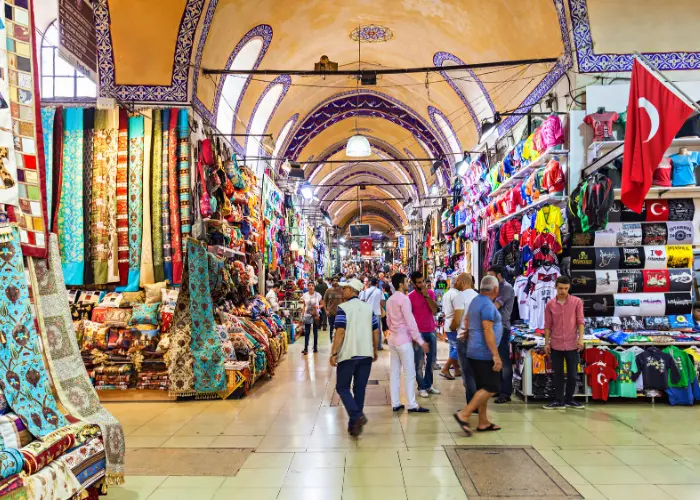
Look up. Many of the bazaar's vaulted intersections feature painted ceilings with geometric and floral Ottoman motifs that most visitors walk past without noticing. The best examples are in the corridors near the İç Bedesten and along the main crossroads.
Keep Valuables Secure
The bazaar is generally safe, but crowds attract opportunistic pickpockets. Keep your wallet in a front pocket, wear bags across your body, and be alert in the busiest intersections, especially on Saturday afternoons. Leave passport copies and unnecessary cards at your hotel.
Ask for a Business Card Before You Leave a Shop
If you see something you like but aren't ready to buy, take the merchant's card with a note of the item and quoted price. You can return later, compare, and negotiate by phone or WhatsApp. Many merchants are happy to continue a negotiation digitally and ship internationally.
Nearby Attractions
The Grand Bazaar sits in the heart of the Old City. These landmarks are all within a 10–15 minute walk.
Continue Exploring Istanbul

Spice Bazaar
Spice Bazaar. Istanbul's aromatic spice market, just 10 minutes downhill toward the Golden Horn.

Süleymaniye Mosque
Süleymaniye Mosque. Sinan's imperial masterpiece crowns the Third Hill, a 5-minute walk north of the bazaar.

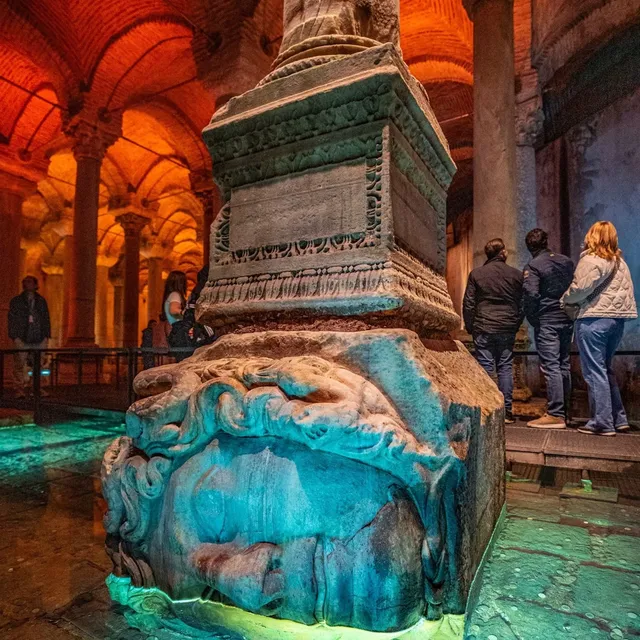
Basilica Cistern
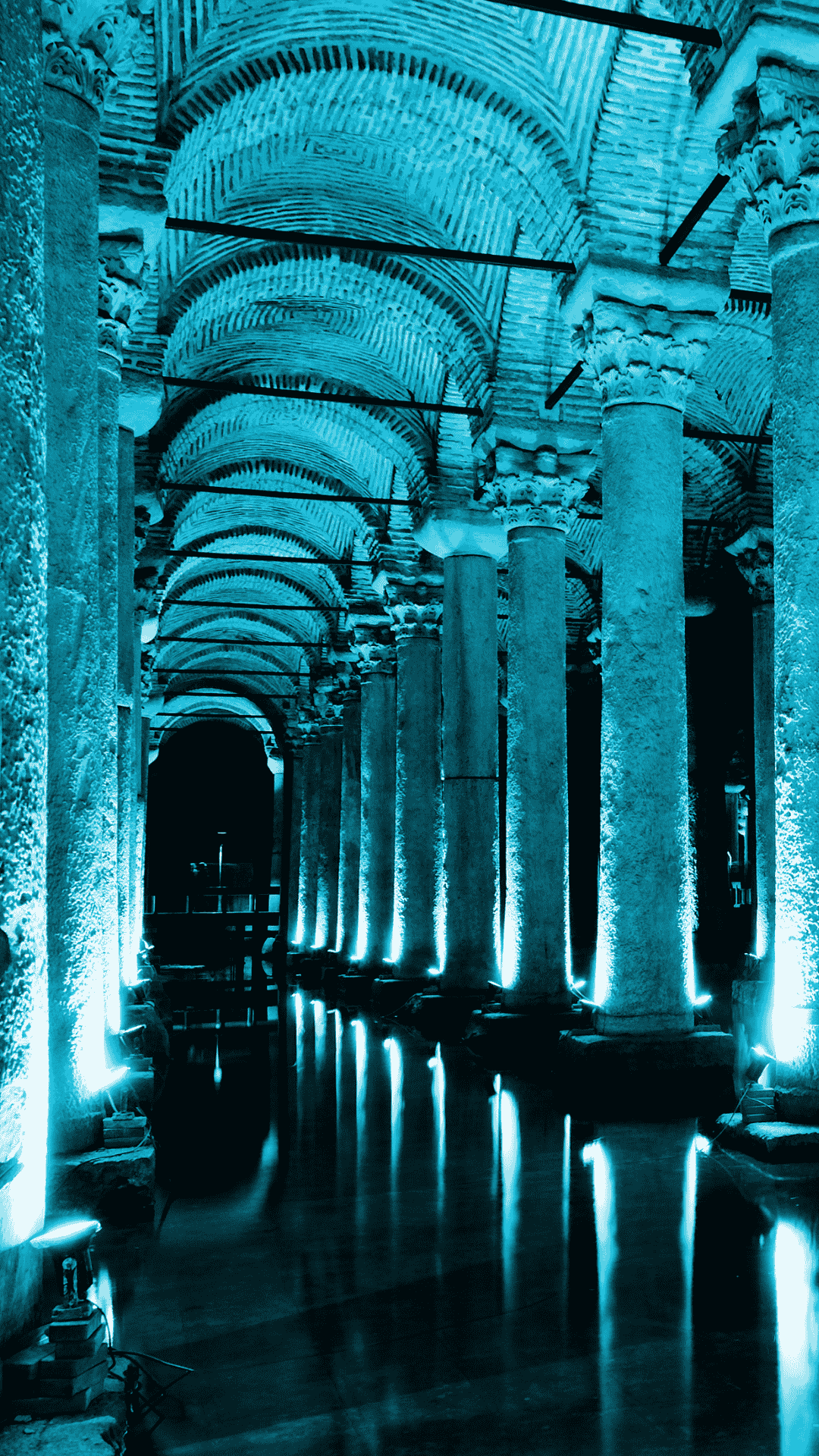
Basilica Cistern. The atmospheric 6th-century underground cistern is a 12-minute walk toward Sultanahmet.

Beyazıt Square
Beyazıt Square. The grand public square directly outside the bazaar's main gate, home to Istanbul University.
Frequently Asked Questions
Absolutely. The Grand Bazaar is one of the most iconic experiences in Istanbul and a must-visit regardless of whether you plan to shop. The architecture alone — vaulted ceilings, painted domes, and centuries-old stone corridors — makes it worth the trip. Even if you buy nothing, the atmosphere of 5,000+ shops, the sound of merchants, and the scent of spices and leather create a sensory experience you won't find anywhere else on earth. That said, visit with a plan and be aware that prices are negotiable on almost everything.
Yes, haggling is not only expected — it's part of the culture. Most prices, especially on carpets, leather goods, jewelry, and ceramics, are initially marked up for negotiation. As a rule of thumb, start at about 40–50% of the asking price and work toward a middle ground. The only items generally sold at fixed prices are food products and some branded goods. Don't be afraid to negotiate; merchants enjoy the interaction and respect a savvy buyer.
The least crowded times are weekday mornings, particularly Tuesday and Wednesday between 8:30 AM and 10:30 AM. The bazaar also tends to thin out in the last hour before closing (around 6:00–7:00 PM). Avoid Saturday afternoons and any time during cruise ship arrivals, which bring large tour groups through the main gates. If you visit during Ramadan, the bazaar is quieter during daylight hours as many locals are fasting.
Many larger shops accept Visa and Mastercard, but smaller stalls and artisan workshops often prefer cash. Having Turkish lira on hand gives you a significant advantage in negotiating better prices — merchants avoid the 2–3% card processing fee and are often willing to pass that saving to you. There are ATMs (Halkbank, Ziraat, Garanti) near the Beyazıt and Nuruosmaniye entrances and several exchange offices in the surrounding streets.
Plan a minimum of 2–3 hours for a meaningful visit that covers the main streets and a few shops. If you want to seriously shop for carpets, jewelry, or leather, allow at least half a day. Serious collectors and those who want to explore every section should allocate a full day with breaks at one of the internal tea houses or cafes. Even if you're not shopping, the sheer scale of the market means you need time just to absorb the atmosphere.
The Beyazıt Gate (Gate 7) is the most convenient if arriving by tram — it's just two minutes from the Beyazıt-Kapalıçarşı tram stop. The Nuruosmaniye Gate (Gate 1) is the grandest and most photogenic entrance, leading from the upscale Nuruosmaniye Street with its bookshops and cafes. For a less crowded entry, try Gate 10 on Mercan Caddesi or Gate 18 from the Gedikpaşa side. Each entrance leads to a different section, so choose based on what you want to see first.
Use the main street Kalpakcilar Caddesi as your central spine — it runs east to west and connects the two main gates (Beyazıt and Nuruosmaniye). Note the numbered gates as reference points. Take a photo of the official map posted at entrances. Drop GPS pins on your phone, though be aware that indoor GPS can be unreliable under the vaulted stone ceilings. Most importantly, remember that the bazaar is roughly rectangular, so if you keep walking in one direction you will eventually reach a perimeter exit. And honestly, getting a little lost is part of the fun — some of the best shops are found by happy accident.
Plenty of great souvenirs fall under the 10-euro mark: hand-painted ceramic bowls and coasters (€3–8), Turkish evil eye (nazar) amulets (€1–5), small copper coffee pots (cezve, €5–8), packets of premium Turkish delight (€3–6), aromatic spice blends (€2–5), decorative Turkish tea glasses (€3–7), leather coin purses (€5–8), handmade olive oil soap bars (€2–4), and calligraphy fridge magnets (€1–3). Remember to negotiate even on small items — buying several pieces from one vendor always unlocks a discount.