History of the Basilica Cistern
The story begins in the Byzantine era. The Basilica Cistern was built to store fresh water for the Great Palace and nearby buildings. Water arrived by aqueduct and rested here in a vast vaulted chamber. The structure uses hundreds of reused columns from older sites, which is why the capitals and shafts do not all match. That layered appearance is part of the cistern’s lasting charm and one reason it feels both monumental and intimate.
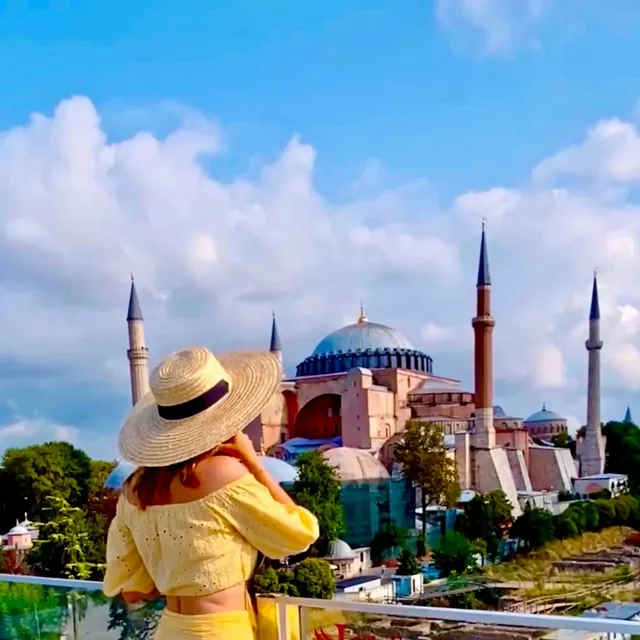
Its location also makes it easy to pair with nearby landmarks such as Hagia Sophia and Sultanahmet Square, which helps place the cistern within the wider historic core of the city.
Who Built the Basilica Cistern?
Engineers working under the Byzantine emperors shaped the cistern. Craftspeople set brick vaults on a forest of columns and sealed the joints to hold a lake below the streets. Earthquakes and time left their marks, but careful restorations kept the space safe and walkable. When you step inside, basilica cistern history feels close rather than distant. The hall is cool and quiet, and every footstep seems to belong to another century.
For broader historical background, you can also consult Britannica or official museum-related sources before your visit.
Basilica Cistern Myths and Architecture Highlights
The magic of the cistern comes from both engineering and storytelling. Follow the walkway slowly and notice how the architecture works with water, darkness, and reflection. The hall reveals its details best when you keep an unhurried pace.
Medusa’s Heads
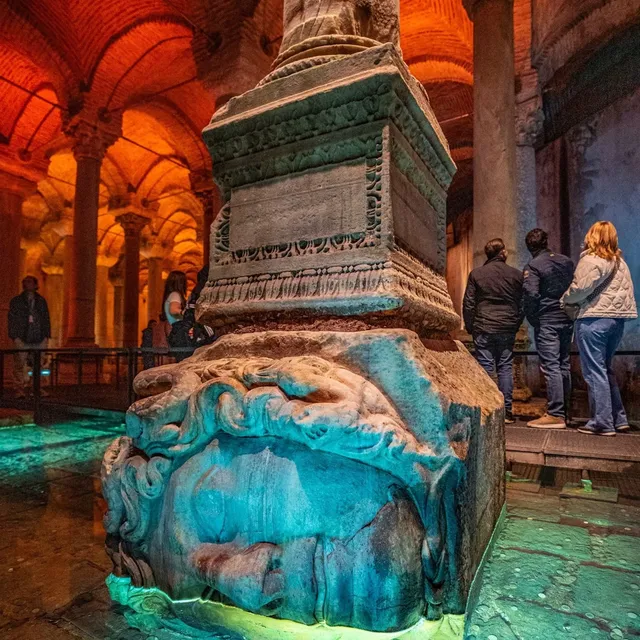
The famous Medusa bases sit in a quieter corner of the cistern. One is tilted, and one rests upside down. They were likely reused from an older monument and placed here as solid supports beneath short columns. Their unusual position has inspired many stories over the years. Some visitors see protection in the arrangement, while others see pure practicality. Either way, these heads are among the most memorable sights inside the Basilica Cistern.
The Weeping Column
Look for a column marked with tear-like patterns. People say these carved drops honor the workers who built the hall. Touching the cool stone makes the moisture and texture easier to notice. The legend may vary from guide to guide, but the feeling remains the same: this is a place that invites quiet attention.
Reflective Waters
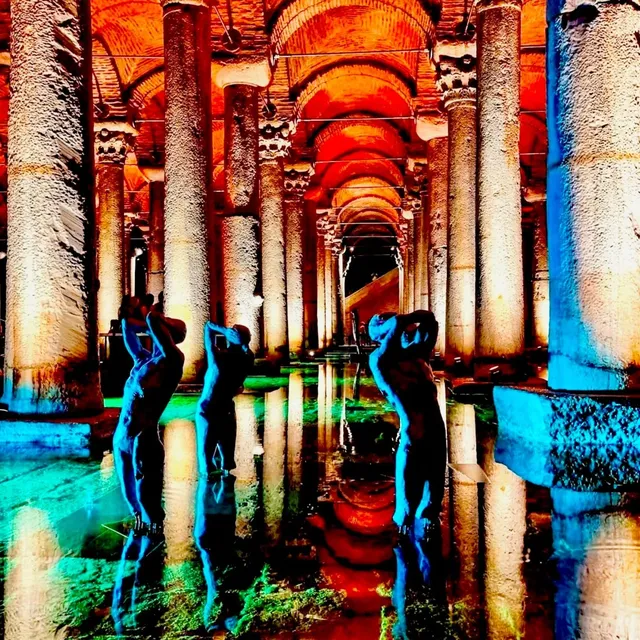
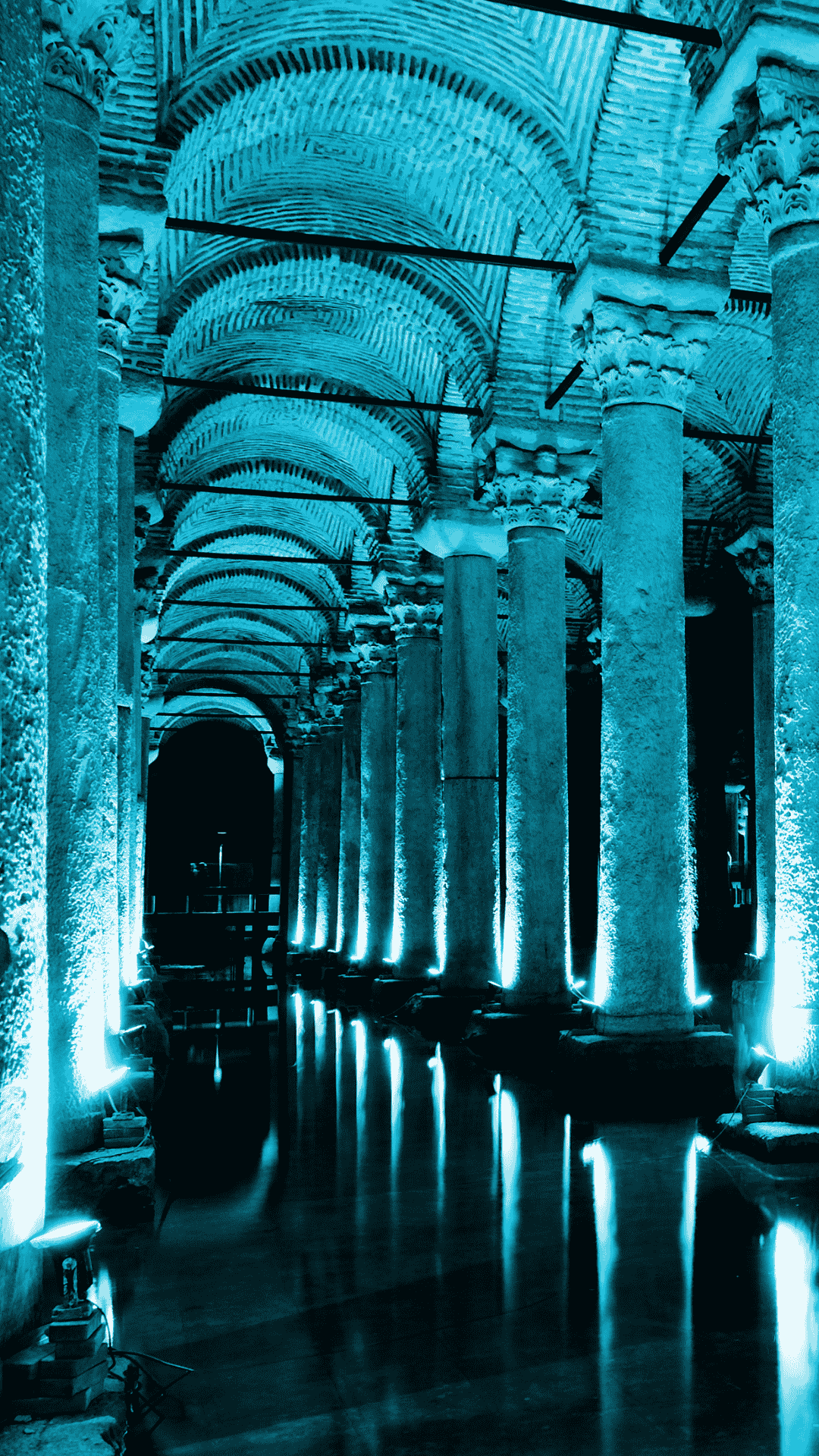
Water brings the architecture to life. Ripples turn the columns into moving mirrors, and the light stretches across the surface in soft arcs. If you want a cleaner photograph, wait for the water to settle. The stillness is not just visual; it is part of why basilica cistern istanbul stays with travelers long after the visit ends.
The Legend Behind the Space
Stories give the cistern a second life. Guides often share tales connected to the Medusa heads, the tear-marked column, and hidden meanings within the reused stonework. These legends work best when enjoyed as folklore that adds warmth to brick and marble. They do not replace the architecture; they deepen the atmosphere around it.
The Mystery of the Columns
Not all the columns match, and that difference matters. Builders reused shafts and capitals from several older sites, creating a hall that feels almost like a museum of forms set in water and low light. The variety is one of the clearest signs of the cistern’s layered history.
The Medusa Head Legends
The Medusa stones feel powerful and calm at once. Some say the odd angles were meant to guard against bad luck. Others say the heads were simply placed in the most practical way for construction. In Istanbul, both explanations can live side by side. That is often how myth and stone meet.
Best Time to Visit Basilica Cistern
Mornings on weekdays are usually the calmest. The first hour after opening often gives you shorter lines and more room to take in the scale. Evenings can be especially atmospheric if you prefer a deeper mood. Rain does not affect the interior, though summer generally brings more visitors. Check current basilica cistern opening hours on the day, as holiday schedules may shift.
How to Get to the Basilica Cistern
The Basilica Cistern location is in Sultanahmet, near Hagia Sophia. Tram T1 is the simplest option for many visitors, with Sultanahmet or Gülhane as useful stops. From there, it is a short walk, and signs usually point toward the entrance. Because the surrounding streets can be busy, it helps to keep the route simple and move at an easy pace.
If you are planning a full Old City route, the cistern combines naturally with Blue Mosque and Topkapi Palace.
Tips for Visiting Basilica Cistern
- Tickets: Buy basilica cistern tickets online when possible to reduce waiting. At the ticket window, ask for the current basilica cistern tickets price and last entry time, or check the official site.
- Pacing: Plan about 45–60 minutes inside. Add more time if you enjoy photography or want to linger at the Medusa heads.
- Comfort: The hall is cool, so a light layer can help. Wear shoes with grip because some surfaces may be damp.
- Photos: Non-flash photography is the kinder choice in this low-lit setting. Waiting a moment for space often gives better results.
- Navigation: Save a simple map pin before you go so the walk from the tram is easy.
Tickets and Visit Planning
Plan your visit with a calm route rather than a rushed checklist. You may find standard entry or hosted options that bundle timing and guidance. If you want to combine nearby attractions in one day, look for practical pairings with major Old City sights. Always confirm the current basilica cistern entrance fee before your visit, since prices can change during the year.
For transportation updates, official city transit resources such as Metro Istanbul can be useful when planning connections.
Closing Note
Move slowly and let the hall speak. Columns, water, and light turn the Basilica Cistern into a gentle lesson in time. With a simple ticket plan, an easy route, and a steady pace, your visit can feel clear, quiet, and memorable.
FAQ
Where is the Basilica Cistern located?
The Basilica Cistern is in Sultanahmet, very close to Hagia Sophia. It is easy to include in a walking route through Istanbul’s historic center, especially if you are already visiting nearby monuments and squares on the same day.
What are the best things to see inside?
The most talked-about highlights are the Medusa head bases, the Weeping Column, and the long rows of columns reflected in the water. Together, they show why the cistern is admired for both its architecture and its legends.
How long should I plan for a visit?
A relaxed visit usually takes 45 to 60 minutes. If you like photography, prefer a slower pace, or want to wait for quiet moments around the main highlights, allow a little extra time.
When is the best time to visit Basilica Cistern?
Weekday mornings are often the calmest, especially near opening time. Evenings can also be rewarding if you prefer a more atmospheric mood. Holiday periods and summer usually bring larger crowds, so checking the day’s schedule helps.
Should I buy tickets online?
Buying online can reduce waiting, especially during busy seasons. If you prefer to decide on the day, arriving early is the simplest way to avoid longer lines. For current prices and entry details, check the official site before you go.