Cisterns were once common across Istanbul during the Byzantine period. These vast underground spaces were built to store water for later use by the people of the city. Among them, the most important and the largest surviving example is the Basilica Cistern.
Basilica Cistern was built by order of Emperor Justinian in 532 as part of the rebuilding of Constantinople after the destruction caused by the Nika riots. Historical accounts describe it as the largest surviving cistern in Istanbul, measuring 138 meters in length and 65 meters in width, covering an area of almost one thousand meters and holding up to 80 thousand cubic meters of water. For its time, this was an extraordinary engineering achievement.
Basilica Cistern is the largest ancient underground cistern in Istanbul. It was used to store water in the past and is now one of the city’s most visited historical attractions.
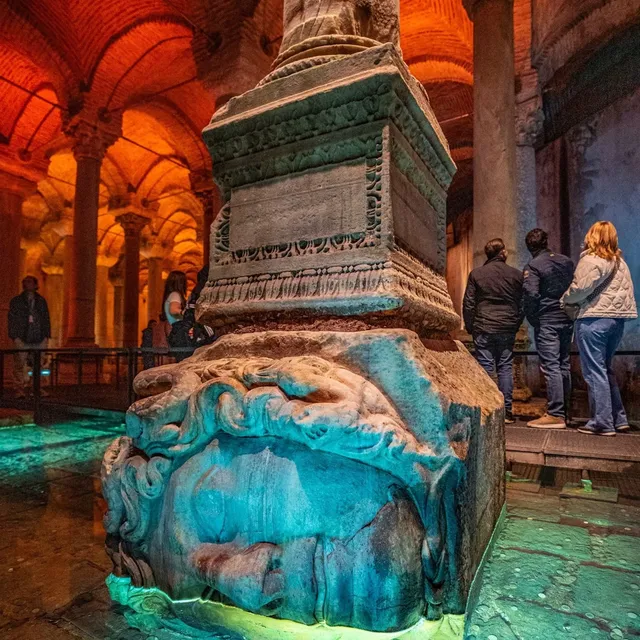
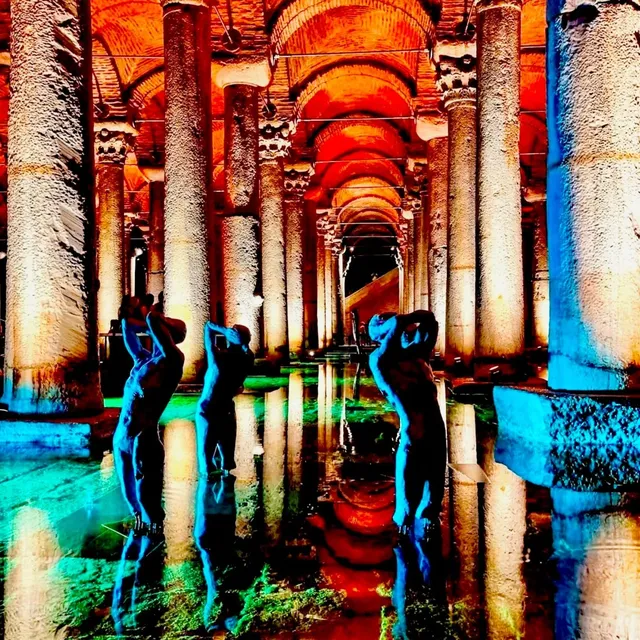
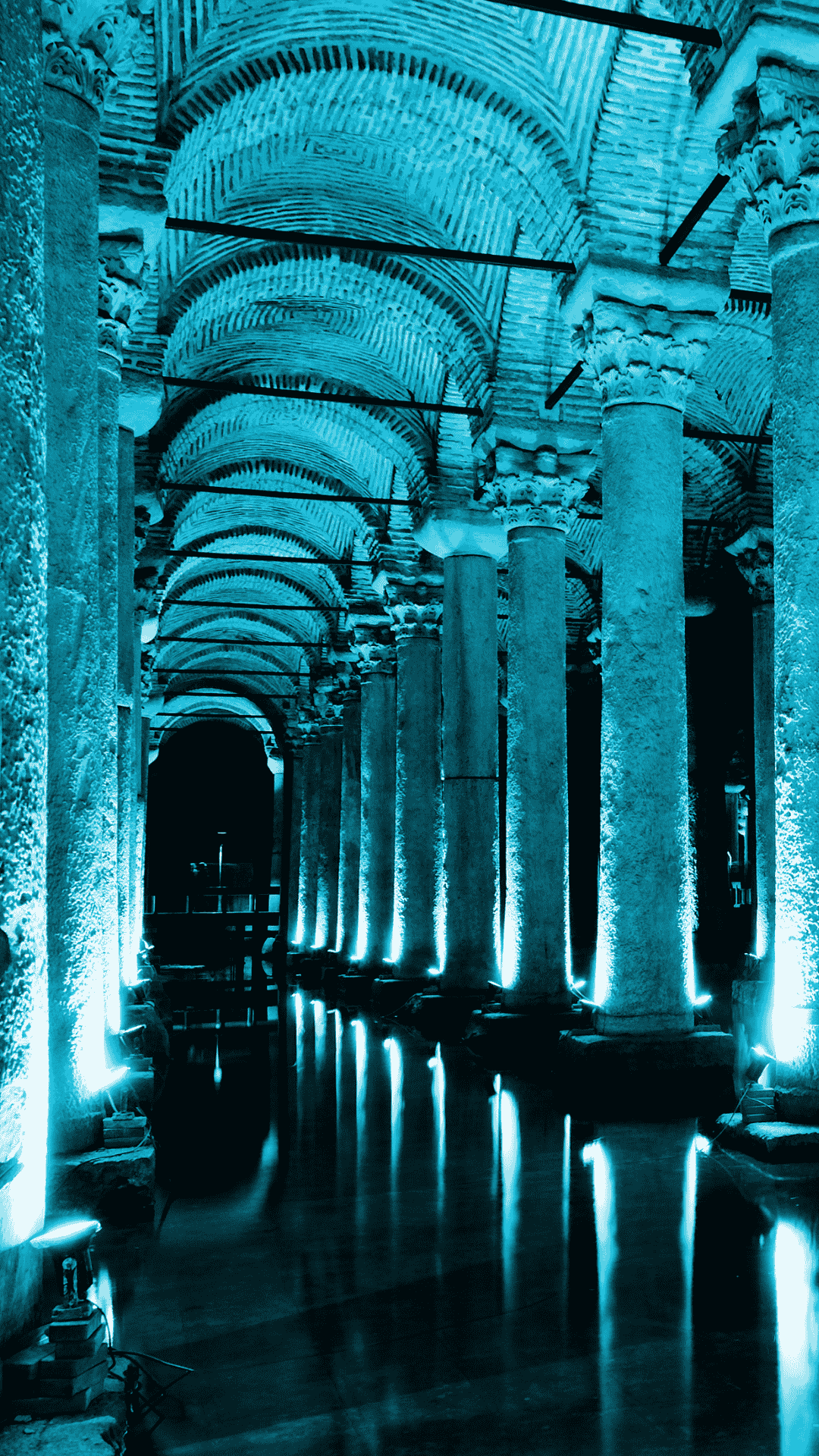
The effort required to build the cistern must have been incredible, since the structure had to withstand the great pressure of stored water. It was constructed with 336 marble columns supporting the ceiling, arranged in 12 rows of 28 columns each, with each column measuring 9 meters in height. Some say these columns were reused from older buildings in different parts of the Byzantine Empire or taken from leftover construction materials from other major monuments such as Hagia Sophia. This idea seems even more believable when you see the two famous Medusa heads used as bases for two of the columns. Why these pieces were reused remains uncertain, though some suggest it may have helped reduce costs.
It is also not fully certain whether Basilica was the cistern’s original name. The name is generally linked to the fact that it stands beneath the area where the Roman Basilica once existed. In this context, basilica referred to a large open public place where business matters and trade decisions were discussed.
Story of Basilica Cistern and Its Rediscovery
Although the Basilica Cistern is extremely famous today and welcomes visitors from around the world, it was not always so well known. At some point before the Ottoman conquest of the city, the cistern was shut down, closed, and gradually forgotten by the authorities. It remained largely out of sight until the early 1545, when the French scholar Petrus Gyllius rediscovered it.
According to the accounts connected with this rediscovery, local residents told Petrus Gyllius that they could draw water from below by lowering buckets through their basement floors, and some even claimed they could catch fish there. Gyllius eventually managed to enter the cistern through the basements of houses in the area. Despite this important discovery, the Ottoman authorities did not immediately give it much attention, and for a period the cistern became a dumping place for trash before being restored again for water storage.
In 1980, lighting and decorative additions were introduced so the cistern could function as a museum for tourists, since it was no longer being used for its original water-storage purpose. Today, the atmosphere inside is one of the reasons it remains so memorable: dim lights, rows of columns, reflections on the water, and the enduring mystery of the underground space itself.
The Basilica Cistern was designed in a sophisticated way and solved a major practical problem for the city, just as other cisterns did in their own neighborhoods. After many centuries, wars, and earthquakes, it still stands strong as evidence of how the Byzantine Empire served the needs of its people and introduced durable engineering solutions to the world.
Once you enter the cistern, its scale is striking. Walking between the columns, it is hard not to imagine the entire chamber once filled with water. Even today, visitors can still see water inside, and fish can still be seen swimming in it, which adds to the unusual feeling of the place.
What to Know Before Visiting Basilica Cistern
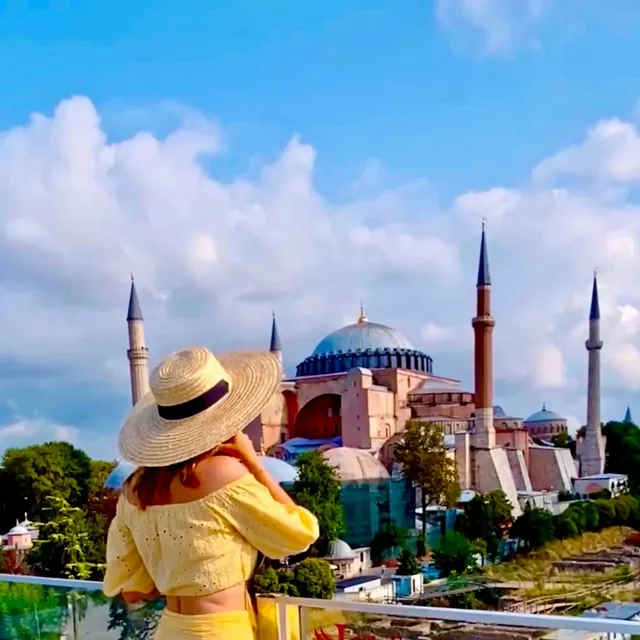
If you want to visit the Basilica Cistern, it is located in Sultanahmet Square, just 159 meters from Hagia Sophia Museum. Because of its central location, it is easy to combine with other historic landmarks in the old city, including nearby Byzantine and Ottoman monuments.
For broader historical background, you can also check the Basilica Cistern entry on Wikipedia. As details such as ticketing or visitor information may change over time, it is best to check the official site before your visit.
Why Basilica Cistern Still Fascinates Visitors
The Basilica Cistern is more than an underground chamber. It is a place where engineering, mystery, and history come together. Its forest of columns, reused architectural fragments, and the famous Medusa heads make it one of Istanbul’s most atmospheric sites. For travelers exploring the city’s historic peninsula, it remains one of the clearest reminders that much of old Constantinople still survives beneath modern Istanbul.