The area where the cistern was built was called Şerefiye, and the structure took its name from this location. After the Byzantine period, and following the Ottoman conquest of Istanbul, Şerefiye Cistern remained under Ottoman control. In the 19th century, a mansion named Arif Pasha was built above it. In 2010, the structure above the cistern was demolished, revealing the magnificent historical monument underneath. If you are planning your route around Sultanahmet Square, this historic site deserves a place on your Istanbul travel list.
The Architecture of Serefiye Cistern

Among the many historical attractions in Istanbul, Şerefiye Cistern has become a popular stop for visitors thanks to its fascinating structure. This 1600-year-old building was originally used as a water tank. It has gone through many restorations and still stands today. Built in the Byzantine period as a water source, it later lost this original function, but it remains an impressive example of underground architecture.
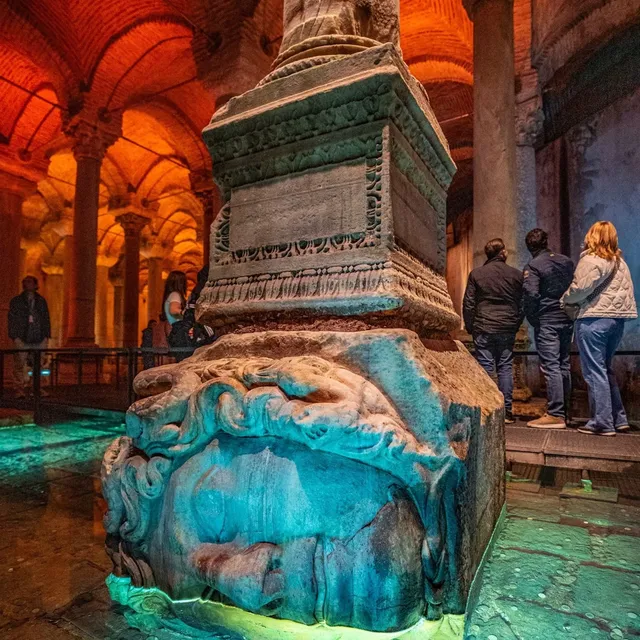
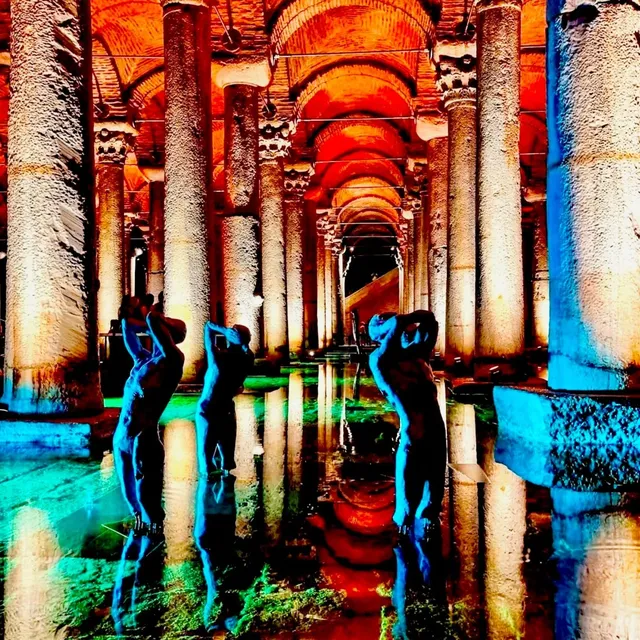
Şerefiye Cistern is an underground structure supported by strong and elegant columns, preserving much of its historic atmosphere. The cistern is 11 meters high and measures 24 by 40 meters. It is supported by 32 columns, and the structure contains 45 sail vaults. Its marbles come from Marmara Island, and the interior is covered with a special waterproof substance. Another notable design detail is the curved corners, which help stabilize water pressure.
If underground monuments interest you, you may also want to compare it with the nearby Basilica Cistern, another of Istanbul’s best-known subterranean landmarks.
Serefiye Cistern and 360 Degree Projection Mapping
One of the features that has made Şerefiye Cistern especially popular is the way it brings history and technology together. The site includes 360 Degree Projection Mapping technology, described here as being used for the first time in Turkey for visitors in this setting. This experience allows you to observe the structure, its walls, columns, and underground space in striking visual detail.
The projection mapping show integrated into Şerefiye Cistern consists of 10 parts and presents the walls, columns, and the entire interior space in 3D. For visitors interested in both history and immersive visual experiences, this combination gives the cistern a different atmosphere from many other historical places in the city.
Because exhibits and visitor arrangements can change over time, it is a good idea to check current details through official tourism or museum sources before your visit. You can also explore broader Istanbul cultural context through GoTürkiye.
History and Setting of Serefiye Cistern
Şerefiye Cistern reflects multiple layers of Istanbul history, from the Byzantine Empire to the Ottoman era and into the present day. Its rediscovery in 2010 helped bring renewed attention to a structure that had long remained hidden beneath a later building. Today, it stands as an important reminder of how the city developed systems to collect, store, and distribute water.
Its alternative names also connect it to Istanbul’s wider historical narrative. Şerefiye Cistern is also known as the Cistern of Constantine and the Cistern of Theodosius. For readers who want to explore the background of the monument further, the Wikipedia entry on the Theodosius Cistern offers an overview.
Serefiye Cistern Facts
- Şerefiye Cistern was used as a water tank and water source for baths connected to historical buildings such as the Great Palace, Nymphaeum, and Zeuksippos.
- After later construction above it, the site was also used as the Istanbul Eminönü Municipality Building until 2010.
- The Serefiye Cistern Museum is described here as one of the oldest buildings in the world combined with this kind of 360-degree projection mapping technology.
- The heads at the top of the Şerefiye Cistern structure are equipped with bear claw leaves.
- Other well-known names of Şerefiye Cistern are the Cistern of Constantine and Theodosius.
If you are looking for a historic building to add to your Istanbul itinerary, don’t overlook the city’s underground monuments. With its Byzantine origins, later Ottoman-era story, and multimedia presentation, Şerefiye Cistern remains one of Istanbul’s most fascinating historical attractions.