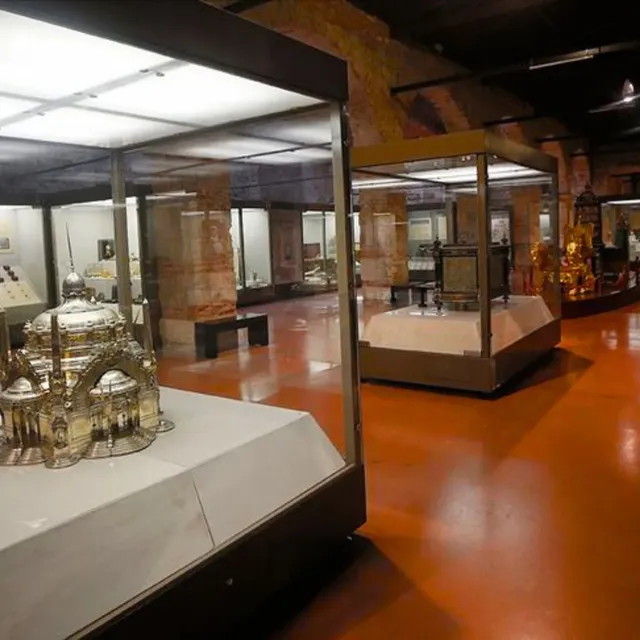
Housed inside the historic Ibrahim Paşa Palace, the museum stands just west of Sultanahmet Square, close to some of the city’s best-known landmarks. Although many Ottoman civil and government buildings were made of wood, this palace was built in stone, which helped it survive in remarkably good condition. Today, the palace’s ceremony room and second court display a collection that stretches from early Islamic art to the twentieth century.
According to the museum’s story, Sultan Süleyman the Lawgiver gave this 16th-century palace to Grand Vizier Ibrahim Pasha. After Ibrahim Pasha’s death, the building continued to serve as a residence for grand viziers, ambassadors, and other high officials. Since 1983, it has functioned as the Museum of Turkish and Islamic Arts and remains a destination where architecture and collections complement each other beautifully.
Why visit the Museum of Turkish and Islamic Arts?
This museum is often described as one of the most important places to understand the Islamic culture that shaped Istanbul during the Ottoman period. It brings together manuscripts, carpets, woodwork, stone carvings, ceramics, metalwork, glass, and ethnographic displays in a setting that feels both scholarly and atmospheric.
It is also historically significant as the first Turkish museum to present Turkish and Islamic artworks collectively, and it is noted as the last museum opened in the Ottoman period. Beyond its exhibitions, the museum has also received international recognition: after its restoration, it is noted for receiving the Council of Europe Museum of the Year Competition Special Jury Prize in 1984, and in 1985 it received the Council of Europe-UNESCO award for helping endear cultural heritage to children.
What to see inside the Museum of Turkish and Islamic Arts
Carpets and rugs
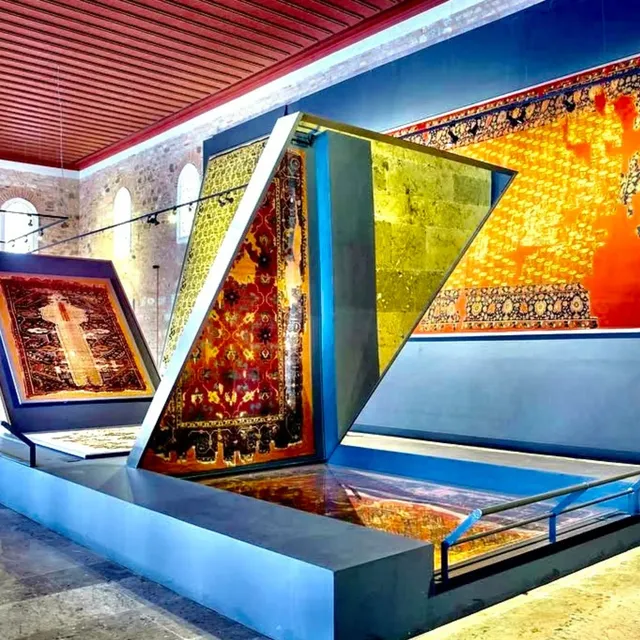
The museum houses what is described as one of the richest carpet collections in the world. Among the most celebrated pieces are carpets from the Seljuk Empire, as well as Anatolian rugs from the 15th, 16th, and 17th centuries. These works are decorated with geometric figures, Kufic designs, and animal motifs. The collection also includes fine rugs from Iran and the Caucasus.
The carpet section is one of the highlights for many visitors. Handcrafted Turkish carpets, shown in large glazed halls, reveal not only technical mastery but also the artistic language of different regions and centuries.
Manuscripts and calligraphy
Handwritten Qurans, decrees, acquittals, and monograms from Ottoman sultans are among the most striking parts of the collection. The manuscripts section is especially notable and is said to contain 18,298 works. Visitors interested in calligraphy and book arts will find some of the museum’s most detailed and delicate objects here.
The Damascus Documents Department includes works brought from the Umayyad Mosque in Damascus, while other departments display examples that help trace the development of Islamic writing and ornament over time.
Wood, stone, and sacred relics
In the Wooden Artifacts Section, you can examine works from Anatolia dating to the 9th and 10th centuries as well as Ottoman-period woodwork decorated with mother-of-pearl and ivory. The stone collection is equally fascinating, especially the Seljuk-era tombstones that show a style of calligraphy distinct from the Ottoman tradition. Hunting scenes and mythological figures such as gryphons and dragons appear on some of these stones.
The Department of Sacred Relics includes the Prophet’s Footprint, known as Kadem-i Saadet, and beard strands known as Sakal-ı Şerif. These are among the museum’s best-known religious objects.
Ethnography and daily life
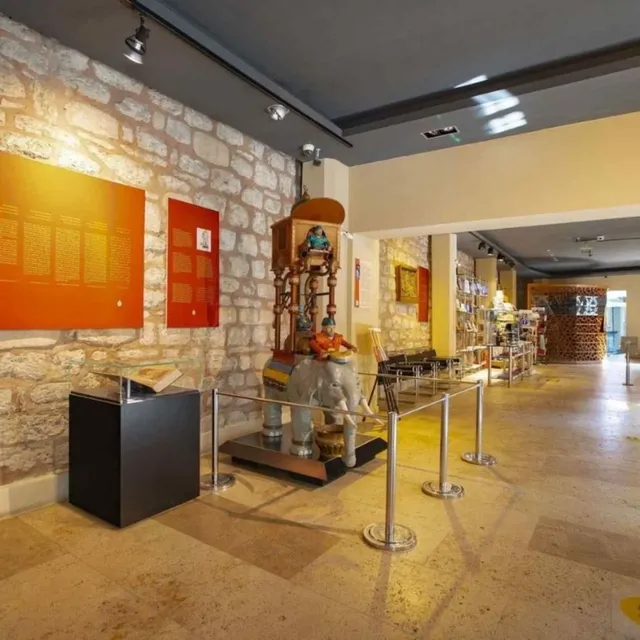
On the lower floor of the carpet section, the Ethnography Section presents Turkish daily life and works from the last few centuries. This part of the museum gives useful context, showing not only elite artistic production but also how people lived, made, and used objects in everyday settings.
The building and courtyard
The museum itself is part of the experience. Ibrahim Paşa Palace is one of the rare surviving private palaces from the Ottoman world aside from the sultans’ palaces. Inside, rooms and corridors display works from the Umayyad, Abbasid, North African, Andalusian, Fatimid, Seljuk, Ayyubid, Ilhanlı, Mamluk, Timurid, Safavi, Caucasian, and Ottoman periods.
From the courtyard’s glass roof and in the Hippodrome Ruins Hall on the ground floor, visitors can also see remains of the ancient Constantinople Hippodrome. The courtyard is a pleasant place to pause, have tea, and take photographs. There is also a plane tree in the courtyard that is said to be around 200 years old, notable for its turban-shaped trunk.
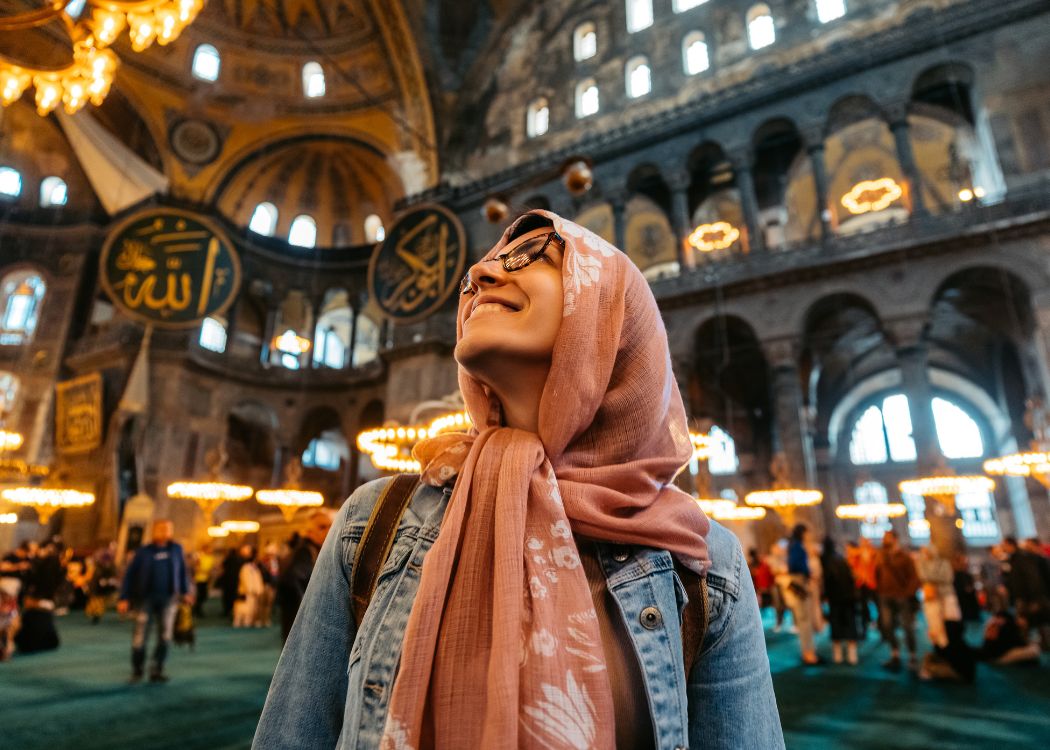
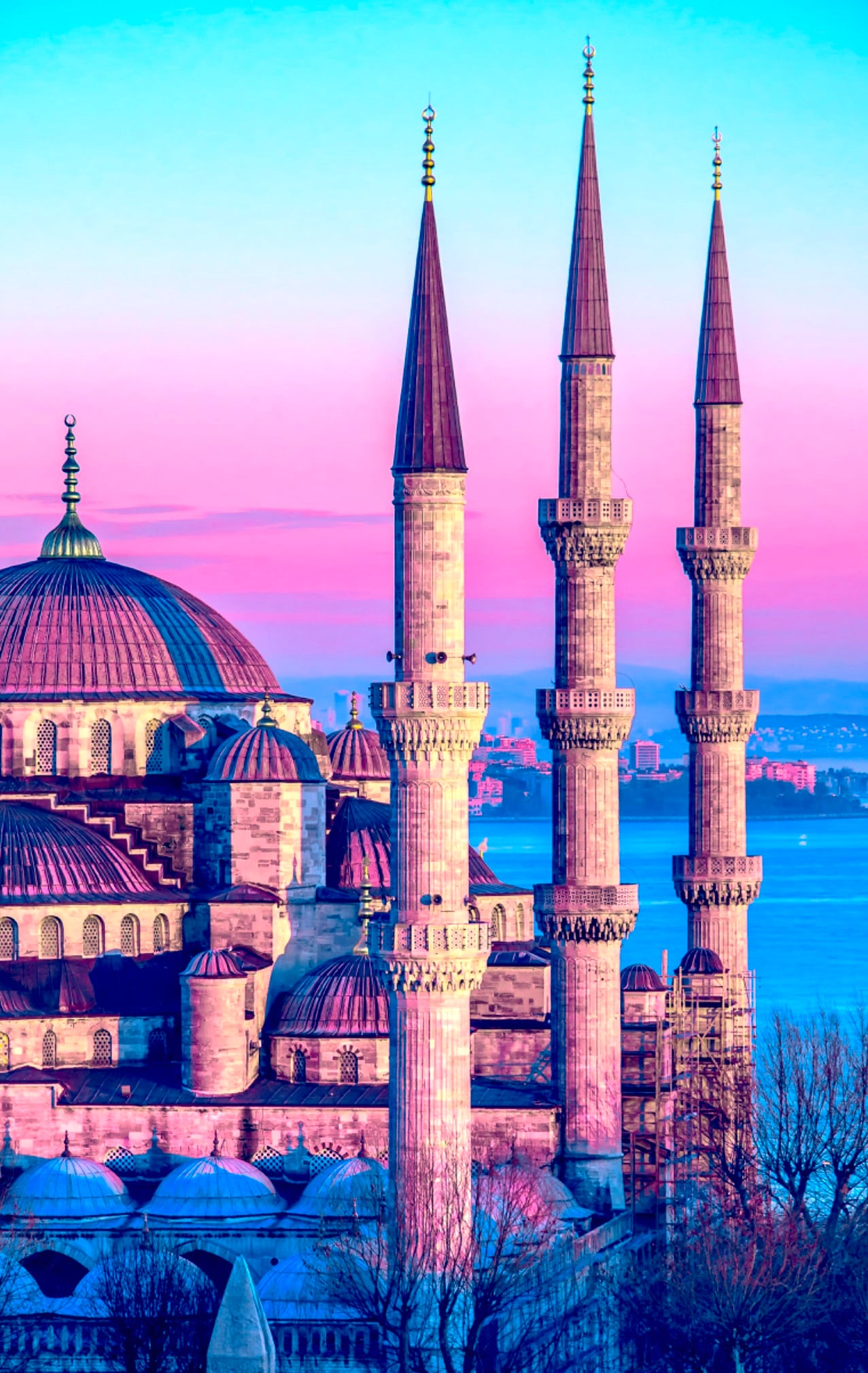
Because of its location, the museum combines very well with nearby sights such as the Blue Mosque, Basilica Cistern, and Hagia Sophia.
How to get to the museum
You can use the T1 tram line toward Eminönü and get off at Sultanahmet station. The museum is very close to the Blue Mosque and Basilica Cistern, so it is easy to find on foot once you arrive in the historic center.
If you are coming from the Asian side, you can take a ferry across the Bosphorus to Eminönü and then walk about 10 to 15 minutes, or continue by T1 tram toward Sultanahmet. For current public transport details, check official Istanbul transit resources such as metro.istanbul.
Tickets and visiting hours
The museum is described as not expensive, though a little higher in price than some other museums. Ticket prices can change, so it is best to check the official site or current museum sources before your visit. Some travelers prefer to visit with a guide for extra context.
The museum opens every day except Mondays. From 15 April to 30 October, it welcomes guests between 9 am and 7 pm. From 31 October to 14 April, it is open between 9 am and 5 pm. The museum is closed on the day before and the first day of religious holidays such as Ramadan and the Sacrifice Feast, as well as on 31 December and 1 January. Ticket counters close 30 minutes before the museum itself closes.
For a broader historical overview of the institution and its home in Ibrahim Paşa Palace, you can also consult Wikipedia.
Useful facts before you go
The Museum of Turkish and Islamic Arts is the first Turkish museum to cover Turkish and Islamic artworks collectively.
It is also noted as the last museum opened in the Ottoman period.
The manuscripts section alone hosts 18,298 works.
The carpet collection includes up to 1,700 handcrafted Turkish carpets and is considered one of the richest collections in the world.
The museum’s lower floor includes an Ethnography Section focused on Turkish daily life from recent centuries.
Final thoughts
If you want a museum visit that goes beyond a quick stop and instead connects religion, art, empire, and daily life, this is one of the strongest choices in Istanbul. The setting of Ibrahim Paşa Palace, the famous carpet collection, the handwritten Qurans, the sacred relics, and the remains of the Hippodrome together make the Museum of Turkish and Islamic Arts a memorable part of any Sultanahmet itinerary.