Dolmabahce Palace: the western palace of Istanbul
Istanbul, the heart of vast empires, has long been a city of emperors and sultans. Unsurprisingly, it is filled with monumental residences, and among them Dolmabahce Palace stands apart as the latest and most “Western” imperial palace of the city. Its story is not only about grandeur, but also about land reclaimed from the sea, changing tastes in architecture, and the final centuries of Ottoman rule.
The name itself is revealing. Dolmabahçe means “filled garden,” and it refers to the area’s earlier geography. Before the palace existed, this stretch between Kabataş and Beşiktaş was an extensive cove where ships could shelter. Even the Ottoman navy once anchored here during the siege of Constantinople. Over time, alluvium carried by streams and the absence of strong undersea currents gradually filled the cove, turning it into a marsh. From the reign of Sultan Ahmed I (1603–1617), the area was filled in stages and transformed into royal gardens used as a summer retreat. That landfill garden gave Dolmabahçe its name.
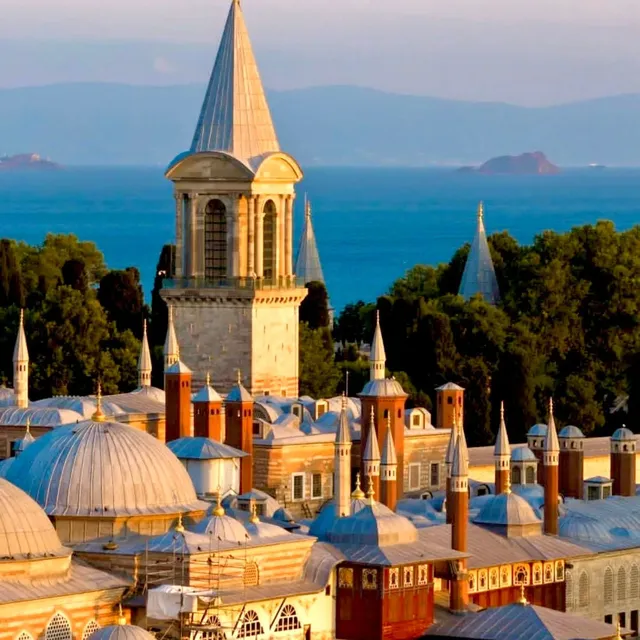
The district’s built history began to grow under Sultan Ahmed II (1691–1695), and later rulers continued to add pavilions and villas. Today, the site remains one of the city’s most impressive historical landmarks, and it is often visited together with other imperial monuments such as Topkapi Palace and Bosphorus-side sights enjoyed on a Bosphorus Cruise.
From filled garden to imperial residence
Known in earlier times as the Beşiktaş Garden, the area saw important structures rise and disappear over the centuries. A palace known as the Cağaloğlu Waterside Mansion was demolished in 1680, and a new palace was built the following year. This residence, referred to as Dolmabahçe Villa or Beşiktaş Palace, was repaired and expanded during the reign of Sultan Ahmed III (1703–1730), at the cost of 2046 pouches of gold. Yet it was only after the Patrona Halil Rebellion and the deposition of Ahmed III, during the reign of Sultan Mahmud I, that the work could be completed.
Sultan Mahmud I was particularly fond of the area and spent his summers here. A shrine in the backyard of the palace is said to hold his three wives and daughter. After the earthquake of May 22, 1766 damaged the Beşiktaş Palace, it was repaired by Sultan Mustafa III (1750–1774). Sultan Abdulhamid I (1774–1789) had another section of the shore filled and enlarged the complex. During the reign of Sultan Selim III (1789–1807), the buildings in the area were once again demolished. Architect Melling removed all the buildings in Dolmabahçe except the Tiled Kiosk (Çinili Pavilion) and built a new palace. That version remained until 1815, when a fire that began in the furnace room of the harem bath damaged it. Sultan Mahmud II then had it rebuilt.
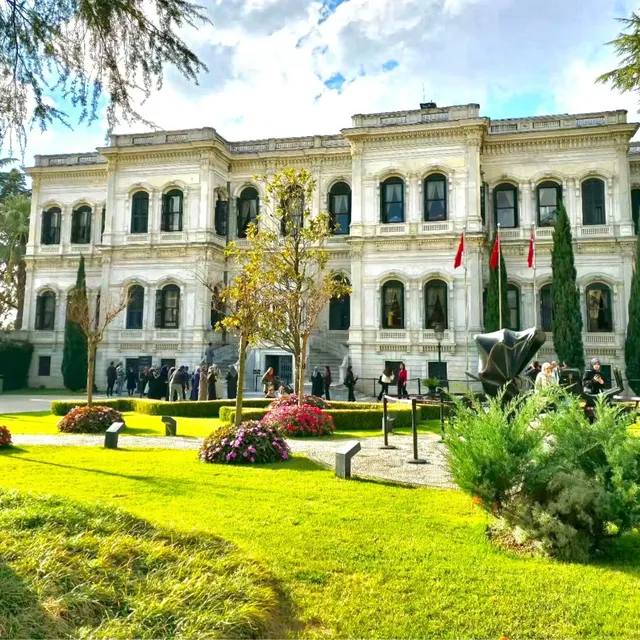
The Dolmabahce Palace seen today belongs to a later phase. After Sultan Abdulmecid came to the throne in 1839, Ottoman westernization gained fresh momentum. Seeking a residence suited to new imperial needs, he chose the Beşiktaş Palace site and commissioned the palace that still stands.
The last great Ottoman palace
Built between 1850 and 1856, the palace covered 110,000 m2 and included a remarkably large complex: the main buildings of the men’s section (Selamlık), the Reception Hall for Holidays, the Harem, a Crown Prince Suite, the Suite of the Sultana, Valide Sultan Mosque, the theatre, royal stables, the Suite of the Minister of War, the Clock Tower, the Royal Treasury, the interior decoration department, the Birds Pavilion, the Glass Pavilion, suites of regular concubines and harem aghas, Hareket Pavilions, the Hereke Weaving Room, suites of Baltacılar, Agavat, Bendegan and Musabihan, and a main kitchen serving these quarters.
During the long reign of Abdulhamid II, the palace was not used and fell into neglect. As damage increased, the theatre, boat yard, and the Suite of the Minister of War disappeared completely. The Royal Stables and the main kitchen were partially damaged, and other sections began to serve different purposes.
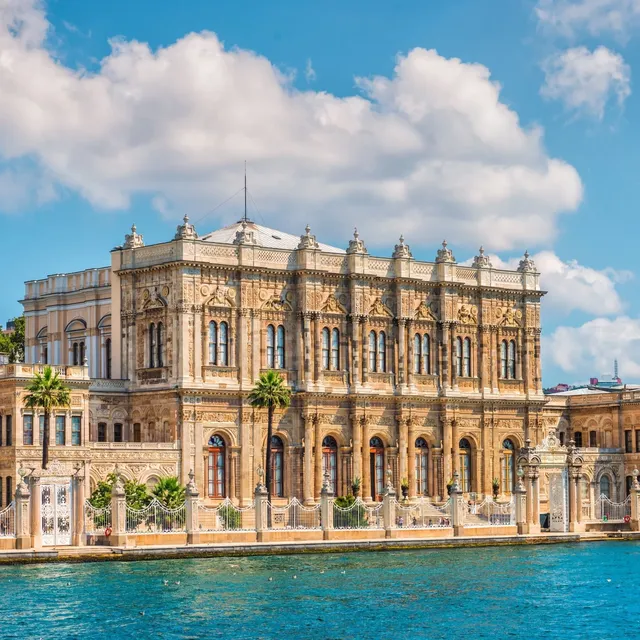
The main structure was designed by Karabet and Nikogos Balyan, among the leading architects of the period. It consists of three principal sections: Mabeyn-i Humayun (the Imperial Men’s Section), the Reception Hall for Holidays, and the Imperial Harem. Mabeyn-i Humayun served administrative functions, while the Harem was the private domain of the Sultan and his family. Between them stood the ceremonial reception hall used for important state occasions.
Why Dolmabahce Palace feels so grand
One of the palace’s most striking features is how fully it embraced the newest technological devices of the time. Central heating, electricity, and a telephone were installed here as symbols of modern luxury. The palace had a total living area of 45,000 m2, with 285 rooms, 46 halls, 6 Turkish baths, and 68 restrooms. Its floors were covered by 4,454 m2 of valuable carpets.
The Mabeyn section, where the Sultan worked during the day, was especially important both for its function and its lavish decoration. Visitors entered through the Medhal Hall and then encountered the Crystal Staircase, the Ambassadors Hall where diplomats were entertained, and the Red Room where they were received by the Sultan. These rooms were decorated to reflect the splendor of the empire. Upstairs, the Zulvecheyn Hall led to the Sultan’s private suite in the Men’s Section, which included a remarkable Turkish bath with alabaster brought from Egypt, along with a study and additional halls.
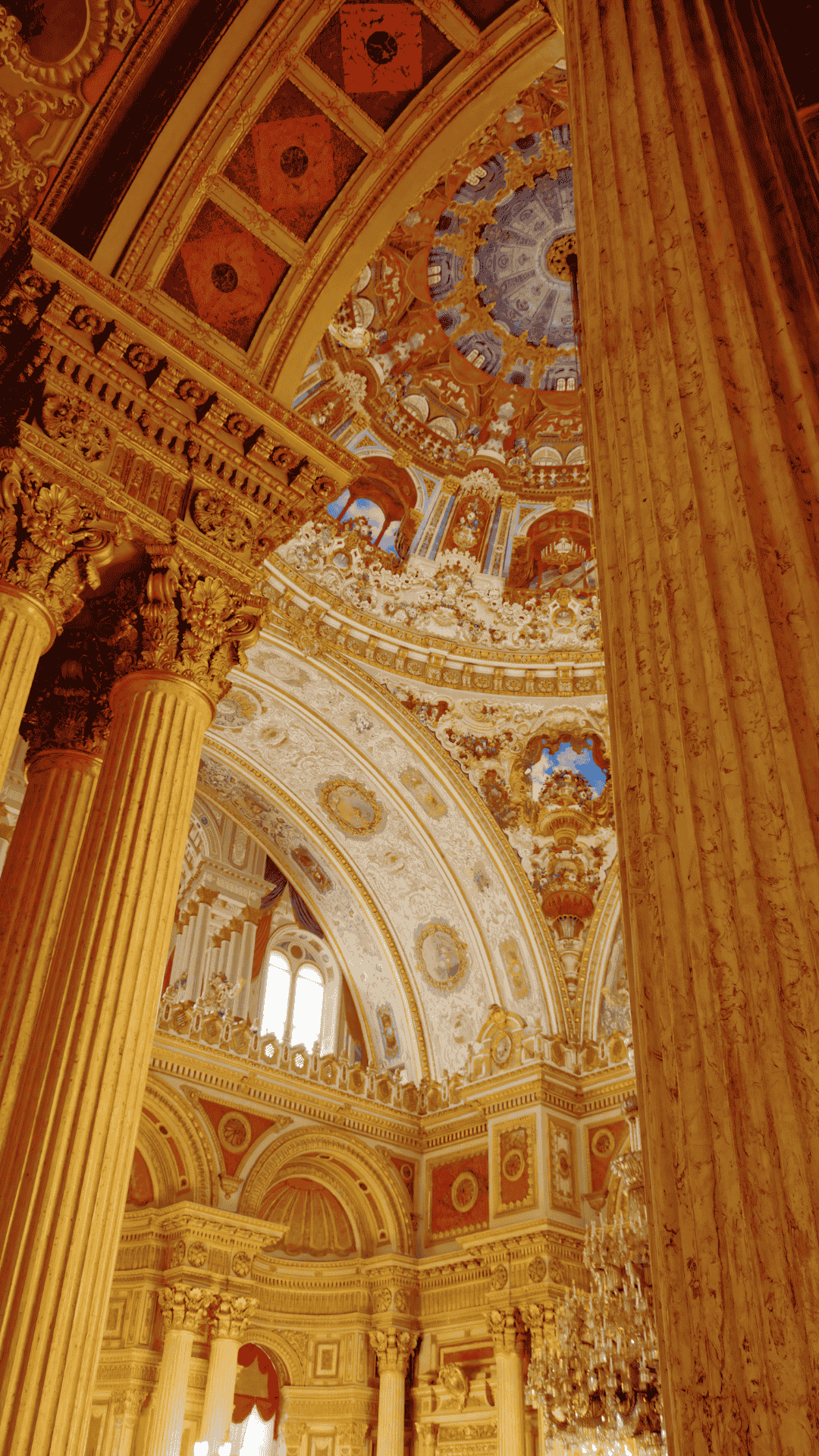
The Reception Hall between the Harem and Men’s Section is the palace’s most impressive space. It has the highest ceiling in the complex, covers more than 2000 m2, and features 56 columns. Its dome reaches a height of 36 m and carries a British-made chandelier weighing 4.5 tons. Even the heating solution was ambitious: hot air from furnaces in the cellar rose into the hall through the lower parts of the columns. During traditional religious holiday ceremonies, the golden throne from Topkapi Palace was brought here so the Sultan could exchange greetings with leading statesmen.
Architecturally, Dolmabahçe is one of the great 19th-century buildings of Istanbul. It reflects the aesthetic language of European architecture while preserving important traits of Ottoman palace tradition. In details it may look Western, but in layout and in the relationship between rooms and halls, it still echoes the traditional Turkish house on a monumental scale.
Dolmabahce Palace and Atatürk
For modern Turkey, Dolmabahce Palace carries a special emotional weight because Mustafa Kemal Atatürk used it as a residence and spent his final days here when his illness had become severe. That alone gives many visits a deeper sense of solemnity. At the same time, the text reminds us that Mustafa Kemal did not especially like the palace. During his illness in particular, he reportedly felt isolated from the people, as he disliked the very idea of living in palaces. There is even a story that one night, under the pretext of going to bed early, he slipped away to a Greek restaurant on the Bosphorus.
With the establishment of the Turkish Republic, former imperial palaces were redefined as part of the nation’s shared heritage. The reforms of the new state aimed to transfer such places from dynastic use to public ownership.
Act 431 of March 3, 1924 stated:
- Article 8 – The registered real estate and landed property within the land of the Turkish Republic belonging to persons who have been Sultans of the Ottoman Empire have been nationalized.
- Article 9 – Abolished imperial palaces, villas, and other properties, together with the upholstery, furniture, pictures, works of fine arts and all similar objects in them, have been nationalized.
- Article 10 – Together with previously nationalized properties bearing the title of the Sultans’ properties, all and former Imperial Treasure, with all its contents, and Palaces, Villas and other buildings, have been nationalized.
- Article 11 – A regulation will be prepared concerning the nationalized landed property and real estates.
Visiting Dolmabahce Palace today
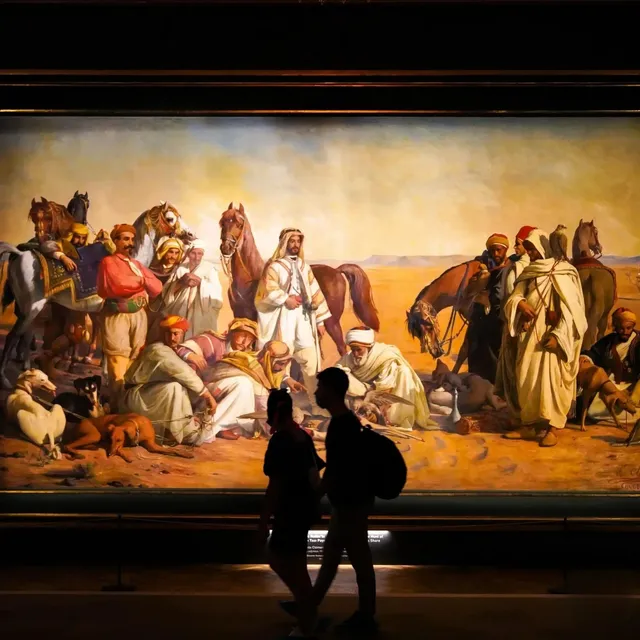
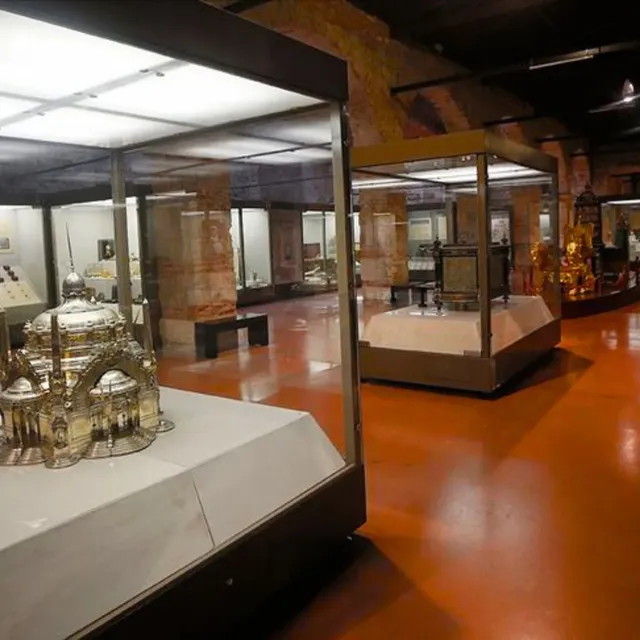
The first attempt to turn Dolmabahçe Palace into a museum also came from Mustafa Kemal. The first fine arts museum of Turkey, Istanbul State Museum of Painting and Fine Arts, opened on September 20, 1927 by Atatürk’s order in the Suite of the Crown Prince at the palace. Today, the complex is a museum that can be explored not only by statesmen, but by visitors from around the world.
If you plan to go, the text states that except for Mondays and Thursdays, the palace can be visited every day of the week from 09.00 to 16.00. As schedules and ticketing policies may change, it is wise to check the official site of the National Palaces administration before your visit: millisaraylar.gov.tr. You can also read a broad historical overview at Wikipedia.
Address: Dolmabahçe, Beşiktaş
Phone: +90 212 236 90 00
Dolmabahce Palace is only one of Istanbul’s marvelous places, but it remains one of the most revealing if you want to understand the city’s late Ottoman identity. Seen from the Bosphorus or explored room by room, it is a palace that fully deserves the name.