The Ottoman state was founded in 1299 and survived until the 20th century. Over roughly 600 years, it became an empire. Sultans, princes, grand viziers, and high officials passed through its history. The sultan was called “the earthly shadow of God”; his words were treated as orders. Yet the rulers of the empire were also human beings. They laughed, cried, grew tired, and, most importantly for this subject, felt hunger and thirst. So what did they eat and drink? And was palace cuisine really as magnificent as it sounds?
From Middle Asia to Anatolia, Ottoman cuisine—or, more broadly, Turkish cuisine—was shaped by many cultures. Before arriving in Anatolia, the Turks were a nomadic people whose diet leaned heavily on milk and meat. Along the way, they absorbed culinary traditions from Persians, Arabs, the Chinese, and the wider Mediterranean world. As the Ottoman state expanded and marriages brought foreign influences into the dynasty, these layers deepened. Centuries later, all of this would become the cuisine of Devlet-i Ali Osman: the Ottoman palace cuisine centered in Topkapi Palace.
Dining Table of the Sultan and the Rise of Palace Cuisine
It is not easy to summarize the cuisine and dining tradition of more than six centuries. The story has many details, and the palace kitchen did not become what we now imagine all at once. It is difficult to speak of a fully formed palace cuisine before Murat II. After his reign, older nomadic habits began to change and Ottoman culinary taste became more elaborate. The real transformation came with his son, Mehmet the Conqueror, who established Topkapı Palace and gave Ottoman cuisine the setting in which it became true palace cuisine.
Topkapı Palace was built between 1475 and 1478 during the reign of Fatih Sultan Mehmet. It served as the permanent residence of the Ottoman sultans for four centuries and has survived through additions and restorations. Today, it remains one of Istanbul’s essential historic sites, close to landmarks such as Hagia Sophia and Sultanahmet Square.
Matbah-ı Amire
Matbah-ı Amire, meaning “the main kitchen,” was also known as the palace kitchen. It fed the sultan, the harem, the grand viziers—in other words, the whole world of Topkapı Palace. It was located in the second courtyard. Even today, after entering through the middle gate, you can see the Matbah-ı Amire buildings on the right side of the court.
With 10 kitchens, 20 chimneys, and a total area of 5,250 square meters, Matbah-ı Amire prepared food for about 4,000 to 5,000 people. On days when the Divan met, during feasts, or when ulufe was distributed, this number could rise to 10,000-15,000. On ulufe days—the regular salary distribution made every three months to soldiers and other state workers—it became customary to serve soup, rice, and zerde to the janissaries waiting in the second courtyard.
The complex could be entered through several doors opening onto the second courtyard: the lower kitchen door, the main kitchen door, the special kitchen door, and the helvahane door. Matbah-ı Amire had two main sections: the larger kitchen and the smaller kitchen, along with the Helvahâne. In the larger kitchen, meals were prepared for palace residents, Divan-day dinners, and feasts. This section fed 5,000 people daily and included four subsections named for Valide Sultan, Kızlarağası, Kapıağası, and Kilercibaşı.
Through the Has Mutfak door, one entered the main kitchen zone lined with ovens and furnaces. The kitchen had eight sections in total. Each had separate ovens, furnaces, cooks, and apprentices. In the 16th century, the staff included a specialized team of 60 cooks and 200 apprentices: dough cooks, sesame roll specialists, rice cooks, kebab cooks, aviary cooks, vegetable specialists, and dessert specialists. Above them stood a chief cook of higher rank. The kitchen used ovens of different sizes heated by wood or coal, along with tandoori, grills, and various implements. Fire rakes, clips for mixing, bakers’ peels, and trivets were among the tools kept near the ovens.
Matbah-ı Hümayun—also called Matbah-ı Has or Kuşhâne—was known as the small kitchen. This was where the sultan’s special meals were cooked and where high-ranking individuals of the palace school were served. In the 16th century, 17 chef cooks, 12 apprentices, and one head cook worked here. Because of the danger of poisoning, the cooks who accompanied the sultan on campaigns were chosen from especially reliable men.
Helvahâne
The final section of the kitchen complex was the Helvahâne, a four-domed building. Here, desserts, jams, syrups, compotes, pastes, and pickles were prepared. According to records, 812 people worked in the Helvahâne under the supervision of the Helvacıbaşı (ser-helvaciyan).
What Was Cooked at Matbah-ı Amire?
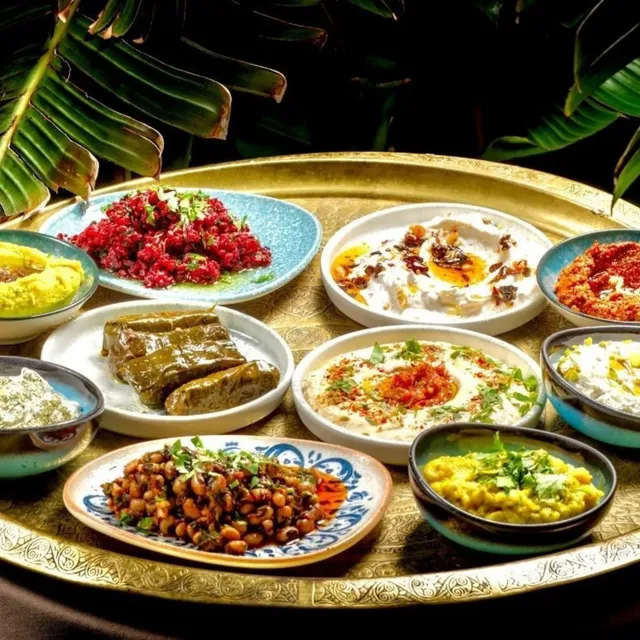
A striking range of dishes, from sour to sweet and from hot to cold, was prepared in the palace. Some stand out for their ingredients and methods. Recipes often used sugar, honey, and dried fruits. Examples include pumpkin stuffing with red currant and sugar; Nızbaç, a meat dish with dried black grapes, nutmeat, gum mastic, and rose water; milky kebab made by boiling lamb in milk and then cooking it as shish kebab, eaten with cinnamon; stuffed leaves with cherry, cantaloupe, or apple filling with meat; and chicken prepared with berries, apricot, honey, and almond.
Desserts were no less varied. The Helvahâne produced many types of halva, alongside saffron-and-rice desserts, blancmange, Noah’s pudding, Terkib-i Çeşm-i Şir, and helatiyes. One important point is that none of the foods mentioned above originally included tomatoes, green peppers, potatoes, or corn. The Ottoman kitchen encountered tomatoes, oranges, peppers, and beans in the 18th century, and potatoes in the 19th century.
Was Ottoman cuisine heavy? Some people assume Turkish cuisine is always fatty, spicy, and dense. Yet, as noted in Nil Sarı’s essay on the regulation of Ottoman palace food according to the seasons and the medical understanding of its era, the palace table was based on balance rather than excess. Meat, wheat, rice, and plain butter played major roles, but they were accompanied by many other animal and plant-based foods. Nutrition was linked to health, and food choices were shaped by the idea that bodily balance changed with the seasons. This understanding reflected the medical thinking of the time. For broader background on the palace itself, you can also check Wikipedia’s Topkapı Palace entry and official museum resources such as muze.gen.tr.
Key Parts and Secrets of Ottoman Cuisine
- Unlike common people, the palace used rice instead of cracked wheat, sugar instead of honey and grape molasses, and white bread and yeast cake instead of darker breads and pastries.
- Compote and sherbet were preferred at palace dinners instead of plain water.
- Sheep and lamb were the preferred meats.
- Bread was extremely important. Fine white bread, finest white bread, and regular bread were distributed according to rank in the palace. The sultan ate the finest bread.
- The most favored vegetable was aubergine, said to have originally come from China.
- Beans, potatoes, turkey, cacao, corn, and some pumpkin varieties arrived only after the discovery of America.
- Gumbo had a special place in Ottoman cuisine.
- Among the 7-8 kinds of halva produced were halva with musk and rose water, flax halva, and almond halva.
- In the 19th century, cinnamon was used in cooking fish and meat.
- Sour grape juice was a fixture in the kitchen.
- Foods cooked in pots were flavored with sour grape juice, lemon juice, dib roman, onions, and various spices.
- Cooking was done with plain butter, meaning unsalted butter.
- Tomatoes joined Ottoman cuisine toward the end of the 18th century. Early tomatoes were cherry-sized and eaten green; stuffing, soup, and marinated tomatoes were prepared from them.
- Shish kebab was not cooked on iron skewers as it often is today. Bay tree stems and aubergine stalks were used instead, allowing their aroma to pass into the meat.
- The sultan’s meal was first tasted by the Çaşnıgirbaşı, the chief taster, before being served in shallow pans.
- Leaf stuffing was not limited to vine leaves; chestnut, conker, quince, and bean leaves were also used.
- Fatih Sultan Mehmet, who liked eating alone, was said to enjoy shrimp, chicken, and fish. Eggs were important in his meals, including grilled chicken, special porridge, and pita with cheese. The meats on his table included sheep, chicken, goose, lamb’s feet, and tripe. Common vegetables in the palace were leek, cabbage, and spinach.
- Sultan Abdülhamit II’s favorite dish was fried eggs with onions. He reportedly rewarded the person who could prepare it best, though making it well required skill and could take about three and a half hours.
- Abdülhamit also liked simple foods, especially yoghurt and çılbır.
Seen together, these details show that the palace table was not only about luxury. It was also about organization, hierarchy, seasonal thinking, technical skill, and enormous scale. The story of Matbah-ı Amire reveals how the Ottoman court fed thousands while still preserving separate standards for the sultan’s own meals. In that sense, the grandeur of the dining table was inseparable from the discipline of the kitchen behind it.