Your Guide to Hagia Sophia
Standing at the heart of Istanbul's Sultanahmet district, Hagia Sophia is one of the world's most influential monuments, known for its exceptional architecture and its central place in Byzantine, Ottoman, and modern Istanbul history. Constructed in just five years and 10 months by Emperor Justinian I, it held the title of the world's largest cathedral for nearly a thousand years. Today, restored as an active mosque, it continues to attract worshippers and cultural visitors from around the world — worshippers use the ground-floor prayer area, while cultural visitors follow a separate route through the upper gallery overlooking the main interior and dome.
This guide covers everything you need for a rewarding visit: the full sweep of its 1,500-year history, a room-by-room breakdown of what to see inside, current ticket and entry information, practical logistics, and insider tips gathered from Istanbul locals who know the building like an old friend. Whether you have 45 minutes or half a day, we will help you make the most of your time at one of humanity's greatest architectural achievements.
Hagia Sophia is more than a building; it is a living palimpsest of faith, power, and artistic genius. Byzantine mosaics, Ottoman calligraphy, and later architectural additions reflect the building's changing religious and political functions across different periods. That layered story is what makes a visit here unlike anything else in the world.
History of Hagia Sophia
Few buildings carry the weight of history quite like Hagia Sophia. Across fifteen centuries, it has served as the crowning jewel of the Byzantine Empire, the grandest mosque of the Ottoman dynasty, a secular museum in the young Turkish Republic, and once again a functioning mosque in the modern era. Each transformation added new layers of meaning — and new layers of art, architecture, and memory — without fully erasing what came before. The result is a building that reads like a compressed biography of Western and Eastern civilization.
Emperor Justinian I commissioned the construction of Hagia Sophia after the previous church on the site was destroyed during the Nika riots of 532. He entrusted the project to two extraordinary mathematicians and physicists, Anthemius of Tralles and Isidore of Miletus — not architects in the traditional sense, but scholars who understood geometry, optics, and the physics of load-bearing structures. Their brief was staggering: create a building that would surpass anything the Roman world had ever produced.
The result was a structure that seemed to defy the laws of nature. The central dome, rising 55.6 meters above the marble floor and spanning 31.2 meters in diameter, appeared to float on a ring of 40 arched windows that flooded the interior with natural light. The historian Procopius famously wrote that the dome appeared to be suspended from heaven by a golden chain rather than supported from below. More than 10,000 workers labored for five years, using stone and marble brought from different parts of the empire, including materials associated with Anatolia, the Aegean, and Egypt, and gold and colored tesserae were used to create the extensive mosaic decoration of the vaults, domes, and walls.
For 916 years, Hagia Sophia served as the seat of the Ecumenical Patriarch of Constantinople, the heart of Eastern Orthodox Christianity, and the church where Byzantine emperors were crowned. It set the standard for religious architecture across the Christian and Islamic worlds, and its engineering innovations — pendentive dome construction, buttress systems, complex load distribution — influenced builders for centuries to come.
In one of the most notorious episodes of medieval history, the Fourth Crusade was diverted from its original goal of recapturing Jerusalem and instead sacked the Christian city of Constantinople in April 1204. Crusader armies looted Hagia Sophia with devastating thoroughness, stripping the church of gold, silver, sacred relics, and jeweled icons that had been accumulated over seven centuries. Many objects taken from Constantinople during the Fourth Crusade were transported to Venice. Among the best-known are the bronze horses associated with Constantinople's Hippodrome, which were later displayed at St. Mark's Basilica.
For 57 years, Hagia Sophia served as a Roman Catholic cathedral under the Latin Empire of Constantinople. A Venetian cleric, Tommaso Morosini, was installed as patriarch. The building suffered neglect and further looting during this period. When the Byzantine Greeks recaptured the city in 1261 under Emperor Michael VIII Palaiologos, they found Hagia Sophia in a state of disrepair. Restorations followed, but the empire itself was weakened beyond recovery, and the building's grandest days as a cathedral were numbered.
When Sultan Mehmed II, known as Mehmed the Conqueror, breached the walls of Constantinople on May 29, 1453, he rode directly to Hagia Sophia. According to Ottoman chronicles, he entered the building on horseback, marveled at its grandeur, and immediately declared it a mosque. It was an act of profound symbolic significance: the greatest church in Christendom would now serve the faith of Islam, and the city of Constantine would become the capital of the Ottoman Empire.
During the Ottoman period, Hagia Sophia was adapted for Islamic worship through the addition of a mihrab, minbar, minarets, calligraphy, and structural reinforcements. Figurative mosaics were covered or altered at different times during the Ottoman period. Some were later uncovered and conserved during the twentieth-century museum period. They added essential Islamic architectural elements: a mihrab (prayer niche) oriented toward Mecca, a minbar (pulpit), and over the following century, four soaring minarets that reshaped the Istanbul skyline. The greatest Ottoman architect, Mimar Sinan, was called upon in the 16th century to reinforce the building's structure with massive external buttresses, ensuring it would survive the earthquakes that periodically shook the region.
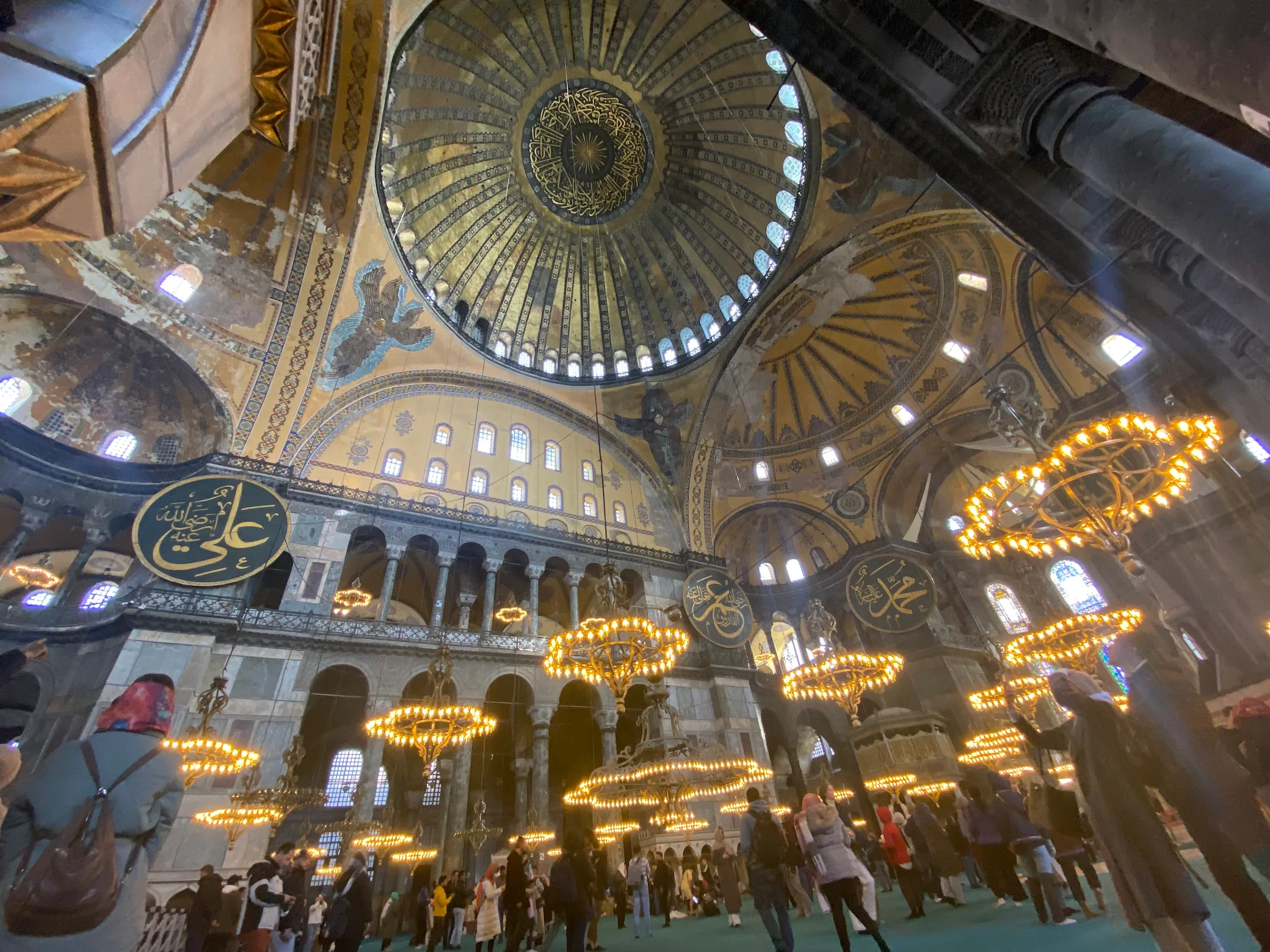
Eight colossal calligraphic roundels, measuring 7.5 meters in diameter, were hung inside the building in the 19th century by the calligrapher Kazasker Mustafa Izzet Efendi. These gilded wooden discs bear the names of Allah, the Prophet Muhammad, the first four caliphs, and the two grandsons of the Prophet. They are among the largest examples of Islamic calligraphy in the world and have become iconic features of the interior, just as the Byzantine mosaics are. The coexistence of Byzantine mosaics and monumental Ottoman calligraphy is one of Hagia Sophia's most distinctive interior features.
On November 24, 1934, the Council of Ministers of the Turkish Republic, under the direction of Mustafa Kemal Atatürk, issued a decree converting Hagia Sophia from a mosque into a museum. On November 24, 1934, the Council of Ministers approved the conversion of Hagia Sophia into a museum. It opened to visitors as a museum in February 1935.
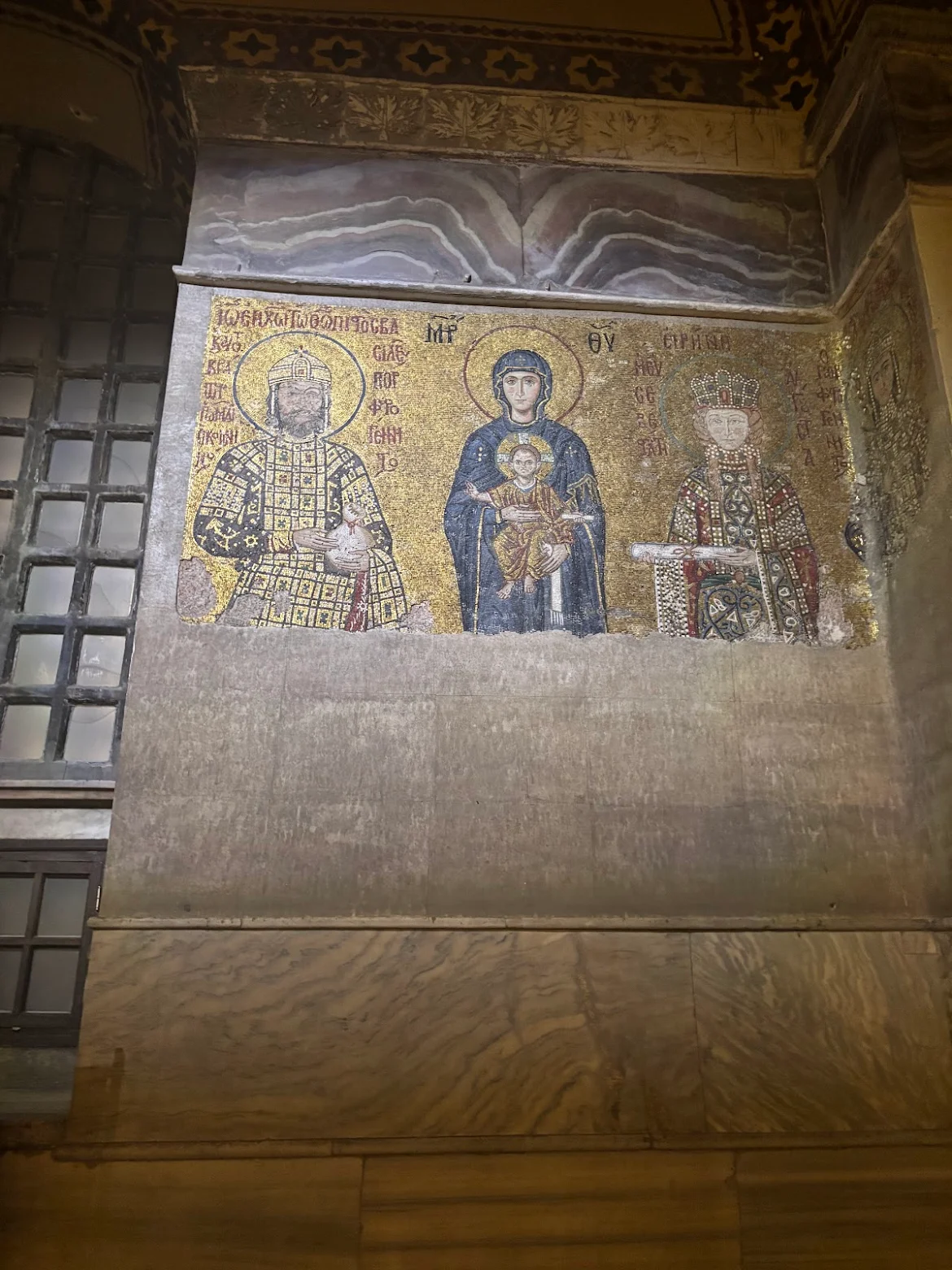
The museum era brought sweeping restorations. The Byzantine Institute of America, led by Thomas Whittemore, began the painstaking work of uncovering the mosaics that had been plastered over for nearly 500 years. The Deësis mosaic in the upper gallery, depicting Christ flanked by the Virgin Mary and John the Baptist, emerged as one of the great masterpieces of medieval art. The building was open to visitors of all faiths and none, free of charge, and became Turkey's most visited cultural site. UNESCO designated it as part of the Historic Areas of Istanbul World Heritage Site in 1985.
On July 10, 2020, Turkey's Council of State annulled the 1934 decree, and President Recep Tayyip Erdogan signed a presidential decree transferring Hagia Sophia back to the Diyanet, Turkey's Directorate of Religious Affairs. The first Friday prayers were held on July 24, 2020, attended by thousands. The decision drew strong reactions both domestically and internationally, with supporters calling it a correction of a historical wrong and critics expressing concern about the preservation of its multicultural heritage.
In practice, the building remains open to visitors of all backgrounds outside of prayer times. The Byzantine mosaics are covered with white curtains during prayers and revealed again afterward. Since January 2024, a ticketed entry system for international tourists has been introduced, with proceeds going toward the building's ongoing conservation. Today, Hagia Sophia stands as a functioning mosque that also serves as one of the most important cultural monuments on earth — a living symbol of Istanbul's identity as a city that bridges civilizations, faiths, and eras.
What to See Inside Hagia Sophia
Walking into Hagia Sophia is a sensory event. The sheer scale of the interior — the dome soaring above you, the columns receding into shadow, the gold and green of ancient mosaics catching the light from high windows — produces a visceral reaction that photographs cannot prepare you for. The current upper-gallery route provides views of the main interior, dome, Ottoman additions, marble decoration, and several important Byzantine mosaics. Some ground-floor features are not included in the standard cultural-visitor route.
The Main Dome
Rising 55.6 meters above the floor and spanning 31.2 meters in diameter, the central dome of Hagia Sophia was the largest in the world for nearly a millennium. It rests on four pendentives — curved triangular sections that transfer the dome's weight to four massive piers below. Forty arched windows ring the base of the dome, creating a halo of light that gives the structure its legendary floating appearance. The interior was originally covered in gold mosaic depicting a monumental cross, later replaced with Islamic calligraphy. Stand directly beneath the dome and look up: the sense of space and light is one of the most transcendent experiences in all of architecture.

Byzantine Mosaics
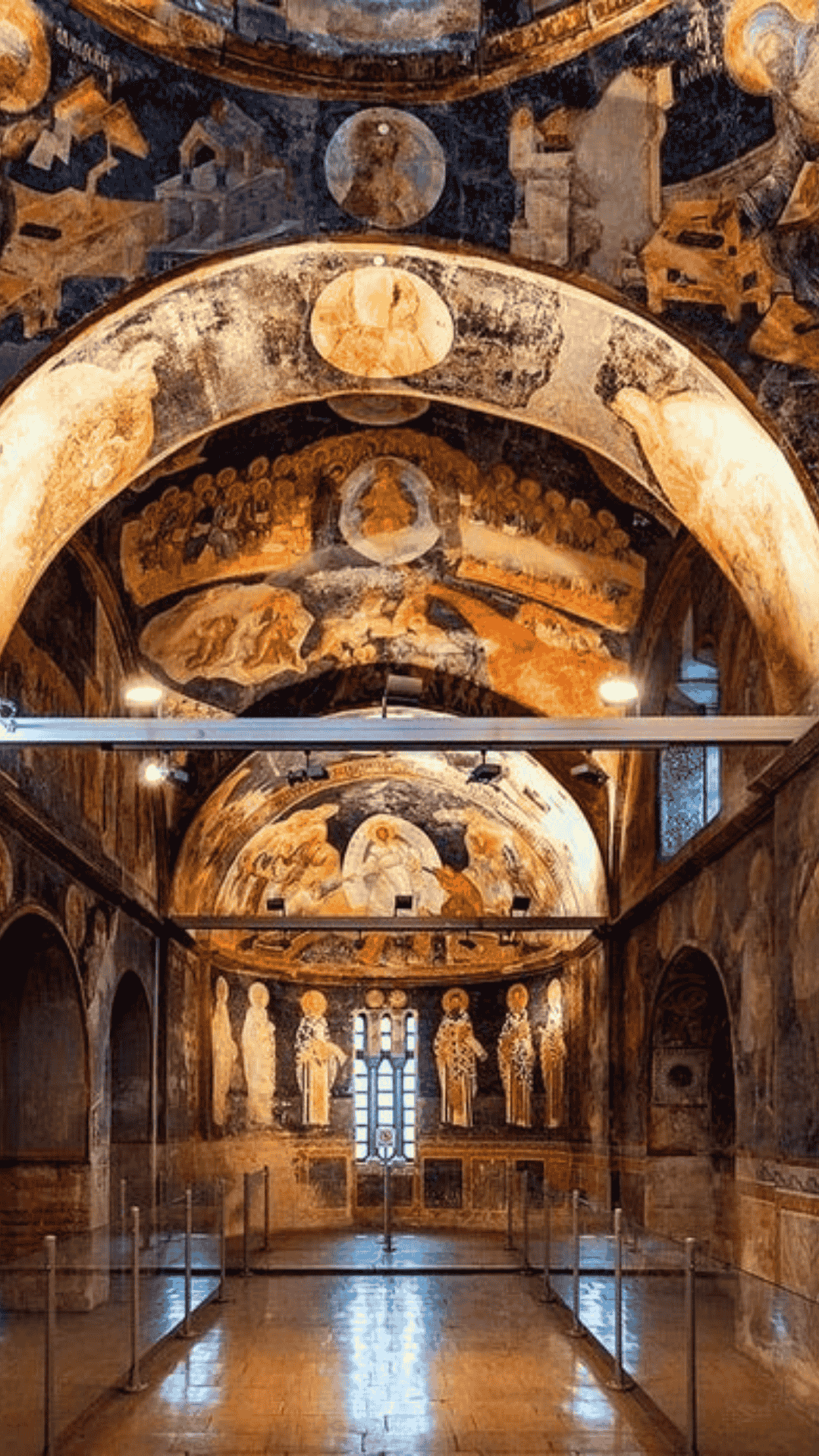
The surviving Byzantine mosaics of Hagia Sophia are among the finest in existence. The most celebrated is the Deësis mosaic in the upper south gallery, dating to the 13th century, which depicts Christ Pantocrator (Christ as ruler of all) flanked by the Virgin Mary and John the Baptist. The tenderness and realism of this work marked a turning point in Byzantine art. Other notable mosaics include the 10th-century panel in the vestibule showing Emperor Justinian presenting the church to the Virgin Mary and Emperor Constantine presenting the city of Constantinople, and the 12th-century mosaic of Empress Zoe and her husband Emperor Constantine IX Monomachos flanking Christ. During prayer times, white curtains are drawn over the figurative mosaics; they are visible again once prayers conclude.

Islamic Calligraphy Roundels
Eight massive wooden roundels, each 7.5 meters in diameter, hang from the piers and arches of the nave. Painted in gold on a dark green ground, they bear the names of Allah, the Prophet Muhammad, the first four caliphs (Abu Bakr, Umar, Uthman, and Ali), and the Prophet's two grandsons (Hasan and Husayn). Created in the mid-19th century by the calligrapher Kazasker Mustafa Izzet Efendi, they are among the largest works of Islamic calligraphy ever produced. Their scale and gilded beauty complement rather than compete with the Byzantine architecture, creating a dialogue between two artistic traditions that is unique in the world.

The Weeping Column
In the northwest corner of the nave stands a marble column encased in bronze plating with a small hole at thumb height. Known as the Weeping Column or the Column of St. Gregory, legend holds that the column has been moist since the 6th century, when St. Gregory the Miracle Worker appeared in a vision. Visitors traditionally insert their thumb into the hole and rotate it 360 degrees while making a wish. If their thumb comes out moist, the wish will come true. The column's bronze plating is worn smooth from centuries of hopeful hands. Whether the moisture is miraculous or mere condensation, the ritual connects modern visitors to a tradition stretching back to the age of Justinian.

The Imperial Gate
The Imperial Gate is the largest of the nine doors on the eastern end of the narthex, and for a thousand years it was reserved exclusively for the emperor. Made of oak reinforced with bronze, the door is seven meters tall and has been dated by dendrochronology to the 6th century, making it quite possibly the oldest surviving door in Istanbul. Above the gate is a stunning 9th- or 10th-century mosaic showing Christ Pantocrator seated on a jeweled throne, with an emperor prostrate before him. The identity of the emperor is debated: it may represent Leo VI the Wise seeking readmission to the church after his controversial fourth marriage. The mosaic is one of the first things visitors see upon entering, and it sets the tone for everything that follows.

The Marble Panels and Opus Sectile
The walls of Hagia Sophia are lined with enormous panels of proconnesian marble, quarried on Marmara Island in the Sea of Marmara. These panels were cut in pairs and opened like a book to create symmetrical patterns known as butterfly patterns. The marble's natural veins of white, gray, and green create an almost hypnotic visual rhythm across the nave walls. The floor features intricate opus sectile work — geometric patterns composed of cut marble, porphyry, and other rare stones. The omphalion, a large circular area of inlaid marble near the main entrance, is where emperors were crowned, its concentric rings of porphyry and granite forming one of the most sacred spots in the building.

The Upper Gallery
The U-shaped upper gallery wraps around the nave at the second level and is accessed by a gently sloping stone ramp (originally designed to allow empresses to be carried up on litters). This gallery holds Hagia Sophia's most precious treasures, including the Deësis mosaic, the Empress Zoe mosaic, and the mosaic of Emperor John II Komnenos and Empress Irene with the Virgin Mary. It also holds an unexpected piece of graffiti: a runic inscription carved into the marble balustrade by a Viking mercenary in the Varangian Guard, probably in the 9th century. The inscription is thought to read "Halvdan carved these runes," a startlingly human touch in a building of such monumental scale. The upper gallery offers the best elevated views of the interior and should not be missed (access is currently limited; check at the entrance for current gallery opening status).
The Exterior and Sultanahmet View
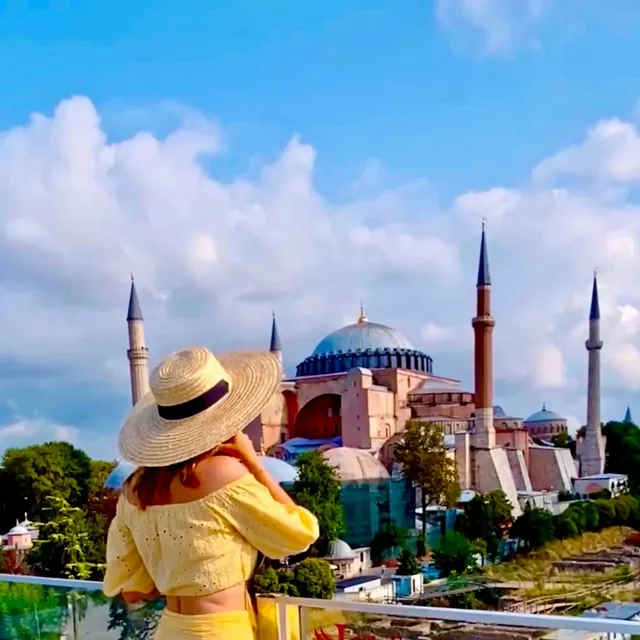
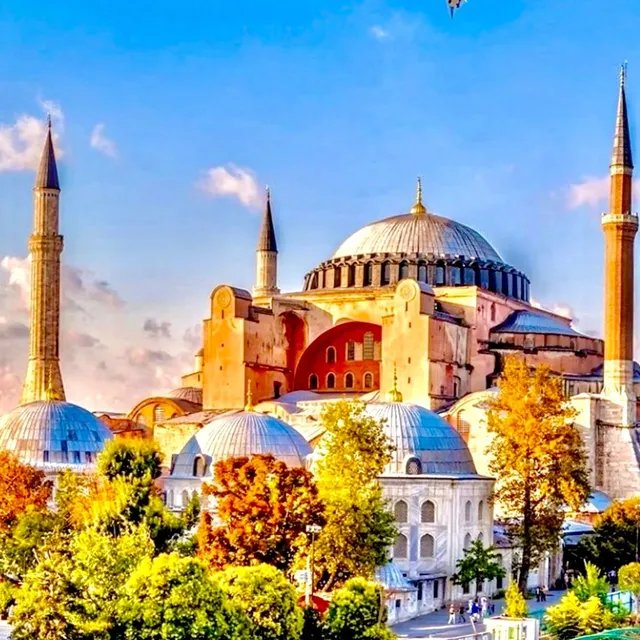
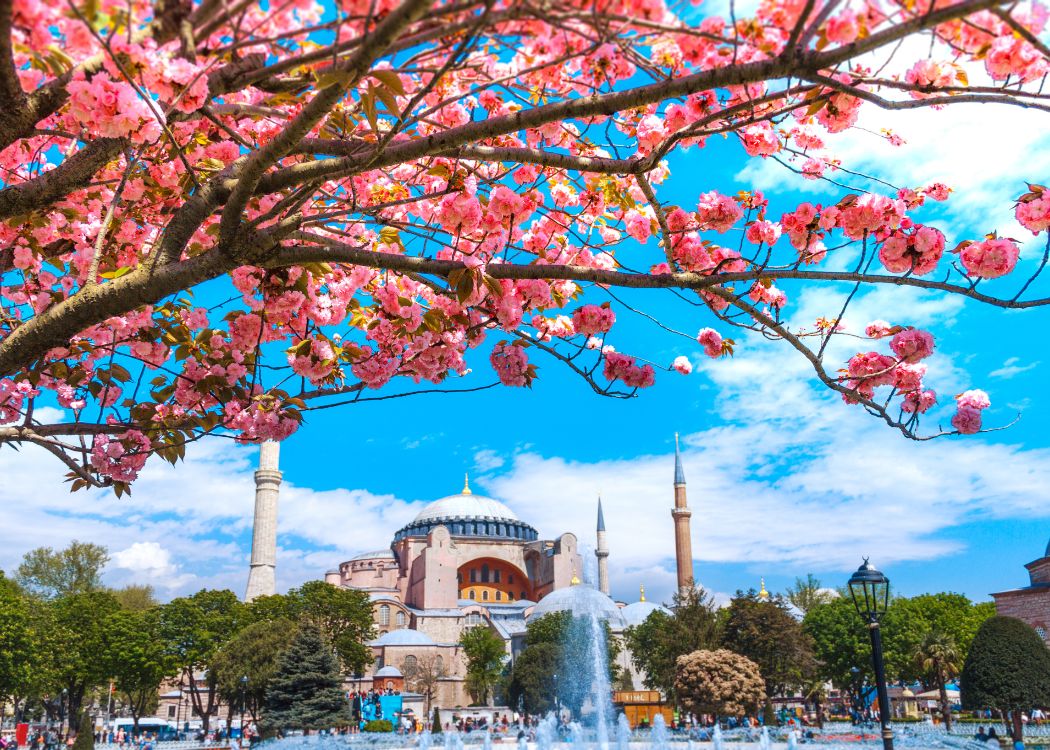
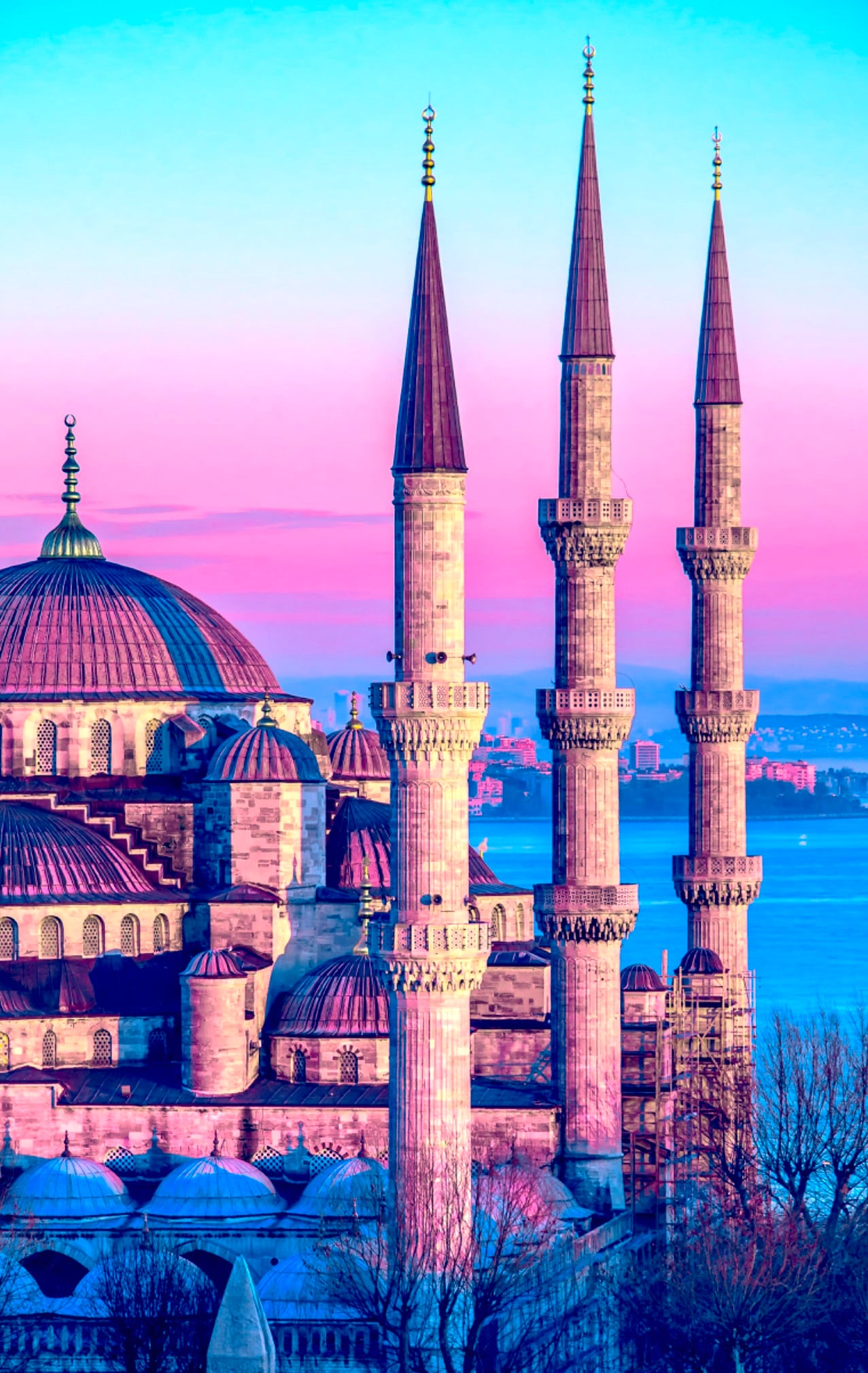
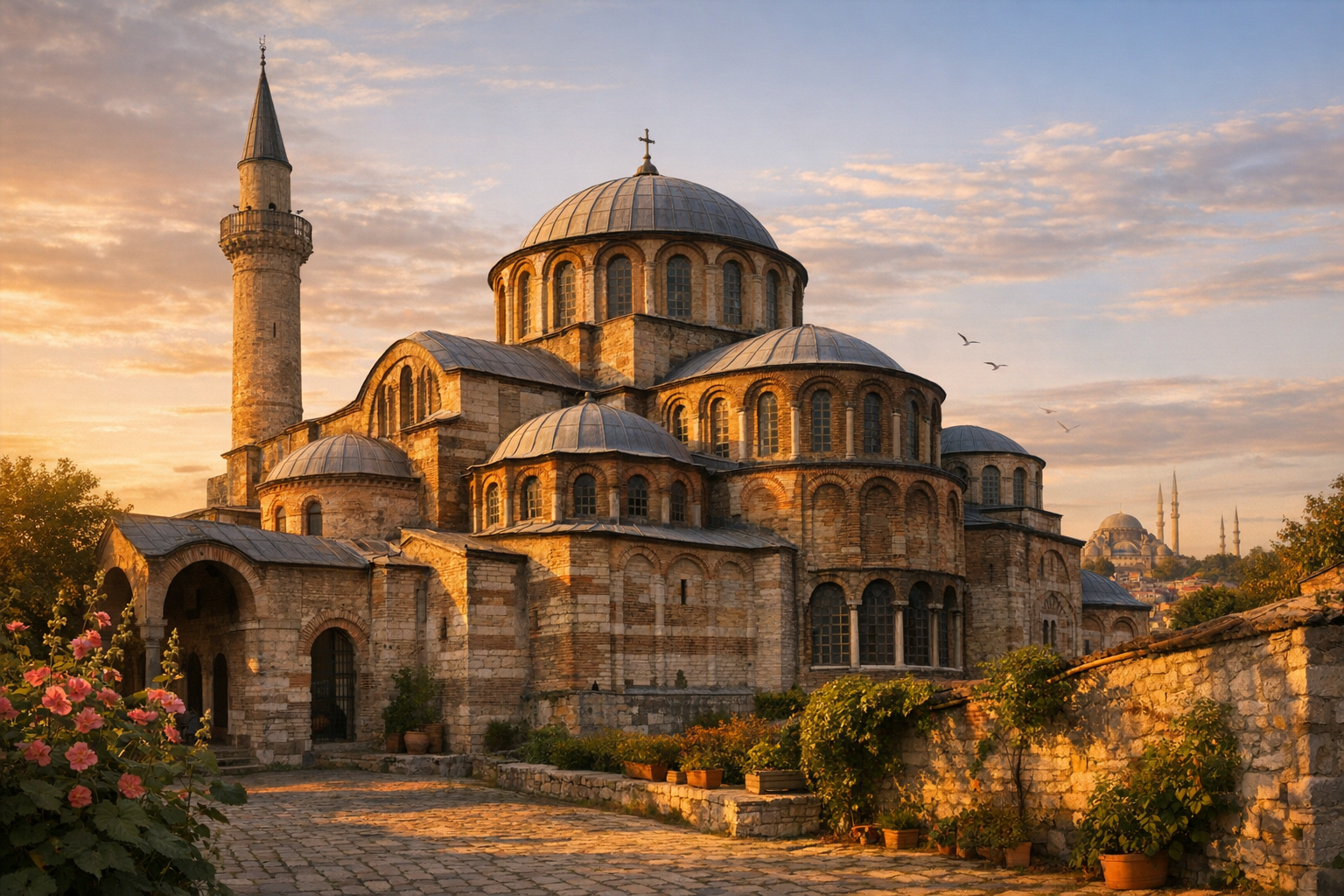
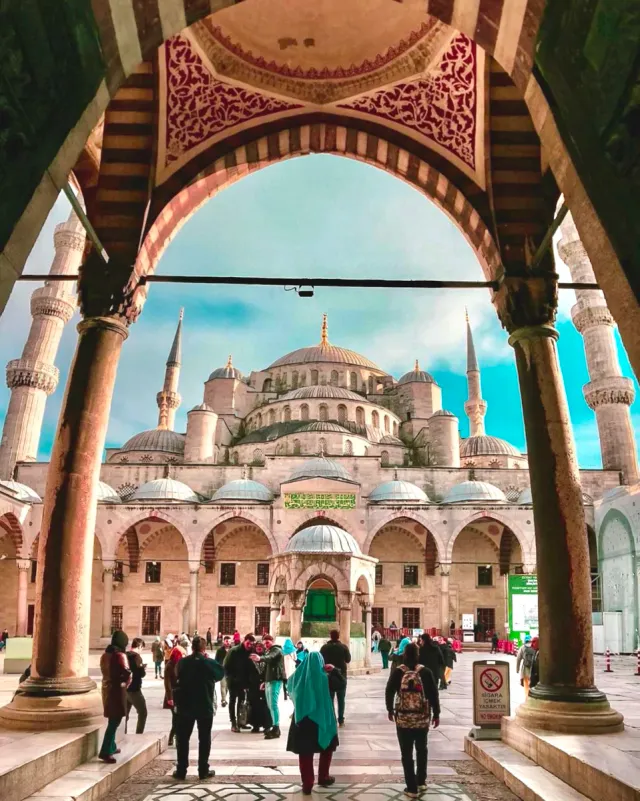
The exterior of Hagia Sophia is as important as its interior. The massive dome, ringed by half-domes and buttresses, creates a cascading silhouette that has defined the Istanbul skyline for 1,500 years and inspired the design of the great Ottoman mosques that surround it. The four minarets, added by the Ottomans over several centuries, give the building its unmistakable profile. The best exterior views are from the park between Hagia Sophia and the Blue Mosque, where the two buildings face each other across a garden of fountains and tulip beds. At sunset, when the stone glows amber and the call to prayer echoes from both buildings simultaneously, the view is among the most unforgettable in all of Europe. The courtyard fountain (sadirvan) on the western side is an excellent spot for photographs with fewer crowds.
Tickets & How to Visit Hagia Sophia
Do You Need a Ticket?
Since January 15, 2024, international tourists must purchase a ticket to enter Hagia Sophia outside of prayer times. Turkish citizens and all worshippers entering for prayer continue to enter free of charge. Children under 8 enter free regardless of nationality. The ticket system was introduced to manage crowd flow, fund ongoing conservation, and improve the visitor experience. Tickets include an audio guide in multiple languages and guarantee timed entry, which significantly reduces queuing.
Skip-the-Line Options
Standard timed-entry tickets can be purchased online through the official Hagia Sophia website or through authorized resellers. These digital tickets let you scan a QR code at the entrance and skip the general queue entirely. Third-party services offer enhanced skip-the-line packages that bundle entry with guided tours, headsets, and priority access during peak hours. We strongly recommend booking at least 24 hours in advance, especially during April through October, when wait times for walk-up tickets can exceed 90 minutes during the midday rush.
Guided Tour vs. Self-Guided Visit
A guided tour is the best way to experience Hagia Sophia if you want to understand the story behind what you are seeing. A good guide will decode the mosaics, explain the engineering of the dome, and bring the building's layered history to life in ways that even the best audio guide cannot match. Group tours typically last 45 minutes to an hour and cost between 40 and 80 euros per person. Private tours offer more flexibility and depth. For budget-conscious visitors, the audio guide included with your ticket is excellent, covering over 30 points of interest. Self-guided visitors should allow 1.5 to 2 hours to explore at a comfortable pace.
Best Time to Visit
The single best strategy is to arrive at 9:00 AM when the doors open. The first hour is the quietest, and morning light streaming through the eastern windows creates the most dramatic illumination of the interior. Midday, from about 11:00 AM to 2:00 PM, is the busiest period, when large tour groups converge. Late afternoon after 4:00 PM is another good window, though you should check the Maghrib prayer time, which varies seasonally, to ensure your visit is not interrupted. Friday mornings before the midday Jummah prayer can also be crowded with worshippers, so plan accordingly. Weekdays are generally quieter than weekends and holidays.
Istanbul Tourist Pass® & Istanbul Prime Pass
For visitors looking for a more seamless and value-packed experience, the Istanbul Tourist Pass® is another excellent option. Hagia Sophia is included in the pass, meaning you can enter without purchasing a separate ticket. The Istanbul Tourist Pass® is also included within the Istanbul Prime Pass, offering even more flexibility for travelers who want to bundle premium experiences.
With the pass, you benefit from a fully digital and hassle-free experience, including hosted entry and access to an audio guide, helping you better understand the history and significance of Hagia Sophia. There is no need to wait in ticket lines or manage multiple bookings — simply choose your preferred time slot, arrive at the meeting point, and enjoy a smooth entry process.
Beyond Hagia Sophia, the pass covers 120+ top attractions and experiences across Istanbul, making it an ideal choice for visitors planning to explore the city in depth. From iconic landmarks to guided tours and unique activities, it offers both convenience and excellent overall value.
If you are looking to save time, skip lines, and maximize your Istanbul itinerary, the Istanbul Tourist Pass® (and its inclusion within the Istanbul Prime Pass) is a smart and efficient choice.
Practical Visitor Information
Everything you need to know before you arrive, from operating hours to transport options. Bookmark this section for quick reference on the day of your visit.
Opening Hours
Open daily from 9:00 AM to 7:00 PM (last entry 6:15 PM). The building closes to tourists approximately 30 minutes before each of the five daily prayers and reopens approximately 30 minutes after. Total prayer-closure time averages about 90 minutes per day, spread across five intervals. Always check daily prayer times before your visit.
Ticket Price
Entry is free for worshippers during prayer times. Tourist entry from €25 (standard timed ticket with audio guide). Enhanced skip-the-line and guided-tour packages range from €40 to €80. Children under 8 enter free. Turkish citizens and residents enter free with valid ID.
How to Get There
Take the T1 tram to Sultanahmet station (1-minute walk). From Taksim, take the funicular to Kabatas and transfer to T1. From the Asian side, ferry to Eminonu and walk 15 minutes or take T1 one stop. Taxis from Taksim cost approximately 80–120 TL. The nearest parking is on Divanyolu Caddesi.
Dress Code
As an active mosque, modest dress is required. Women must cover their hair, shoulders, and knees. Men should wear long trousers and cover shoulders. Free headscarves, skirts, and shawls are available at the entrance. Shoes are removed before entering the main prayer hall (plastic bags and shoe racks are provided). Photography is permitted but flash photography is prohibited.

Are you ready to explore Hagia Sophia?
Unforgettable views and the best moments await you.
Insider Tips & Secrets
These tips come from Istanbul locals, licensed guides, and repeat visitors who know Hagia Sophia beyond what any standard guidebook covers. Follow these and you will have a noticeably better experience than the average tourist.
Arrive Right When It Opens
The doors open at 9:00 AM. If you arrive at 8:50, you can be inside by 9:05 with almost no queue. The first 45 minutes are the quietest of the day, and the morning light streaming through the east-facing windows creates a golden atmosphere that disappears by mid-morning. This single tip will transform your visit.
Download the Official Audio Guide App
If you purchase a standard ticket, the included audio guide is available through a mobile app. Download it before you arrive so you can start immediately. The narration covers over 30 stops and provides detailed historical context for the mosaics, calligraphy, and architectural features. Using your own earbuds avoids the hassle of on-site headset rental.
Head Straight to the Upper Gallery
Most visitors spend all their time on the ground floor and then run out of energy or time before reaching the upper gallery. Do it in reverse: head straight for the ramp on the north side and visit the gallery first, while it is empty. The Deësis mosaic, the Viking graffiti, and the panoramic views of the nave are all upstairs, and you will have them virtually to yourself if you go up within the first 30 minutes.
Check Prayer Times the Night Before
Prayer times change daily based on the Islamic calendar and the position of the sun. Hagia Sophia closes to tourists approximately 30 minutes before each prayer and reopens about 30 minutes after. If you do not account for this, you might arrive only to find the building temporarily closed. The Diyanet website and most travel apps list Istanbul prayer times accurately.
Visit the Hagia Sophia History and Experience Museum
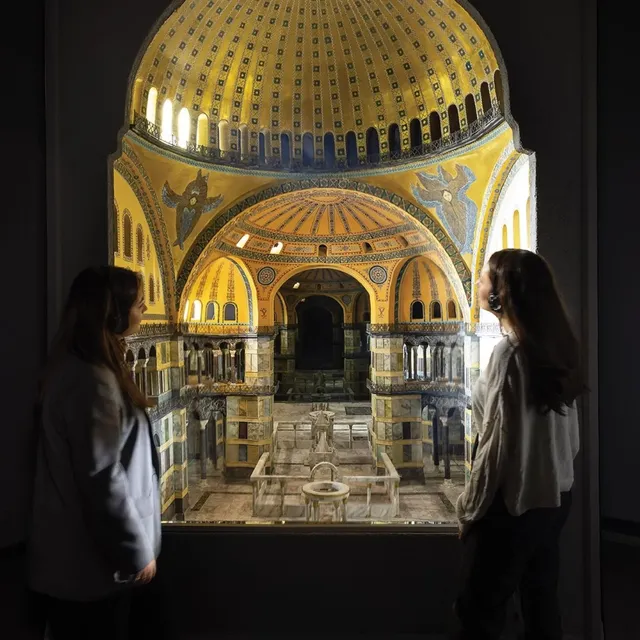
Directly across the courtyard from the main entrance, the Hagia Sophia History and Experience Museum (opened in 2023) provides detailed context on the building's 1,500-year history through interactive exhibits, scale models, and digital reconstructions. Visiting it before you enter the main building will deepen your understanding immensely. It requires a separate ticket but is well worth it.
Combine with the Blue Mosque and Basilica Cistern
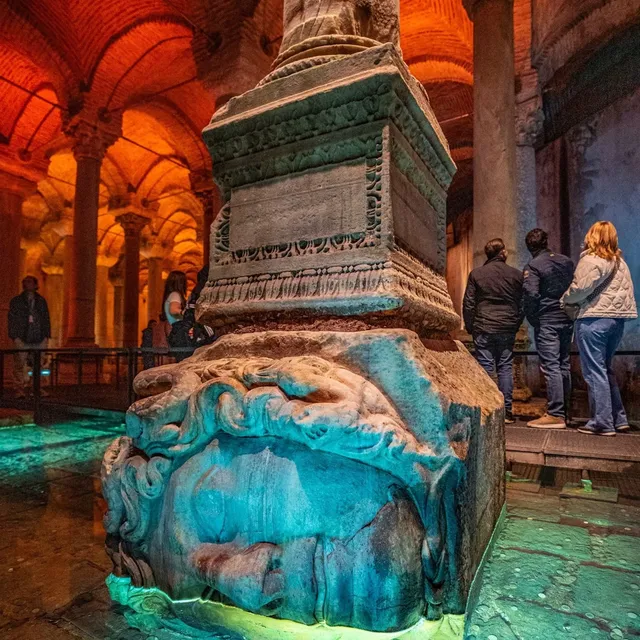
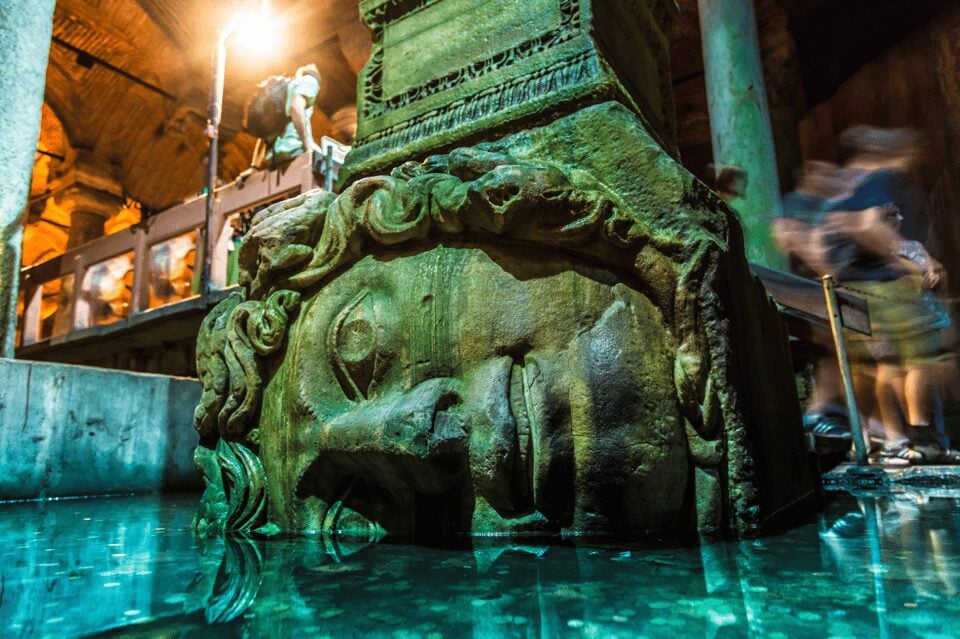
All three landmarks are within a 3-minute walk of each other. A smart itinerary starts at Hagia Sophia at 9:00 AM, moves to the Basilica Cistern (open from 9:00 AM, often less crowded in the first hour), and finishes at the Blue Mosque. This triangle can be covered in a single morning and gives you the most concentrated dose of historical architecture in Istanbul.
Use the Courtyard Fountain for Photos
The Ottoman-era sadirvan (ablution fountain) in the western courtyard is one of the most photogenic spots on the grounds. Few tourists linger here because it is outside the main building, which means you can get clean, uncrowded shots with the dome and minarets as a backdrop. The late-afternoon light, about an hour before sunset, is ideal.
Bring Your Own Headscarf and Socks
While free coverings are available at the entrance, the queue for them can add 10 to 15 minutes to your wait. Bringing a lightweight scarf and wearing or carrying clean socks saves time and is more comfortable than the communal options. If you forget, the shops along Divanyolu Caddesi sell inexpensive scarves for a few lira.
Nearby Attractions
Hagia Sophia sits at the epicenter of Istanbul's historic peninsula. These landmark attractions are all within easy walking distance and combine perfectly with a Hagia Sophia visit.
Blue Mosque
Basilica Cistern
Topkapi Palace

Grand Bazaar
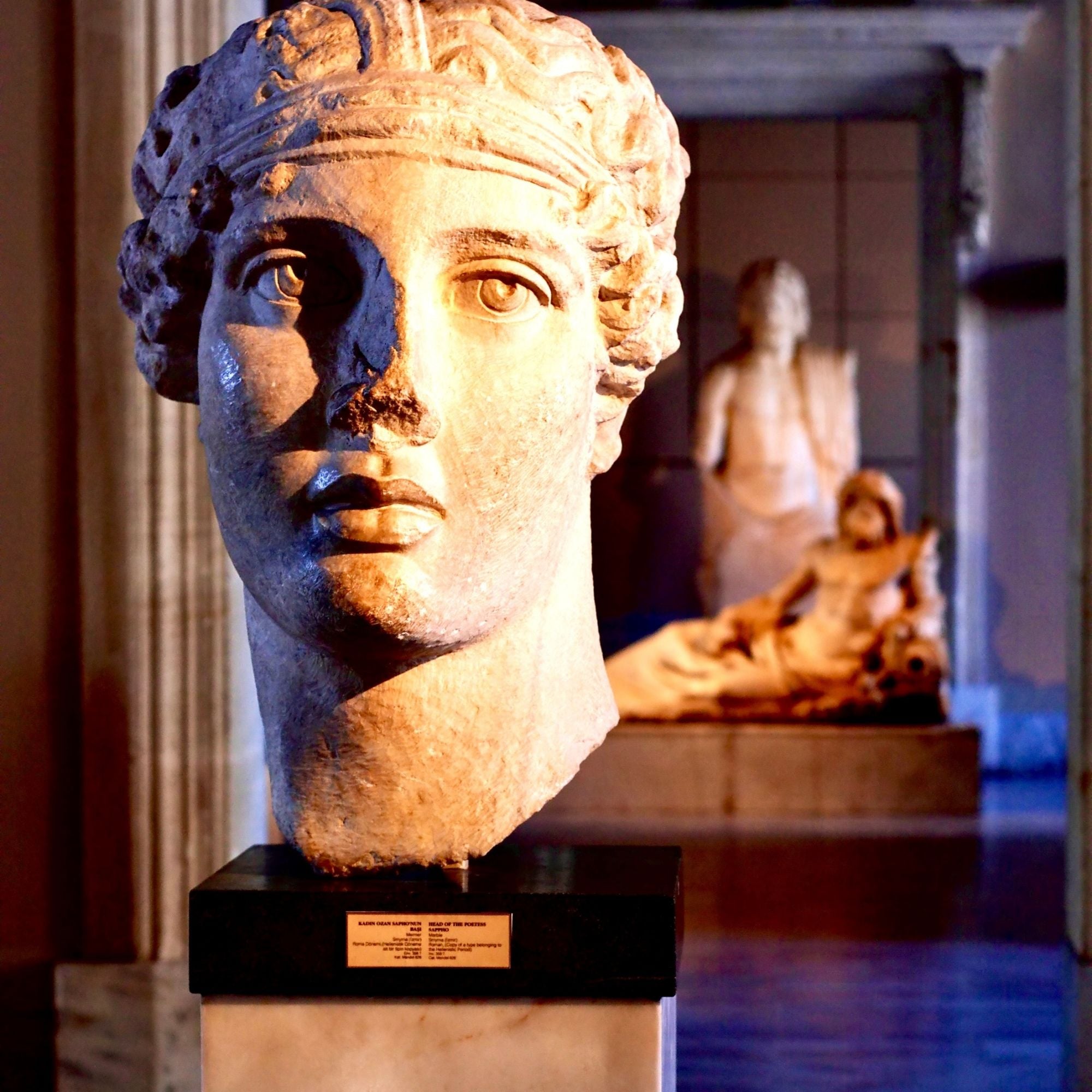
Istanbul Archaeological Museums
Hagia Sophia FAQ
Hagia Sophia is free for Muslim worshippers entering during designated prayer times. Since January 2024, international tourists must purchase a ticket (starting from €25) for entry outside of prayer times. Turkish citizens and residents enter free with valid ID. Children under 8 of any nationality also enter free. The ticket includes a digital audio guide available in multiple languages.
Hagia Sophia is an active mosque, so modest dress is required for all visitors regardless of religion or gender. Women must cover their hair, shoulders, and knees. Men must cover their shoulders and wear long trousers (no shorts above the knee). Free headscarves, long skirts, and shawls are available at the entrance. Shoes are removed before entering the carpeted prayer hall — clean socks are recommended. Flip-flops and sleeveless shirts will require coverings.
Most visitors spend between 1 and 1.5 hours inside, which is enough to see the main floor, the dome, the calligraphy roundels, and the Weeping Column. If you use the audio guide thoroughly and explore the upper galleries, plan for 2 hours. A guided tour typically covers the highlights in 45 minutes to 1 hour. Factor in an additional 15 to 30 minutes for security screening and the dress-code checkpoint, especially during busy periods.
Hagia Sophia is currently an active mosque, officially named the Hagia Sophia Grand Mosque (Ayasofya-i Kebir Camii). It served as a museum from 1934 to 2020. On July 10, 2020, it was reconverted to a mosque by presidential decree. Despite the change, it remains open to visitors of all faiths and backgrounds outside of prayer times, and the Byzantine mosaics and architectural features are preserved and visible.
Absolutely. Hagia Sophia welcomes visitors of all religions, backgrounds, and nationalities. Non-Muslim tourists can enter between prayer times with a valid ticket. You do not need to identify your religion at the entrance. The only requirements are a valid ticket (purchased online or at the door), modest dress, and respect for the religious nature of the space. Photography is allowed (no flash), and you are welcome to sit and observe the interior as long as you wish.
Prayer times follow the Islamic calendar and change daily based on sunrise and sunset. The five daily prayers are Fajr (dawn, usually before tourist hours), Dhuhr (midday, around 1:00–1:30 PM), Asr (afternoon, around 4:00–5:00 PM), Maghrib (sunset, varies by season), and Isha (nighttime, usually after tourist closing). Hagia Sophia closes to tourists approximately 30 minutes before each prayer and reopens approximately 30 minutes after. Check the Diyanet (Turkey's religious affairs directorate) website for precise daily times.
Yes, especially for first-time visitors. Hagia Sophia's 1,500-year history is layered and complex, and a knowledgeable guide will help you decode the Byzantine mosaics, understand the Ottoman additions, and appreciate the engineering innovations that made the dome possible. Guided tours range from €40 to €80 per person for group options and more for private tours. If budget is a concern, the included audio guide is an excellent alternative that covers over 30 points of interest. Either way, having context will significantly enrich your experience compared to walking through unguided.
The best time is first thing in the morning at 9:00 AM opening. Crowds are smallest, the light is most dramatic (streaming through the eastern windows), and you have the best chance of accessing the upper gallery without waiting. The worst time is midday (11:00 AM to 2:00 PM), when large tour groups arrive and the building is at peak capacity. Late afternoon (after 4:00 PM) is a good second choice, but confirm the Maghrib (sunset) prayer time to avoid being asked to leave mid-visit. Weekdays are quieter than weekends.