Inside
Inside Rumeli Fortress: Towers, Gardens & the View
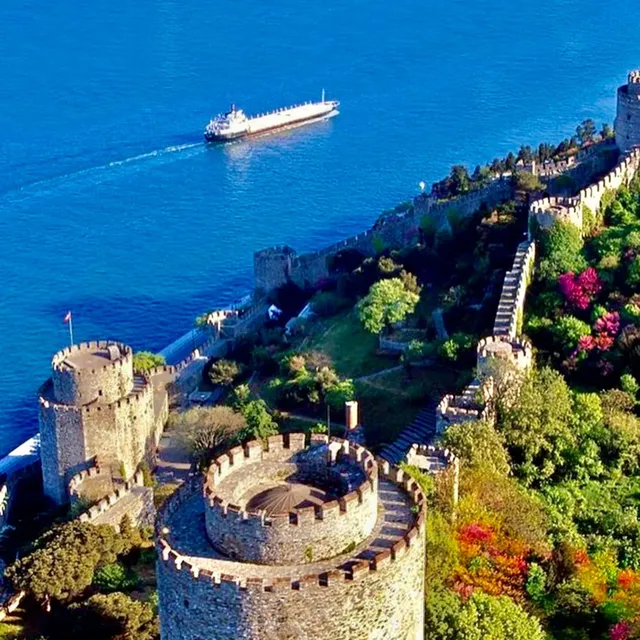
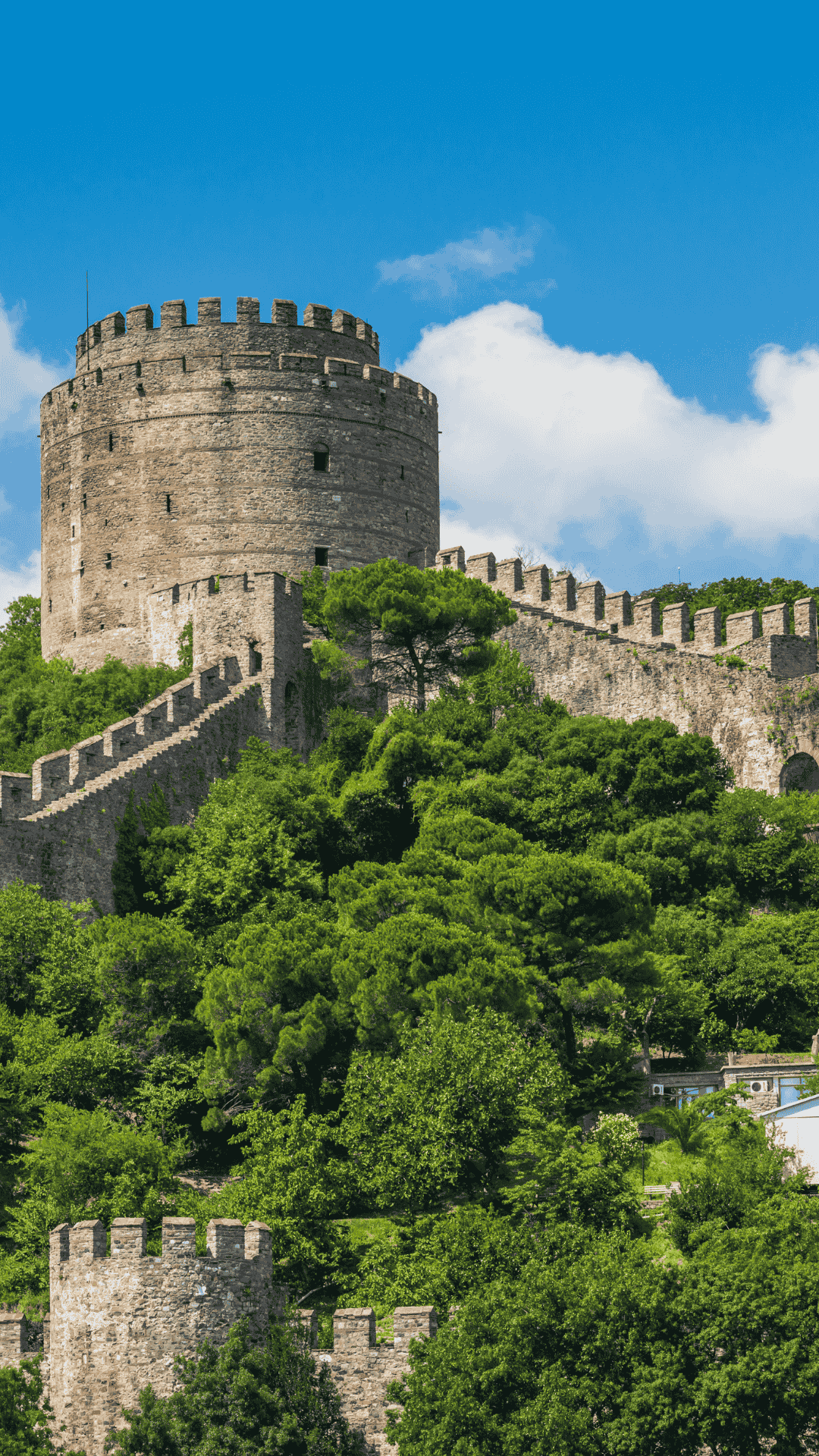
Rumeli Fortress (Rumeli Hisarı) is the European-shore castle of the Bosphorus narrows, and it climbs its hillside like a stone amphitheater with the strait as its stage. Three great towers anchor the walls — each originally commanded by one of Mehmed II's viziers — and the courtyard between them is now a garden of cannons, pines, and paths. The plan, seen from above, is said to trace the Prophet's name in Arabic letters; from inside, it simply reads as a hillside that decided to become a wall. In our experience the reward is the composition. Medieval walls fill the foreground, the Fatih Sultan Mehmet Bridge sweeps overhead, and tankers thread the narrows below. No other spot in Istanbul stacks its centuries this neatly, and no photograph quite carries how casually the neighborhood lives among the towers. Locals jog past the gate; wedding couples pose against the walls; the castle has retired into scenery, and worn it well.
One honest caveat before you plan. The courtyard, gardens, and viewpoints are open. However, access to the ramparts and tower interiors may be restricted while conservation work continues — recent visitors report the high walkways closed. The fortress remains fully worth the stop either way; the drama was always in the setting, not the stairs. Accordingly, come for the grounds and the views, treat any wall-walk as a bonus, and check the official museum page if the climb is your main goal.
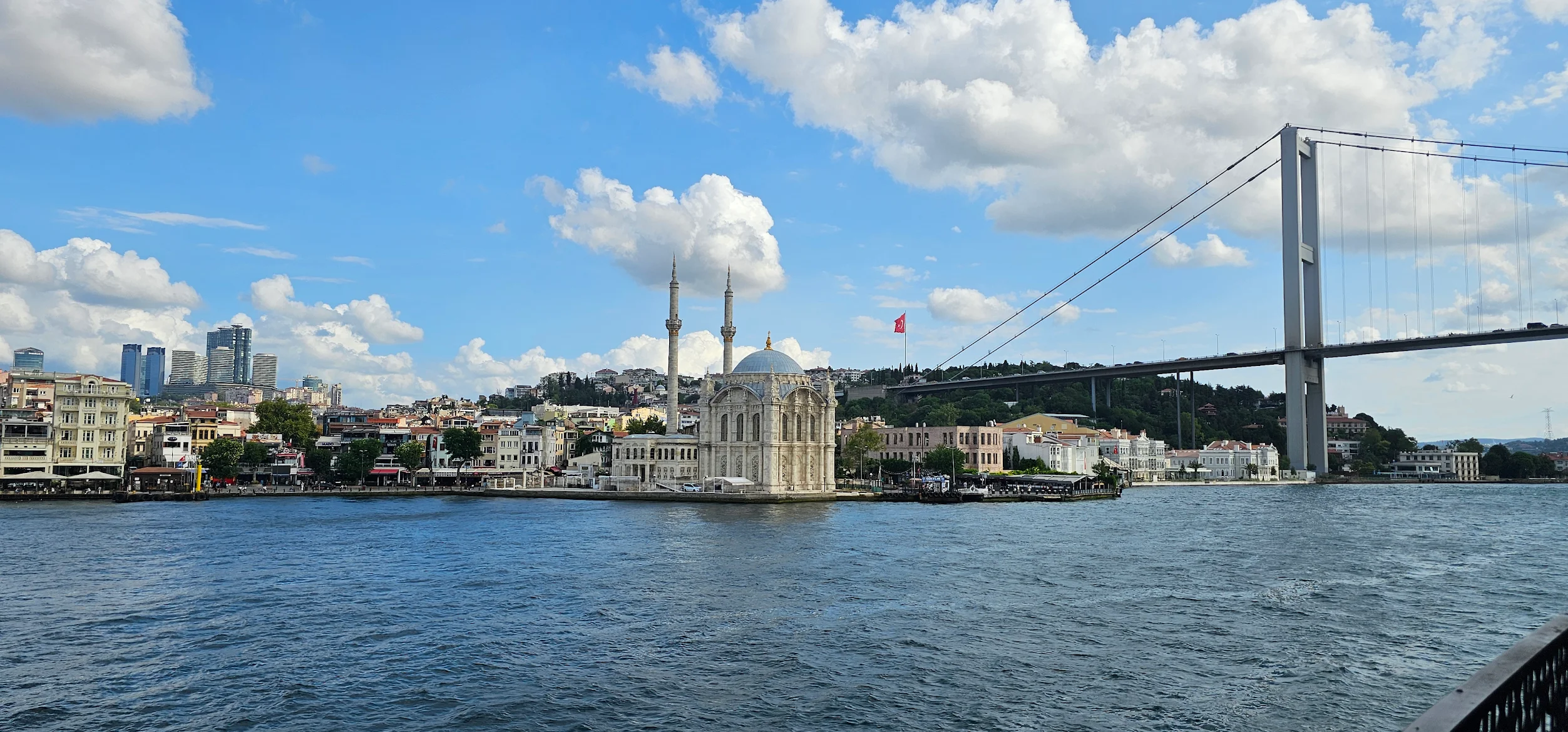
So what fills the hour? The small mosque with its 2015-rebuilt minaret, the Ottoman cannons lining the paths, and the shoreline angle on the world's narrowest intercontinental gap. For example, stand at the lower gate and you can watch a ship pass from Europe-side to Asia-side shadow in under a minute. The village outside the walls keeps the scale human: fishermen on the quay, tea gardens under the towers, and Istanbul's calmest waterfront mosque squeezed between castle and sea. Budget an extra half hour for it — the fortress supplies the drama, the village supplies the tea.
History
Rumeli Fortress History: Four Months to Strangle a Strait
The name says everything. Boğazkesen is what contemporaries called it — the throat-cutter, the strait-cutter — and that was the entire job description. In 1452, Mehmed II resolved to take Constantinople. The city's lifeline ran up the Bosphorus to the Black Sea, and he meant to cut it. His answer was this fortress. Anadolu Hisarı is its older, smaller twin on the Asian bank, built by his great-grandfather in 1394 — and the pair could close the narrows between them with crossfire. Nothing would pass; consequently, nothing did. Cannon on both banks, chains of command on both towers, and a strait suddenly narrower than any admiral wanted to test — the blockade worked from the day the mortar dried. A Venetian galley that tried to run it in November 1452 was sunk, and its surviving crew learned how serious the new landlord was.

The speed remains the astonishing part. Per the museum's own records (muze.gen.tr, 2026), some 300 master builders and 700 to 800 workers raised the entire complex in roughly four months. The sultan assigned one tower to each of his viziers, turning construction into a race between careers. It was finished by August 1452. The city it was built to starve fell the following May, and the fortress had already done its work before the first cannon fired at the walls.
After the conquest the fortress's purpose evaporated overnight. Subsequently it drifted — garrison, checkpoint, occasionally a prison — a weapon with no war left to fight. The Republic restored it in 1953 — notably, with a team led by three female Turkish architects, a first for a project of this scale — and an open-air theater era followed. Summer crowds watched plays where garrisons once drilled. That chapter closed too: concerts ended in 2008, because vibrations threatened the Ottoman cistern beneath the stage. In other words, the building outlasted even its own second act — and now it simply plays itself.
Plan your visit
Visiting Rumeli Fortress: Tickets, Hours & Timing
Tickets and prices
Entry costs €6 for foreign visitors, with children under 12 free — one of the cheapest tickets on the Ministry's books — and Museum Pass İstanbul is valid, per the official museum page. Buy at the gate or online. Likewise, treat the figure as current rather than permanent; state-museum tariffs reset periodically.
Opening hours
The fortress opens 9am to 6pm from April through October, and to 5pm in winter, with the box office closing an hour before. It closes on Mondays year-round. Meanwhile, the grounds are entirely outdoors — dress for the weather, and for stairs.
How to get there
The fortress sits on the Sarıyer shore road between Bebek and Emirgan. Buses from Kabataş and Beşiktaş run the coast constantly, and a taxi from Taksim takes about twenty-five minutes outside rush hour. Similarly pleasant: the walk up from Bebek's cafés along the water, about twenty minutes of the Bosphorus's best real estate. In addition, every full Bosphorus cruise passes directly beneath the walls — the fortress reads best from the water, exactly as intended.
Best time to visit
When should you come? Late afternoon wins twice: the light rakes the towers, and at dusk the bridge switches on beside them. We found weekday visits nearly private outside summer weekends, and our team measured the full garden loop at forty relaxed minutes. On the other hand, photographers should also consider mornings, when the sun stands behind you and the Asian shore glows across the narrows.
Fact-checked against official sources · August 31, 2026 · TURSAB-licensed operator
Tours
Rumeli Fortress Tickets & Tours
The €6 entry below covers the fortress. The stronger pairing, in fact, is by water: a Bosphorus cruise puts you at the foot of the walls mid-strait, the angle Mehmed's engineers designed for. If the fortress joins a longer list, check what a city pass currently includes along the northern shore. Prices sit on the cards.


FAQ
Frequently Asked Questions
€6 for foreign visitors as of 2026, with children under 12 free. Museum Pass İstanbul is valid. It is among the cheapest major-site tickets in the city.
No — Monday is the weekly closing day. Otherwise it opens 9am to 6pm in summer and to 5pm in winter, with the box office closing an hour early.
To cut Constantinople's Black Sea supply line before the 1453 siege. Mehmed II built it in about four months in 1452, directly opposite Anadolu Hisarı, so the two fortresses could close the strait's narrowest point with crossfire. Its contemporary name was Boğazkesen — the throat-cutter.
Sometimes. The courtyard, gardens, and viewpoints are open, but rampart and tower access may be restricted during ongoing conservation work — recent visitors report the high walkways closed. Check the official museum page before visiting if the climb matters to you.
An hour to ninety minutes covers the grounds, the towers from below, and the views without rushing. Add the neighboring waterfront cafés of Rumelihisarı village and it becomes a half day well spent.
Yes — especially for the setting. Medieval walls, the suspension bridge overhead, and the strait's narrowest passage below make it the most photogenic fortress in Istanbul, and the €6 ticket is the city's best sightseeing bargain.
Still have questions?
Our Istanbul travel experts are happy to help.
Nearby