Inside
The Sema Ceremony: What You Are Actually Watching
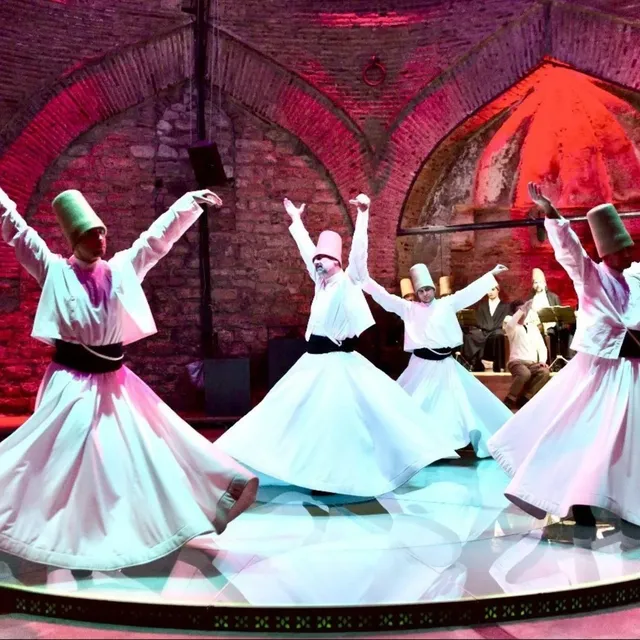
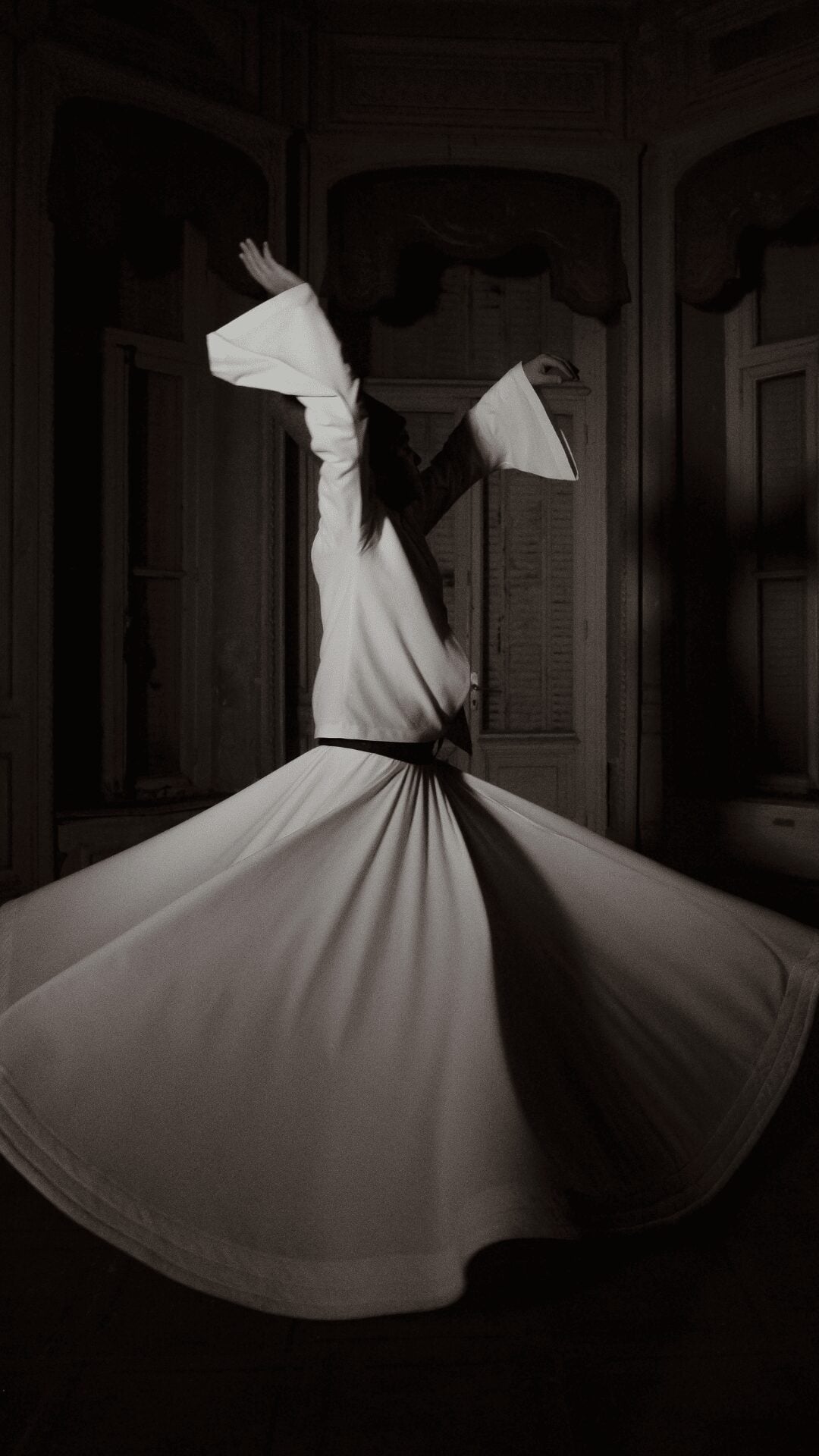
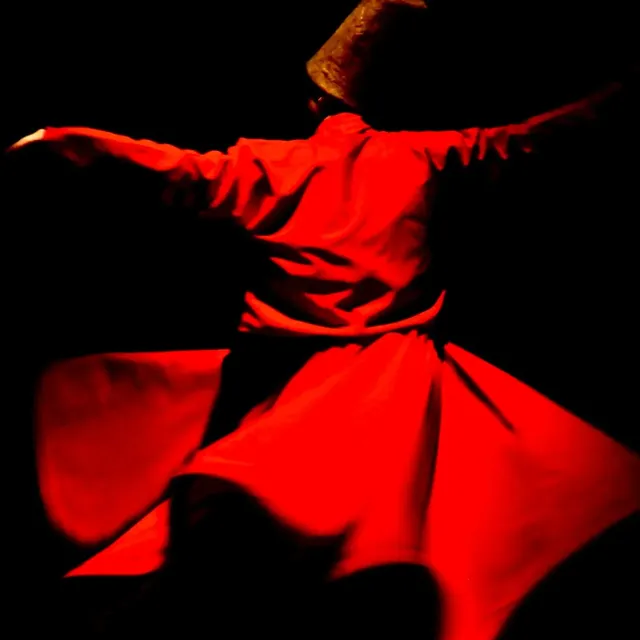
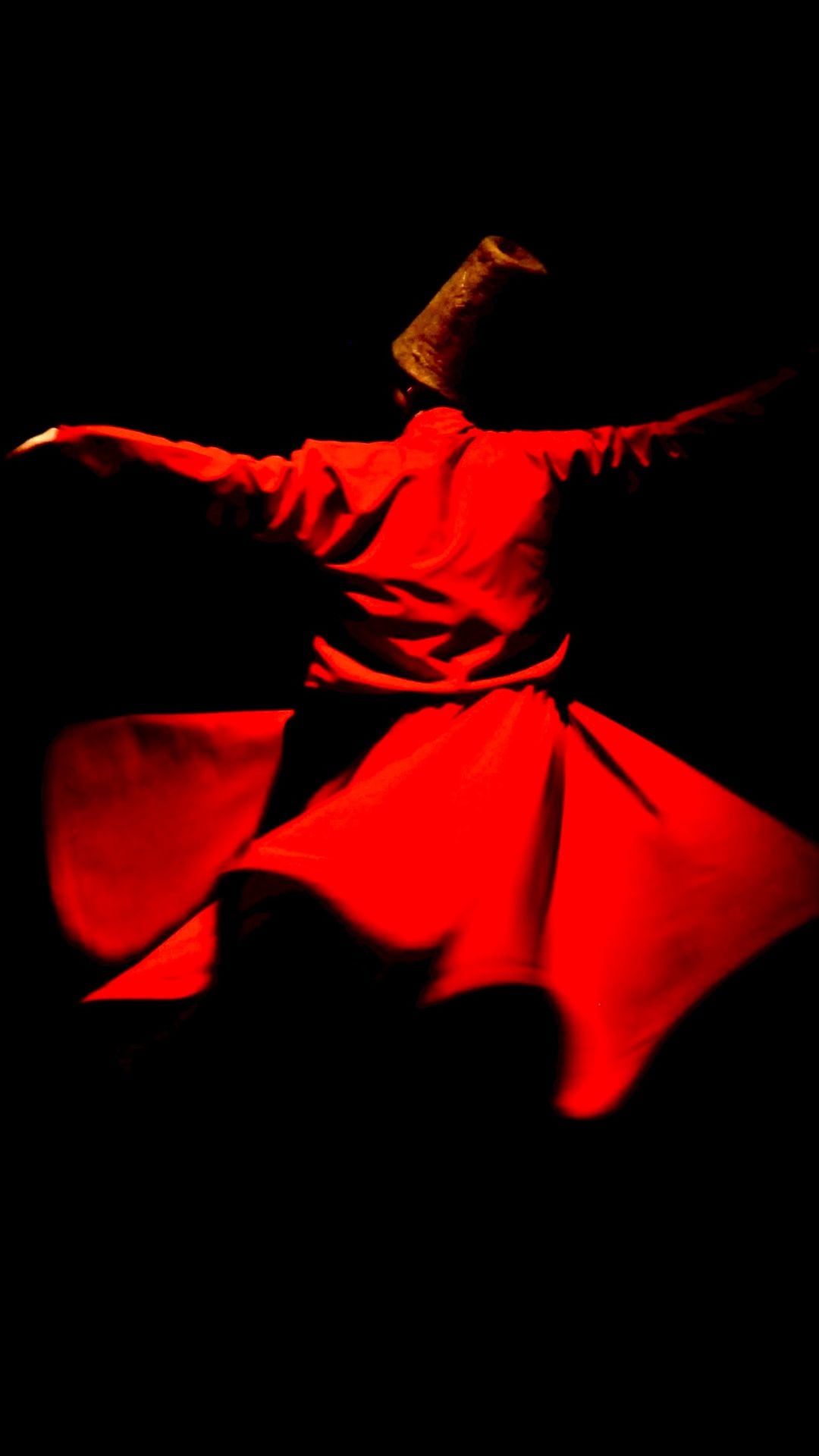
What are you actually watching? The sema is the Mevlevi order's central ritual, and every element is coded. The dervish's tall camel-hair hat represents the tombstone of the ego. The white robe is the ego's shroud. The black cloak discarded at the start marks rebirth into truth. The turn itself runs counterclockwise, pivoting on the left foot. The right palm opens to the sky and the left turns toward the earth — receiving from one, passing to the other, per the ceremony's UNESCO listing (UNESCO, 2008). In other words, nothing on that floor is choreography for its own sake. It is prayer in rotation. Once you can read the code, you stop watching a spectacle and start following a text — and the hour changes character completely.
The ceremony unfolds in a fixed sequence, and knowing it transforms the hour. It opens with a sung eulogy to the Prophet. Then comes a solo on the ney — the reed flute whose cry stands for the soul's longing. Subsequently comes the stately Sultan Veled walk. Then follow the four selams, the movements of the whirling proper, each with its own meaning. Consequently, what looks like one long spin is in fact a structured journey: toward truth, through love, and back to service. The dervishes return to their daily lives at the end — that return is the point. Listen for the transitions as much as you watch the turns. The music shifts mode between selams, and the whole room resets with it. Our team measured the full ceremony, prelude included, at just under an hour at every major Istanbul venue.
One request before you book: this is a religious ceremony, not a cabaret. No applause during the ritual — save any appreciation for the very end. Follow the house rules on phones and photography, which vary by venue. Flash is out everywhere. In our experience the audiences that sit stillest get the most back; the ceremony rewards the attention it asks for. Arrive twenty minutes early. Sit where you can see the floor whole, and let the hour be slow.
History
From Rumi to Istanbul's Stages: 750 Years of Turning
The path begins with a poet. The Mevlevi order is the Sufi brotherhood founded on the teachings of Jalaluddin Rumi, the 13th-century mystic poet, after his death at Konya in 1273 (Wikipedia, 2026). His followers, notably his son Sultan Veled, shaped remembrance of the divine into the turning ceremony. The order spread through the Ottoman world. Its lodges became conservatories as much as monasteries — for centuries, likewise, the empire's finest musicians and calligraphers trained in Mevlevi houses. Rumi's own line explains the reach better than any history: he wrote in Persian, taught in Anatolia, and is read today on every continent. The turning ceremony became the visible signature of a poetry that needed no translation — which is, in fact, why you are planning to see it.
Then, in 1925, the music stopped. The young Turkish Republic closed all dervish lodges by law, and the sema went silent in its own homeland. It returned gradually from the 1950s, permitted as cultural heritage — first in Konya, then more widely. For example, Istanbul's Galata lodge, founded in 1491 as the city's oldest Mevlevi house, reopened as a museum where ceremonies are once again held. UNESCO proclaimed the Mevlevi sema a masterpiece of intangible heritage in 2005 and inscribed it on the world list in 2008.
That history explains today's landscape. The ceremony lives in a careful balance between worship and performance — UNESCO itself flags commercialization as a risk to the tradition (UNESCO, 2008). Turkey's official Culture Portal likewise presents the sema as living heritage rather than entertainment. Accordingly, the venues worth your evening are the ones that stage the ceremony whole and unabridged, in settings that respect it. Istanbul, in fact, has several — which is the next section's business.
Plan your visit
Where to See Whirling Dervishes in Istanbul
Hodjapasha, Sirkeci
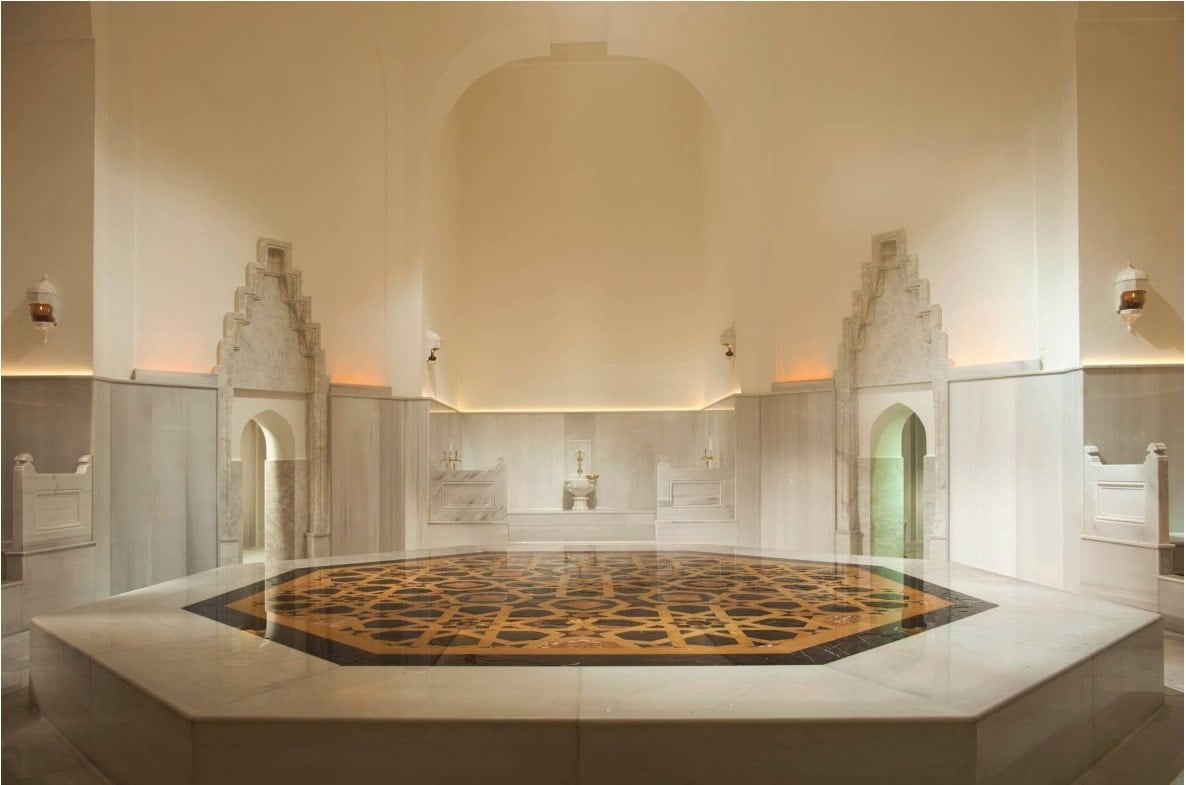
The most convenient serious venue. This is a 1470s Ottoman bathhouse turned ceremony hall, and its domed stone chamber is a naturally reverent space. Ceremonies typically start around 7pm. The pattern runs several evenings a week in winter and near-nightly in high season — confirm current times when booking. It sits minutes from the T1 tram and Marmaray at Sirkeci. In addition, it is an easy walk from Sultanahmet hotels.
Galata Mevlevihanesi, Beyoğlu
The city's oldest Mevlevi lodge, founded in 1491 and now a museum of the order. Ceremonies here follow a sparser pattern. The tradition is Sunday afternoons around 5pm, with seats limited to roughly 150 and sold at the door. In contrast to the nightly venues, this is the closest to the ceremony's own home ground. Meanwhile, the museum itself rewards an hour before the sema.
Mansions and cultural centers
Several Ottoman mansions, similarly, host intimate ceremonies — the Abud Efendi mansion near Sultanahmet among them. They trade scale for closeness. Smaller rooms mean the turn happens meters away. Whichever you choose, book a day or two ahead in season. The halls are small, and the serious venues do not oversell.
Practical notes
What should you wear? Ordinary street clothing — this is a public ceremony, not a mosque visit, so no covering rules apply. Children are welcome if they can sit quietly for an hour. We found the front rows overrated. The mid-hall seats show the geometry of the whole turning floor, and the geometry is the show.
Fact-checked against official sources · September 1, 2026 · TURSAB-licensed operator
Tours
Dervish Ceremony Tickets
The tickets below cover Istanbul's established ceremony venues — the bathhouse hall at Sirkeci and the mansion setting near Sultanahmet. Prices and start times sit on the cards. Book ahead rather than at the door, since the good halls are small. If your evening plans run wider, in addition, a city pass may bundle a ceremony — check current inclusions.


FAQ
Frequently Asked Questions
The main venues are Hodjapasha in Sirkeci (a converted 1470s bathhouse, several evenings weekly), the Galata Mevlevihanesi (the 1491 lodge-museum, traditionally Sunday afternoons), and Ottoman mansion settings near Sultanahmet. Book a day or two ahead in season.
The Mevlevi order's central ritual: a structured ceremony of chant, ney music, and whirling through four movements called selams, symbolizing the soul's journey toward the divine and back to service. UNESCO inscribed it as intangible cultural heritage in 2008.
Not during the ritual — it is a religious ceremony, and silence is part of it. Hold any applause until the very end, and follow each venue's rules on photography. Flash is never allowed.
About an hour, including the musical prelude. Arrive twenty minutes early for seating — halls are small and unreserved seats fill from the sightlines out.
The turn is a moving meditation: counterclockwise on the left foot, right palm open to heaven and left turned to earth, passing what is received. The costume itself is symbolic — the tall hat represents the ego's tombstone, the white robe its shroud.
The established venues stage the full, unabridged sema performed by practicing ensembles — the same ceremony UNESCO lists, in historic settings. What to avoid is the abbreviated dinner-show version; the real ceremony is never background entertainment.
Still have questions?
Our Istanbul travel experts are happy to help.
Nearby