Hagia Sophia Mosque: Holy Wisdom in Istanbul
Hagia Sophia Mosque is one of Istanbul’s most extraordinary monuments, celebrated for its immense dome, layered history, Byzantine mosaics, Ottoman additions, and the powerful sense of sacred space it creates. Located in the heart of the Old City, this landmark continues to inspire visitors through its architectural brilliance, spiritual associations, and centuries of cultural transformation.
For many travelers, Hagia Sophia is not only a major stop in Sultanahmet but also a place where architecture, religion, legend, and imperial ambition meet. Its story has been told through devotion, scholarship, and myth alike, and that mixture of fact, symbolism, and fascination still shapes the way people experience it today.
Illumination Through Holy Wisdom
Hagia Sophia has long been associated with the idea of Holy Wisdom. In older traditions and later interpretations, the monument was seen not merely as a building, but as a space where divine presence, light, and cosmic order were made visible through architecture. The text and legends surrounding Hagia Sophia often ask two enduring questions: how Hagia Sophia was built, and why Hagia Sophia was built with such extraordinary ambition.
Those questions helped turn the monument into more than an engineering achievement. It came to be viewed as a wonder, a sanctuary whose beauty and scale seemed to exceed ordinary human ability. In that sense, Hagia Sophia became a symbol of sacred magnificence, where geometry, light, and belief worked together to create an unforgettable interior world.
Secret and Hidden Knowledge
In many legendary interpretations, Hagia Sophia was linked with the wisdom needed to build sacred architecture on a superhuman scale. Comparisons were often drawn with Solomon’s Temple and with Hiram Abif, the master builder associated with biblical and later mystical traditions. Such stories reflect how deeply people felt that Hagia Sophia could not be explained by technique alone.
This language of secret and hidden knowledge reveals the awe the building inspired. To generations of visitors and writers, the structure seemed to lift the mind upward and create the feeling that God could not be far away. That spiritual intensity remains central to the monument’s enduring appeal.
Descriptions of Hagia Sophia often emphasize its metaphysical effect: calm, radiance, harmony, and a sense of being enclosed within a space shaped by wisdom and light. Whether approached devotionally or artistically, the building has repeatedly been described as healing, softening, and illuminating to the human spirit.
The Mystery of Hagia Sophia
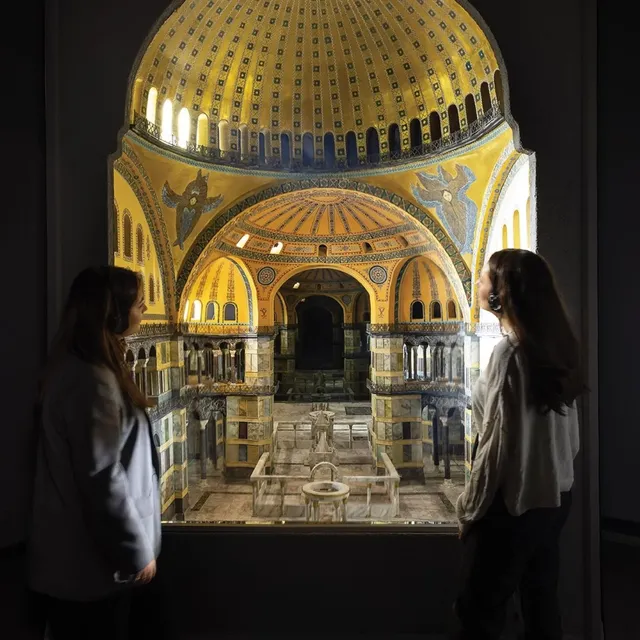
The mystery of Hagia Sophia lies in the way design, symbolism, and atmosphere appear to merge. Writers have described it as a monument where geometry, vision, and cosmology come together in a nearly miraculous way. The use of light is especially important. Sunlight entering through the windows and reflecting across stone and marble gives the interior a shifting, almost immaterial quality.
Such observations helped establish Hagia Sophia as a place where aesthetic design was understood as theological expression. Light was not simply functional. It carried meaning, reinforcing the building’s identity as a space of revelation and sacred order.
Integration of Geometry, Light, and Cosmology
One of the most striking ideas associated with Hagia Sophia is that its design joins geometry, light, and cosmology into a single architectural vision. In this interpretation, the monument is not just large or beautiful; it is proportioned to communicate a worldview. The harmony of circle and square, earth and heaven, matter and divinity, becomes part of the building’s message.
As later traditions spread across Europe, the very perfection of Hagia Sophia’s form encouraged speculation. The building’s proportions, the orchestration of light, and the sensation of spaciousness under the dome all contributed to its reputation as a structure touched by mystery.
The Dome of Hagia Sophia Mosque
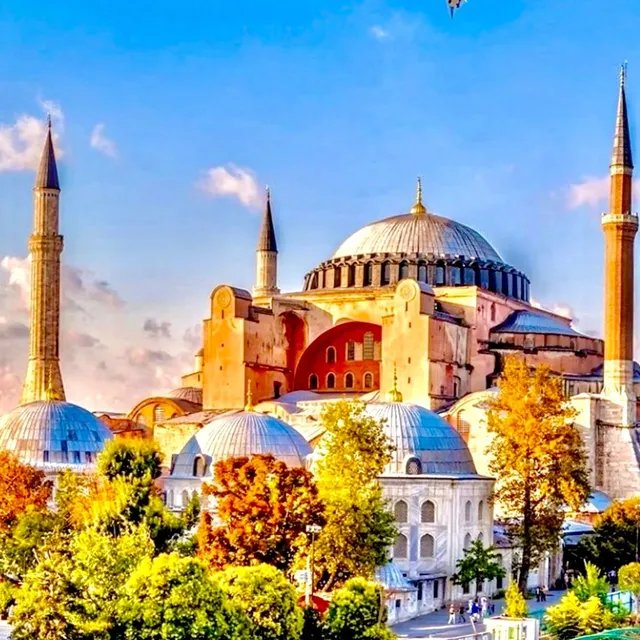
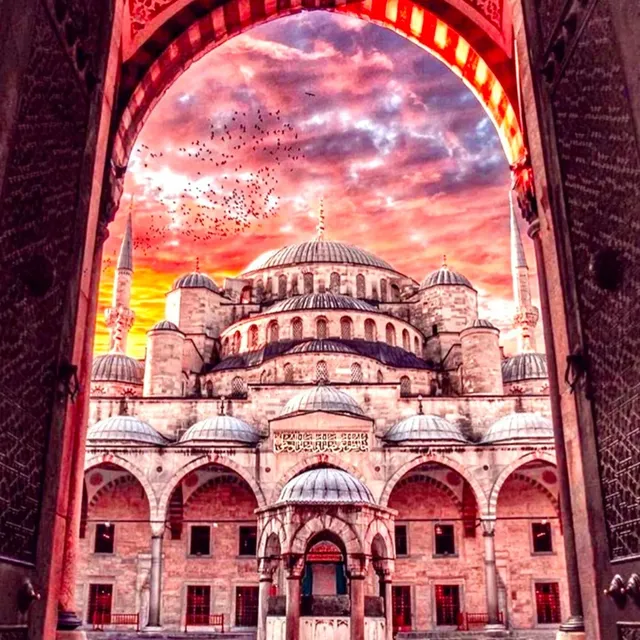
Among all its features, Hagia Sophia is most recognizable for its dome. The monument’s famous dome, described here as 56 meters high and 31 meters wide, has inspired admiration for centuries. The achievement of Isidore of Miletus and Anthemius of Tralles became a lasting source of wonder, especially given the scale and speed attributed to the project and the number of workers involved.
The dome also carries symbolic meaning. In traditional interpretations, the square below represents the earth and the circular dome above suggests the sky and divinity. This union of forms made Hagia Sophia a visual statement about the relationship between the human and the heavenly.
The monument in Constantinople, magnificently rebuilt by Emperor Justinian in the sixth century, later became the subject of legendary elaboration for centuries. That legendary afterlife is part of what keeps Hagia Sophia so compelling today.
The Legend and Secret of Solomon’s Temple
Some of the most dramatic stories surrounding Hagia Sophia compare it to Solomon’s Temple. In those narratives, both structures are presented as temples built with supernatural assistance. Justinian’s sanctuary was even described as the final and most glorious house of God, one connected in legend to prophetic expectation.
These stories were shaped by biblical descriptions of Solomon’s Temple, including the role of King Hiram of Tyre, the cutting of cedar and cypress, and the organization of workers under foremen. In later magical and hermetic traditions, Solomon was also credited with supernatural powers, including the power to command demons. These motifs provided a framework for later legends about Hagia Sophia’s construction.
The Legend and Secret of Hagia Sophia
According to legend, angels took part in the construction of Hagia Sophia by guiding workers, correcting architectural decisions, and helping create key structural elements. These stories present Holy Wisdom as a divine principle active in the making of the building, connecting invisible truth with visible form.
Some legends describe an angel appearing to instruct workmen. Others say the apse was designed to have three lights through three galleries in the name of the Father, the Son, and the Holy Spirit. There are also references to relics inserted into columns supporting the altar and to verses from Psalms 46:5 engraved in the clay bricks used for the arches beneath the dome.
Whether taken as pious storytelling or symbolic interpretation, these accounts show how strongly Hagia Sophia was understood as a work of sacred significance rather than an ordinary monument.
Who Constructed Hagia Sophia?
Legend also expanded the story of funding and finishing Hagia Sophia. One account says that when Justinian had spent all the gold of Byzantium and worried about how to complete the dome, angelic intervention led his staff to a treasure near the Golden Gate. Another narrative tells of a boy watching over the workers’ tools when an angel disguised as a eunuch appeared and ordered that work resume without delay.
A further story concerns the altar, where craftsmen were instructed to melt together gold, silver, bronze, electrum, lead, iron, tin, glass, and precious stones, then pour the mixture into a mold. This was described as an alchemical and supernatural procedure that resulted in an altar formed by divine force.
These legends are part of the monument’s storytelling tradition. They do not replace the historical achievement of its architects and builders, but they help explain the intensity of admiration Hagia Sophia inspired.
Mosaics and the Deesis Composition
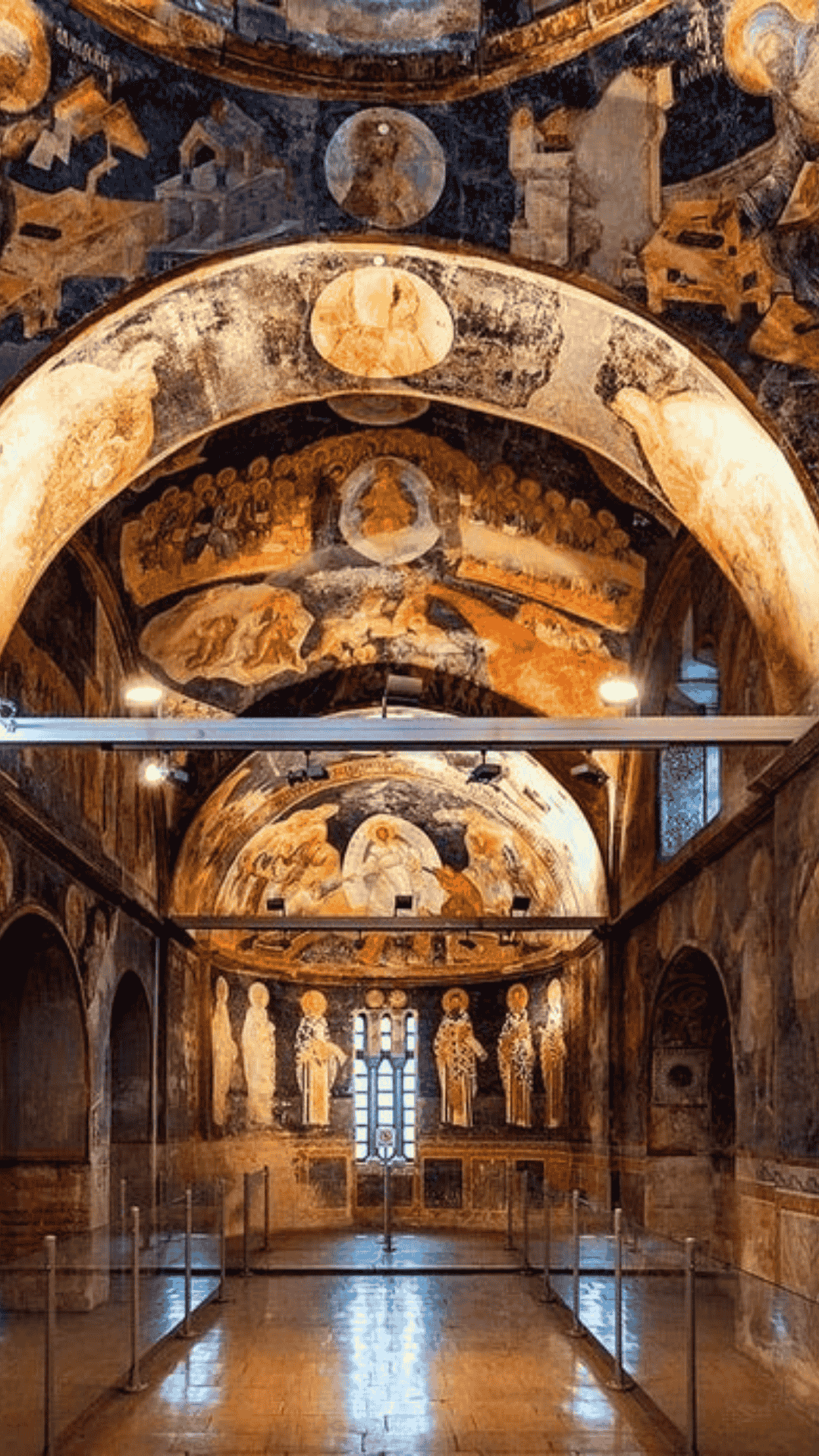
Visitors to Hagia Sophia encounter a building still marked by faded grandeur and extraordinary beauty. Among its most celebrated works is the Deesis mosaic, admired for its fine workmanship and subtle response to light. Composed of very small cubes of glass and stone, it was positioned to benefit from the illumination near the great windows of the gallery.
For Orthodox Christians, mosaics and icons were not merely images; they were understood as manifestations of divine presence. In this view, the Deesis was not a passive representation but a living icon, spiritually charged and meant to draw viewers into encounter. Christ stands at the center, with the Virgin Mary and John the Baptist turning toward Him in intercession.
Apse Mosaic: Theotokos and Christ Child
The apse mosaic of the Virgin seated with the Christ Child is another essential image in Hagia Sophia. The monumental figure looks down over those entering the building. Though often perceived by modern viewers as solemn and hieratic, the image was designed within a theological and liturgical language very different from modern portraiture.
The figure of the Virgin rests one hand on the Child’s shoulder and the other on His knee. An area of loss affects part of Mary’s left forearm and elbow, the Child’s left hand, and part of the cushion on the throne. Yet the image remains one of the monument’s defining survivals.
The Byzantine mosaic technique, with alternating reflective gold tesserae and darker glass, created visual depth through changing light. This dynamic surface is central to the emotional power of Hagia Sophia’s mosaic program.
When and Who Turned Hagia Sophia into a Mosque?
After the Muslim conquest in 1453, Hagia Sophia was converted into a mosque. The text notes that the apse mosaic was not covered immediately and remained visible for almost 300 years afterward, with generations of Muslims praying beneath it. According to this account, the mosaics in the apse continued to be visible until 1750, when they were covered with paint.
This layered visual history is one reason Hagia Sophia remains so singular. Byzantine mosaics, Ottoman calligraphy, Islamic worship, and imperial architecture all coexist within the same monument. That coexistence is part of what makes it both historically complex and visually unforgettable.
The site’s later history also includes moments of Christian response. The text records that when Pope Paul VI visited in 1967, he knelt in prayer after seeing the image in the apse, described here as the first public demonstration of Christian prayer in Hagia Sophia since 1453.
The Main Entrance and the Imperial Door
The symbolic importance of Hagia Sophia’s main entrance was immense. Although little of the original decoration survives, the doorway from the narthex to the nave retains exceptional historical significance. Today, the mosaic above the entrance depicting Christ enthroned with Emperor Leo the Wise at His feet is one of the best-known features in the building.
Written sources also describe miracle-working icons once placed on either side of the Imperial Door. Russian pilgrims such as Deacon Zosima and Alexander the Clerk recorded details that suggest large panel icons stood in the east narthex wall near the silver gates. One source identifies an image of the Virgin associated with Jerusalem and St. Mary of Egypt.
These references show that the entrance sequence was not only ceremonial but deeply symbolic, linking movement into the church with sacred images, relics, and acts of veneration.
The Doors of Hagia Sophia
The Imperial Door is surrounded by a rich body of written tradition. The Patria Constantinopoleos, a Byzantine collection of historical material on Constantinople’s monuments, includes descriptions of the doors in the second narthex. According to those references, some were gilded and one especially large central door was of gilded silver.
One striking tradition says the wood within these doors was not ordinary timber but the Wood of the Ark. The door was also referred to as the Silver Gates, the Beautiful Gates, and the Door of Repentance. Above it stood the mosaic of Emperor Leo the Wise bowing before Christ enthroned, while icons of the Savior, Mary of Egypt, and the Theotokos were associated with the entry zone.
Aural Manifestations of Reflection
Hagia Sophia has often been described as a metaphor for heaven and as a monument where the eternal and the temporary, the divine and the mortal, become architecturally linked. Its atmosphere is shaped not only by sight, but also by sound, reflection, and surface.
Inside, more than ten types of marble were carefully arranged across walls and floors. More than fifty marble columns contributed to the shimmering visual field of the interior. Light moving across polished stone creates the impression of flowing water, while the abundance of sunlight strengthens the building’s sense of radiance.
Where Is the Hagia Sophia Mosque?
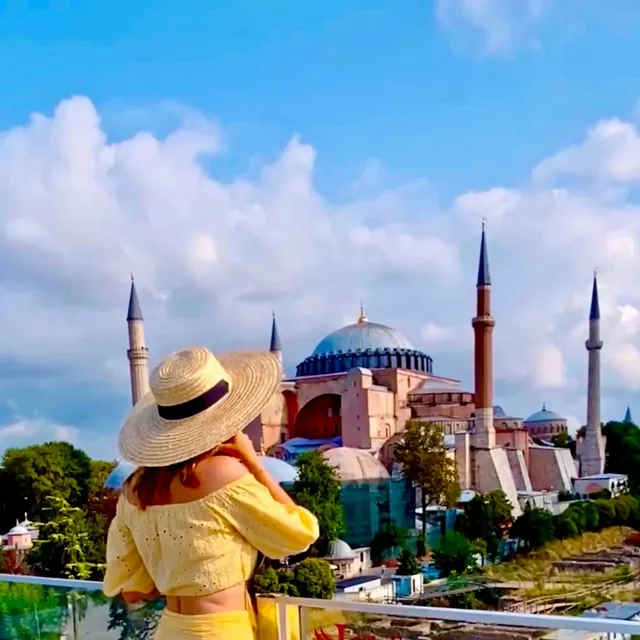
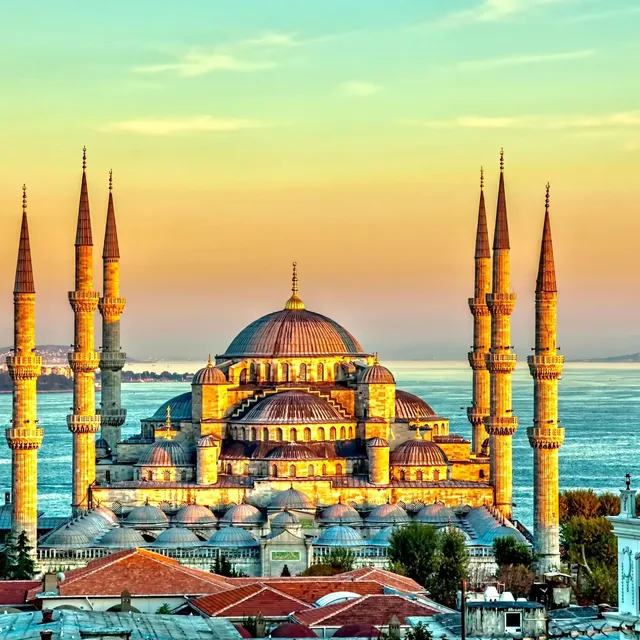
Hagia Sophia Mosque is located in the Sultanahmet area of Istanbul’s Old City. This puts it within easy reach of other major historic landmarks, including Blue Mosque, Basilica Cistern, Topkapi Palace, and Sultanahmet Square. The surrounding district is ideal for travelers who want to explore the city’s most important imperial and religious monuments on foot.
For broader historical context, UNESCO recognizes the Historic Areas of Istanbul, including this part of the city. You can read more at unesco.org. For a general overview of the monument’s historical background, britannica.com is another useful reference.
Hagia Sophia to Grand Bazaar
A visit to Hagia Sophia is often combined with other major sights in the Old City. Moving from Hagia Sophia toward the Grand Bazaar creates a rewarding route through some of Istanbul’s most historic streets and monuments. The same day can also include nearby sites such as Hagia Irene, Topkapi Palace Museum, and the Basilica Cistern, depending on your pace and interests.
This part of Istanbul offers a dense concentration of history, architecture, shopping, and atmosphere, making it one of the best areas in the city for a full day of exploration.
The Architecture of Ayasofya as an Imperial Artifact
The architecture of Ayasofya is often described as one of the supreme imperial artifacts of its age. The great Imperial Door stands at the center of the entrance sequence, and the mosaic panel above it, completed in the ninth century according to the text, reinforces the ceremonial drama of entry.
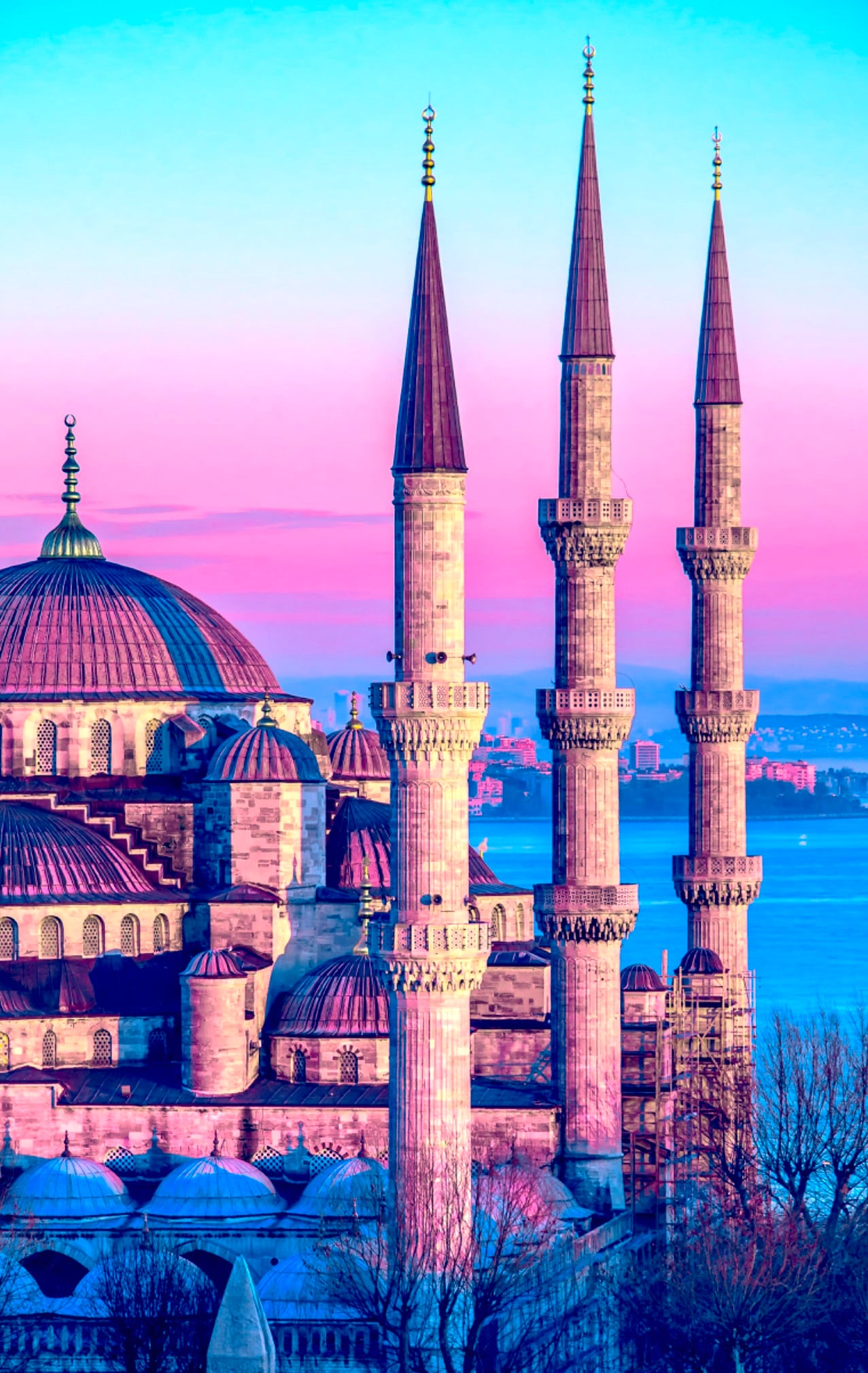
Hagia Sophia’s greatest feature remains its enormous dome, which appears almost suspended in air. The interior includes multicolored marble, mosaics, 107 columns on the lower and upper levels, deeply hollowed marble capitals, and imperial monograms. At the apex of the half-dome stands the mosaic of the Virgin Mary with the Christ Child, with the Archangel Gabriel to the right.
The large circular leather disks at mezzanine level testify to the building’s use as a mosque. Their inscriptions, together with the calligraphic works on the dome, are associated with famous nineteenth-century master calligraphers. The names Allah, Hz. Mohammed, the four caliphs, and Hasan and Huseyin are written on the circular panels.
Other memorable features include the so-called crying pillar, the south gallery mosaics, the Deesis composition, and the exit mosaic with the Virgin Mary and Child flanked by Constantine the Great holding a model of the city and Emperor Justinian holding a model of Hagia Sophia. Bronze doors at the exit, thought to date from the second century B.C.E. and to have come from a pagan temple, add another layer to the monument’s remarkable history.
Ayasofya remained a mosque throughout the Ottoman period and drew the special attention of the sultans. Over time, it accumulated objects and features characteristic of Ottoman culture while preserving key elements of its Byzantine past. The result is a monument shaped by two religious traditions and two imperial worlds.
Hagia Sophia Mosque Today
Hagia Sophia, originally built as a cathedral, underwent a significant transformation in 2020 when it was repurposed as a mosque. Today it continues to serve as a religious temple, as a mosque, while also remaining one of Istanbul’s most visited historic monuments.
As of January 15, 2024, the text notes that a new visitor policy was implemented. An entrance fee of 25 euros is stated for access to the second-floor visitor areas, while entry to the prayer area remains restricted. The text also notes that guided tours within the historic structure have been discontinued and that visitors should expect possible queues due to limited capacity. As policies can change, it is wise to check the official site before visiting.
Despite these practical changes, Hagia Sophia still offers a profound encounter with history, art, architecture, and living faith. Its dome, mosaics, marble, legends, and calligraphy continue to make every visit feel like a journey across centuries.