
The mosque was originally thought to have been designed by Architect Sinan Hayreddin or Architect Kemaleddin, but later research suggests the architect may have been Yakubşah Bin Sultan. For visitors exploring Istanbul's historic peninsula, Bayezid Mosque also sits conveniently near landmarks such as the Grand Bazaar and Suleymaniye Mosque.
Bayezid Mosque history
Commissioned by Sultan Bayezid II, Bayezid Mosque was completed in the years 1500–1505 and reflects an important stage in the development of Ottoman mosque architecture. The külliye, or mosque complex, was designed not only as a place of worship but also as a civic center serving the surrounding community. Its various buildings supported education, charity, healthcare, bathing, and trade, showing how Ottoman religious foundations shaped urban life.
The attribution of the architect has long been debated. Earlier sources associated the design with Architect Sinan Hayreddin or Architect Kemaleddin, while later research points to Yakubşah Bin Sultan. For a general historical overview, readers can also consult Wikipedia's Bayezid II Mosque entry and broader architectural references such as Archnet.
Architecture and artistic details
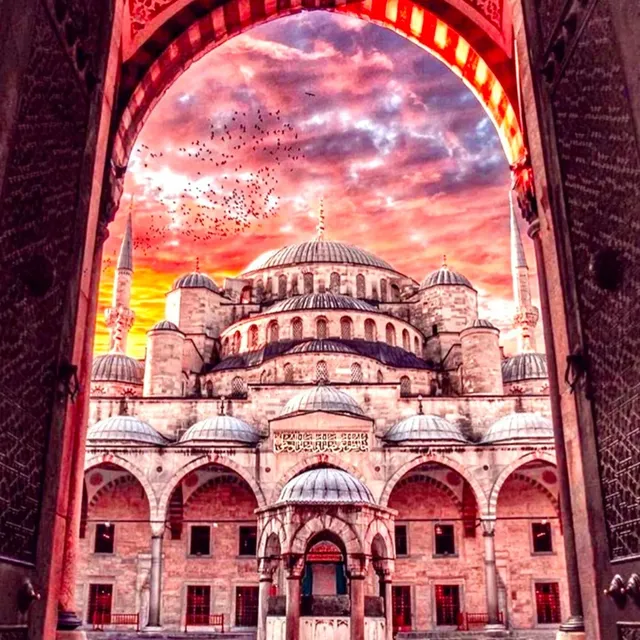
At the center of the complex stands the mosque itself. Its main dome measures 16.78 meters in diameter and is supported by four pillars. Inside, the stone and wood craftsmanship, together with the stained glass, are especially notable and help explain why the building remains admired centuries after its completion.
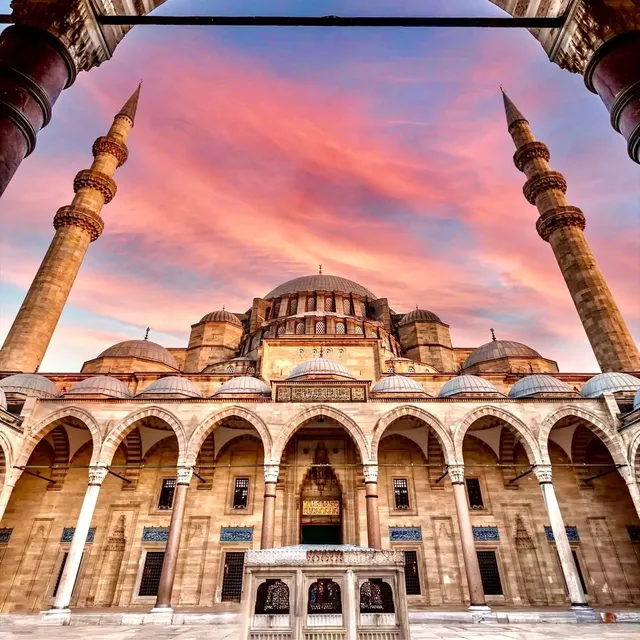
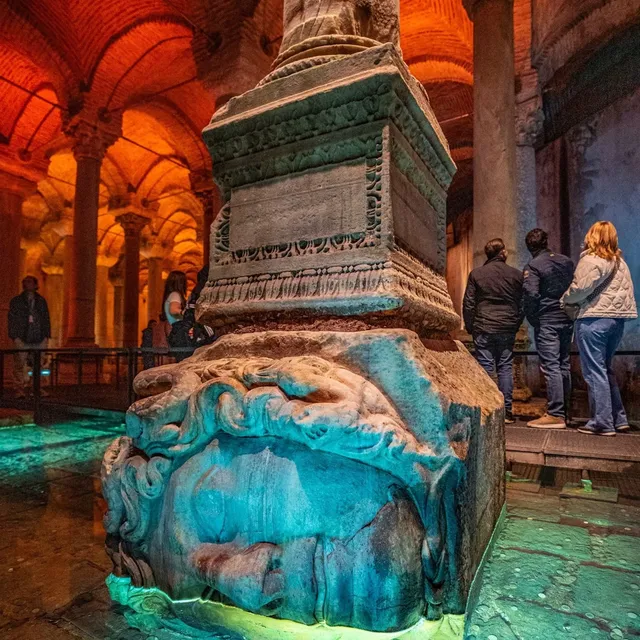
The courtyard is also significant. Its paving materials and the pillars used as a reservoir for ablutions were reclaimed from Byzantine ruins. These reused elements, especially the pillars, clearly demonstrate the quality of Byzantine workmanship and add another historical layer to the mosque's visual identity.
What was in the Bayezid Mosque complex?
Bayezid Mosque was conceived as more than a single religious structure. The wider complex included:
- A kitchen
- A primary school
- A hospital
- A medresse
- A hamam
- A soup kitchen for the poor
- A caravanserai
The soup kitchen and caravanserai, located to the left of the mosque, are used today by the Bayezid State Library. The medresse, far to the right of the mosque, is used by the Turkish Foundation of Calligraphy as a museum. The hamam stands away from the medresse, on Ordu Street next to the Department of Literature.
Tombs at Bayezid Mosque
On the Kiblah side of the mosque, several tombs are found. Sultan Bayezid II is buried here, along with his daughter Selçuk Hatun and Mustafa Reşit Paşa, the architect of Tanzimat Fermanı. These burials make the site important not only architecturally but also historically, connecting the mosque to major figures of Ottoman political and dynastic life.
What to see nearby
Because Bayezid Mosque is in Bayezid Square, it is easy to combine with other major stops in the old city. The Grand Bazaar is especially close, making the mosque a rewarding cultural stop before or after shopping. Visitors interested in the evolution of imperial mosque design can also continue to Suleymaniye Mosque, one of Istanbul's greatest Ottoman monuments.
If you are planning a broader visit, Bayezid Mosque works well as part of a walking route through the historic center of Istanbul.
Visitor notes
Bayezid Mosque is best appreciated slowly, with attention to both its architecture and the remains of its wider complex. Look closely at the craftsmanship, the stained glass, and the reused Byzantine elements in the courtyard. As with any active mosque, visitors should be respectful during prayer times and dress appropriately. For current visitor access or transport information in Istanbul, official local transit resources such as IETT may be useful.
Words may not be enough to explain this lovely mosque. If Bayezid Mosque is on your list, it is well worth making time for it during your trip to Istanbul.