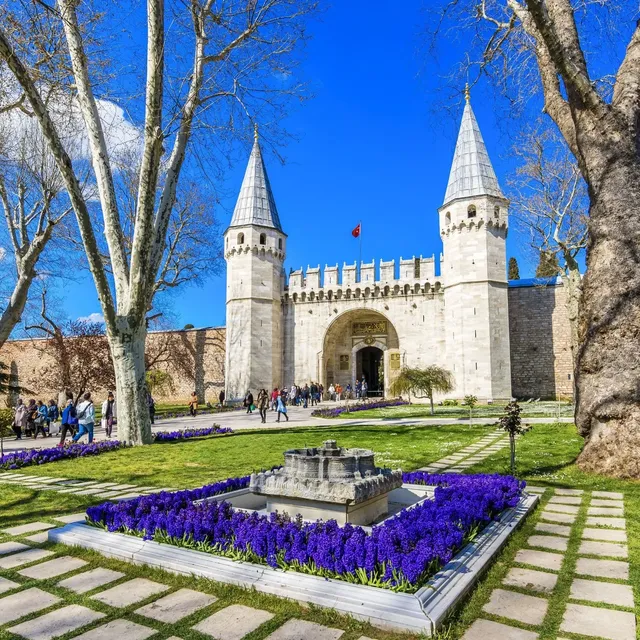

Four centuries of Ottoman Empire history took place here. The palace was built between 1460 and 1478 by Sultan Mehmet the Second. Ottoman sultans and palace residents lived here until the middle of the 19th century, and the complex was used for state protocols and ceremonies. In the early 1850s, it was decided that the palace no longer met the needs of the 19th century, and the court moved to Dolmabahce Palace. Today, visitors come to see the sultanate treasury, Holy Relics, and imperial archives preserved here. The palace was converted into a museum on 3 April 1924 by the order of M. Kemal Atatürk.
Topkapi Palace is located in Sultanahmet Square, in the heart of Istanbul's old town. It is also a short walk from the Grand Bazaar, with the Bab-ı Hümayun gate being the closest gate in that direction. This area is filled with historical monuments and museums, including nearby landmarks such as Hagia Sophia. Spring and summer are often considered the best times to visit because the gardens and courtyards are especially pleasant then.
Before the conquest of Istanbul by Sultan Mehmet the Conqueror, Ottoman sultans had resided in the Bey Palace built by Orhan Gazi in Bursa in 1326. They later stayed in the Old Palace (Saray-ı Atîk) built by Sultan Murad Hüdavendigar in Edirne. After that came the palace known as Saray-ı Cedid-i Amîre. Following the conquest of Istanbul, the first residence of the sultan was the Old Palace, where the current Istanbul University Central Building is located. Soon after, the construction of Topkapi Palace was started by Sultan Mehmet the Conqueror.
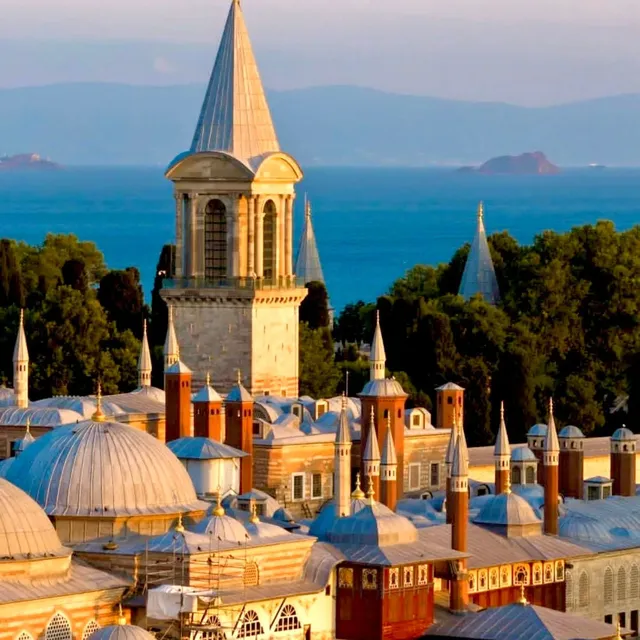
The construction of Saray-ı Cedîd-i Ma’mure started in 1465 and ended in 1478. There used to be a wooden palace where this complex stands today. The reason this building came to be called “Topkapi” is that one of the doors of the old wooden palace was called “Top Kapısı,” meaning Cannonball Door in Turkish. The Tower of Justice in the Second Courtyard is the highest structure visible from across the city, and it remains one of the symbols of imperial grandeur.
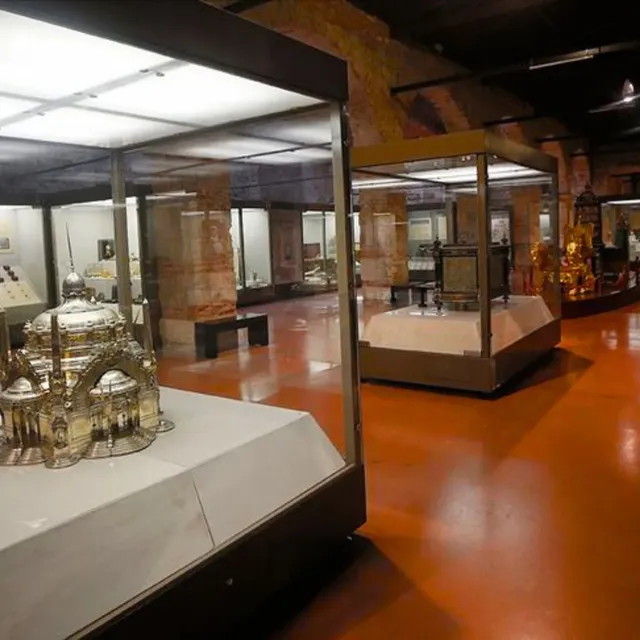
Inside Topkapi Palace Museum
Topkapi Palace, converted into a museum in 1924, is the first museum of the Republic period. Its architectural structures, collections, and nearly 300 thousand archival documents make the palace and its courtyards one of the largest palace museums in the world.
Harem Division
The word harem means “protected.” This was the secluded part of the palace where sultans and their families lived. Built in the second courtyard and back gardens, it was separated from the rest of the palace and carefully hidden. This division is accessed by an entrance associated in the text with the Gate of Felicity. It contains more than three hundred rooms, nine baths, two mosques, a hospital, many wards, and laundry facilities. Areas open to visit include Karaağalar Taşlığı, Bondwoman Corridor, Sultan's Feast Table, Has Oda of Sultan Murad the Third, Crown Prince Room, Masjid of Harem, and Gözdeler Taşlığı. Even the courtyards alone make the visit memorable.
Holy Relics Division
The conquest of Egypt by Yavuz Sultan Selim marked an important historical stage with the passing of the Caliphate to the Ottoman sultans. After this event, holy relics of the Prophet, known as manifestations of the caliphate and including the Cardigan (Hırka-i Saadet), were transferred by Mutawakkil the Third, the Abbasid Caliph, to Yavuz Sultan Selim. In the Holy Relics Division, these relics and many other valuable objects brought in later periods are preserved.
Collections in the Museum
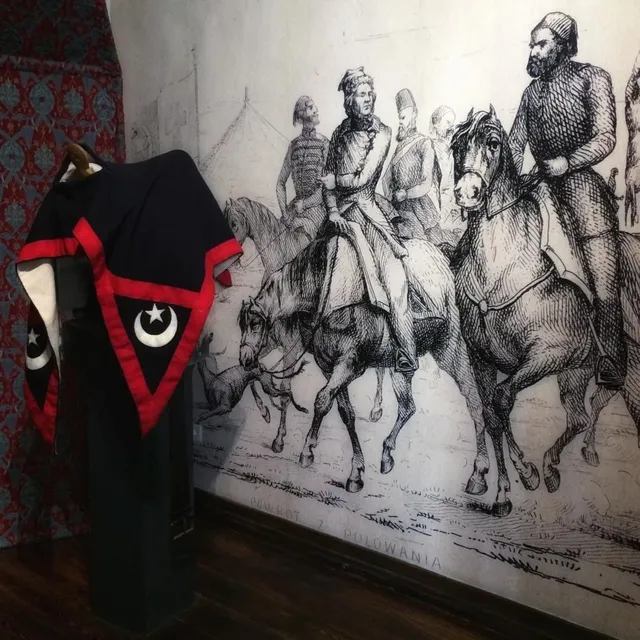
The museum has 10 main collections with tens of thousands of pieces, including the Holy Relics. Visitors can see European, Chinese, Japanese, and Istanbul porcelains and glassware; copper and tombak kitchenware; silver collections; the Imperial Treasure, including the Spoonmaker's Diamond; dresses of the sultans and dynasties; portrait collections; and the weapons collection, which includes 52 thousand pieces. The paintings are also worth seeing.
Topkapi Palace and Harem tickets are sold separately. The text states that the museum entrance fee is 60 TL, while the Harem and Zuluflu Baltacılar Ward entrance fee is 35 TL. As ticket policies may change, it is best to check the official museum sources before your visit.
Topkapi Palace Museum Visiting Hours
If you are planning your route, it is useful to check Topkapi Palace Museum visiting hours in advance. The museum is open every day of the week except Tuesday. The text states that Topkapi Palace is open from 9:00 to 16:45. It also notes seasonal hours: during the winter season (October 30-April 15), the museum is open between 09:00 and 16:00, while during the summer season (April 15-October 30) it is open between 09:00 and 18:00, closing at 18:45 in summer according to the original information. Since schedules can be updated, check the official channels before you go.
For broader historical context, you can also review the UNESCO listing for Istanbul's historic areas on UNESCO. For current museum information, it is wise to verify details through official Turkish museum resources such as muze.gen.tr.
Topkapi Palace Visiting Tips
It is forbidden to take photos inside the palace and to enter with a baby stroller. At the entrance to the Holy Relics Division, visitors must be dressed appropriately for a holy place. There is a nursing room at the Harem exit in the third courtyard, the Enderun Courtyard. You can also hire an audio guide within the museum.
If you are arriving by air, the text states that Topkapi Palace is 48 km from Istanbul Airport and that the journey can take up to 1 hour by car in normal traffic conditions. This makes it easy to include the palace in an Istanbul old city itinerary, especially with nearby sights clustered around Sultanahmet.
Topkapi Palace Museum is worth visiting for anyone interested in the history of the Ottoman Empire, imperial collections, and one of Istanbul's most important heritage sites.