Everything You Need to Know
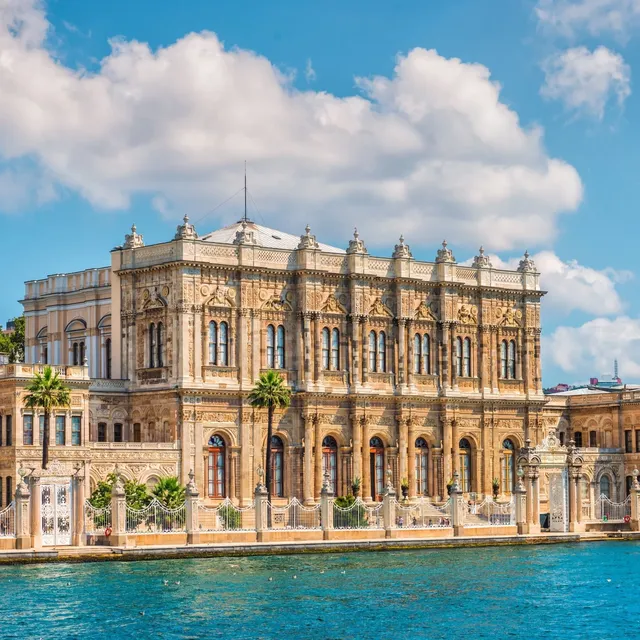
Standing on the European shore of the Bosphorus in Besiktas, Dolmabahce Palace is the physical embodiment of an empire's final, extravagant act of reinvention. Built as a new administrative and residential palace reflecting the Ottoman Empire's nineteenth-century transformation, it isTurkey's largest single-block palace building and one of Istanbul's most impressive nineteenth-century landmarks.
When Sultan Abdulmecid I commissioned its construction in 1843, the Ottoman Empire was undergoing major political, administrative, financial, and diplomatic change. Yet the palace that rose along the Besiktas waterfront over the next thirteen years told a different story entirely. With 285 rooms, 44 halls, 68 toilets, and 6 baths, and interiors richly decorated with gilded details, crystal, porcelain, paintings, and Hereke textiles, Dolmabahce was a statement of intent: the Ottoman Empire was modern, European, and still formidable. That the statement was delivered in crystal chandeliers and Carrara marble only added to the bittersweet grandeur.
Today, Dolmabahce Palace draws visitors for many reasons. Some come for the sheer visual spectacle of the Ceremonial Hall and its world-famous 4.5-ton chandelier. Others come for the poignant history: this is where Mustafa Kemal Ataturk, the founder of the Turkish Republic, spent his final days and died on November 10, 1938. The clock in Ataturk's room is stopped at 9:05 AM, marking the time of his death on November 10, 1938. Whether you arrive for the opulence, the history, or the extraordinary Bosphorus setting, Dolmabahce Palace delivers an experience unlike any other in Istanbul.
History & Legacy of Dolmabahce Palace
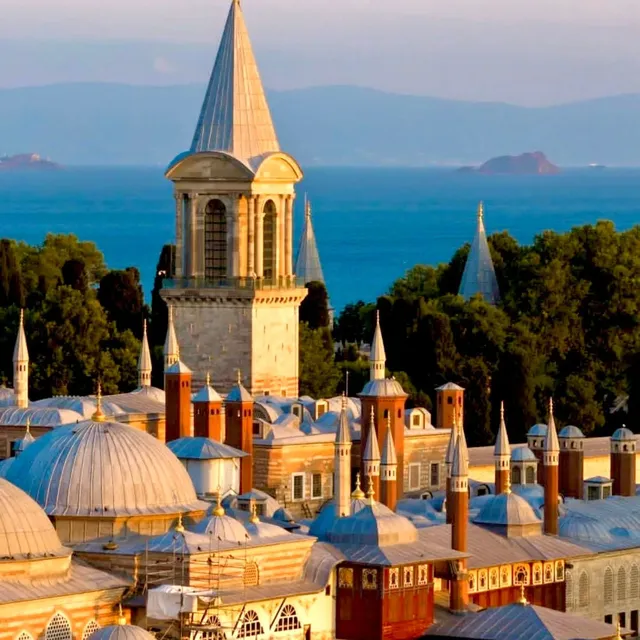
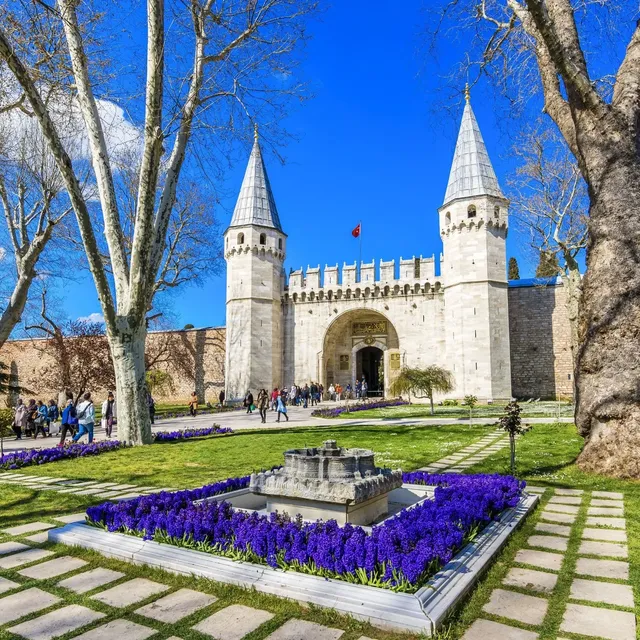
For nearly four centuries, the sultans of the Ottoman Empire ruled from Topkapi Palace, a sprawling complex of pavilions and courtyards located on the historic peninsula overlooking the Bosphorus, the Golden Horn, and the Sea of Marmara. But by the mid-19th century, the medieval layout of Topkapi felt increasingly inadequate. By the nineteenth century, Topkapi Palace's pavilion-and-courtyard layout differed significantly from the monumental ceremonial spaces increasingly associated with European courts. State ceremonies took place in spaces that, however beautiful, bore no resemblance to the palatial halls of Paris, London, or Vienna. The Ottoman court, which had spent generations looking inward, now looked west and found itself lacking a stage grand enough for the part it wished to play.
Sultan Abdulmecid I understood that architecture was diplomacy by other means. The young sultan, who ascended the throne in 1839 at the age of sixteen, was a committed modernizer. He had already enacted the Tanzimat reforms, reshaping Ottoman law and governance along European lines. A new palace, built in the European style and positioned prominently on the Bosphorus, would be the physical symbol of this transformation.
Construction begins. Sultan Abdulmecid I commissions Armenian architects Garabet Balyan and his son Nigoayos Balyan to design a monumental new palace combining Ottoman spatial traditions with contemporary European architectural influences. The site, a filled-in inlet on the Bosphorus shore (dolma means "filled" and bahce means "garden" in Turkish), provides a dramatic waterfront setting stretching over 600 meters.
The palace is completed. Thirteen years of construction and a staggering cost equivalent to roughly 35 tons of gold. The interior features 14 tons of gold leaf, 40 tons of silver, and the largest collection of Bohemian and Baccarat crystal chandeliers in the world.
Seat of the Ottoman Empire. Six Ottoman sultans used Dolmabahce Palace during different periods. The palace witnesses both the splendor and the slow unraveling of Ottoman power.
Ataturk's residence. The founder of the Turkish Republic, Mustafa Kemal Ataturk, uses Dolmabahce as his Istanbul base. He spends his final days here, battling cirrhosis of the liver, and dies on November 10, 1938 at 9:05 in the morning.
Museum and national treasure. After decades of intermittent use as a government building, Dolmabahce opens as a museum. Today it draws over 1.5 million visitors annually.
What makes Dolmabahce's history so compelling is its dual nature. The palace is simultaneously a monument to ambition and a memorial to loss. Every gilded ceiling and crystal chandelier speaks of an empire that believed beauty could reverse decline. The stopped clocks in Ataturk's room speak to the moment when one era ended and another's founding figure passed into history. Walking through Dolmabahce is to walk through the last chapter of one civilization and the first pages of the one that replaced it.
What to See Inside Dolmabahce Palace
Dolmabahce Palace is divided into three main sections: the Selamlik (ceremonial and administrative halls), the Harem (private royal quarters), and the grounds including gardens and the Bosphorus waterfront. Here are the five highlights you should not miss.
Watch: Grand Tour (4 min)
The Ceremonial Hall (Muayede Salonu)
Must See
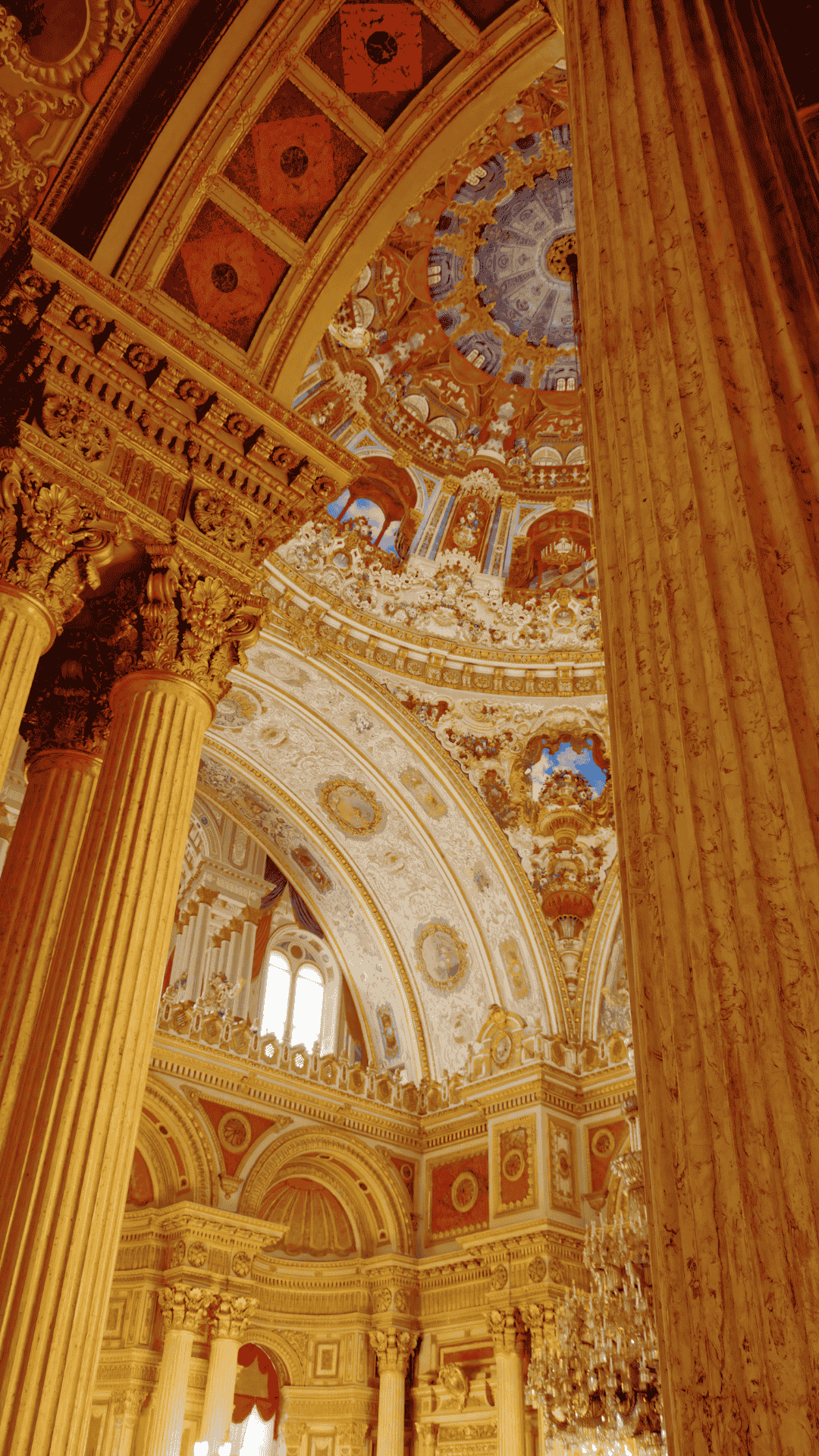
If you see nothing else at Dolmabahce, see the Ceremonial Hall. Rising 36 meters to a vast painted dome, the hall was designed to host the most important state ceremonies of the Ottoman Empire. It can accommodate 2,500 people standing, and its proportions are calibrated to inspire awe.
The centerpiece is the world's largest Bohemian crystal chandelier, a breathtaking creation weighing 4.5 tons and featuring 750 lights. It was a gift from Queen Victoria of England and hangs beneath the monumental dome of the Ceremonial Hall. The hall is furnished with large Hereke carpets designed to complement its monumental proportions, specially woven in the Hereke workshops.
The Crystal Staircase
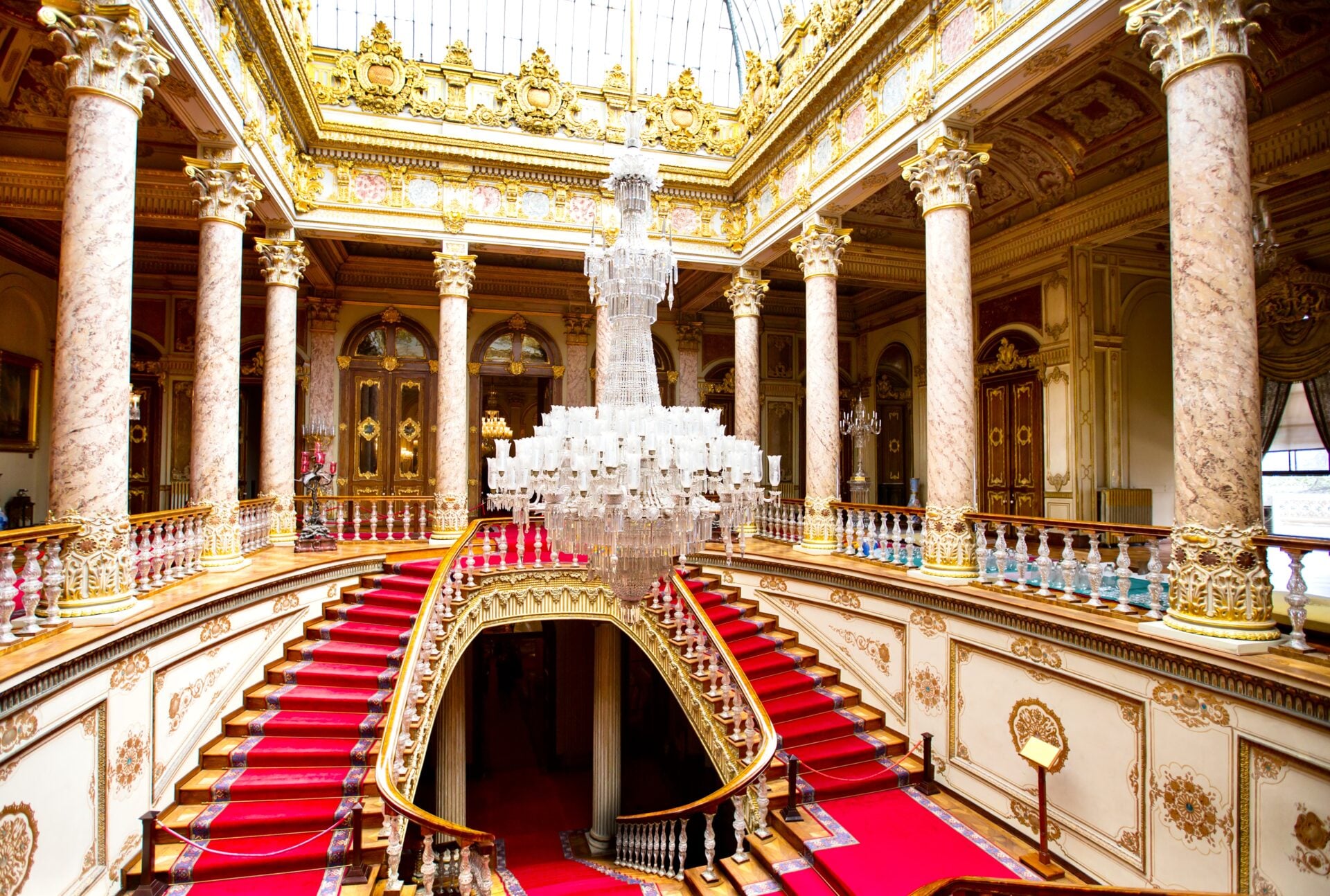
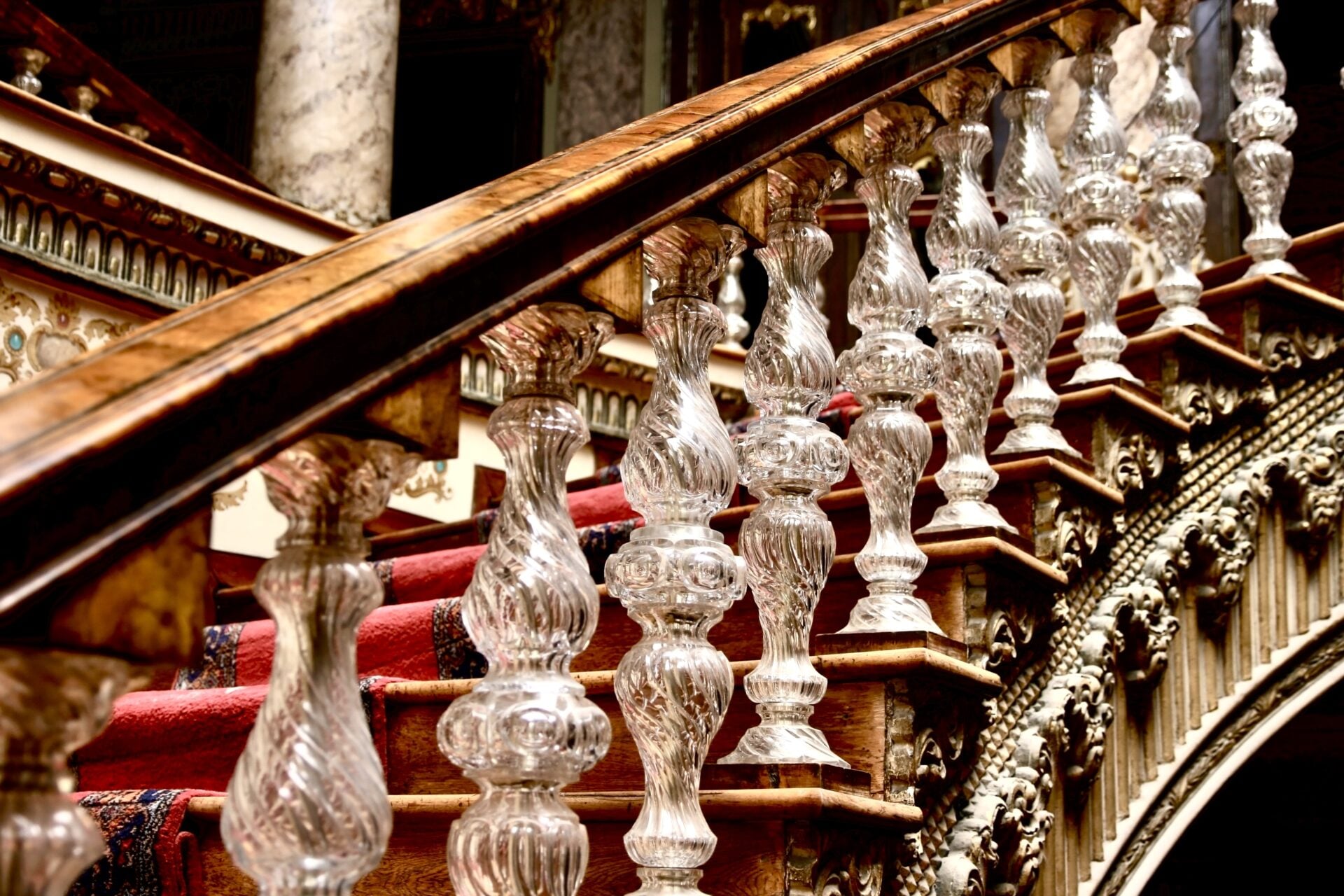
Connecting the ground floor to the upper ceremonial rooms, the Crystal Staircase is one of Dolmabahce's most photographed features. The staircase follows a double horseshoe design, its balustrades decorated with Baccarat crystal, brass, and mahogany elements. The effect is ethereal: the crystal catches every beam of light entering through the surrounding windows.
The staircase was designed by Nigoayos Balyan to serve as a theatrical transition between the relatively modest ground-floor administrative rooms and the overwhelming grandeur of the ceremonial spaces above. It is a masterpiece of decorative architecture and one of the finest staircases in any palace worldwide.
The Harem Section
Unlike the common Western misconception, the Harem was not a place of exotic mystery but the private domestic quarters of the Ottoman royal family. At Dolmabahce, the Harem occupies roughly one-third of the palace and contains some of its most exquisitely decorated rooms. The most impressive is the suite of the Valide Sultan (Queen Mother), whose apartments rival the ceremonial halls in their decorative richness.
The section also includes a private hamam (Turkish bath) clad in Egyptian alabaster and heated marble, offering a glimpse into the daily rituals of palace life. Many visitors find the Harem more emotionally engaging than the ceremonial halls, precisely because it reveals the human scale behind the imperial grandeur.

Ataturk's Room
On the upper floor of the palace, a modest bedroom stands in quiet contrast to the opulence surrounding it. This is where Mustafa Kemal Ataturk, the founder of the Turkish Republic, spent his final weeks and died on November 10, 1938. The room has been preserved exactly as it was on that day. The bed, covered with a Turkish flag, remains in place. A simple writing desk sits near the window. And on the bedside table, a small clock stands frozen at 9:05 AM, the precise moment of Ataturk's death.
The emotional power of this room is difficult to overstate. Every November 10 at 9:05 AM, sirens sound across Turkey and the nation observes a minute of silence. For many Turkish visitors, this room is the most important place in the entire palace.

Gardens & Bosphorus Waterfront
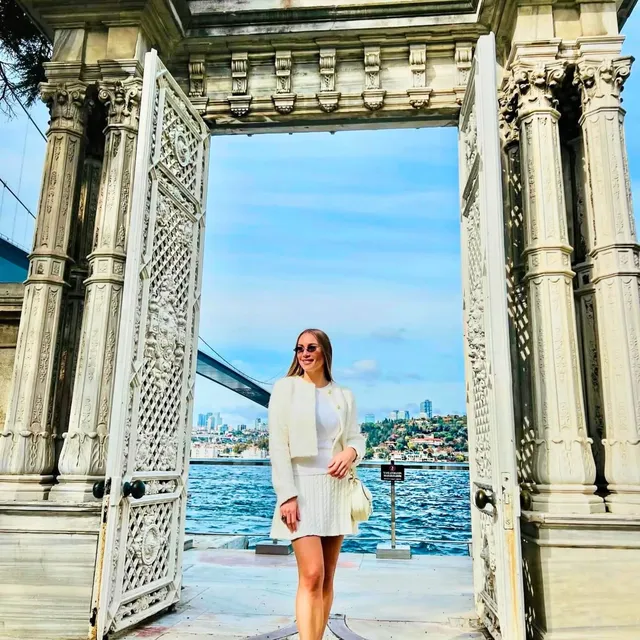
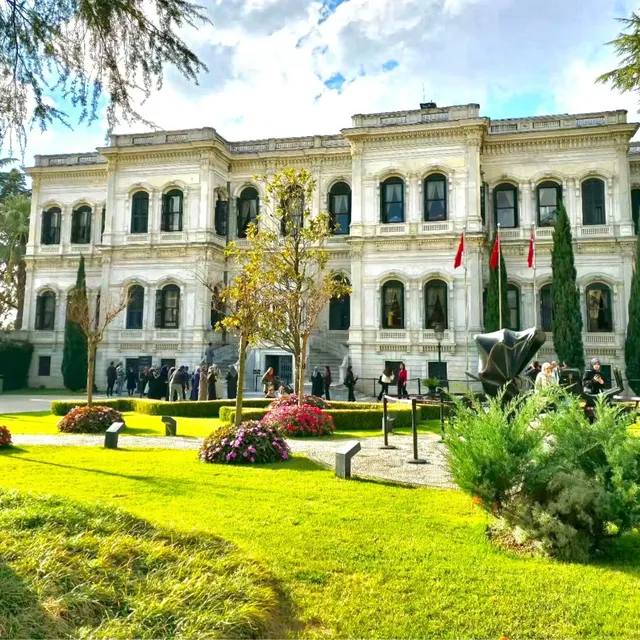
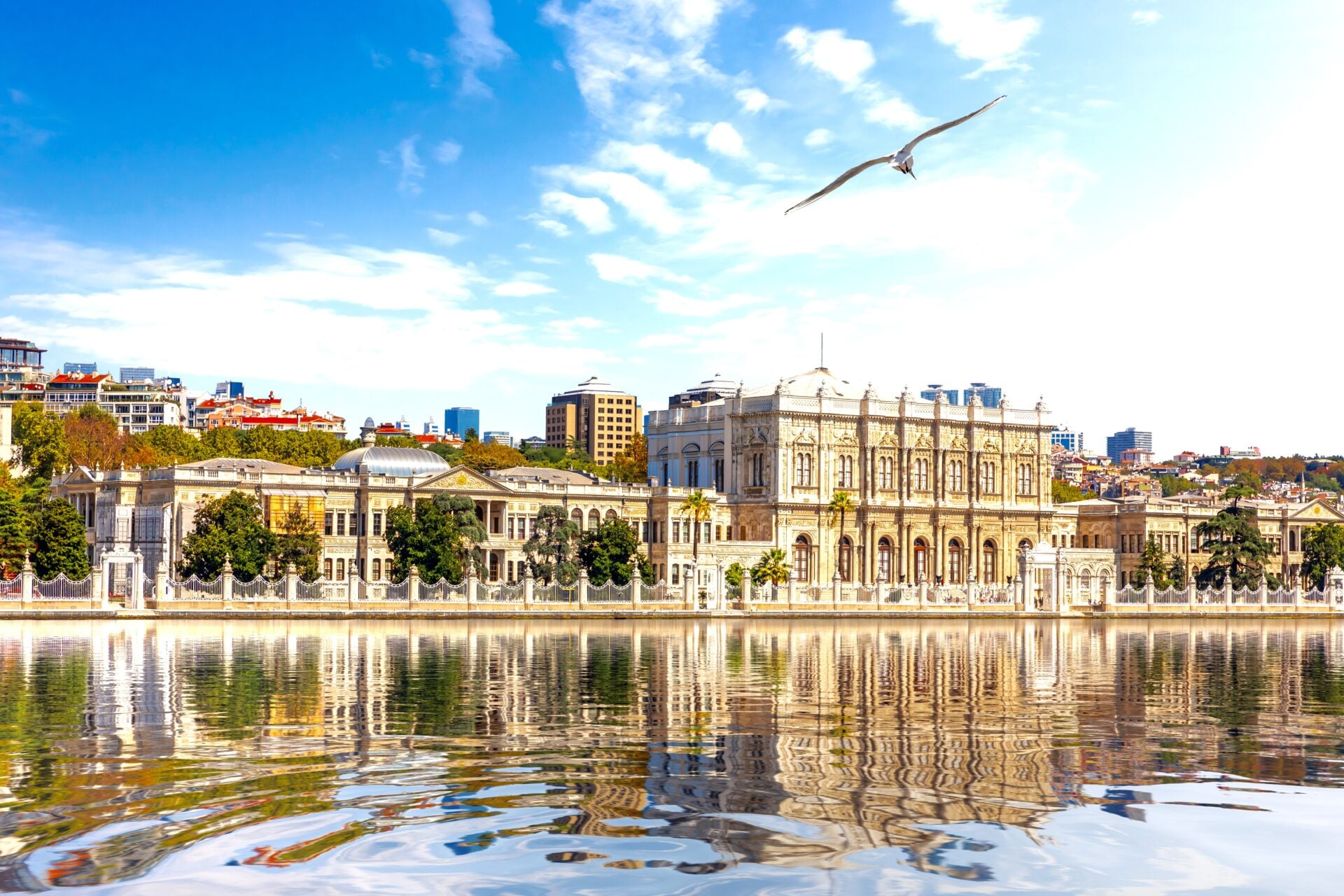
Dolmabahce Palace stretches along 600 meters of the Bosphorus shoreline, and its waterfront facade is one of Istanbul's most iconic images. The ornate imperial gates, the manicured gardens with their formal European plantings, and the sheer length of the marble-and-stone facade combine to create a scene of extraordinary visual impact.
The gardens include a bird garden, the imperial clock tower (which can be climbed for panoramic views), and decorative pools and fountains. After the intensity of the interior tour, the gardens offer a welcome chance to decompress and watch the ferries and cargo ships passing through the strait.

Tickets & Visiting Options
Dolmabahce Palace offers several ticket options depending on which sections you wish to visit. All interior visits are conducted as mandatory guided tours in groups. We strongly recommend booking online, particularly during peak season (April through October).
Selamlik (Ceremonial Halls)
- Ceremonial Hall & chandelier
- Crystal Staircase
- State reception rooms
- Ambassador halls
- Guided group tour (~75 min)
Complete Experience
- Everything in Palace Only
- Harem private quarters
- Valide Sultan's suite
- Ataturk's Room
- Royal hamam & bedchambers
- Guided group tours (~2 hrs)
Expert-Led Experience
- Palace + Harem combo access
- Licensed English-speaking guide
- Skip-the-line entry
- Historical context & stories
- Small group (max 15 people)
- Full tour (~2.5 hrs)
Istanbul Tourist Pass® & Istanbul Prime Pass
For visitors looking for a more seamless and value-packed experience, the Istanbul Tourist Pass® is another excellent option. Dolmabahce Palace is included in the pass, meaning you can enter without purchasing a separate ticket. The Istanbul Tourist Pass® is also included within the Istanbul Prime Pass, offering even more flexibility for travelers who want to bundle premium experiences.
With the pass, you benefit from a fully digital and hassle-free experience, including hosted entry and access to an audio guide, helping you better understand the history and significance of Dolmabahce Palace. There's no need to wait in ticket lines or manage multiple bookings—simply choose your preferred time slot, arrive at the meeting point, and enjoy a smooth entry process.
Beyond Dolmabahce Palace, the pass covers 120+ top attractions and experiences across Istanbul, making it an ideal choice for visitors planning to explore the city in depth. From iconic landmarks to guided tours and unique activities, it offers both convenience and excellent overall value.
If you're looking to save time, skip lines, and maximize your Istanbul itinerary, the Istanbul Tourist Pass® (and its inclusion within the Istanbul Prime Pass) is a smart and efficient choice.
Prices listed are approximate and subject to change. Children under 6 enter free. Reduced rates are available for Turkish citizens and residents. Museum Pass Istanbul is accepted for the basic palace entry.
Practical Information
Planning ahead will make your Dolmabahce Palace visit significantly smoother. Here is everything you need to know about logistics.
Opening Hours
Tuesday through Sunday, 9:00 AM to 6:00 PM (last entry at 5:00 PM). Closed every Monday for maintenance. Arrive before 10:00 AM or after 3:00 PM for shorter queues.
Photography Policy
No photography or video inside the palace. This is strictly enforced. You may photograph the gardens, exterior, and waterfront freely.
Tour Format
Mandatory guided group tours only. Groups of 20-30 visitors are led through the palace by official guides. Tours depart every 15-20 minutes.
Time Needed
Allow 1.5 to 2 hours for the full visit including both Selamlik and Harem sections, plus garden time.
Getting There
Take the T1 tram to Kabatas (final stop), then walk 5 minutes along the waterfront. From Sultanahmet, the tram ride takes about 20 minutes.
Accessibility
The palace is partially accessible for wheelchair users. The ground floor of the Selamlik is accessible, but upper floors involve staircases without elevator alternatives.
Are you ready to explore Dolmabahce Palace?
Unforgettable views and the best moments await you.
8 Essential Tips for Visiting Dolmabahce Palace
These practical suggestions will help you get the most out of your Dolmabahce experience.
Arrive Early, Ideally at Opening
The palace opens at 9:00 AM and the first hour is consistently the quietest. By 10:30, tour groups from hotels across the city begin arriving in waves. If you reach the ticket gate by 8:45, you can be among the first groups inside.
Do Not Skip the Harem
Many visitors purchase only the Selamlik ticket to save money or time, but the Harem contains some of the palace's most beautiful and emotionally resonant spaces. Ataturk's room, the Valide Sultan's suite, and the private hamam are all located in the Harem section.
Leave Your Camera Expectations at the Door
Photography is completely prohibited inside the palace. Rather than feeling frustrated, embrace it as an opportunity to be fully present. Consider purchasing the official photo book from the gift shop as a memento.
Wear Comfortable, Slip-On Shoes
Visitors are required to wear protective shoe coverings over their footwear inside the palace. Comfortable walking shoes that slip on and off easily will save you time and hassle.
Book Tickets Online in Advance
During peak season and on weekends year-round, the ticket queue can exceed 30-45 minutes. Online tickets allow you to bypass this line entirely.
Stay for the Bosphorus Waterfront
After the intensity of the interior tour, take 20-30 minutes to walk the palace gardens and the Bosphorus waterfront. The view of the strait from the palace grounds is magnificent.
Explore Besiktas for Lunch Afterward
The Besiktas neighborhood surrounding the palace is one of Istanbul's most vibrant districts. Walk five minutes inland to the Besiktas fish market for excellent lokanta restaurants and street food at a fraction of tourist-area prices.
Combine with Ortakoy or the Naval Museum
The Istanbul Naval Museum is just a few minutes' walk away. Alternatively, a 15-minute walk north along the Bosphorus brings you to the charming Ortakoy neighborhood.
Nearby Attractions
Dolmabahce Palace sits in the Besiktas district, one of Istanbul's liveliest neighborhoods. These nearby attractions combine well with a palace visit for a full day along the Bosphorus.

Besiktas Neighborhood
Besiktas Neighborhood. One of Istanbul's most characterful districts. Fish market, lively streets, local eateries, and the Besiktas ferry terminal.

Istanbul Naval Museum
Istanbul Naval Museum. Houses the ornate imperial caiques (royal rowboats) that once carried sultans across the Bosphorus.
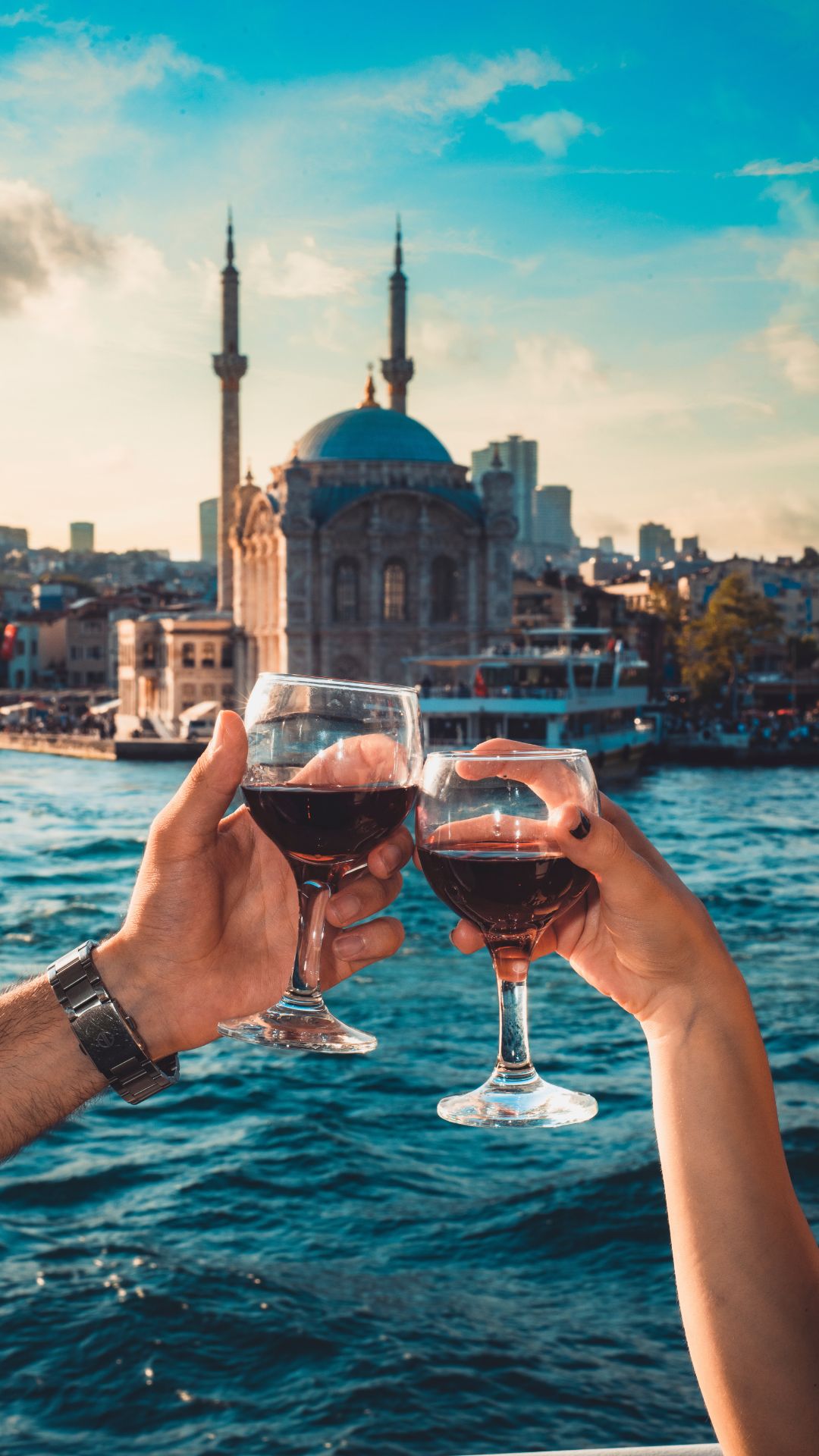
Ortakoy Mosque & Square
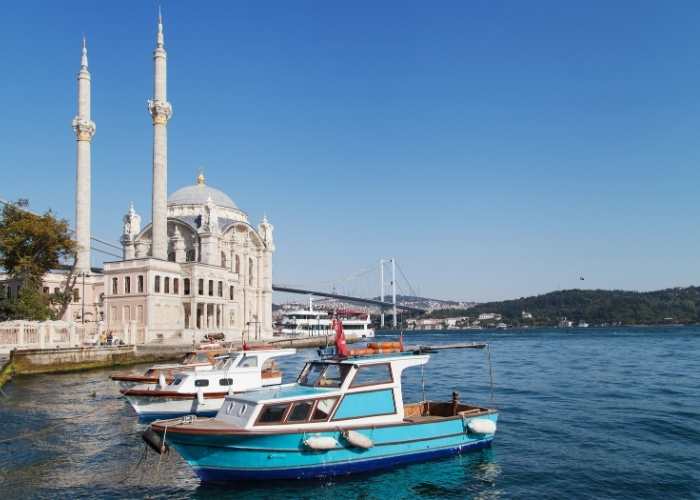
Ortakoy Mosque & Square. Baroque waterfront mosque with the Bosphorus Bridge as its backdrop. Famous for kumpir and weekend craft markets.

Ciragan Palace
Ciragan Palace. Another Ottoman waterfront palace, now a Kempinski luxury hotel. The stunning facade and waterfront terrace cafe are open to non-guests.

Bosphorus Strait Guide
Bosphorus Strait Guide. Catch a ferry from Besiktas terminal for a Bosphorus cruise. See Dolmabahce Palace from the water.

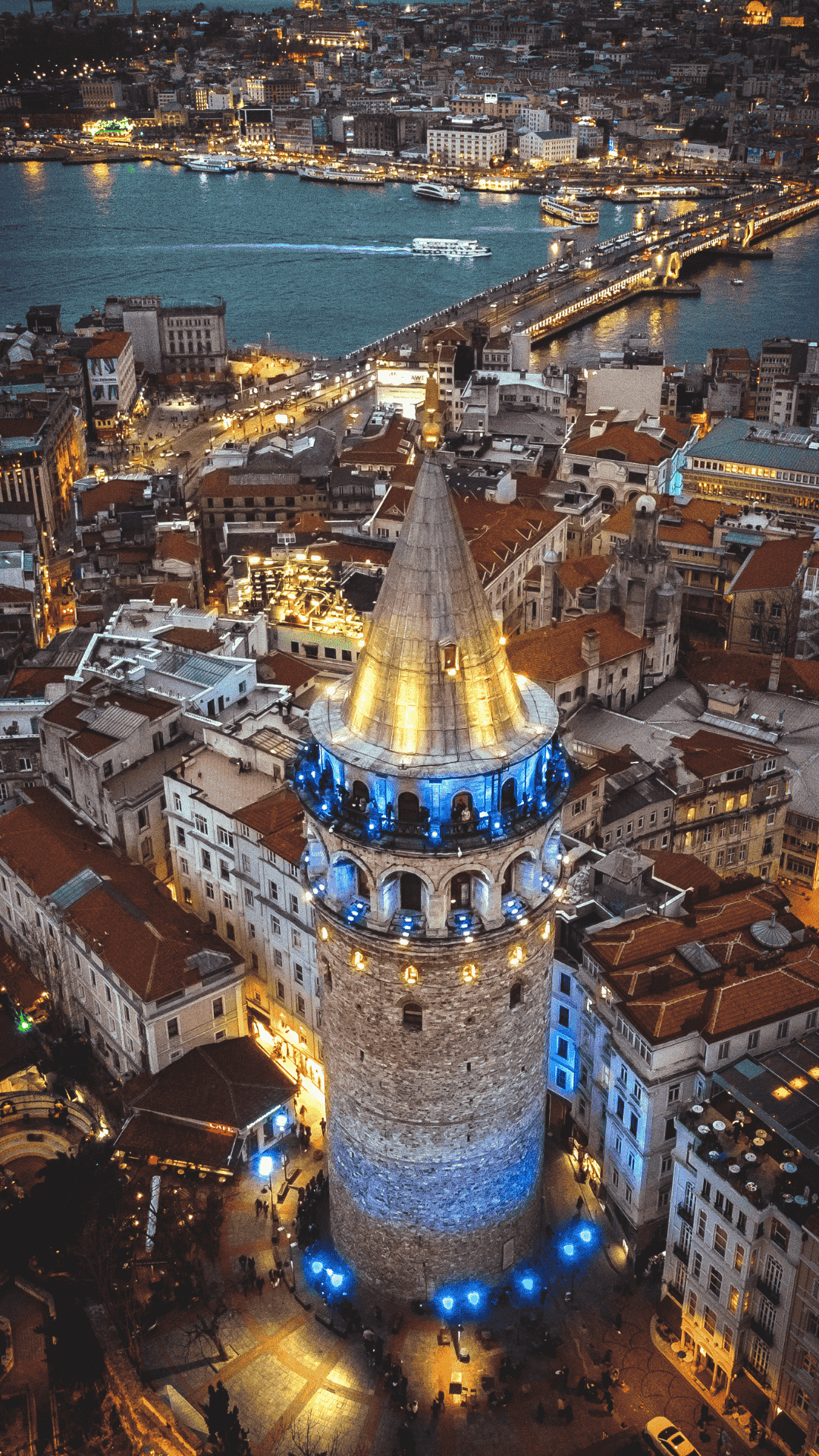
Galata Tower Guide
Galata Tower Guide. Medieval Genoese watchtower with panoramic views over the Golden Horn, Bosphorus, and Old City.
Frequently Asked Questions
A complete visit typically takes 1.5 to 2 hours. If you visit only the Selamlik (ceremonial halls), allow about 60 to 75 minutes. Adding the Harem section requires an additional 45 to 60 minutes. We recommend allowing an additional 30 minutes to explore the gardens and waterfront after the interior tour.
No. Photography and videography are strictly prohibited inside all interior sections of Dolmabahce Palace. Guards actively enforce this policy. You are free to photograph the exterior facade, gardens, Bosphorus waterfront, and imperial gates. The palace gift shop sells an excellent official photo book.
Absolutely. The Harem section contains some of the palace's most intimate and beautifully decorated spaces, including the Valide Sultan's lavish suite, the Sultan's private bedchamber, the royal hamam in Egyptian alabaster, and the room where Ataturk died on November 10, 1938. The combo ticket is the best value.
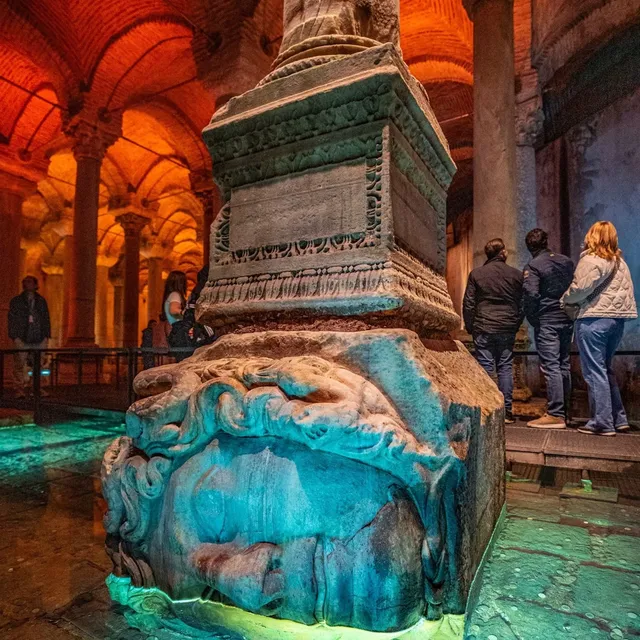
Dolmabahce Palace is closed every Monday for maintenance, conservation, and thorough cleaning. The delicate interiors require regular maintenance that cannot be performed while visitors are present. If Monday is your only available day, consider visiting Topkapi Palace (closed Tuesdays) or the Basilica Cistern instead.
The easiest route is the T1 tram line. From the Sultanahmet tram stop, board any tram heading toward Kabatas (the final stop). The ride takes approximately 20 minutes. From Kabatas station, exit and walk 5 minutes northeast along the Bosphorus waterfront. Alternatively, take a taxi (15 to 20 minutes depending on traffic).
It depends on the metric. Dolmabahce Palace has a larger total floor area: 45,000 square meters with 285 rooms, 46 grand halls, 6 Turkish baths, and 68 toilets. Topkapi Palace covers a larger overall compound area of approximately 700,000 square meters, including extensive courtyards and gardens. Both are extraordinary and well worth visiting.
Every clock in Dolmabahce Palace is stopped at 9:05, marking the exact time of Mustafa Kemal Ataturk's death on the morning of November 10, 1938. The stopped clocks serve as a permanent, silent memorial throughout the palace. The moment of 9:05 on November 10 is observed across Turkey with a nationwide minute of silence to this day.
The formal ornamental gardens require a valid admission ticket. However, the Bosphorus waterfront promenade outside the palace gates is public and free. From here, you can admire the stunning 600-meter facade, the ornate imperial gates, and the clock tower without purchasing a ticket.