Legend of Basilica Cistern and Its Lasting Appeal
Part of the fascination with the Basilica Cistern comes from the atmosphere itself: dim light, rows of towering columns, and the famous Medusa heads hidden in the northwest corner. While the structure is celebrated for its engineering, visitors are often drawn just as much by the legends surrounding it. This blend of history and myth is what makes the cistern one of Istanbul’s most beautiful tourist attractions.
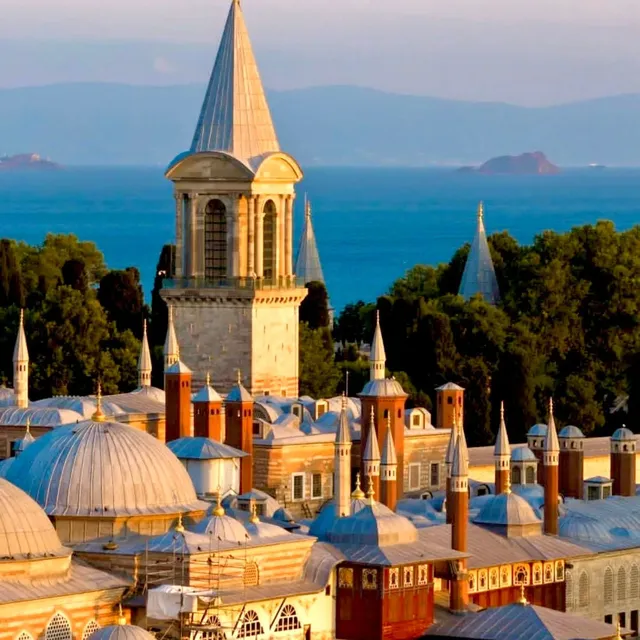
The cistern stands near the city’s historic core, not far from landmarks such as Topkapi Palace and Sultanahmet’s monumental heritage. For travelers exploring old Istanbul, it offers a very different experience from the city’s mosques, palaces, and open squares: a hidden world below ground.
The Basilica Cistern’s Architecture
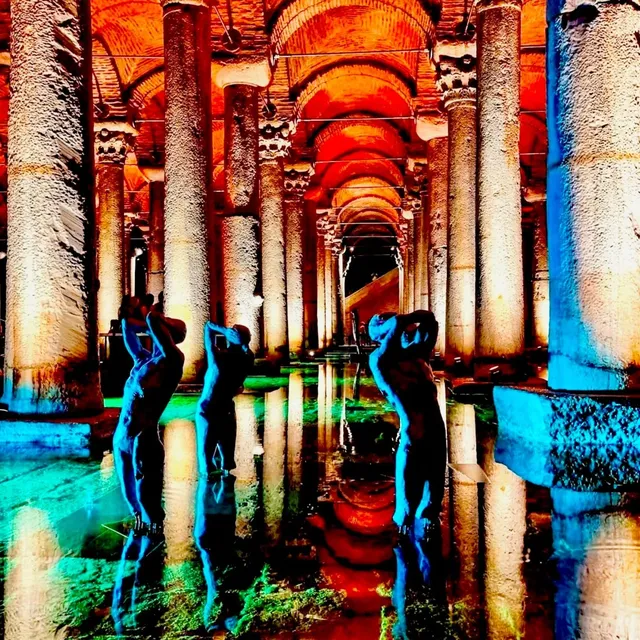
The Cistern is more than 100 meters tall, occupying a rectangular area. The Cistern in Istanbul, which is accessible by a 52-step stairway, has 336 columns that are 9 meters high. The columns are arranged in 12 rows of 28 columns each, separated at 4.80-meter intervals. Through arches, these columns support the case-bay of the cistern.
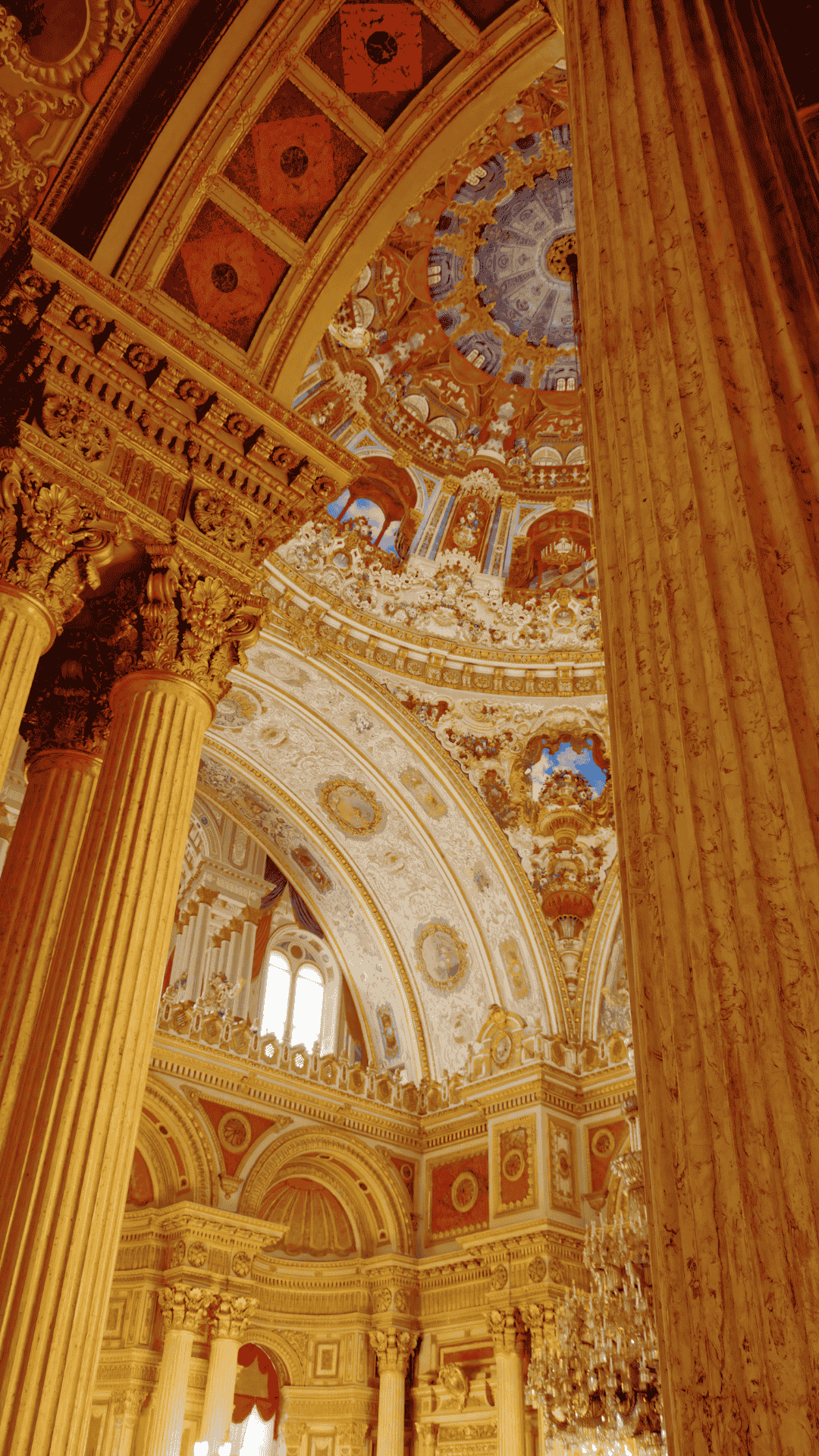
The bulk of the columns are made from a single piece, while one is made of two pieces. Most are believed to have been assembled from ancient Istanbul sites and carved from different kinds of marble. The heads of the columns vary in design. The majority are in the Corinthian style, while the rest are in the Dorian style.
The walls of the cistern are 4.80 meters tall, and the floor is bricked and plastered with a thick layer of brick dust mortar for water resistance. The cistern has a total size of 9,800 square meters and a capacity of 100,000 tons of water.
According to ancient sources, the basilica had gardens surrounded by a colonnade and facing Hagia Sophia. Emperor Constantine built a structure that was later rebuilt and enlarged by Emperor Justinian after the 532 Nika riots, which devastated the area.
According to ancient sources, 7,000 slaves were employed in the cistern’s construction. The enlarged cistern served as a water filtering facility for the Great Palace of Constantinople and other First Hill residences. It continued to provide water to Topkapi Palace after the Ottoman conquest in 1453 and into the modern era.
Heads of Medusa
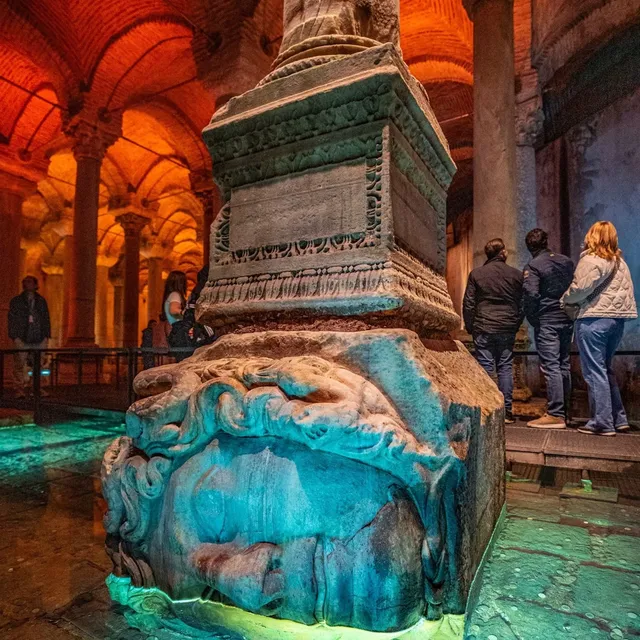
Two columns in the cistern’s northwest corner rest on stones carved with Medusa’s visage. The origins of these two heads are unknown, although they are believed to have been brought to the cistern after being removed from a late Roman building. There is no documented evidence that they were previously used as column pedestals.
The blocks are said to have been placed sideways and upside down to neutralize the power of the Gorgon’s gaze. However, it is also widely accepted that one was laid sideways simply because it was the right size to support the column. The other may have been placed upside down for practical reasons of height and fit. Even so, the unusual positioning has helped fuel the legend of basilica cistern and made the Medusa heads the site’s most talked-about detail.
This combination of practical reuse and myth is part of what makes the cistern memorable. Visitors come for Byzantine engineering, but many leave talking about Medusa.
Why Visit the Basilica Cistern
The Basilica Cistern offers a rare glimpse into the infrastructure that supported imperial Constantinople. It is not only an architectural monument but also a place where fragments of older history were absorbed into a later Byzantine project. That is especially clear in the reused columns and the famous Medusa blocks.
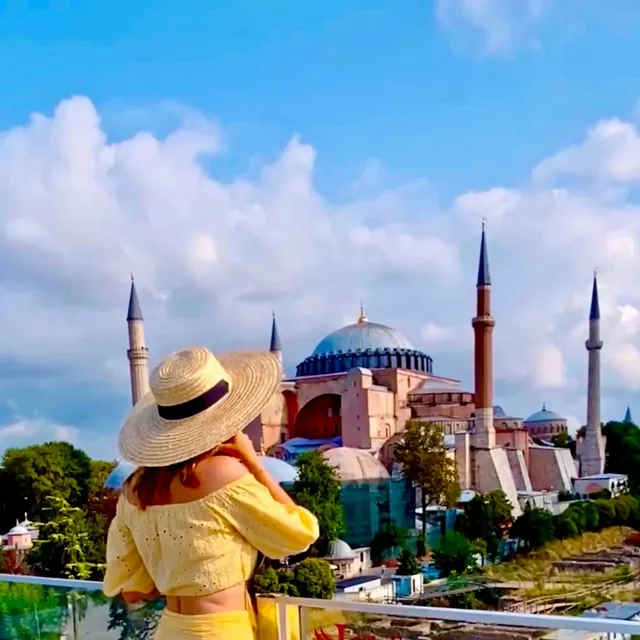
If you are planning a route through the old city, the cistern pairs naturally with nearby sites such as Hagia Sophia and Sultanahmet Square. For broader historical background, you can also review the monument’s overview on Wikipedia. As always, check official or current travel sources before your visit for the latest visitor information.
On an Istanbul trip, the Basilica Cistern can easily become one of the most atmospheric stops on your itinerary. Beneath the city streets, its columns, shadows, and Medusa heads preserve both the history and the mystery that define this remarkable place.