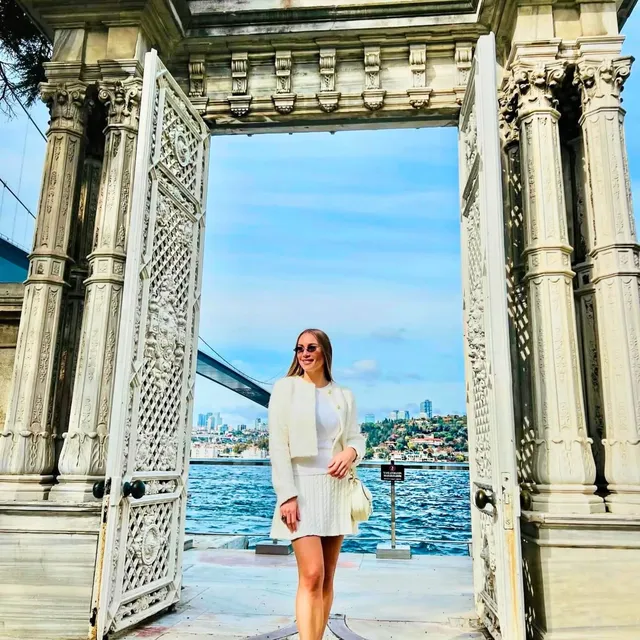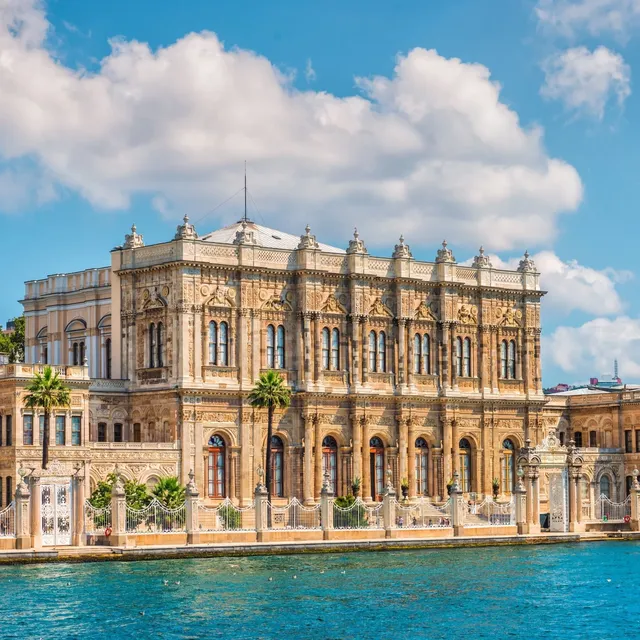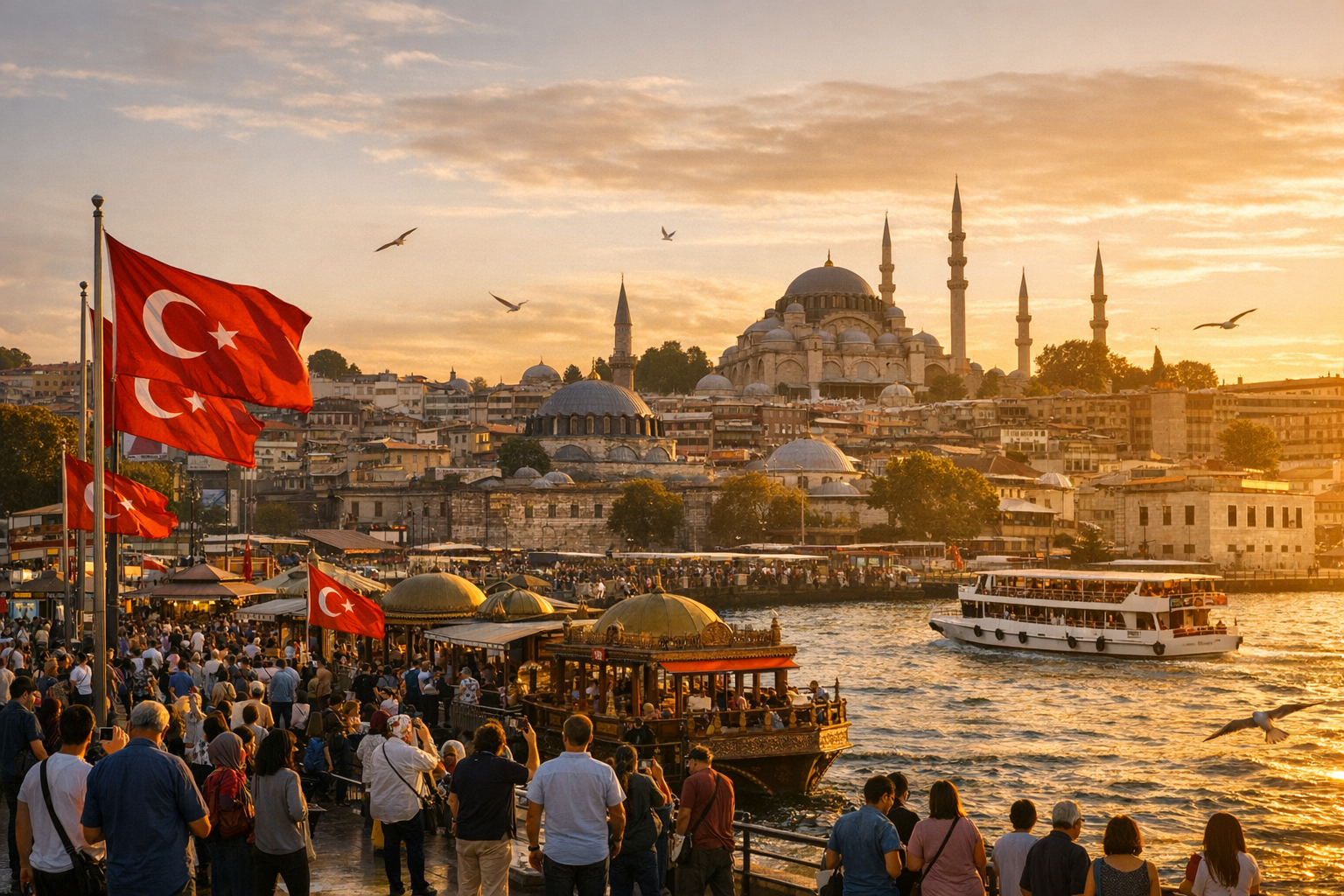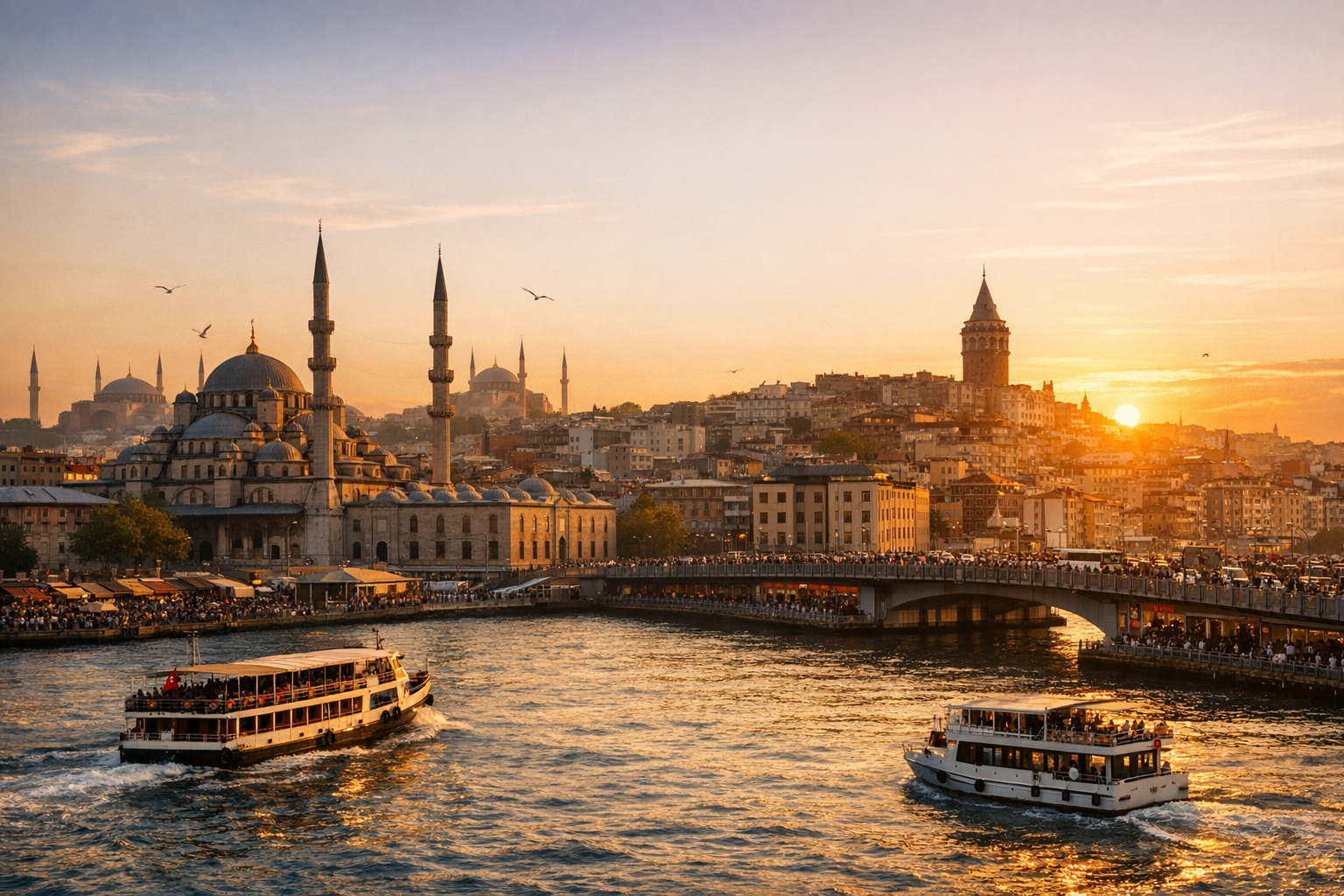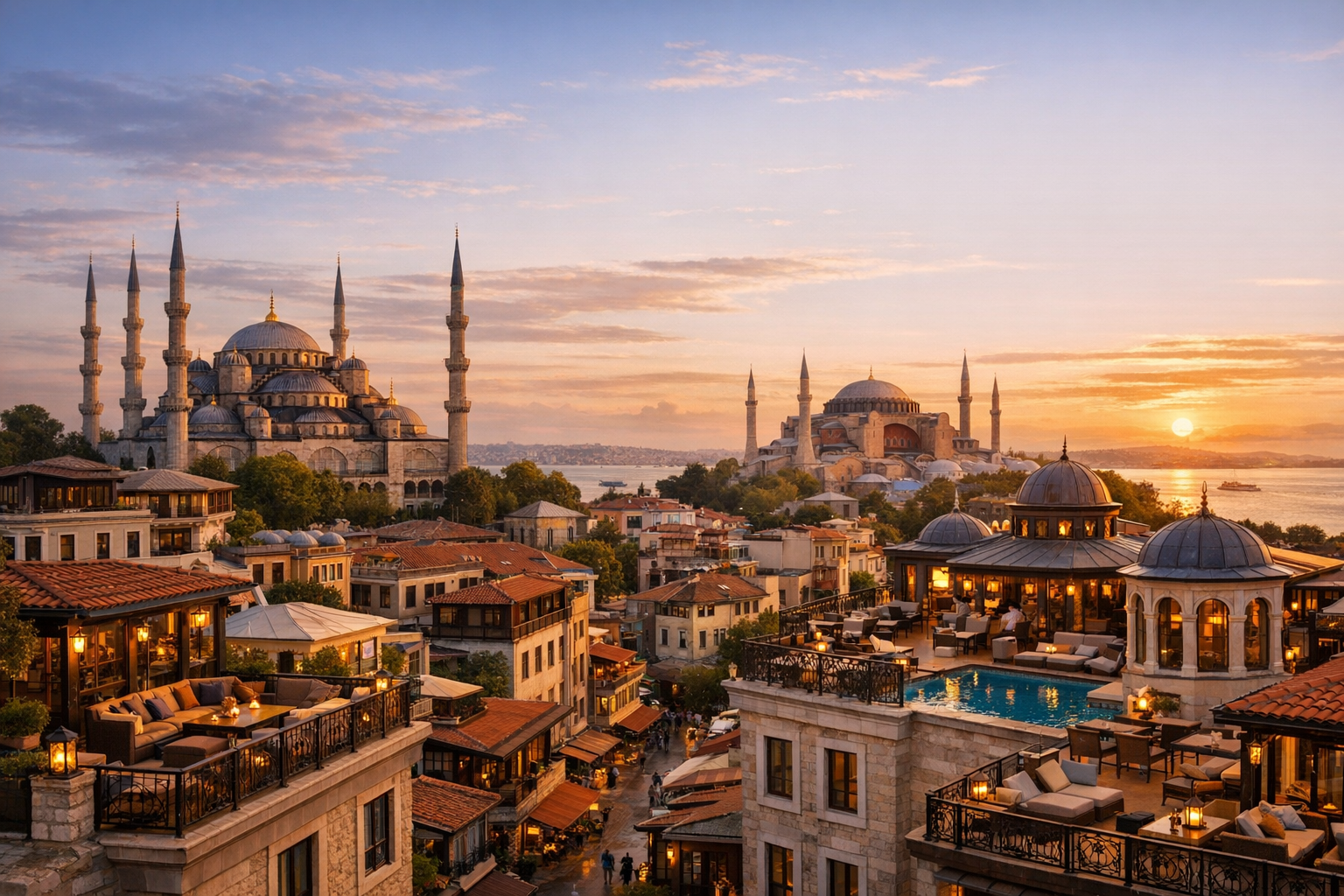
Another classic Istanbul experience is walking along İstiklal Street. Starting from Taksim Square, you can follow Istiklal Avenue past cafes, shops and restaurants on both sides. Be sure to taste some of the area’s well-known flavors along the way. For many visitors, one of the images most associated with Istanbul is the view of Ortaköy Mosque with the Bosphorus Bridge behind it. One of the simple pleasures in the city is to pick up tea and snacks near Ortaköy, sit on the benches facing the water, and enjoy the scene.
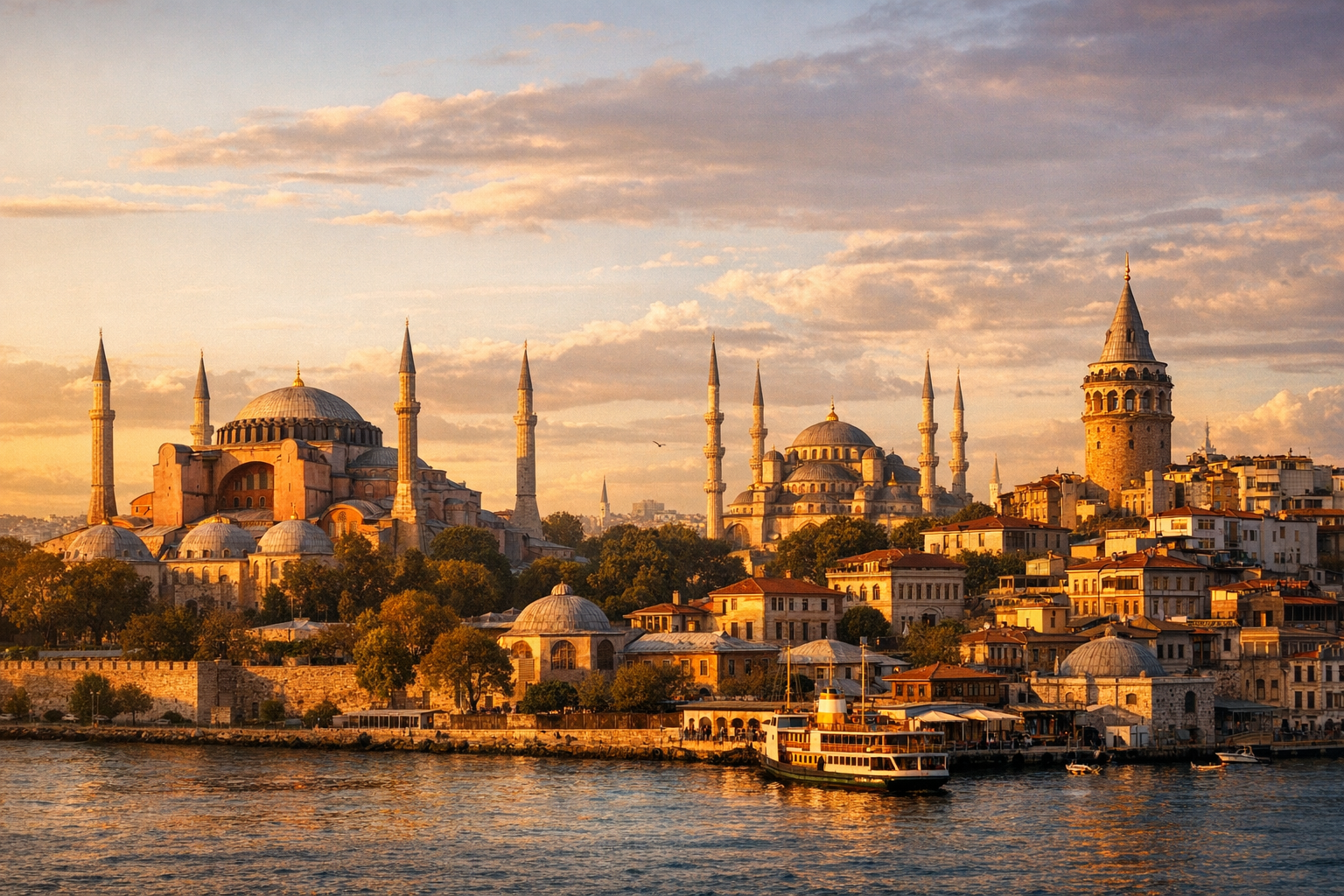
How to plan a route around Istanbul historical buildings
If you are wondering how to travel around Istanbul, it helps to make a plan before you start. A practical way is to organize your route according to the area where your hotel is located. You can begin by visiting the historical places nearby, then expand your itinerary to include landmarks in other districts. Istanbul is full of sites from different periods, so grouping nearby attractions can make your trip easier and more enjoyable.
Below are some of the best-known historical buildings and places in the city, along with brief notes on why they matter.
Istanbul historical buildings you should know
Hagia Sophia
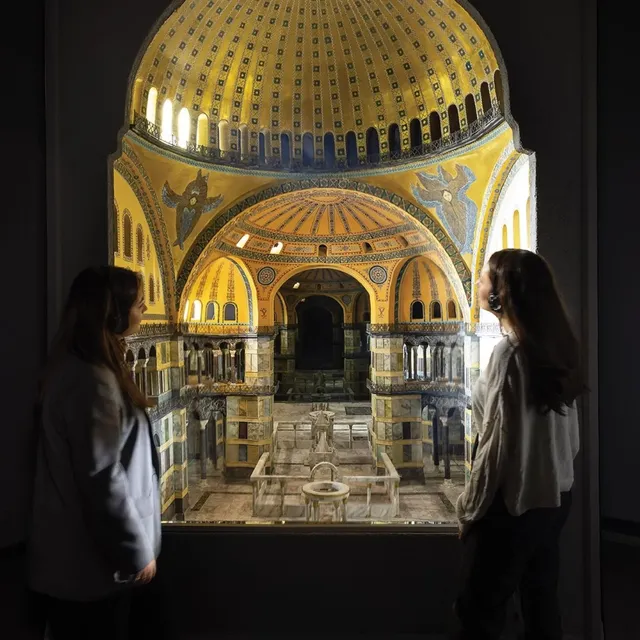
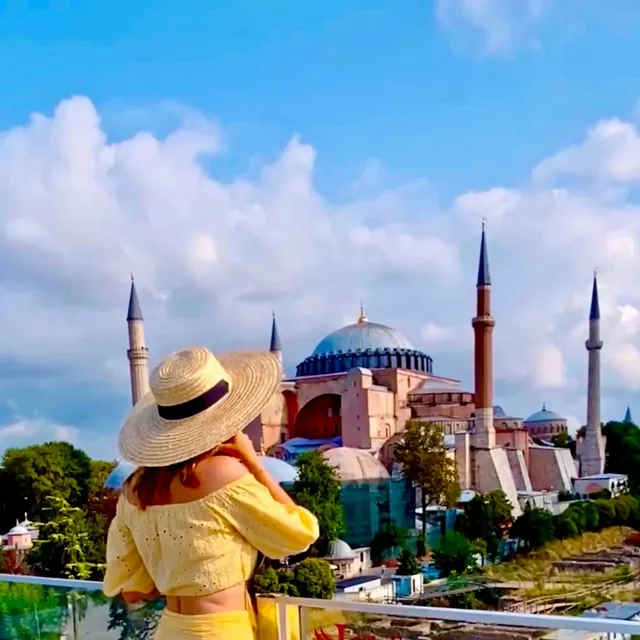
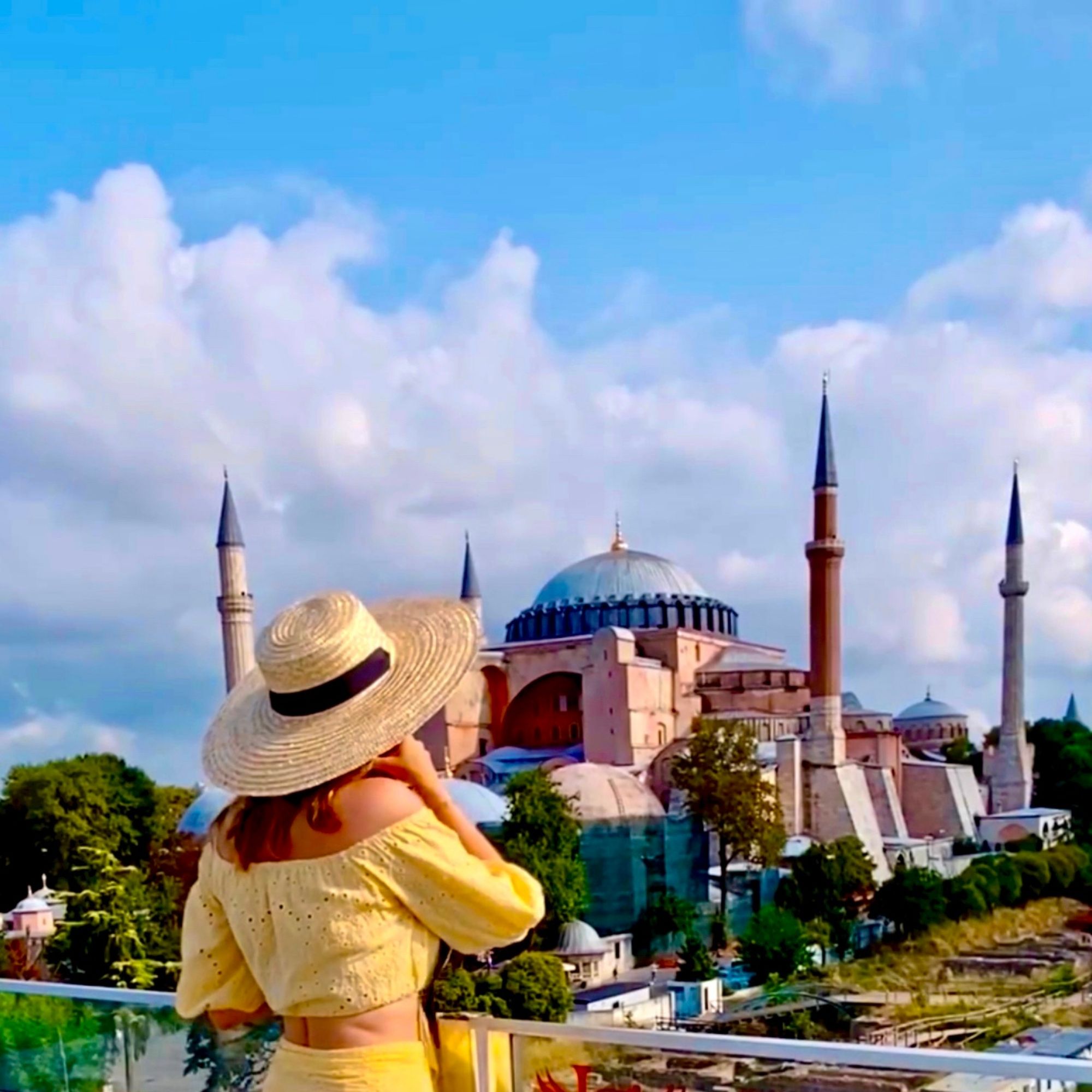
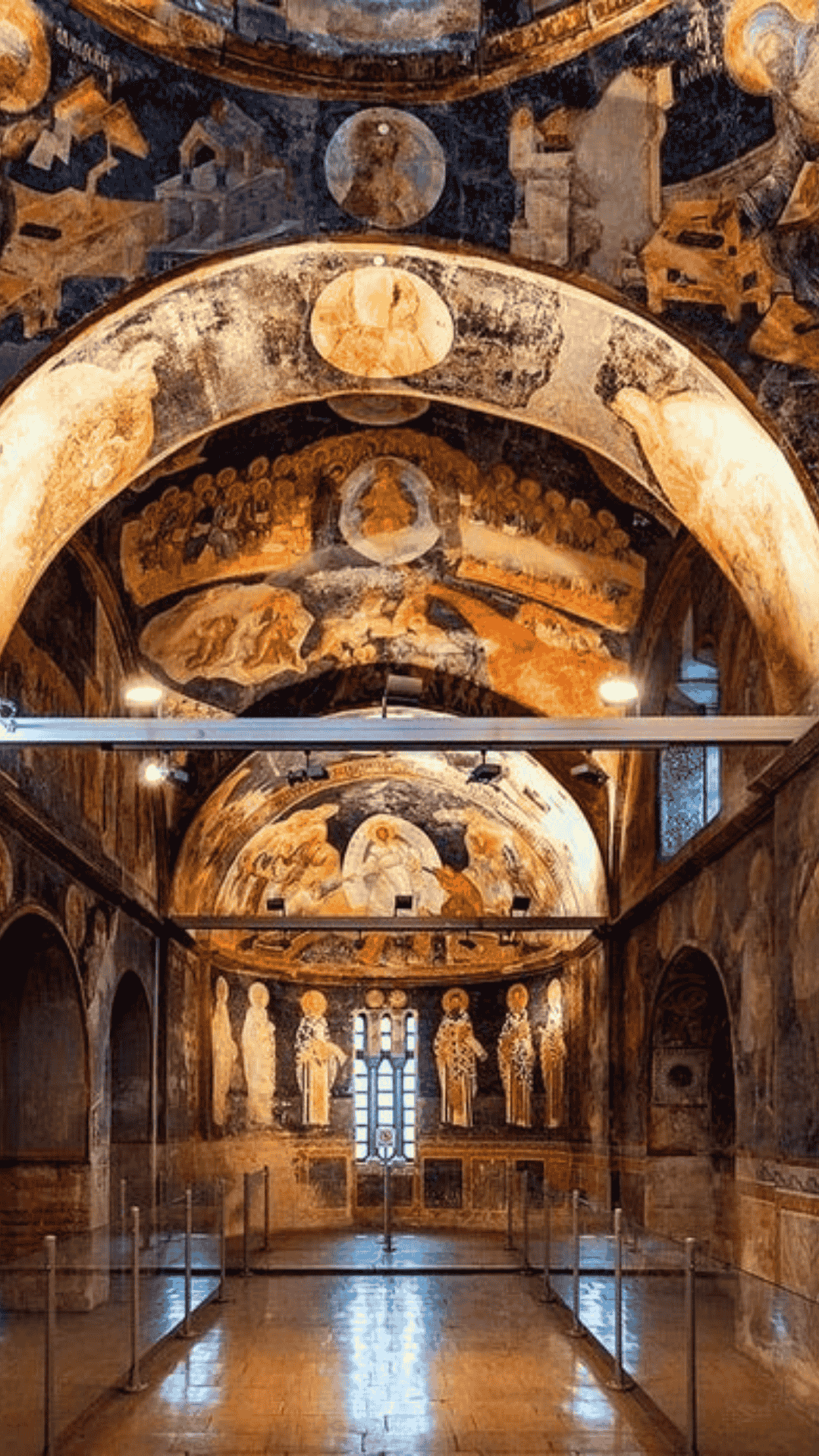
Hagia Sophia is one of the most important historical buildings in Istanbul. It was first built as a church and then as a cathedral in the Byzantine period. With its magnificent design, it is considered one of the masterpieces of the architectural world. After the Ottoman conquest of Istanbul in 1453, the building was converted into a mosque, served as a museum from 1934 to 2020, and is now a mosque again.
Its original ceiling mosaics, fine marble workmanship and the mausoleums of Ottoman sultans in the garden make it one of the most remarkable places in the city. Visiting Hagia Sophia gives many travelers the feeling of moving through thousands of years of Istanbul’s history. For historical background, UNESCO’s overview of the city is also useful: UNESCO.
Topkapı Palace
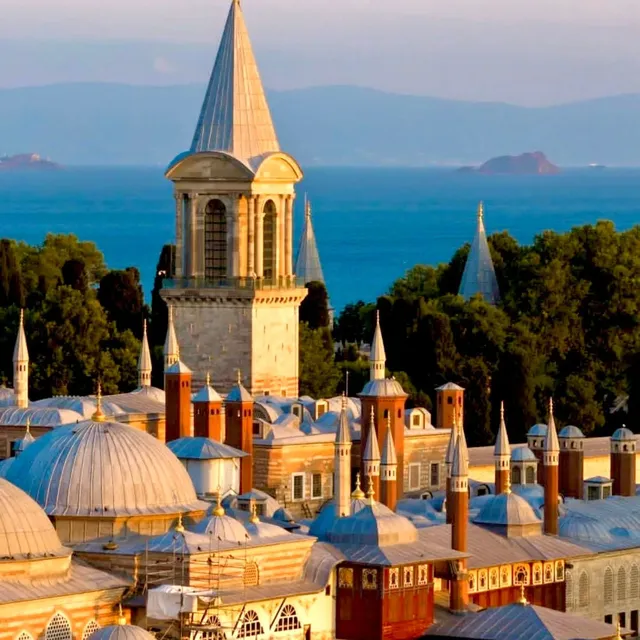
Topkapi Palace is another of the most important historical buildings in Istanbul. Built by Fatih Sultan Mehmet in 1478, it served as an administrative center of the Ottoman Empire for 400 years. The palace displays personal belongings of the sultans as well as tools and objects used in palace life.
Walking through Topkapı Palace offers insight into Ottoman history, administration and everyday routines. It is one of the places where history feels especially tangible as you move through courtyards, rooms and exhibition areas. For current visitor details, it is best to check the official museum resources or the relevant official site.
Galata Tower
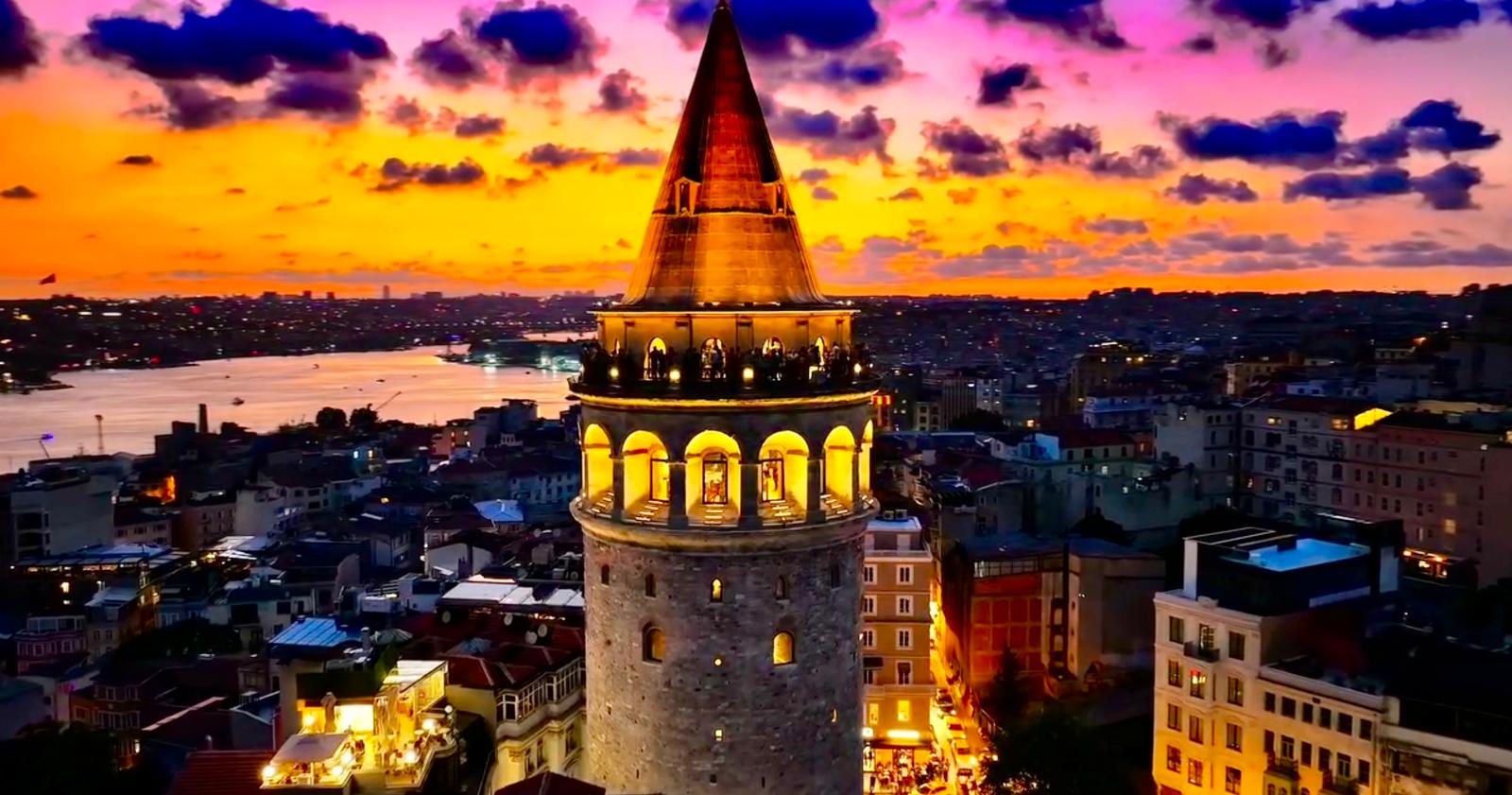
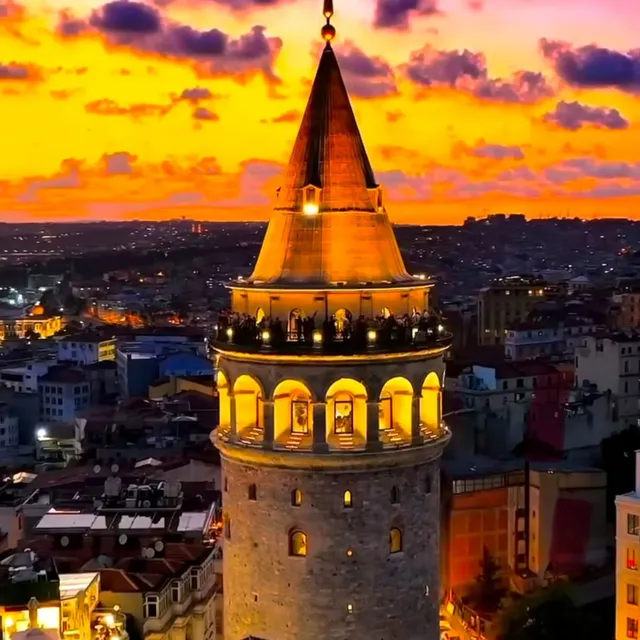
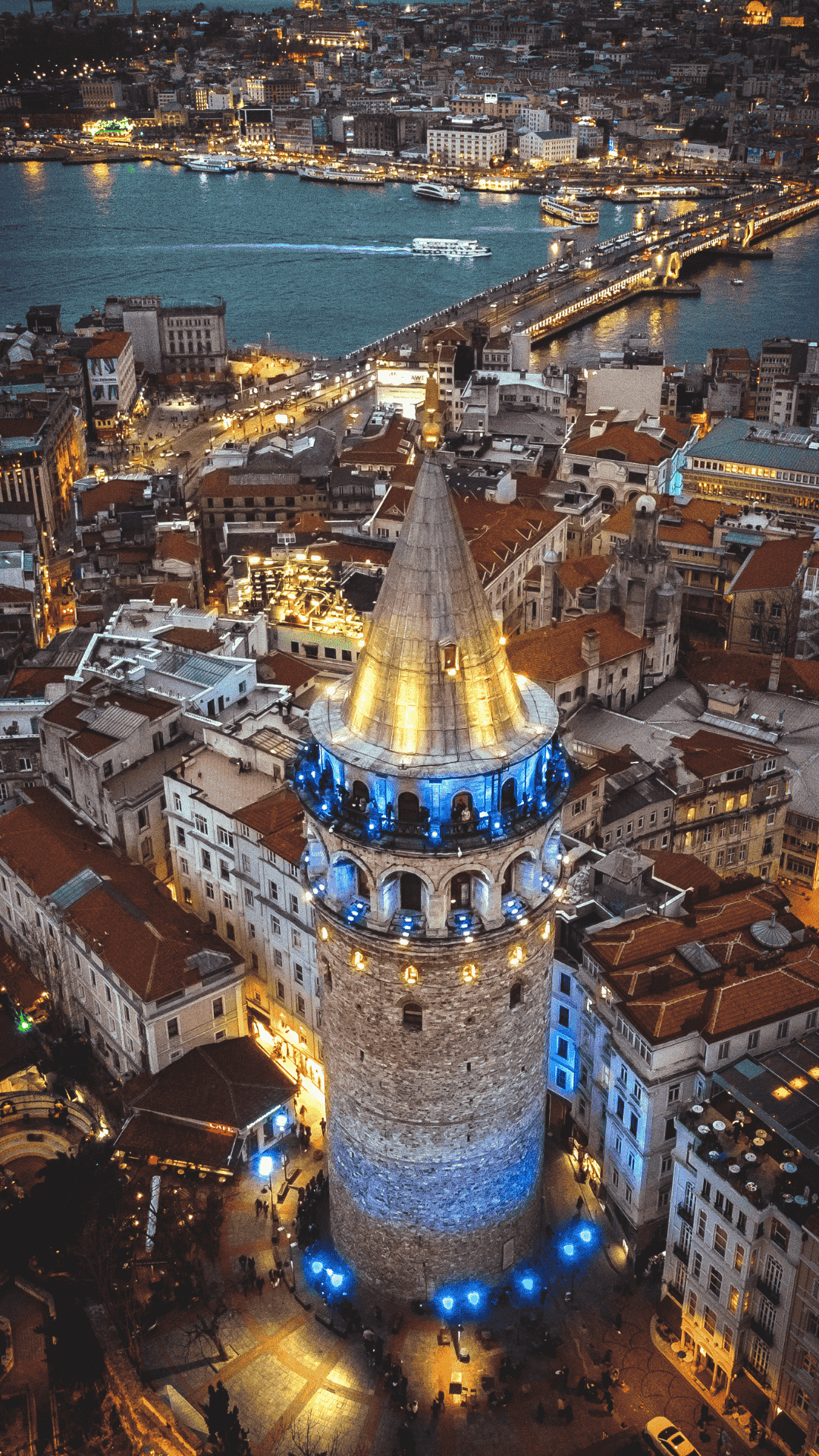
Galata Tower, one of the oldest towers in the world, was used as a shelter in the Ottoman period and later as a fire observation tower. Over time, it underwent several architectural changes. One of the most notable was the pointed cone at the top, which became a defining feature of the tower. After a storm in 1875, that cone was blown away, beginning a cone-free period in the tower’s history.
Although different restoration ideas were proposed by different architects, the tower was restored in 1967. Today, Galata Tower is known for the sweeping Istanbul panorama it offers. There is also a popular hearsay connected to the tower: whoever you take to Galata Tower, you will marry him.
Historical places that complete the experience
Grand Bazaar
The Grand Bazaar is one of the most touristic and historical places in Istanbul and is often described as one of the first shopping centers in the world. When it was first built, it consisted of a single section, but it expanded over time and now has almost 4 thousand shops across 65 streets.
It remains one of the essential historical routes in the city for anyone who wants to experience Istanbul’s atmosphere, artisan culture and shopping traditions together. Even if you are not planning to shop, wandering through its streets is a memorable part of any visit.
Egyptian Spice Bazaar
The Egyptian Spice Bazaar, also known as the Spice Bazaar, is located in Eminönü. In the past, it stood within a major commercial area where products from many parts of the world met buyers. It is one of the oldest covered bazaars in Istanbul.
Today, you can walk through its passages, browse spice shops and other traditional stores, and find many food items and souvenirs. The bazaar is still strongly associated with spices, and it remains a rewarding stop if you want to discover new flavors and ingredients.
Gülhane Park
Gülhane Park, the subject of many poems and compositions, is one of Istanbul’s most historical walking areas. The park covers a large area of 163 acres. It is especially important in historical terms because the Tanzimat Edict was announced here.
Beyond its historical significance, Gülhane Park is also one of the green spaces in Istanbul that has preserved its historical texture. After a day spent visiting palaces, towers and bazaars, it offers a relaxing setting where you can slow down and enjoy a quieter side of the city.
Why these places still matter
What makes these landmarks special is not only their age, but also how they reflect Istanbul’s layered identity. Churches turned mosques, imperial palaces, watchtowers, trade centers and historic parks all reveal a city shaped by different empires, beliefs and daily traditions. Together, they form a route through Byzantine, Ottoman and modern Istanbul.
If you want a trip that combines scenery, walking, culture and history, these places provide a strong starting point. You can begin with the Bosphorus views, continue through central streets and squares, and then move into the city’s great monuments and marketplaces at your own pace.