
Best Turkish Drinks for Cold Days
Turkish Tea
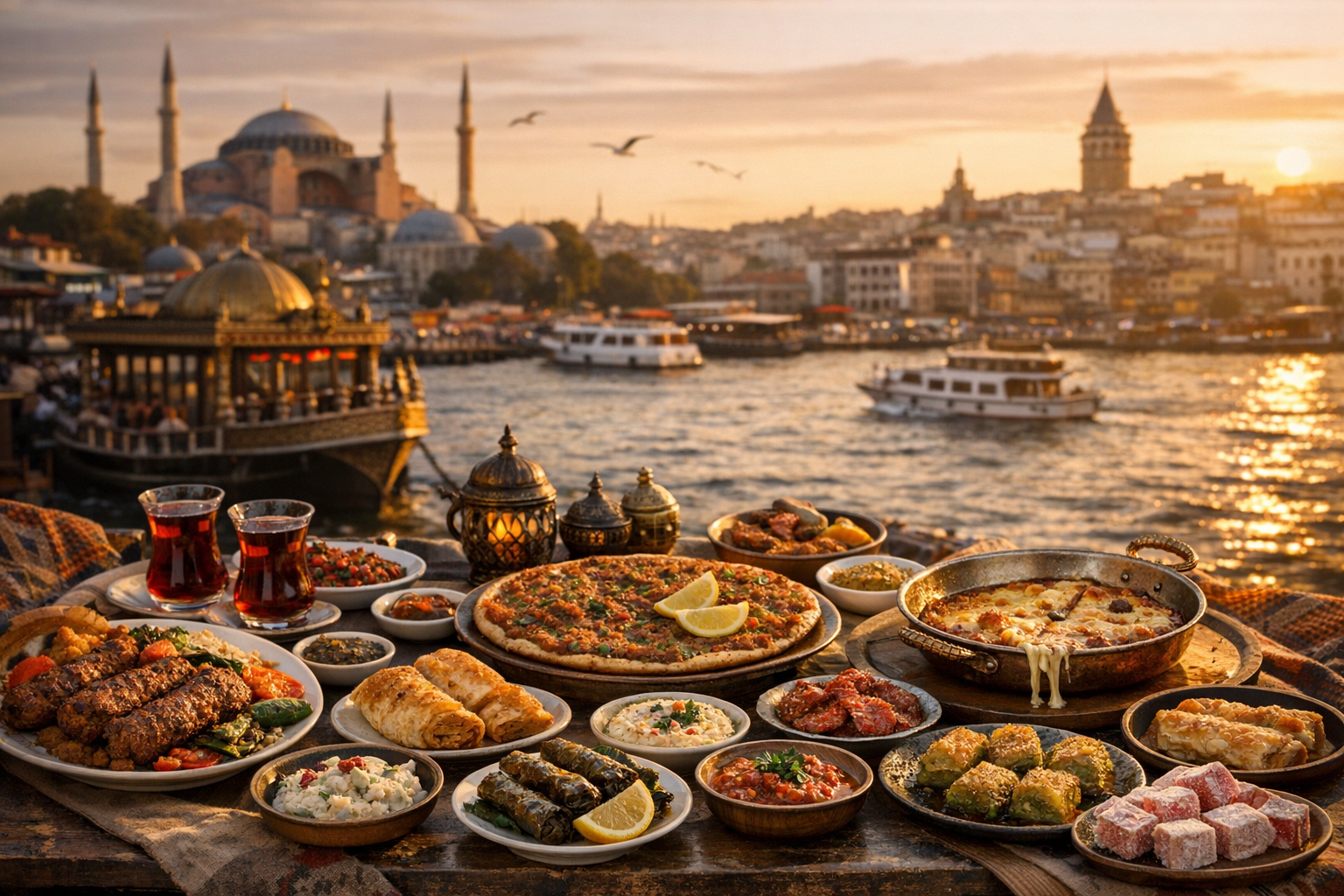
Turkish tea, with its very distinctive taste, is indispensable at breakfast and remains one of the essential Turkish drinks. In Istanbul, it has become a symbol alongside simit. Tea is enjoyed during meals, after meals, and throughout the day. It helps take away the day’s tiredness and also reflects hospitality and friendship. Wherever you go, you can enjoy Turkish tea in its fine-waisted glass.
Turkish Coffee
Turkish coffee stands apart with its cooking and brewing technique and entered the Turkish culinary scene in 1551. It also held an important place in the palace kitchen. With its ceremonial presentation, it continues to attract guests and remains one of the most loved Turkish drinks.
Roasted beans for Turkish coffee are cooked in a copper cezve until foamy. After it is boiled, the coffee is poured into cups and traditionally served with water and Turkish delight. Turkish coffee is often enjoyed after a heavy meal and is known for leaving people with a sense of lightness. It is a special drink you should not forget to try when you come to Istanbul. You can also learn more about its cultural background on Wikipedia.
Sahlep
Would you like to discover an incredible taste that warms you up in the winter months? Sahlep, one of the rare flavors of Turkish gastronomy, is among the top drinks to try. It is served in wide-mouthed cups that keep the heat longer, usually with cinnamon sprinkled on top. It is also known for many health benefits. Drinking sahlep while watching the city on a Bosphorus Cruise can be one of the most memorable cold-weather experiences in Istanbul.
Cold Turkish Drinks for Summer
Ayran
Known well beyond Turkey, ayran is an indispensable accompaniment to meals. Made with yogurt, water, and salt, it was traditionally prepared by churning and is now also made in special machines. A good ayran should be thoroughly foamy. Across Turkey, you can find it fresh or packaged almost everywhere. It is a main actor beside meals thanks to its refreshing character, digestive relief, and probiotic qualities. On a hot summer day in busy areas such as the Grand Bazaar, a glass of ayran can be especially satisfying.
Boza
Although served cold, boza is mostly consumed in autumn and winter. Boza is one of the traditional Turkish drinks once sold on the streets in large copper jars. Generations grew up hearing vendors calling out, “Boza!” Today, these sellers are nearly gone, but the custom still survives in a more limited way. Boza remains widely available and is still enjoyed by many people. Be sure to try it, even if its thick texture seems unfamiliar at first. It is traditionally topped with cinnamon and yellow chickpeas.
Kefir
Kefir, often described as a natural antibiotic, contains probiotics beneficial to health. It supports immunity and digestion and is also said to help strengthen bones. Kefir is generally recommended for children and older adults. It can be consumed almost every day by those who enjoy it and is among the Turkish drinks that often interest tourists. For people who do not prefer plain kefir, fruity versions are also available.
Şalgam
This drink is made from the juice obtained by combining red beet and black carrot in a pickle-like preparation and is served cold. Şalgam, sometimes described as turnip juice, comes in spicy and non-spicy versions. It is especially common in kebab restaurants and is often introduced to foreign visitors. Sour and salty at the same time, it is one of the most original flavors among traditional Turkish beverages.
Ottoman Sherbets from Past to Present
Ottoman sherbets have a well-deserved reputation for their attractive colors and pleasant taste. In today’s Turkish culinary culture, they also stand out for their natural character. These delicious Turkish drinks are made from fruit, spice, and flower extracts. They have long been seen as healing drinks and were used both as refreshments and as remedies for troubles.
If you are exploring historic parts of the city such as Topkapi Palace, learning about Ottoman food and drink traditions adds another layer to the experience. For a broader overview of Turkish culture and travel, the official tourism portal GoTürkiye is also useful.
Rose Sorbet
Rose sherbet, one of the special tastes of the Ottoman Empire, is prepared without cooking and is quite simple to make. In the past, it was consumed both for refreshment and for the pleasant scent associated with it. Sherbet varieties were made from many plants and fruits, especially roses. Lemon juice and drinking water are added to rose petals, then rubbed with sugar or honey, covered tightly, and kept in the refrigerator overnight. This delicious option is among the Turkish drinks often preferred during Ramadan.
Hibiscus Sorbet
For hibiscus sherbet, hot water, cinnamon, and cloves are put in a pot and boiled for five minutes. Then the cinnamon is removed and the heat is turned off. Dried hibiscus flowers, lemon salt, and sugar are added and left for twenty minutes. After cooling, the drink is ready to enjoy.
Why These Turkish Drinks Matter
These drinks are more than simple refreshments. They reflect hospitality, seasonal habits, Ottoman heritage, and everyday life in Istanbul. Some are tied to breakfast, some to heavy meals, and others to winter streets or Ramadan tables. Trying them helps you experience Turkish cuisine in a more complete and memorable way.
FAQ About Turkish Drinks
Which Turkish drink should I try first in Istanbul?
If you are trying just one drink first, Turkish tea or Turkish coffee is the easiest place to begin. Both are central to everyday life in Istanbul and are widely available in cafés, restaurants, and local shops across the city.
Are Turkish drinks only served hot?
No. Turkish beverage culture includes both hot and cold options. Tea, coffee, and sahlep are popular in cooler weather, while ayran, şalgam, kefir, and many sherbets are commonly enjoyed cold, especially during warmer months.
What is the most traditional Turkish winter drink?
Sahlep and boza are among the most traditional winter favorites. Sahlep is served hot with cinnamon, while boza is usually consumed cold but is strongly associated with autumn and winter traditions in Turkey.
What do Turkish people drink with meals?
Ayran is one of the most common drinks served with meals, especially alongside kebabs and other rich dishes. Tea may also follow a meal, and some regional or traditional restaurants serve şalgam with meat dishes as well.
Are Ottoman sherbets still available today?
Yes. Ottoman sherbets are still part of Turkish culinary culture today, especially in traditional settings and during Ramadan. Popular varieties include rose sherbet and hibiscus sherbet, both known for their colorful appearance and refreshing taste.