Valens Aqueduct Facts
The Valens Aqueduct is one of Istanbul’s most striking surviving Roman-era structures. It is 971 meters long, with a peak height of about 29 meters. It is not an entirely straight and regular structure because some of its components were reconstructed at various points throughout time. In contrast, the arches between 41 and 45 and 52 to 56 were rebuilt during the reigns of Mustafa II and Suleyman I, respectively. As can be seen, the arches between 1 and 40 and 46 to 51 have remained unchanged from the time of Emperor Valens.
Uncertain circumstances surround how the bent section near the Fatih Mosque got to be that way, which attracts particular notice. Even though its stonework appears to be nearly flawlessly regular from a distance, closer examination reveals that ashlar blocks and bricks were combined to build it.
The aqueduct’s breadth is also asymmetrical, with its largest point measuring 8.24 meters and its narrowest at 7.75 meters. The pillars are 3.70 meters thick and currently extend 6 meters below the surface.
If you look at the Valens Aqueduct map, you can see that the water that joins together near Edirnekapi comes from the northeast and the northwest parts of the Valens Aqueduct. The daily discharge measured in the 1950s was around 6,000 m3.
For broader historical context, you can also check the Valens Aqueduct entry on Wikipedia.
Where Is the Valens Aqueduct?

Sarachane Park and the Aqueduct of Valens Istanbul are both in Istanbul’s Fatih neighborhood. The monument stands in a central part of the historic city, making it easy to combine with other well-known sights in the area.
To use the metro, board the M2 Yenikapi-Haciosman line and exit at the Vezneciler - Istanbul University stop. The distance to the aqueduct from there is about 10 minutes on foot. For current metro connections and updates, you can also consult Metro Istanbul.
The Istanbul Buyuksehir Belediyesi stop is the closest bus stop to the Valens Aqueduct Istanbul if you need to take a bus. Numerous IETT buses, including the 33, 35, 73, 77, 78, 80, 82, and 92, stop here.
You can take the Marmaray from Istanbul’s Anatolian side and change to the M2 Yenikapi - Haciosman metro line at the Yenikapi stop.
Other Attractions Near the Valens Aqueduct
The location of Valens Aqueduct in Fatih offers visitors a wealth of additional places to discover. It is even safe to argue that Fatih offers some of Istanbul’s best attractions, especially for travelers interested in history, architecture, and the layered story of the city.
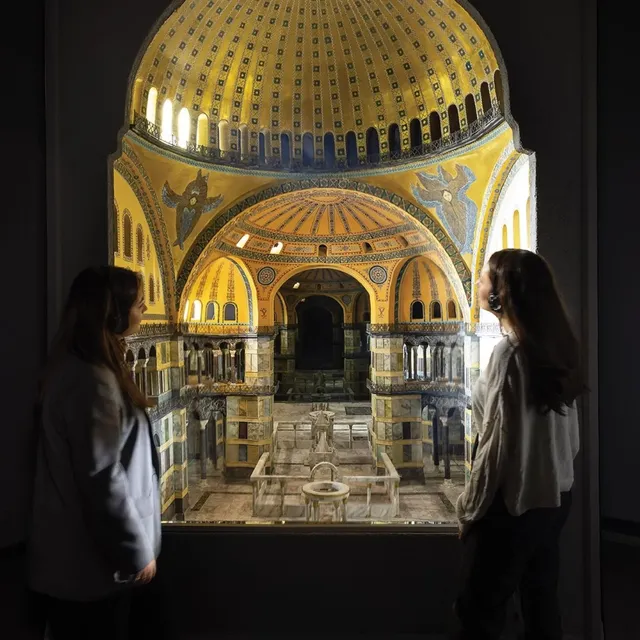
One of the easiest nearby additions to your route is Hagia Sophia, one of Istanbul’s most famous landmarks. With a history spanning more than 15 centuries, it has carried a tremendous amount of history on its shoulders as both a Greek Orthodox Christian patriarchal cathedral and an Ottoman imperial mosque.
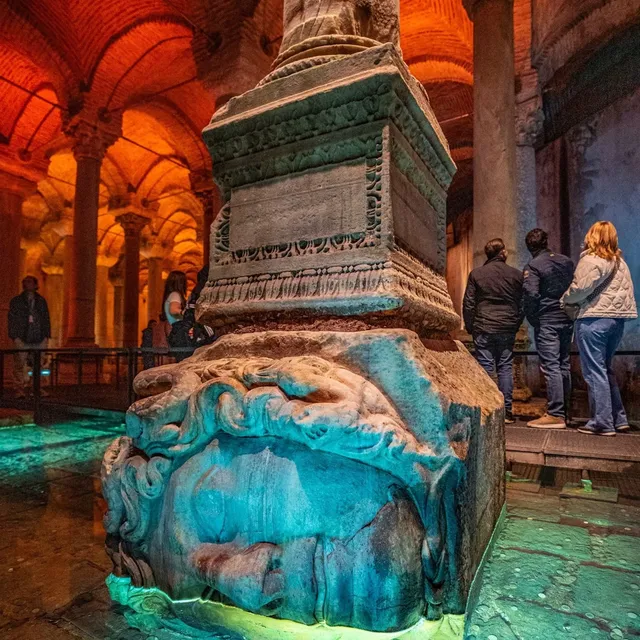
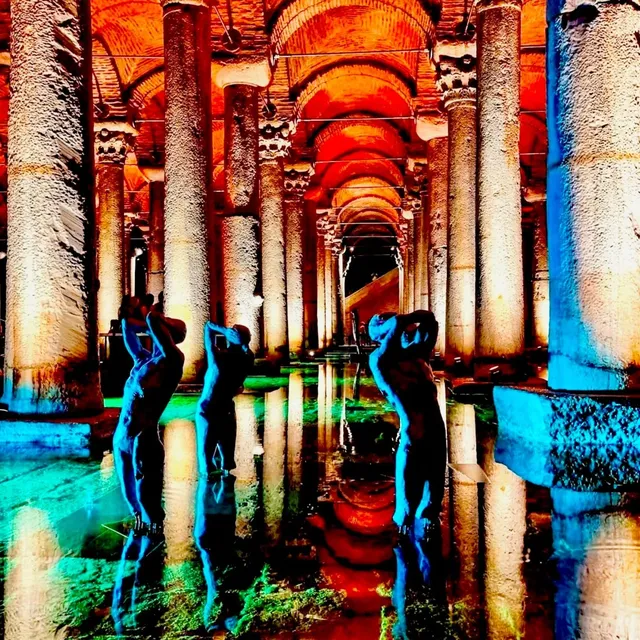
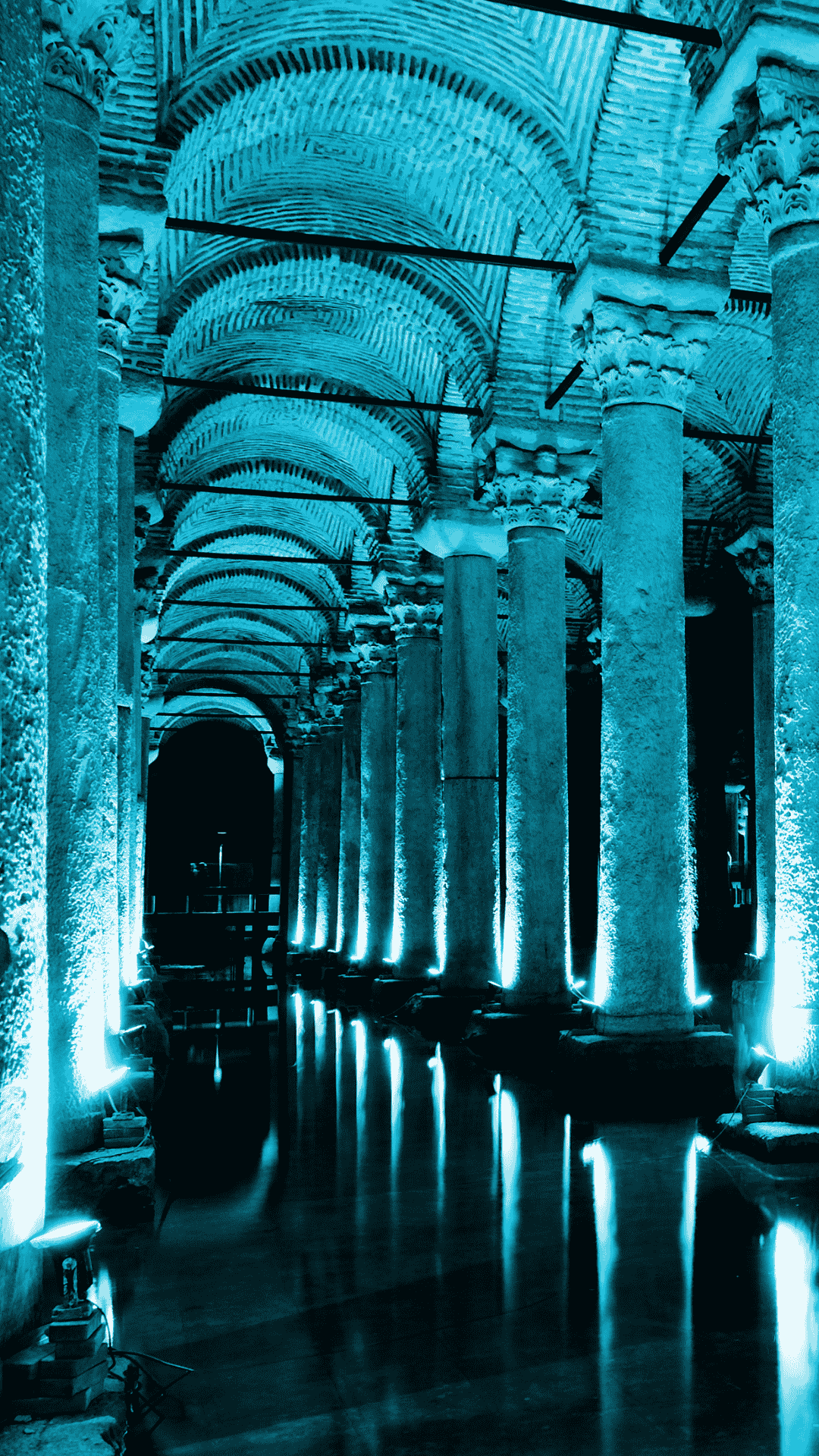
Another remarkable stop is the Basilica Cistern, the city’s largest ancient subterranean cistern. Considering that this enormous historical cistern was constructed in the sixth century, it has been providing Istanbul with water for more than 15 centuries. Inside, you’ll find a space with more than 300 marble columns that appear to go on forever.
You can also continue on to Topkapi Palace, one of the most significant structures in Ottoman history. The imperial palace housed numerous sultans and their families for more than four centuries and remains one of the essential stops in the Historic Peninsula.
For travelers who want to explore beyond the major monuments, the surrounding Fatih district also opens the door to a wider Istanbul experience, from monumental mosques to old streets and public squares. Depending on your route, the aqueduct can fit naturally into a day spent around the city’s most historic neighborhoods.
Planning Your Visit
The Valens Aqueduct is best approached as a visual and historical stop rather than a long standalone visit. Because it stretches across a busy urban setting, most visitors spend time viewing, photographing, and understanding its engineering significance while continuing on to nearby landmarks.
If you are already exploring the Historic Peninsula, pairing the aqueduct with major attractions in Fatih makes practical sense. Its central location, straightforward public transport access, and importance as part of ancient Constantinople’s water system give it lasting appeal for history-focused travelers.
FAQ
What is the Valens Aqueduct?
The Valens Aqueduct is a Roman-era aqueduct in Istanbul, built to carry water into the city. Today, it remains one of the most visible surviving pieces of Constantinople’s infrastructure and is valued for both its engineering and historical significance.
Where is the Valens Aqueduct located?
The Valens Aqueduct is located in the Fatih district of Istanbul, near Sarachane Park. It stands in a central area of the city, making it easy to visit while exploring other historic attractions nearby.
How do you get to the Valens Aqueduct?
You can reach the Valens Aqueduct by taking the M2 Yenikapi-Haciosman metro line and getting off at Vezneciler - Istanbul University, then walking დაახლოებით 10 minutes. Several IETT bus lines also stop nearby at Istanbul Buyuksehir Belediyesi.
How large is the Valens Aqueduct?
The Valens Aqueduct is 971 meters long and reaches a peak height of about 29 meters. Its width varies, measuring 8.24 meters at its widest point and 7.75 meters at its narrowest.
What can you see near the Valens Aqueduct?
Nearby attractions include Hagia Sophia, Basilica Cistern, and Topkapi Palace. Because the aqueduct is in Fatih, it can be included easily in a full day of sightseeing across Istanbul’s Historic Peninsula.