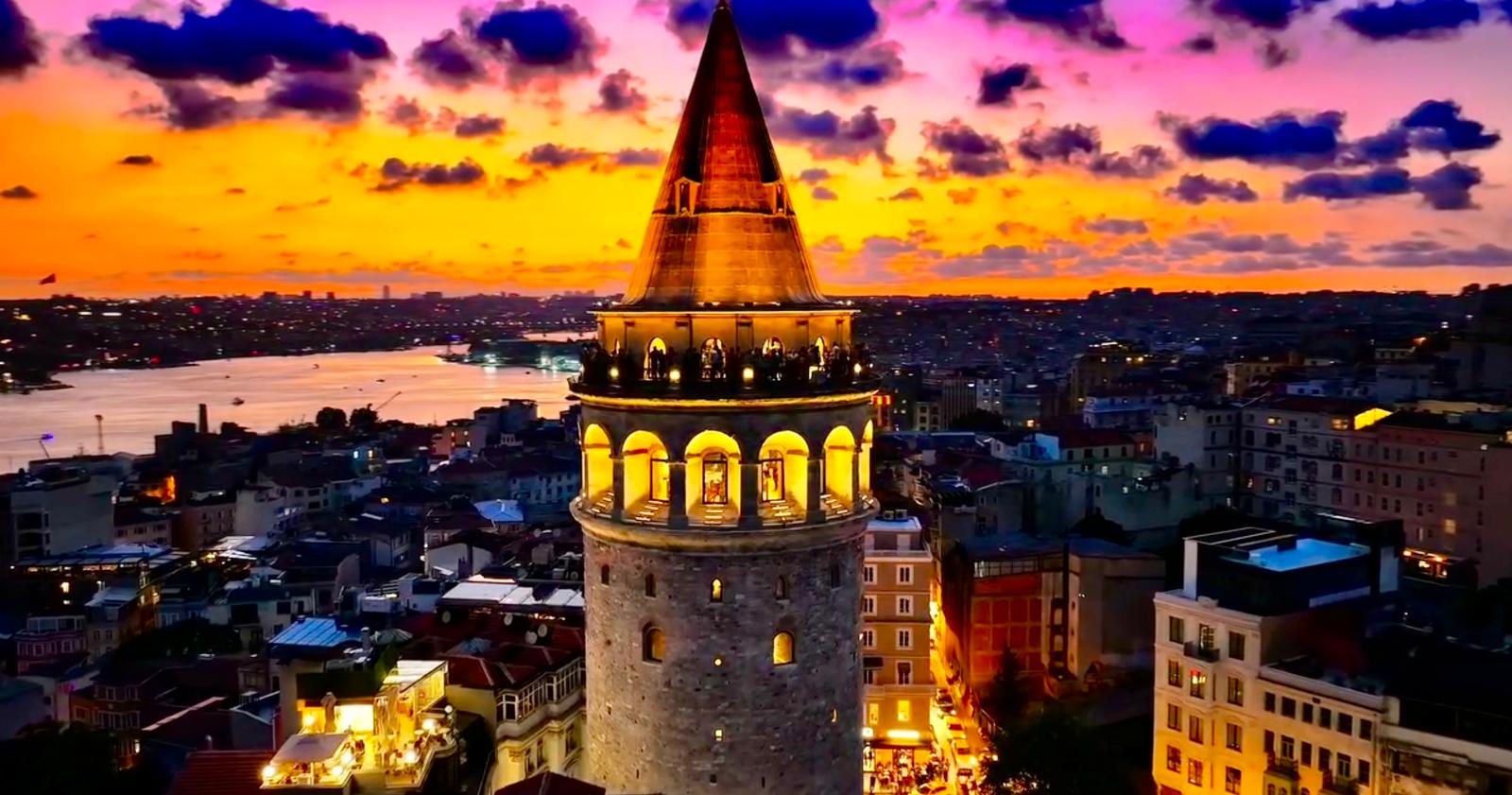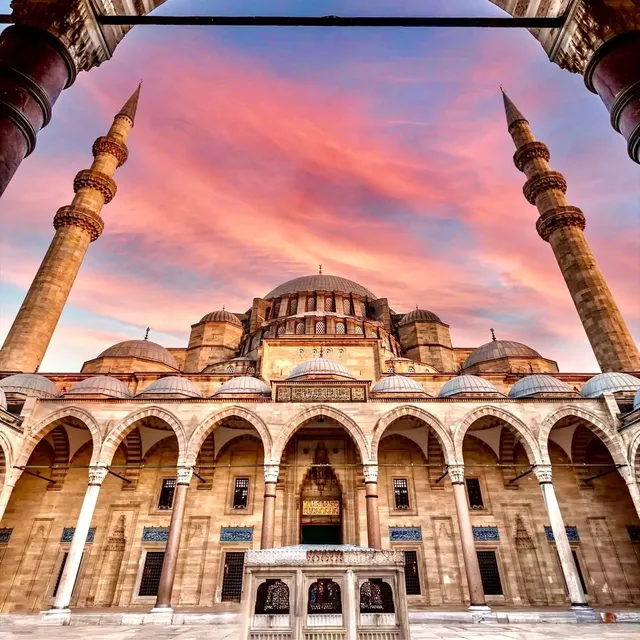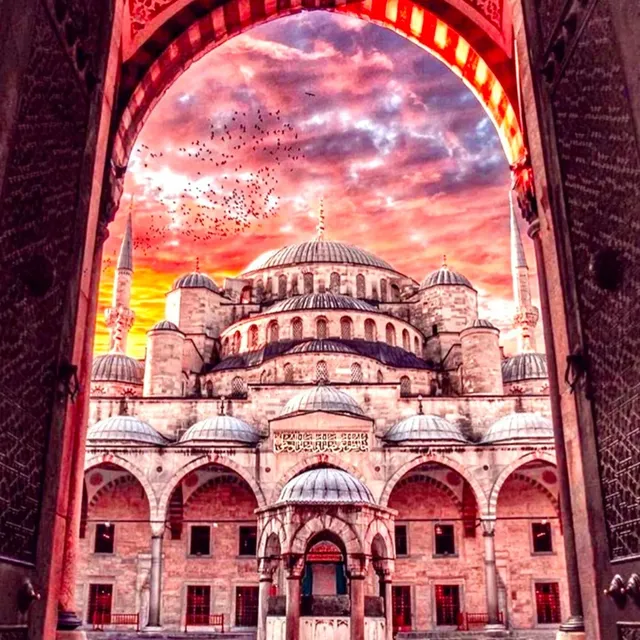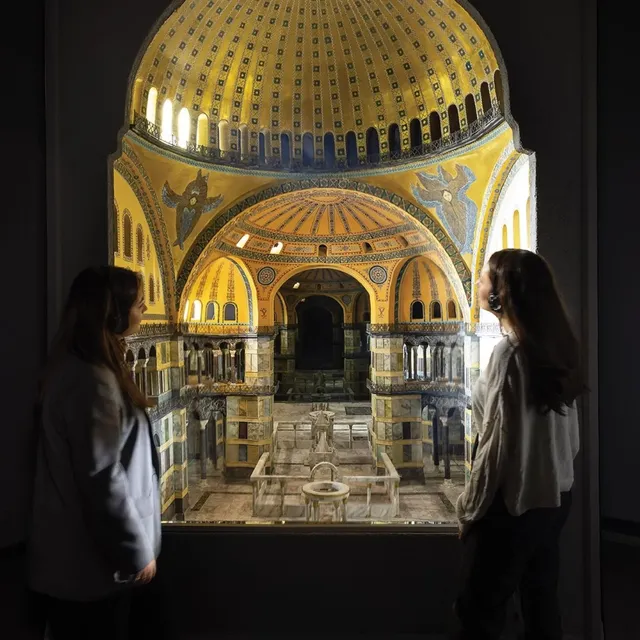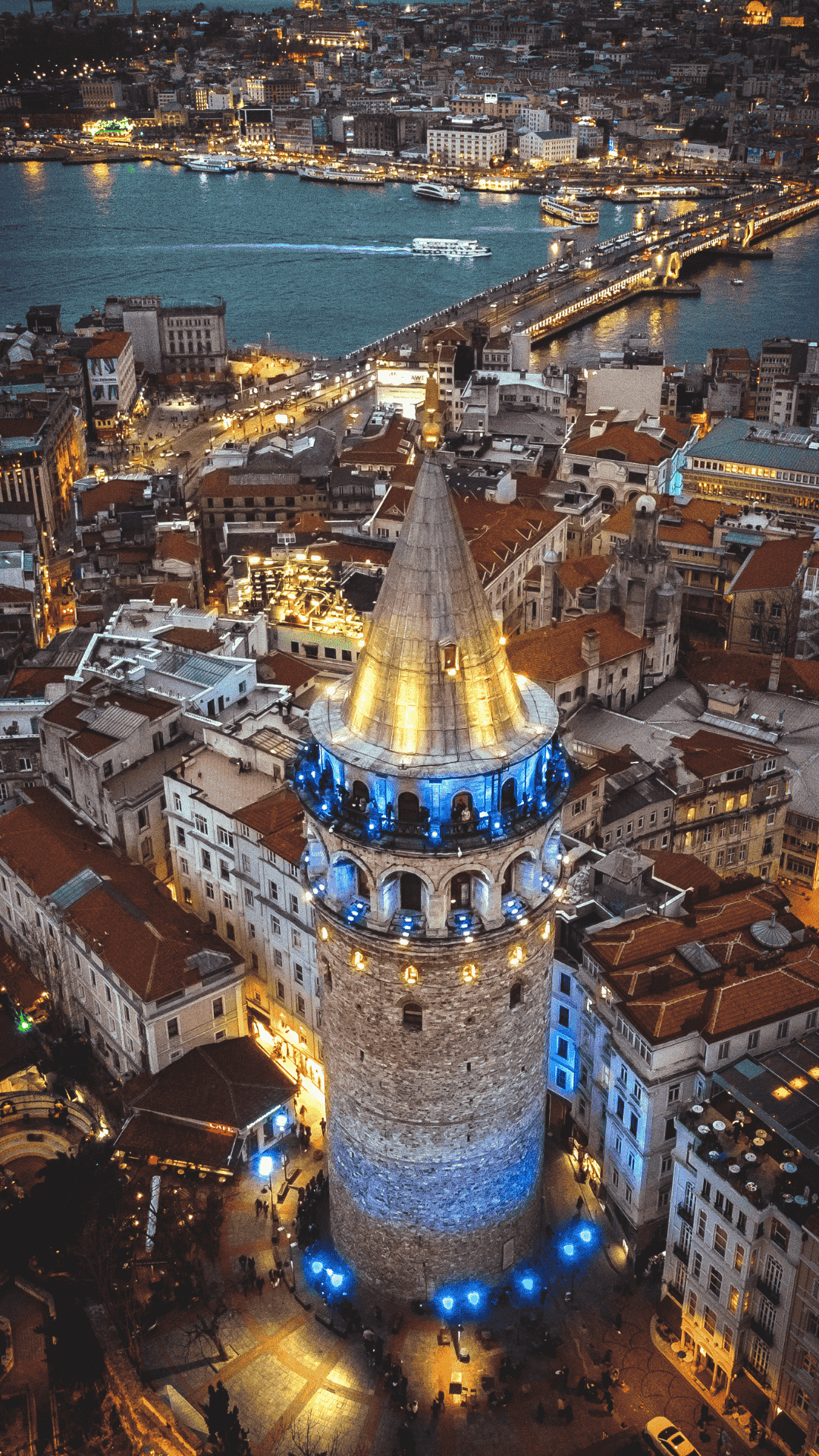

Its location also makes it easy to combine with nearby highlights such as Galata Tower or a visit to Dolmabahce Palace. For a concise historical overview, see the entry on Wikipedia.
History of Kilic Ali Pasa Mosque
According to folklore, Kılıç Ali Paşa asked Sultan Murat III to grant him land to build a mosque. The Sultan is said to have replied that, since Kılıç Ali Paşa was such a great admiral, he should build his mosque in the sea. This story helps explain why landfill was used to create a promontory on the coast and why the complex was built in that position.
The result was a remarkable seaside foundation in Tophane, where the religious and social functions of the complex were brought together in one setting. The mosque, school, tomb, fountain, and hamam reflect the classic Ottoman külliye tradition in a smaller but highly distinguished form.
Architecture and interior details
A large courtyard surrounds the mosque, and a sloping roof covers the assembly area. The three doors of the inner garden feature ornate carvings, while Quranic verses are painted on ceramic panels over the windows. In the garden stands a fountain with eight marble columns and a domed cover, adding to the calm and balanced composition of the complex.
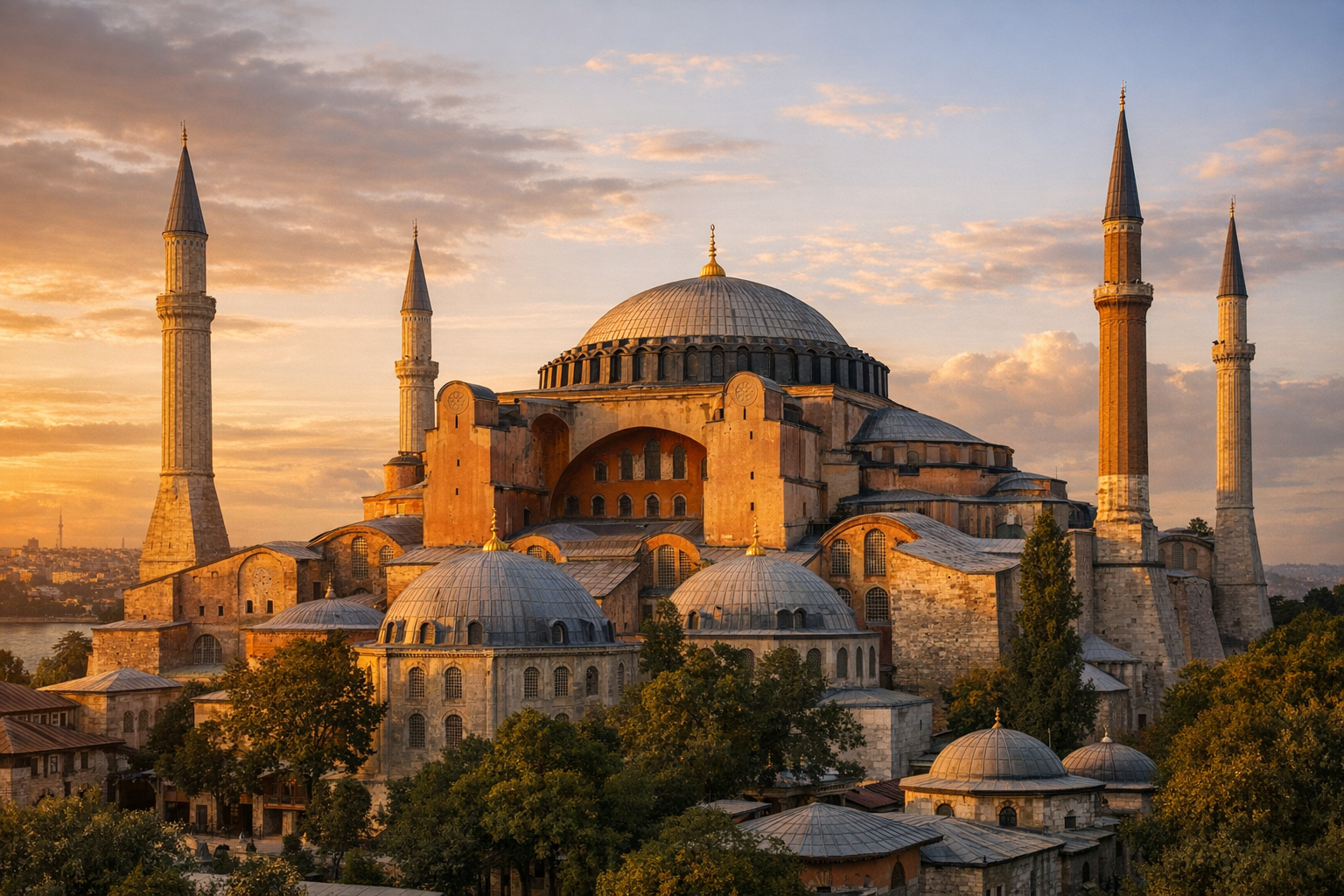
The mosque is based on a rectangular design and is described as an enlarged plan of the Hagia Sophia Mosque. The tops of the windows are adorned with tiles, and the largest dome rests on four elephant-leg-shaped marble columns. This central dome is supported to the east and west by two half domes, while a small dome sits in each of the four corners.
Inside, colored tiles with flower motifs decorate the mosque’s interior. The largest dome contains twenty-four windows, contributing to a total of 147 windows in the building. This generous light gives the interior a spacious and refined atmosphere, emphasizing both the geometry of the structure and the decorative surfaces.
What to see in the complex
Beyond the prayer hall itself, several original elements of the complex remain important. The tomb of Kılıç Ali Paşa is located in the garden facing east. By the garden wall facing the street is a fountain, and on the right-hand side of the mosque a minaret rises with its balcony.
The hamam on the right-hand side of the mosque is still in use today, and the school is located on the seaside of the hamam. These structures help visitors understand the mosque not only as a place of worship, but also as part of a wider civic and charitable complex.
In 1948, the 16th-century ship’s lantern that had hung from the main dome was moved to the Istanbul Naval Museum. This detail is a reminder of the founder’s naval identity and of the strong connection between the monument and the maritime world of the Ottoman Empire.
Visiting tips
Kilic Ali Pasa Mosque is especially rewarding for travelers interested in Architect Sinan, late 16th-century Ottoman design, and the layered history of the Tophane waterfront. Its architecture invites close attention, from the carved garden doors to the ceramic panels, tiled window tops, and flower-motif decorations inside.
Because the hamam remains in use and the mosque is an active religious site, visitors should dress respectfully and plan around prayer times when entering the prayer area. For broader context on Ottoman architecture by Sinan, the Archnet archive can also be useful.
If you are exploring major imperial mosques in the city, Kilic Ali Pasa Mosque pairs well with Suleymaniye Mosque, another key Sinan monument in Istanbul.
FAQ
Who built Kilic Ali Pasa Mosque?
Kilic Ali Pasa Mosque was built in 1581 by Architect Sinan on the orders of Admiral Kılıç Ali Paşa. It is regarded as one of Sinan’s last projects and reflects the maturity of his Ottoman architectural style.
Where is Kilic Ali Pasa Mosque located?
The mosque is situated in Tophane Square. Its setting was historically close to the coast, and folklore says landfill was used to create a promontory there so the complex could be built in a position connected to the sea.
What is included in the Kilic Ali Pasa Mosque complex?
The complex consists of the mosque, a religious school, a tomb, a public fountain, and a hamam. Together, these elements form a compact Ottoman külliye that combined worship, education, and public service.
What makes the mosque architecturally notable?
The mosque has a rectangular plan described as an enlarged plan of Hagia Sophia, a main dome resting on four elephant-leg-shaped marble columns, two half domes, corner domes, ceramic panels, floral tiles, and a total of 147 windows.
Is the hamam at Kilic Ali Pasa Mosque still in use?
Yes. The hamam on the right-hand side of the mosque is still in use today. It remains one of the living parts of the historic complex and highlights the site’s continuing place in Istanbul’s urban life.