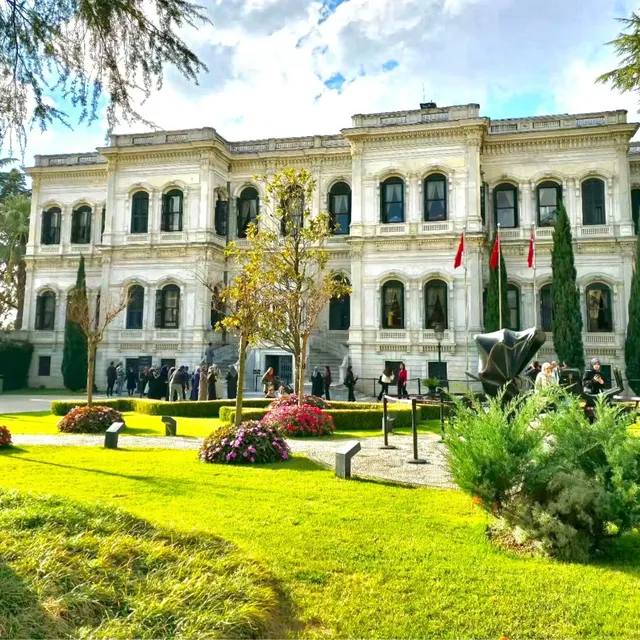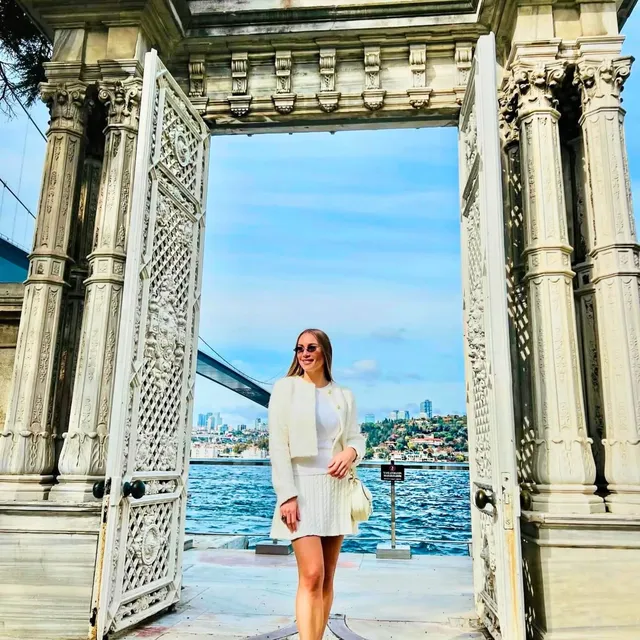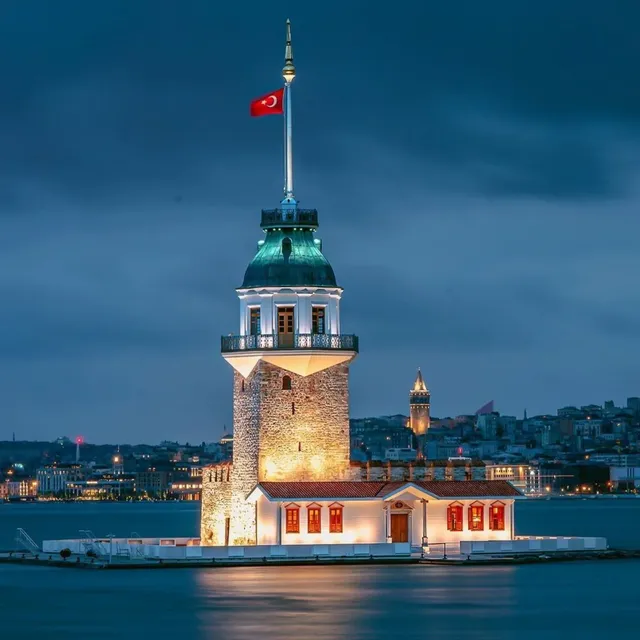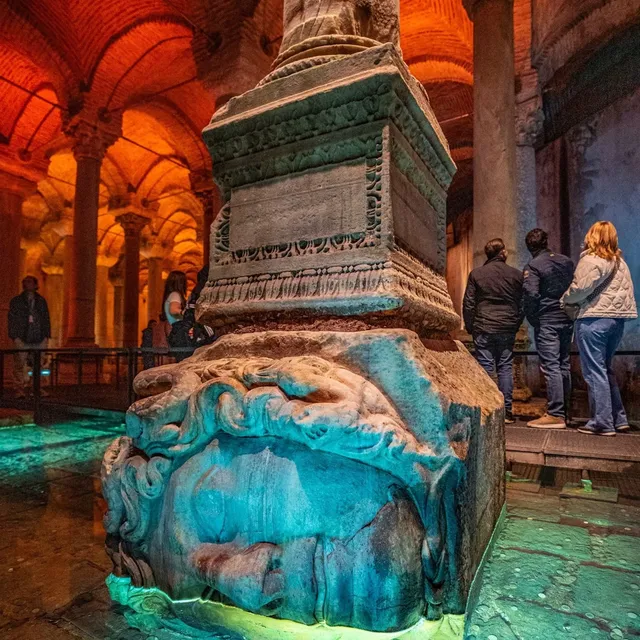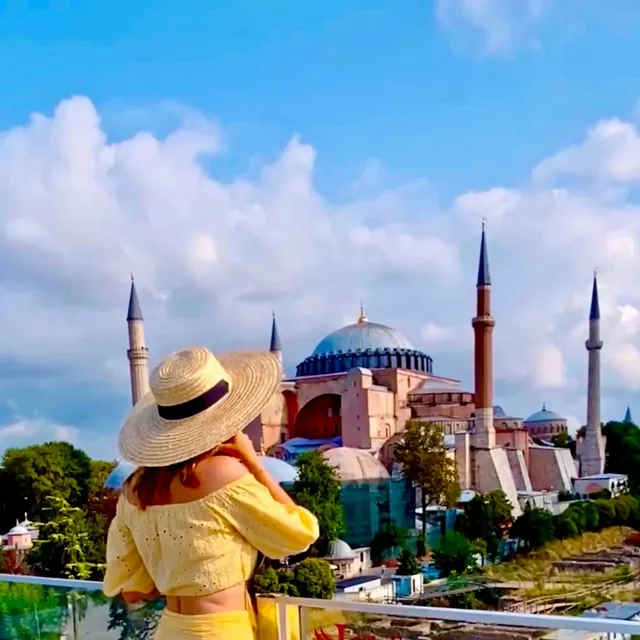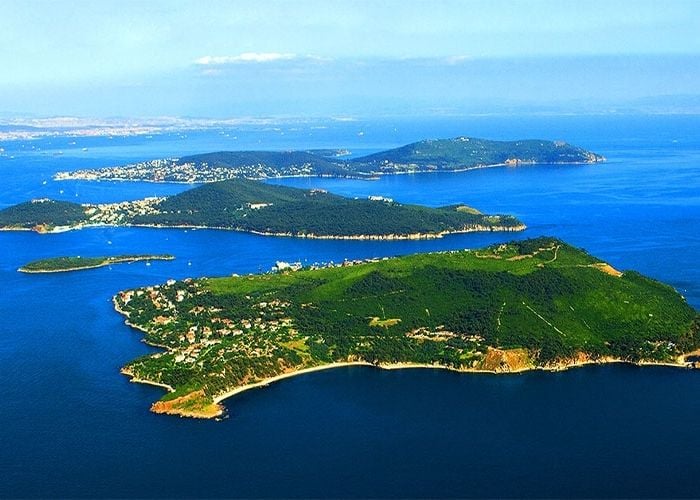

Today, Yıldız Grove is open to the public and remains popular with Istanbul residents thanks to its peaceful atmosphere. Restored villas, centennial trees, and inviting paths make it a pleasant picnic area. There are also cafes and restaurants within the grove, making it easy to spend a slow afternoon here. If you are already exploring nearby landmarks, you can combine the area with a visit to Dolmabahce Palace or continue toward Ortakoy Mosque.
Yildiz emirgan groves: what to see in Yıldız Grove
In addition to Yıldız Palace and the Şale Villa, Yıldız Grove includes several historic structures that reflect the area’s Ottoman character. Among the best known are the Yıldız Palace Clock Tower, Tent Pavilion, and Malta Pavilion. For background on the wider palace complex, you can also check the official information at millisaraylar.gov.tr.
Yıldız Palace Clock Tower
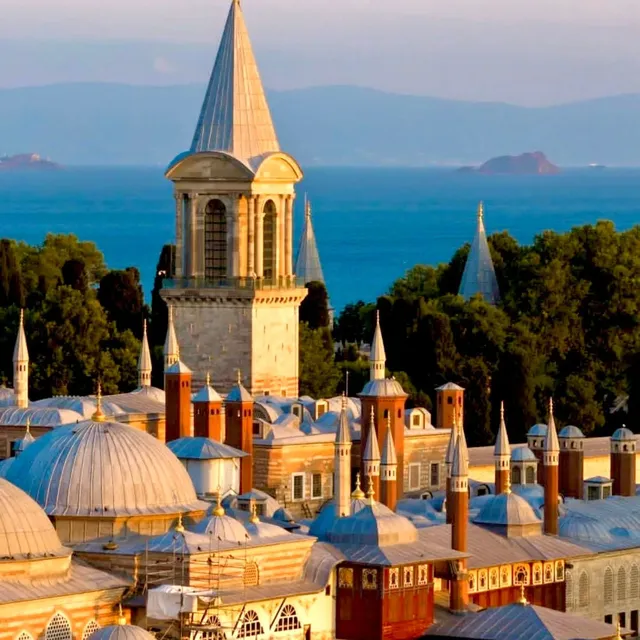
This tower stands in the southwest corner of Yıldız Mosque’s yard. Built in 1890, it shows a synthesis of oriental and neo-gothic design. The three-story tower has a square plan with broken corners and is covered by a sharp, slivered dome. In the overhang, there are slivered and arched roof windows.
Tent Pavilion
One of the two historical houses in the Yıldız Groves, the Tent Pavilion was built in the backyard of Çırağan Palace for daily tours. After the foundation of the Republic, it remained closed for a long time. Today, it is open to the public.
Malta Pavilion
Malta Pavilion was built during the Abdulaziz period and is known for its marvelous vantage point. Its restoration stayed loyal to the original form. Visitors can admire the ceiling ornaments while enjoying a pleasant dinner of Turkish tastes.
Emirgan Groves
Emirgân Groves lie on the northwest slope of the Emirgân district on Istanbul’s European side. During the Byzantine period, this green area was used as a service area. In the mid-16th century, it was known as Feridun Bey Garden. When Murad IV gave the area to Emirgüneoğlu in 1635, it became known as the Emiroğlu Garden. Later, the name changed to Mirgun and then Emirgân.
In the second half of the 19th century, Abdulaziz gave the groves near Emirgüne village to Hidiv İsmail Pasha. He built three more houses to complement the wooden palace on the shore. The groves later passed to Saffet Lütfü Tozan and afterward to the Metropolitan Municipality of Istanbul.
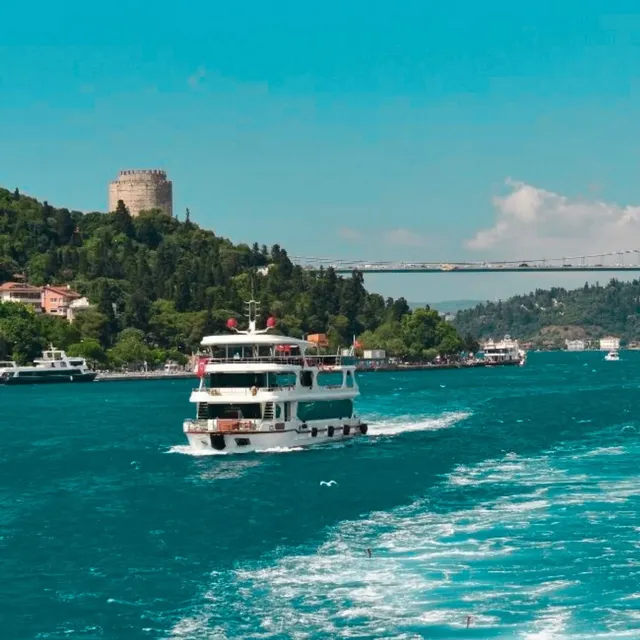
If you would like to enjoy the magnificent seascape of the Bosphorus, Emirgân Korusu is one of the finest places to do it. After a peaceful jog or walk, visitors can relax around the Sarı (Yellow), Pembe (Pink), and Beyaz (White) Villas. The grove is especially appealing for those who want a slower Istanbul experience away from the dense historic center. For a general overview of the area’s history, Wikipedia’s Emirgan Grove entry provides additional context.
Why visit these groves?
- Yıldız Grove offers Ottoman-era pavilions, mature trees, and a peaceful atmosphere between Beşiktaş and Ortaköy.
- Emirgan Grove is ideal for Bosphorus views, walking, jogging, and time around its famous colored villas.
- Both are excellent choices for travelers who want to balance major monuments with time in nature.
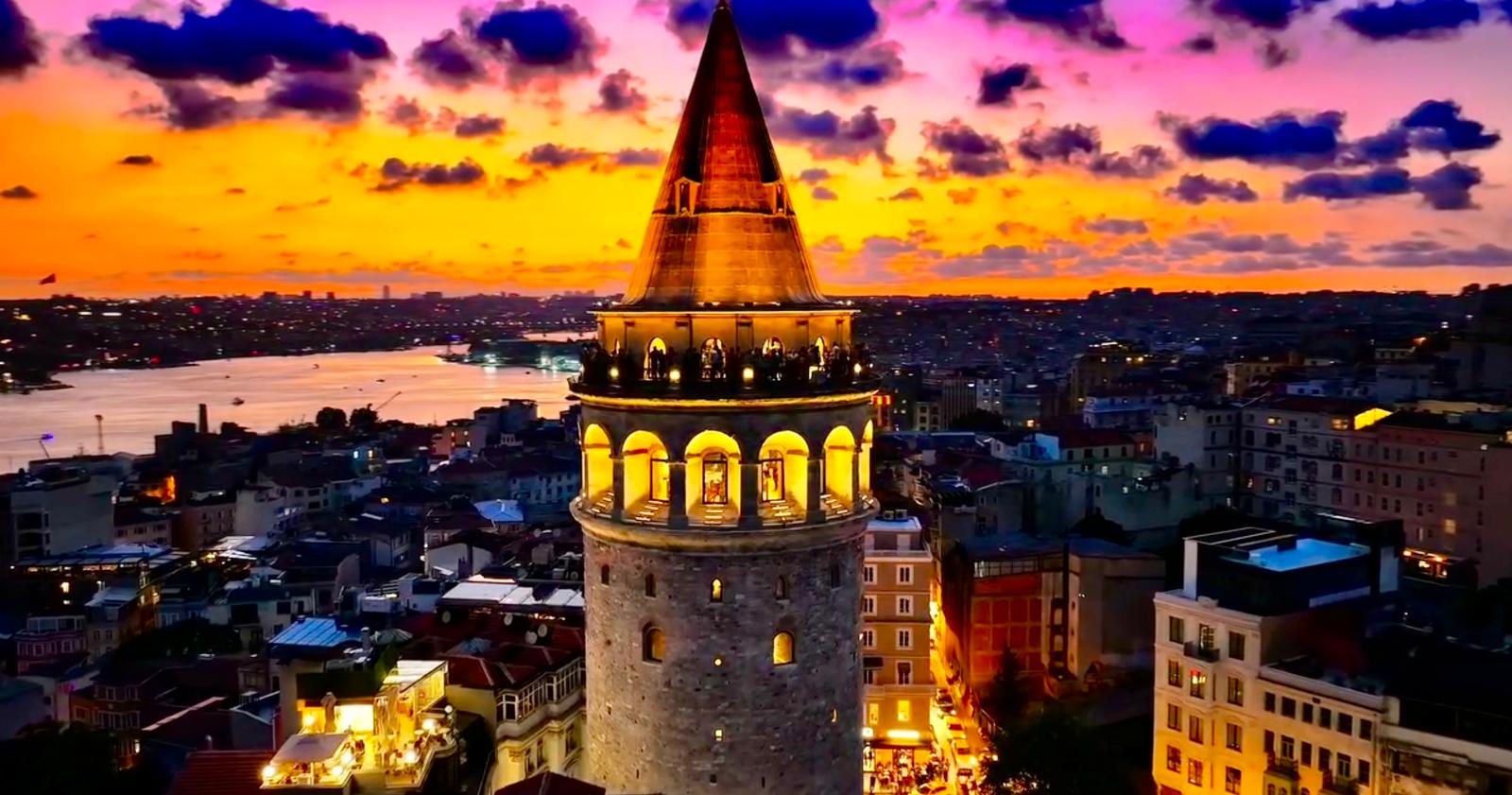
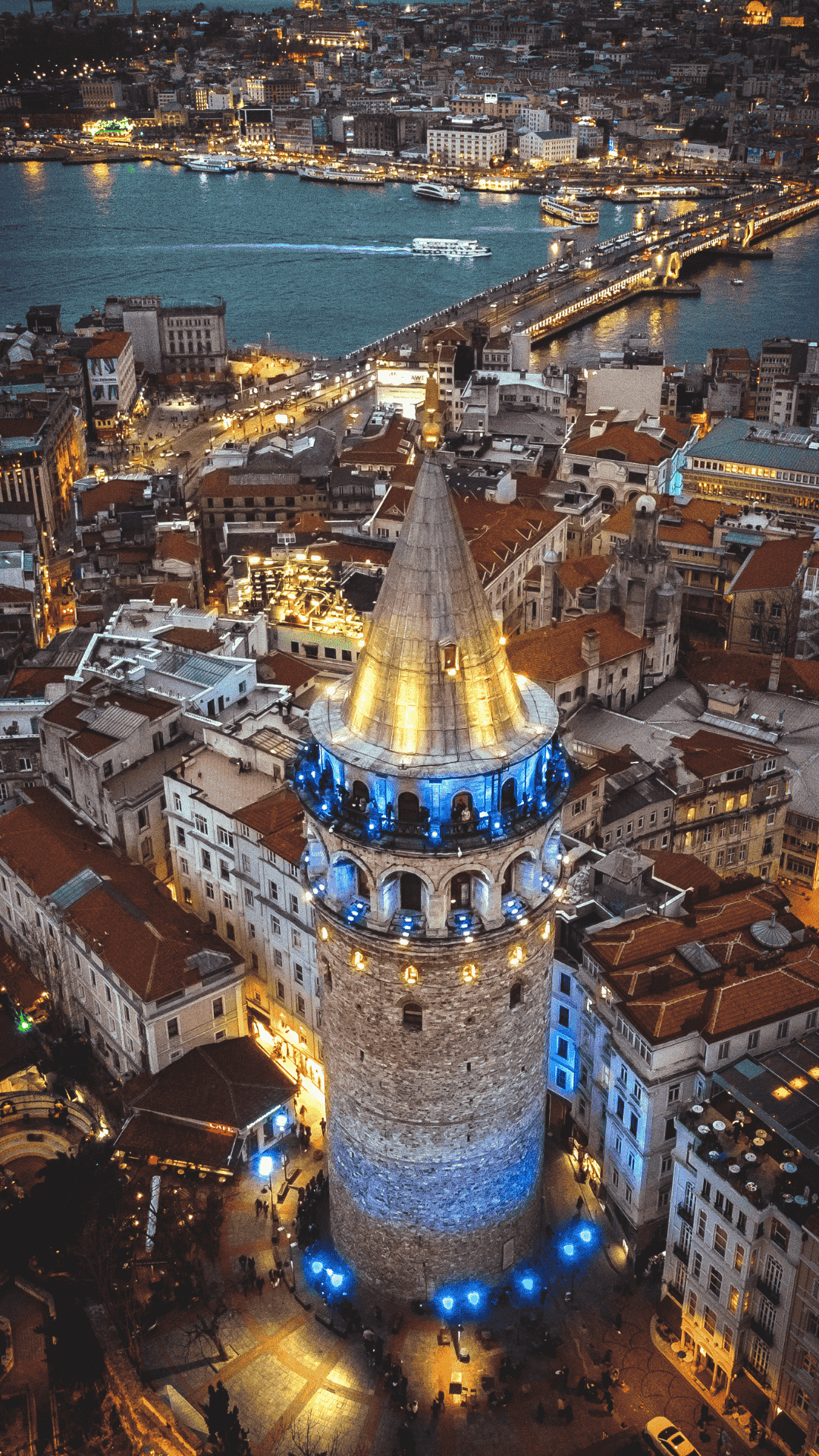
If your Istanbul itinerary is focused on palaces, mosques, and viewpoints, these groves make a refreshing contrast to places such as Galata Tower or the busy historic quarters around Sultanahmet.
Planning your visit
Yıldız Grove suits visitors who are already spending time in Beşiktaş, Ortaköy, or around palace districts. Emirgan Grove works well as part of a scenic Bosphorus day. Since cafes, restaurants, and public access conditions can change over time, it is always wise to check official or up-to-date local sources before your visit.