At first, a small wooden church stood where the current building is located. Later, it was replaced by a larger and more ambitious structure. Because the ground conditions were weak, an iron frame was preferred over concrete. The construction plans were prepared by Hovsep Aznavur, an Armenian Istanbulite, and an international competition was held for the prefabricated components. The Austrian firm R. Ph. Wagner won the competition.
The prefabricated parts were produced in Vienna and transported to Istanbul by ship along the Danube and through the Black Sea. After one and a half years of work, the church was completed in 1898. Its main skeleton was made of steel and covered with metal boards, while the metal pieces were joined with nuts, bolts, rivets, or welding. Architecturally, the church reflects both Neo-Gothic and Neo-Baroque influences, giving it a striking appearance among Istanbul’s religious monuments.
History of Stephan Bulgarian Church Istanbul
The story of the church is closely tied to the Bulgarian community in Ottoman Istanbul. Before building their own church, Bulgarian worshippers attended churches connected to the Fener Orthodox Patriarchy. In the 19th century, changing political and cultural currents encouraged the community to create a separate religious space that reflected its own identity.
The first solution was a modest wooden church on the same site. Over time, the need for a more substantial building led to the creation of the present structure. The choice of iron construction was practical as well as unusual, since the weak foundations along the waterfront made a heavier conventional structure less suitable.
Architecture and Why the Church Is Unique
What makes this church especially remarkable is its prefabricated iron construction. Rather than being built entirely on site with traditional masonry, its parts were manufactured in Vienna, shipped to Istanbul, and assembled here. This gave the building a rare place in the city’s architectural heritage.
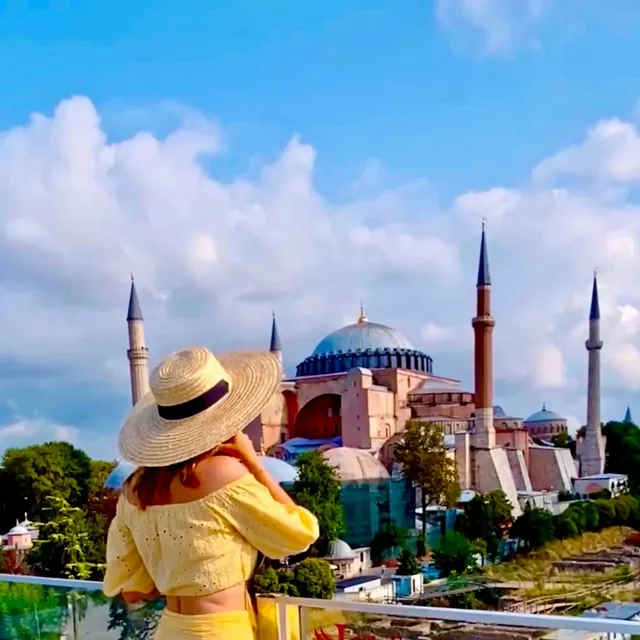
The design combines decorative elements associated with Neo-Gothic and Neo-Baroque styles. The result is both ornate and elegant, with a silhouette that stands out in the historic neighborhoods around it. For visitors exploring the old quarters of the city, the church offers a different visual experience from Ottoman imperial landmarks such as Hagia Sophia or the nearby mosques of the Historic Peninsula.
Location on the Golden Horn
The church stands between Balat and Fener, two districts known for their layered history and multicultural past. Its waterfront setting on the Golden Horn adds to its appeal, especially for visitors who enjoy walking through older neighborhoods and discovering lesser-known landmarks.
If you are already exploring Balat, the church is an easy and rewarding stop. Its position also makes it interesting for travelers tracing Istanbul’s religious diversity beyond the city’s most famous monuments.
What to Notice During Your Visit
- Iron structure: The church is widely noted for its steel skeleton and metal-covered construction.
- Prefabricated design: Its parts were manufactured in Vienna and transported by sea to Istanbul.
- Architectural style: Look for Neo-Gothic and Neo-Baroque details in the façade and decorative elements.
- Waterfront setting: The church’s location along the Golden Horn makes it especially photogenic.
- Historic context: It reflects the story of the Bulgarian community in Ottoman Istanbul.
Planning a Visit
Stephan Bulgarian Church is best visited as part of a wider walk through Fener and Balat. The area rewards slow exploration, with historic streets, religious buildings, and views of the Golden Horn. Before visiting, it is a good idea to check current access information or restoration-related updates through official tourism or transport resources.
For broader Istanbul travel planning, you can consult GoTürkiye. For additional historical background on the church, Wikipedia offers a useful overview.
Source: ibb.gov.tr