The fact that many kinds of this şiş kebap, especially the original Turkish Seekh Kebab, are also preferred in the Middle East has helped more people become familiar with it. Still, it is mainly consumed by Turks. Domestic and foreign tourists traveling around the country enjoy this well-known şiş kebap wherever they taste it.
Although Turkish Seekh Kebab has original recipe materials and does not traditionally include vegetables, many restaurants now serve tomatoes, onion slices, bell peppers, and mushrooms alongside the meat, either on the same skewer or on a separate one, to make the dish more appealing and easier to enjoy. Below are some of the best-known types of şiş kebap that are often associated with Turkish Seekh Kebab, along with a few useful notes on recipe materials.
Turkish Seekh Kebab Types
First of all, there are 105 types of şiş kebap in Turkish cuisine in total. But when it comes to Turkish Seekh Kebab and its authentic recipe materials, only a few stand out and have become especially popular around the country.
Adana Kebab (Adana Şiş Kebap)
Adana Kebab is one of the most consumed kebab types in the Middle East, including Turkey. Among its primary recipe materials are lamb meat and spices. Whoever cooks the dish should be highly skilled, because Adana Kebab made with lamb may not taste very good if it is not prepared in experienced hands.
Urfa Kebab (Urfa Şiş Kebap)
Urfa Kebab has a special place in the Turkish Seekh Kebab family. The reason is the difference in the use of recipe materials. In this şiş kebap, chopped chili peppers and spices are not mixed into the meat in the same way as Adana Kebab. This difference makes Urfa Kebab a common choice for foreigners and for people trying it for the first time.
Eggplant Kebab (Patlıcan Şiş Kebap)
Unlike Urfa Kebab and Adana Kebab, the name of Eggplant Kebab does not come from the region where it originated. This type of kebab comes from Gaziantep, in Turkey’s Southeastern Anatolia region. What sets it apart is that eggplant slices and pieces of meat are arranged one after another on the skewer before cooking.
Iskender Kebab
Strictly speaking, Iskender Kebab is not usually in the Turkish Seekh Kebab category. It is not made on skewers, but since it carries the word kebab and is so well known for its taste, it still deserves mention. It is shaped in thin slices and cooked by turning over the fire as a large whole that is thinly cut and layered differently from standard şiş kebap types.
It would not be wrong to say this about the kebab types mentioned above: all of them are related in the broader kebab tradition, and the main differences come either from the recipe materials or from the cooking method itself.
Which Provinces Are Turkish Seekh Kebab Types Specific To?
Adana - Adana Şiş Kebap
Urfa - Urfa Kebab
Bursa - Iskender Kebab
Gaziantep - Eggplant Kebab (Patlıcan Şiş Kebap)
Erzurum - Cag Kebab
If you are exploring Turkish food while visiting the city, you can easily come across kebab restaurants near major areas such as the Grand Bazaar or after a walk around Sultanahmet Square. For a broader introduction to Turkish culinary culture and regional dishes, the overview on GoTürkiye can also be useful.
How to Make Turkish Seekh Kebab (Şiş Kebap)?

Put the chopped meat in a large bowl first.
Pour olive oil over the meat.
Add the spices.
Cut the onions and garlic into two or three parts and add them to the meat.
Cover the bowl with stretch film and leave it in the refrigerator for at least one day to complete the marinating process.
After the necessary time is up, take out the meat and wait until it comes to room temperature.
Then put the meat on the skewers one by one. For Eggplant Kebab, place one piece of eggplant and then one piece of meat.
With the help of the necessary barbecue or grill equipment, cook a few delicious portions of Turkish Seekh Kebab.
These are the basic recipe materials and preparation stages of Turkish Seekh Kebab. The kebab types described above can generally be made in this order, while many other kebab varieties follow different patterns.
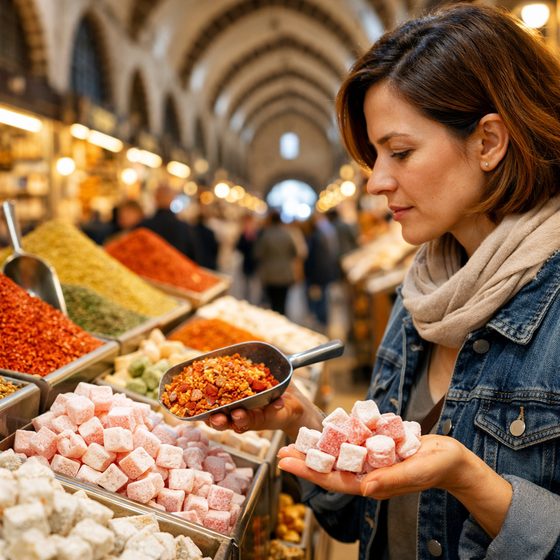
For readers who want a quick background on the broader history of kebab, Wikipedia’s kebab entry offers a general starting point. And if you plan to continue your food-focused route through Istanbul, areas around the Spice Bazaar are also worth seeing for ingredients and local food culture.
What Makes Turkish Seekh Kebab Popular?
Its popularity comes from a combination of simple preparation, strong flavor, and the flexibility to present it in different regional forms. Some versions highlight spices and lamb, while others add ingredients such as eggplant. Even when the core idea stays the same, the experience can change from one city to another.
That is also why Turkish Seekh Kebab remains interesting for travelers. It is both familiar and varied: a single kebab tradition that opens the door to different local styles across Turkey.