In 1872, Minister of Education Ahmed Vefik Pasha re-established the Hümayun Museum, which had been abolished for a while, with the help of the German Dr. Phillip Anton Dethier. As newly arrived works increased, Hagia Eirene became insufficient, but financial difficulties prevented the construction of a new museum building. The “Tiny Pavilion,” built during the reign of Fatih Sultan Mehmet, was therefore converted into a museum and added in 1880.
It took time for the museum to become world-renowned. In 1881, Osman Hamdi Bey, the son of Grand Vizier Edhem Pasha, became the director of museums, and the effort to find and collect artifacts gained momentum. He did not only lead the institution; he also took part in the search for artifacts himself.
If you are planning a culture-focused day around the old city, the museum area is also close to major landmarks such as Topkapi Palace and Sultanahmet Square, making it easy to combine several historic stops in one route.
For broader background on the museum complex and its institutional history, you can also check Wikipedia or look for current visitor information on official Turkish museum resources such as muze.gen.tr.
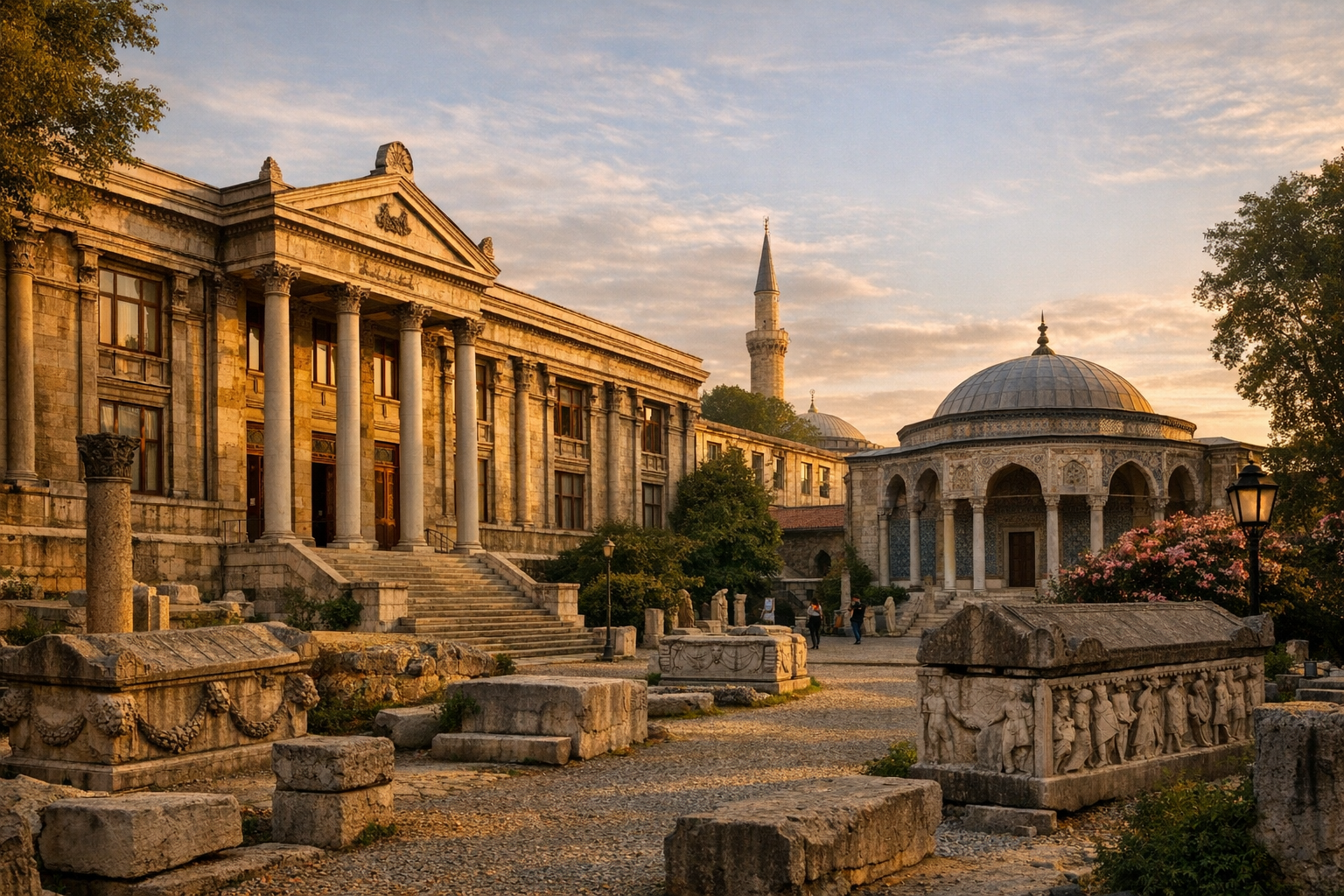
Building of the istabul archeological museum
The Istanbul Archeology Museum building was designed by Alexander Vallury. The need for a new museum building emerged after magnificent works such as the Iskender Tomb, the Crying Women's Tomb, the Lycian Tomb, and the Tabnit Tomb were brought to Istanbul from the Sidon King Necropolis. The building opened on 13 June 1891.
June 13, the date when the museum opened to visitors, is celebrated as Museum Day in Turkey. With the addition of the north wing in 1903 and the south wing in 1907, the Archeology Museum building gained its present appearance. Later, due to the need for new exhibition halls, an additional section was built to the southeast of the Main Museum building between 1969 and 1983, and this section was named the Annex Building.
This building, which has witnessed an important part of history, still impresses visitors with its atmosphere and architectural character.
Artifacts in the Istanbul Archeological Museum
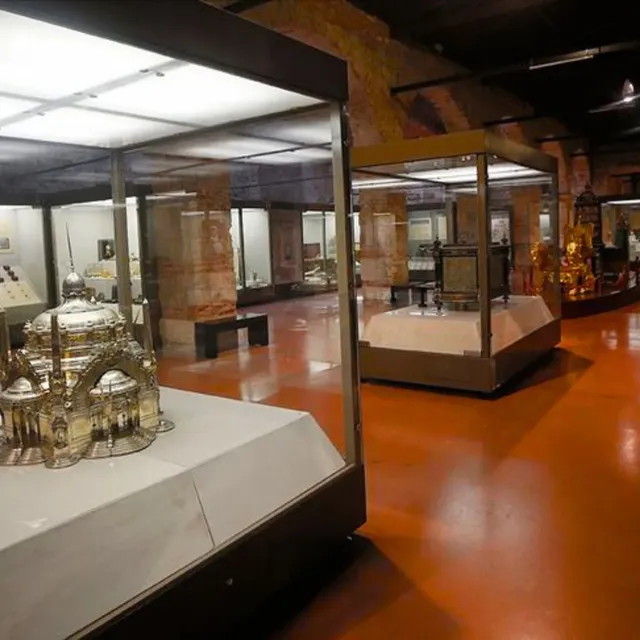
This uniquely beautiful building, where you step into the dusty pages of history as soon as you enter, is home to many ancient artifacts. There are approximately 1 million artifacts in the museum, containing works from many places, most of them from Turkey. It is difficult not to admire the remarkable artifacts from Mesopotamia and Anatolia.
The ancient Greek exhibition in particular creates a powerful impression, making visitors feel as though they are wandering among ancient Greek gods and far from the modern world.
Some of the famous artifacts in the museum are:
- Statue of Hermes
- Statue of Aphrodite
- Archaic Temple Pediment from Assos
- Ancient Greek Exhibition
- Siloam Inscription
- Virgin Mary Relief
- Roman Emperor II. Valentinian's Statue
- Mari Governor Puzur Ishtar
- Sarcophagy Porphyry Stones of Byzantine Emperors
- The original text of the Treaty of Kadesh, signed in BC 1258
- Mesopotamian Statues
- Babylon Reliefs
- Palmyra Reliefs
- Bust of Marcus Aurelius from Rome
- A panel from the Ishtar Gate in Babylon
- Kybele Statue from Bitínia
- Nippur, the Ancient Egyptian Measure of Length
Orpheos statue
Orpheus, who first appeared as a mythological character, became a school over time and was associated with Jesus in Christian art. At the root of this association is the story of Orpheus, who tamed animals with the musical instruments he played, then lost his lover because of a snake bite. Due to his deep sadness, he was given the chance to go to the underworld and bring back his lover. But after losing her again in this tragic experience, he devoted himself only to preaching to men. Because of this dedication, Orpheus came to be associated with Jesus and appears in some works with imagery similar to Jesus as the Good Shepherd.
In the statue, Orpheus is depicted sitting with an animal beside him. The details of his dress are rendered with a few shallow scratches rather than elaborate carving. The depiction is completed by the face and hair treatment, which follows a classical style seen in Roman art of those centuries.
Alexander sarcophagus
The Sayda Sarcophagi are the sarcophagi from the kings' tombs in Sidon, unearthed by Osman Hamdi Bey in 1887. Seven of the 18 sarcophagi found in the necropolis were left in place, and the others were brought to Istanbul through very meticulous work. The most important among these invaluable sarcophagi is the Alexander Sarcophagus, while the oldest is the Tabnit Sarcophagus. Other important examples include the Sarcophagus of Crying Women, the Lycian Sarcophagus, and the Sarcophagus of Satrap.
The Alexander Sarcophagus is considered the most important artifact in the Istanbul Archaeology Museums. According to some archaeologists, this priceless work is also seen as a symbol of Istanbul. Seeing it in person is one of the highlights of any museum visit.
Why visit the museum today?
The museum offers more than a simple display of objects. It presents a layered history of collecting, preservation, archaeology, and architecture in one of Istanbul’s most historic settings. For travelers interested in civilizations from Anatolia, Mesopotamia, the ancient Greek world, Rome, and Byzantium, it remains one of the city’s most rewarding museum experiences.
Before visiting, it is always wise to check the official site or current museum resources for the latest ticketing and visitor details.
FAQ
What is the origin of the Istanbul Archeological Museum?
The museum grew out of the Hümayun Museum, which was formed from archaeological artifacts collected in Hagia Eirene Church. Over time, the collection expanded so much that new buildings and exhibition spaces became necessary.
Who played a major role in developing the museum?
Several names were important, including Saffet Pasha, Ahmed Vefik Pasha, Dr. Phillip Anton Dethier, and especially Osman Hamdi Bey. Under Osman Hamdi Bey, the museum’s collecting activities and reputation gained major momentum.
When did the main museum building open?
The main building opened on 13 June 1891. This date later became significant enough that June 13 came to be celebrated as Museum Day in Turkey.
What are some famous artifacts inside the museum?
Important works mentioned in the museum include the Alexander Sarcophagus, the Tabnit Sarcophagus, the Crying Women's Tomb, the Lycian Tomb, the Treaty of Kadesh text, Mesopotamian statues, and the Siloam Inscription.
Is the museum near other major attractions?
Yes. The museum is in Istanbul’s historic core and can easily be paired with nearby landmarks such as Topkapi Palace, Sultanahmet Square, and Hagia Irene for a full day of sightseeing.