The museum was established to preserve the Eastern Roman period mosaic floor decoration that partially survived in the northeastern corner of the colonnaded courtyard of the Great Palace. It is housed inside the Arasta Market within the Blue Mosque complex.
Dating to the early Byzantine era, these mosaics are priceless historical treasures that carry visitors centuries into the past. If you are planning a visit, this guide covers the main things to know before touring the Great Palace Mosaic Museum.
Inside the Great Palace Mosaic Museum
The mosaics were discovered in 1935 during excavations in the northeastern cloister of the Eastern Roman Great Palace. They are extraordinary both for their artistic quality and for the range of themes they portray. The mosaics on display in the Great Palace Mosaics Museum, dated to around 450 to 550 AD, contain no religious elements. Instead, they draw on daily life, nature, and mythology, with vivid scenes that reflect the work of numerous craftsmen directed by leading masters of the period.
More than 250 m2 of colorful mosaic art with 150 unique characters and 90 scenes, along with objects and legendary creatures, can be seen here. The precision and complexity of the workmanship suggest that some of the Roman Empire's most skilled artisans took part in creating them.
Many scenes depict Romans in everyday life, alongside animals and mythological figures. Visitors can spot an arena, hunters, people carrying pots, predatory animals chasing prey, shepherds, and legendary encounters such as Bellerophon and the Chimera.
In one hunting scene, two hunters aim spears at tigers. They wear sleeveless shirts, tunics, scarves, and protective bandages on their legs. These details offer a glimpse of the attire of Roman hunters in the sixth century. Marks on their clothing that resemble regimental crests may indicate a connection to palace service.
Another striking mosaic shows the battle between Bellerophon, the legendary Greek hero, and the three-headed Chimera. Bellerophon thrusts his spear toward the goat head of the beast, while the lion head extends its tongue. Although much of Bellerophon's figure has decayed, the serpent tail of the Chimera is still visible.
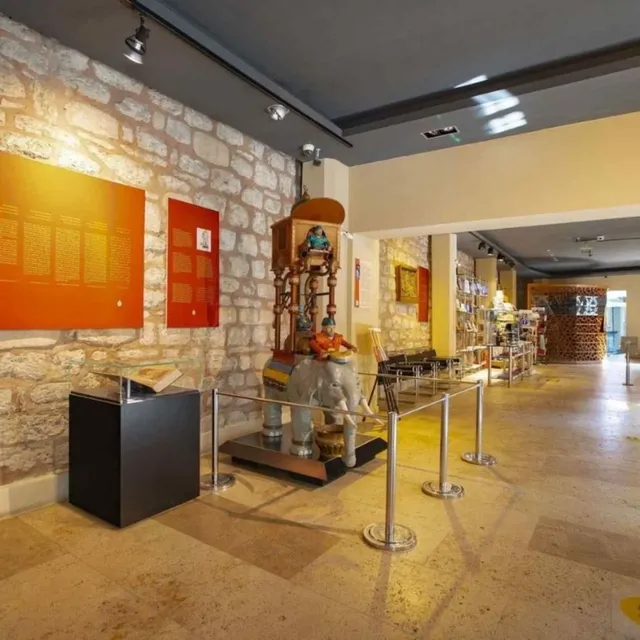
A further mosaic presents Dionysus, the ancient Greek god of wine, revelry, and theater, as a child. He sits on Pan's shoulders wearing a crown made of leaves, apparently during a triumphal procession in India. Behind them are an African elephant and its rider, while Pan carries a flute.
The mosaic technique
There are three main layers in the mosaics displayed at the Great Palace Mosaic Museum:
At the bottom is a base measuring approximately 0.30 to 0.50 meters, followed by a mortar layer about 9 centimeters thick.
The second layer used compressed slime, earth, and charcoal. A thicker layer of broken tiles was placed above it.
On top of these, mortar was added to form the foundation for the mosaic surface.
The images themselves were made using thousands of colored cubes about 5 mm in size. Materials included limestone and marble, red, blue, green, and black glass, rust-colored clay, terracotta, and some valuable stones. These mosaics contain about 40,000 cubes per m2, suggesting that the complete floor once used roughly 75 to 80 million cubes.
How to get to the Great Palace Mosaic Museum
The museum is in Sultanahmet in the Fatih district, close to many of Istanbul's major historic landmarks. One of the easiest ways to reach it is via the Kabatas-Bagcilar tram line, getting off at Sultanahmet stop. From Taksim, you can first take the Taksim-Kabatas funicular to connect.
If you are coming from the Asian side, ferries to Eminonu from Kadikoy or Uskudar provide another connection point for the tram. After arriving at Sultanahmet, head toward the area around Sultanahmet Square and the Blue Mosque, then look for Arasta Bazaar, where the museum is located.
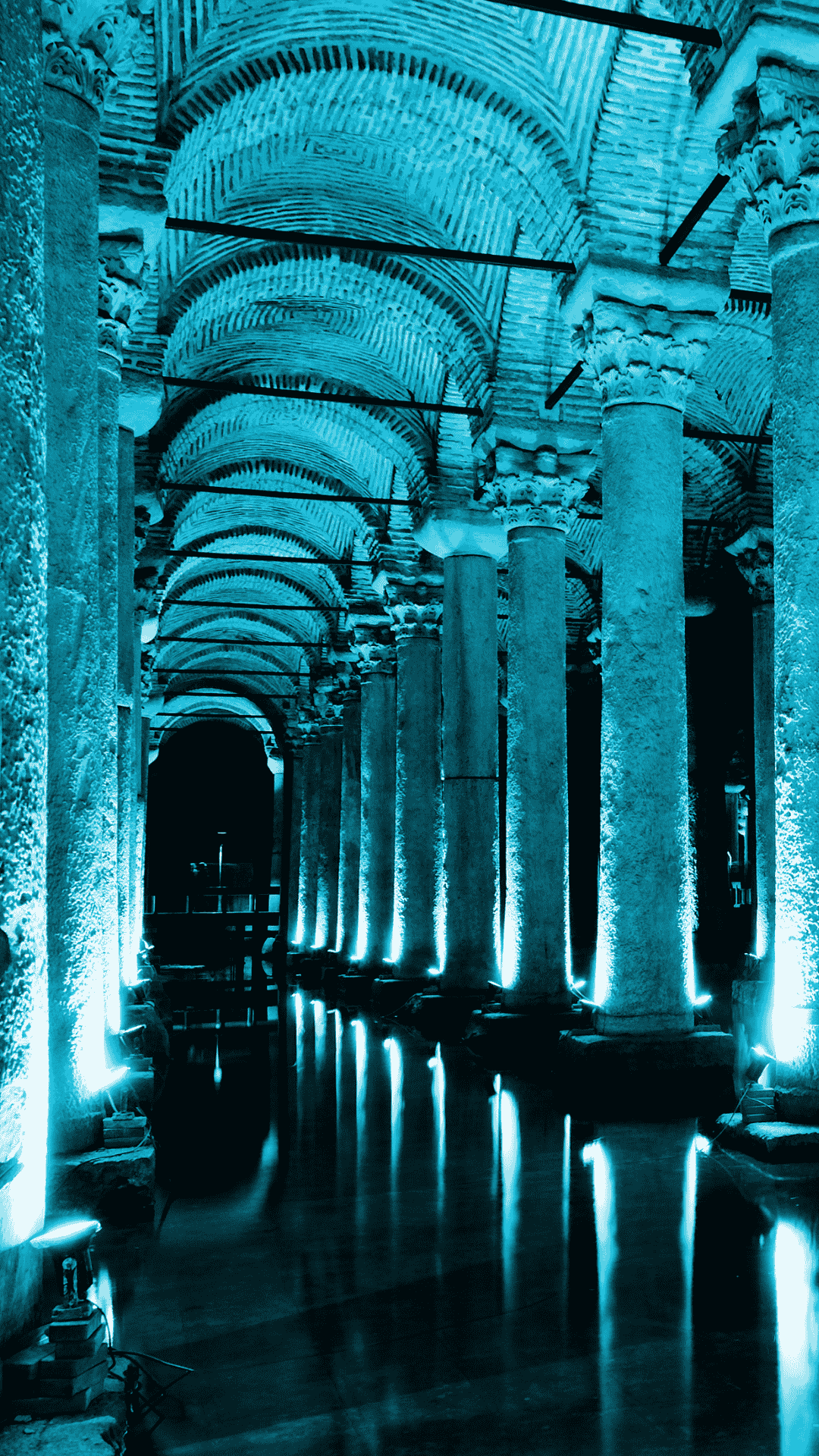
Because the museum sits in the heart of the old city, it is easy to combine with nearby sights such as Hagia Sophia and Basilica Cistern.
Visiting the Great Palace Mosaic Museum
The stated operating hours of the museum are 9 AM to 7 PM during the summer season, from 1 April to 31 October, and 9 AM to 5 PM during the winter season, from 1 November to 31 March.
The entrance fee is listed as around 120 TL per adult, and the ticket office closes about an hour before closing time. Since prices and schedules can change, it is best to check the official source before your visit. You can review general museum details on muze.gen.tr and read background information on Wikipedia.
If you plan to visit more museums in the area, including Hagia Sophia, Topkapi Palace, and the Museum of Turkish and Islamic Arts, it may be worth considering a city sightseeing pass depending on your itinerary.
Important note: Great Palace Mosaics Museum is temporarily closed.